Printable values cards: What they are and how to use them in therapy
Printable values cards are a reflection tool that helps a patient work out which...

13
Last Updated: Sep 30, 2026

How to start a pelvic health practice requires a DPT or OT license plus pelvic-specific continuing education from APTA Pelvic Health or Herman & Wallace.
Cash-based pelvic health practices can launch for under $10,000; insurance-based models typically require $100,000 or more in startup capital.
Your first strong referral source, often an OB-GYN or urogynecologist, is usually enough to generate consistent early patient volume.
Pabau’s digital intake forms, automated scheduling, and HIPAA-compliant records simplify operations from day one so you can focus on treating patients.
Skilled pelvic floor therapists often stay tethered to employer-owned clinics long after they’re ready to work independently. Productivity targets, limited scheduling flexibility, and no control over referral relationships keep them there. According to the American Physical Therapy Association, private practice is one of the fastest-growing employment settings for physical therapists in the US. This guide covers how to start a pelvic health practice step by step: from credentials and legal setup through clinical equipment, billing models, and the systems that keep operations running smoothly.
Entry-level physical therapy practice in the US requires a Doctor of Physical Therapy (DPT) degree from a CAPTE-accredited program, followed by passing the NPTE licensure exam in your state. Occupational therapists need a state OT license from an ACOTE-accredited program. Neither credential alone qualifies you to practice pelvic floor therapy.
Pelvic health is a post-licensure specialization. Once licensed, you pursue continuing education (CE) courses that build the clinical skills the profession requires. This post-licensure route is essentially how to become a pelvic floor therapist, whether you trained as a PT or an OT: the license qualifies you to practice, and pelvic floor certification coursework qualifies you to assess and treat the pelvic floor. The two most widely recognized CE pathways are:
For OTs, the pathway is less standardized. Functional Pelvis and OT Potential offer OT-specific pelvic health education that addresses scope-of-practice nuances relevant to occupational therapy. The scope of internal evaluations for OTs varies by state, so check your state licensing board before adding this to your practice.
Board certification is optional but meaningful for clinical credibility. The APTA’s Pelvic and Women’s Health Clinical Specialist (PWCS) credential requires 2,000 clinical hours in the specialty area and passing a written examination. It distinguishes a specialist from a therapist who has completed introductory CE coursework. Herman & Wallace offers a separate credential, the Pelvic Rehabilitation Practitioner Certification (PRPC), which recognizes clinicians treating the full scope of pelvic conditions.
Before seeing your first pelvic patient independently, review your state PT or OT practice act. Some states have specific requirements around documentation of competency for internal evaluations. If you’re planning a telehealth component, verify telehealth practice rules in every state where you’ll see patients. If you’re considering opening a physiotherapy clinic for the first time, state licensure timelines can run 60 to 90 days, so apply early. Clinicians pursuing a broader scope, like a functional medicine practice, face similar credentialing timelines.
Most solo pelvic health practices start as a single-member LLC. An LLC separates your personal assets from business liabilities, provides flexibility for tax treatment, and is straightforward to register in most states. You can file yourself through your state’s Secretary of State office or use a registered agent service. Typical state filing fees range from $50 to $500.
After forming your LLC, set up a Doing Business As (DBA) name if you want to operate under a clinic name rather than your own name. File the DBA with your county clerk and open a dedicated business checking account. Keep business and personal finances separate from the first transaction.
Additional business setup steps before seeing patients:
Good private practice management starts with clean business infrastructure. Practices that blur personal and business finances, skip professional liability coverage, or operate without a service agreement create legal exposure that is avoidable at the setup stage.
Pelvic health assessment requires privacy. Unlike outpatient orthopedic PT, pelvic floor therapy involves internal examinations, sensitive conversations, and patient vulnerability that make a private room non-negotiable. A single treatment room of 100 to 150 square feet is sufficient for a solo practice.
Common space arrangements for new pelvic health practices include:
A few space details matter more in pelvic health than in general PT. Position the treatment table so a supine patient’s feet face away from the door, add window coverings, and keep a sink or hand sanitizer within reach for internal exams. Lockable storage and a nearby bathroom help too, since many patients need to empty their bladder before and after treatment.
The APTA Pelvic Health Academy organizes equipment into three tiers: what you desperately need, what you sort of need, and what you want. The essential tier is shorter than most new practitioners expect.
Biofeedback units and electrical stimulation devices are useful additions but not required to start. Many experienced pelvic PTs recommend beginning without them so you develop strong manual assessment and cueing skills first. A basic biofeedback unit costs $2,000 to $4,000; add this after your practice is generating consistent revenue.
This is the decision that shapes everything else: your startup costs, your scheduling structure, your documentation burden, and your long-term revenue ceiling.
The Pelvic PT Rising podcast has argued that a cash-based pelvic health practice can launch for under $10,000. That figure is plausible for a solo practitioner subleasing a single room with minimal equipment. An insurance-based clinic with multiple treatment rooms, credentialing across several payers, and a front-desk hire realistically costs $100,000 or more. These are community estimates, not industry benchmarks, but the directional difference is significant.
| Factor | Cash-based | Insurance-based |
|---|---|---|
| Startup cost estimate | Under $10,000 (solo, sublease) | $100,000+ (multi-room, credentialed) |
| Revenue per visit | Higher per session ($150-$250 typical) | Lower net after adjustments ($60-$110 typical) |
| Session length | 60-90 minutes | Often capped at 45-60 minutes by payer |
| Documentation burden | SOAP notes, no prior auths | Prior authorizations, billing codes, claims follow-up |
| Patient volume needed | Lower (10-15 visits/week viable) | Higher (25-35 visits/week to cover overhead) |
| Credentialing timeline | Not required | 90-180 days per payer |
Many new pelvic health practices start cash-based and add insurance panels selectively as they grow. Medicare Part B covers outpatient physical therapy, and some commercial payers cover pelvic floor therapy when medically necessary diagnoses are documented. If you plan to bill insurance, consult a billing specialist familiar with pelvic floor CPT codes before contracting with payers. The CMS Physician Fee Schedule lookup is the authoritative source for Medicare reimbursement rates by code and geography. The benefits of running a private practice shift substantially depending on which model you choose, so model both scenarios with realistic patient volumes before committing.
Two details catch new cash-based practices off guard. First, give patients a superbill, an itemized receipt with diagnosis and CPT codes, so they can claim out-of-network reimbursement from their insurer. Second, the federal No Surprises Act requires a Good Faith Estimate of expected charges for every self-pay or uninsured patient.
A hybrid model that mixes cash and insurance is possible, but it often carries the administrative burden of insurance and the marketing demands of cash-pay at the same time. Choose it deliberately rather than by default.
Document your clinical rationale thoroughly from your first pelvic patient. Insurance audits often target pelvic floor therapy claims because of the specialty’s historically higher denial rates. Even if you’re cash-based now, SOAP notes that clearly link diagnosis, objective findings, and treatment goals protect you if you add insurance billing later.
Pelvic health practices have scheduling requirements that standard PT software often handles poorly. Sessions run 60 to 90 minutes. Patients frequently need a private room for the full duration, not just treatment time. Gaps between appointments for room turnover matter. New patient intakes involve sensitive health history that must be collected securely before the first visit.
Getting patient scheduling and appointment management right from the start prevents the double-booking and missed-intake problems that frustrate new pelvic health practitioners. Pelvic health PT practice management works best on purpose-built clinic software rather than generic calendar tools, which were never designed for clinical intake or room turnover.
Practice management software like Pabau handles exactly this workflow. Pabau’s pelvic health software lets patients complete sensitive intake questionnaires through Pabau’s digital intake forms before their first appointment, so the first session starts with a complete health history rather than paperwork. Appointment reminders are sent automatically, reducing the no-show rate that undermines revenue in a low-volume cash-based practice. Clinical notes, consent records, and health history are stored in one HIPAA-compliant record, so nothing gets lost between systems.
HIPAA compliance is non-negotiable from your first patient. Pelvic health records are particularly sensitive given the intimate nature of the conditions treated. Key compliance steps for a new pelvic health practice:
Review HIPAA compliance requirements for medical offices and confirm your software vendor provides a signed BAA before inputting any patient data. For the broader operational framework governing PT clinics, compliance requirements for physiotherapy clinics covers the regulations most likely to affect your day-to-day documentation and reporting obligations.
Pabau’s automated appointment workflows handle the administrative side of a growing caseload: appointment confirmations, pre-session forms, post-treatment follow-up sequences, and recall reminders for patients who need ongoing pelvic health maintenance. That automation matters more as your practice fills up and manual follow-up becomes unmanageable.
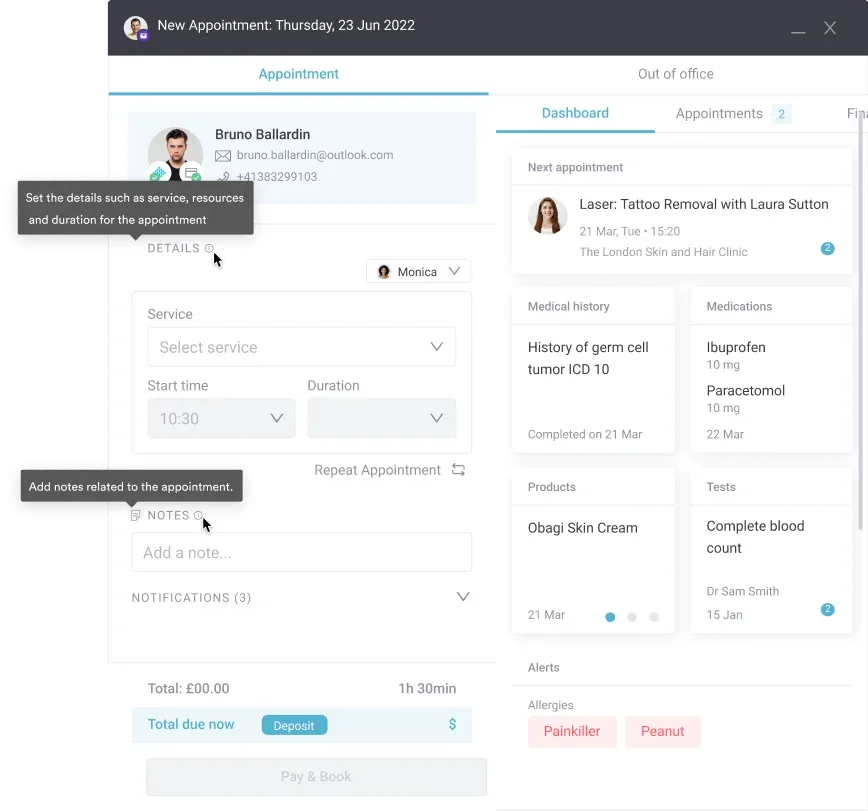

Pabau handles scheduling, digital intake forms, HIPAA-compliant records, automated reminders, and billing workflows so you can focus on patients rather than administration.

One strong referral source is enough to launch. According to APTA Pelvic Health, a single gynecologic surgeon who believes in pelvic PT can generate sufficient patient volume to sustain a solo practice in its first year. The goal early on is not a broad network but a reliable one.
Your highest-value referral relationships are with providers who regularly see patients with pelvic floor conditions:
Introduce yourself in person when possible. Drop off a brief one-page overview of the conditions you treat and the patients most likely to benefit from a referral. Follow up quarterly. Most referral relationships take 3 to 6 months to generate consistent volume, so start outreach before you open your schedule, not after. A ready-made postpartum recovery plan is a practical handout for midwives and new-parent groups.
Social media and educational content accelerate growth in pelvic health specifically because public awareness of pelvic floor therapy is still low. Instagram and YouTube are effective platforms for short educational content about leakage, prolapse, pelvic pain, and postpartum recovery. Patients who find you through content often arrive with higher trust and treatment readiness than cold referrals. Community workshops and local networking groups are another proven way to grow a pelvic floor PT business, and they work just as well for a pelvic floor occupational therapist: presenting to new-parent groups, fitness studios, or midwife practices puts you in front of potential patients who experience your approach firsthand before they book. For a structured approach to physiotherapy clinic management software that scales with your practice as you grow, the right system handles patient communications, recall campaigns, and outcome tracking without adding administrative headcount. Fertility clinic software keeps cycle timing, results and appointments in one record where the sequence matters. Fertility clinic software keeps cycle timing, results and appointments in one record where the sequence matters.
Starting a pelvic health practice is operationally achievable for any licensed PT or OT with the right continuing education. In most communities, demand for qualified pelvic floor therapists consistently outpaces supply, and patients are willing to pay out of pocket for access to specialized care.
The operational side is where new practices run into trouble: scheduling 60 to 90-minute sessions, managing sensitive patient records under HIPAA, and building referral relationships while seeing patients full time. Pabau’s practice management platform handles scheduling, intake forms, automated reminders, and compliant clinical record-keeping in one place, so the systems are running from your first patient. See how Pabau supports pelvic health practices by visiting pabau.com/industry/pelvic-health-software/.

Deciding how to price pelvic floor therapy? Pelvic floor therapy pricing guide weighs packages against per-session pricing and why patients drop out of care early.
Considering a telehealth component for your pelvic practice? Pabau’s telehealth software supports HIPAA-compliant video consultations for intake sessions, follow-ups, and home exercise program reviews.
Need documentation for a urinary retention case? Nursing care plan for urinary retention gives you the NANDA wording, interventions, and a free care plan PDF.
A pelvic health practice requires a current PT or OT state license, pelvic floor continuing education (APTA Pelvic Health Level 1 or Herman & Wallace coursework), an LLC business structure, professional liability insurance, a private treatment room, and HIPAA-compliant practice management software. You do not need board certification (WCS) to start, though it strengthens clinical credibility over time.
A cash-based solo practice subleasing a single room can realistically launch for under $10,000, covering CE courses, liability insurance, basic supplies, and practice management software. An insurance-based clinic with multiple treatment rooms and credentialing typically requires $100,000 or more. These are community-derived estimates and will vary significantly by location and business model.
No board certification is required to practice pelvic floor therapy. You need a PT or OT license plus post-licensure continuing education. The APTA Pelvic and Women’s Health Clinical Specialist (PWCS) certification is optional but demonstrates advanced competency. More importantly, completing the hands-on lab component of APTA Pelvic Health Level 1 (or equivalent Herman & Wallace coursework) is required before performing internal pelvic examinations.
Yes. OTs can specialize in pelvic health with appropriate CE, including programs from Functional Pelvis and OT Potential specifically designed for OT scope of practice. The scope of internal pelvic evaluations for OTs varies by state, so verify your state OT licensing board’s position on internal examinations before offering that service.
Start with one high-value provider: an OB-GYN, urogynecologist, or gynecologic surgeon who regularly sees patients with pelvic floor conditions. Introduce yourself in person, leave a brief one-page referral guide, and follow up quarterly. One consistent referral relationship is enough to sustain a solo cash-based practice in year one. Referral volume typically builds over 3 to 6 months.
Employed pelvic floor physical therapists earn broadly in line with US physical therapist pay, generally around $85,000 to $100,000 a year. Practice-owner income depends heavily on the billing model: a cash-based practice charging $150 to $250 per session at 10 to 15 visits a week can clear employed-level pay once overhead is covered, while insurance-based owners net less per visit and rely on higher volume to reach the same take-home.
Plan on several months to a year on top of your PT or OT license. After licensure, most clinicians finish an introductory course such as APTA Pelvic Health Level 1 or the equivalent Herman & Wallace series before treating patients, then build toward optional board certification. The APTA Pelvic and Women’s Health Clinical Specialist (PWCS) credential requires 2,000 clinical hours in the specialty, so completing full pelvic floor certification courses and logging those hours usually spans a year or more of focused practice.