Professional development record
A professional development record is a structured log of a healthcare practition...

8
Last Updated: Oct 8, 2026

HIPAA training is legally required under 45 CFR 164.530(b) and 45 CFR 164.308(a)(5). It applies to every workforce member who can access protected health information (PHI).
New hires must be trained before they touch PHI, and annual refreshers are the established standard. No law sets a specific frequency.
The compliance checklist below pairs each obligation with its cadence, the evidence to keep, and who signs it off.
Training records must be kept for six years under 45 CFR 164.530(j). Penalties for untrained staff run from $145 to $2,190,294 per violation.
Practice management software like Pabau tracks training completion, stores certificates, and flags overdue renewals, so audit prep stops being a manual scramble.
HIPAA training for employees comes down to three fixed obligations. Train every workforce member who can reach protected health information (PHI). Retrain them whenever a policy or a job role changes. Then keep the evidence for six years.
The law leaves everything else open. There is no approved vendor, no minimum course length, and no federal certificate. That freedom is why HIPAA compliance for employees so often shrinks to one video a year that nobody records.
Since April 2003, the HHS Office for Civil Rights has received 374,321 HIPAA complaints and resolved 370,578 of them, or 99%. Workforce training failures turn up in those enforcement records more consistently than almost any other compliance failure.
This guide walks through who must be trained, what the sessions have to cover, how often to run them, and what to file afterward. Two tables carry the practical detail. One is a compliance checklist you can work down, the other sets out the current penalty ranges.
HIPAA training for employees covers three federal rules, with your own policies sitting underneath them. The Privacy Rule governs how PHI may be used and shared. The Security Rule covers electronic PHI. The Breach Notification Rule sets out what happens when either one fails.
Three terms carry most of the weight in any HIPAA policy, and they are worth pinning down before the detail starts.
Two layers make up a working program. HIPAA basics training gives everyone the same grounding in PHI, patient rights, and reporting. Role-specific content then sits on top of it.
The Security Rule also asks for ongoing security awareness rather than one annual sitting. Short HIPAA awareness prompts through the year count toward that requirement, so they are not an optional extra.
Both obligations are binding. The HIPAA Privacy Rule (45 CFR 164.530(b)) requires covered entities to train all workforce members on their PHI policies and procedures. The HIPAA Security Rule (45 CFR 164.308(a)(5)) separately mandates a security awareness program for everyone handling electronic PHI.
Business associates carry the same obligation. Under the HITECH Act, they must train their own workforce on the HIPAA policies that apply to their role. A billing vendor, IT support firm, or transcription service that touches your PHI needs a working training program. Without one, your practice inherits compliance exposure through the relationship.
Every person in your workforce who could access PHI must complete HIPAA training, whether or not they are on payroll. HIPAA training for covered entities reaches everyone the entity controls, which is a wider net than most staffing charts show.
HIPAA training for healthcare employees tends to get pictured as a clinical exercise. In most practices, the front desk and the billing team handle PHI more often than anyone in a treatment room.
If you are unsure whether a role qualifies, default to inclusion. The same logic applies to med spas and HIPAA, where the treatment is cosmetic but the records are still medical.
The edge cases are where training scope usually breaks down. Each of these three roles can reach PHI without anyone planning it:
None of those three works in a treatment room, and all three need training scoped to what they can actually see.
HIPAA training requirements for employees are short. Train everyone on your own policies, cover new hires before they reach PHI, retrain when things change, and document it.
What the law does not do is prescribe a curriculum, a minimum duration, or an approved vendor. That flexibility is deliberate. Regulators care about the outcome, which is a workforce that understands the policies attached to their own jobs.
The regulatory text at 45 CFR 164.530(b) requires training on the covered entity’s own policies, not generic HIPAA content alone.
Plenty of practices buy an off-the-shelf course and treat it as the whole program. Guides to compliance for medical offices show why that falls short. HIPAA compliance training for employees has to name your intake workflow, your EHR access policy, and your internal reporting chain.
Four requirements apply to every practice:
HIPAA training must cover the Privacy Rule, the Security Rule, and the Breach Notification Rule, each mapped to your own policies. PHI training runs underneath all three, because staff cannot protect information they cannot recognize.
Practices often run confidentiality training for staff as a separate exercise. In a healthcare setting it covers the same ground, so folding it into the HIPAA session saves a duplicate meeting.
Privacy training for employees starts with how PHI may be used and disclosed. Staff learn what counts as PHI and which disclosures need patient authorization. They also learn which disclosures are permitted without it, covering treatment, payment, and operations. Patient rights belong here too, including access, amendment, and restriction requests.
A staff member who confirms a patient’s appointment to a family member without checking authorization has committed a Privacy Rule violation. Social media is the other common trap, and HIPAA and social media covers the posts that get practices in trouble.
Security Rule training focuses on electronic PHI. Topics include password hygiene, workstation security, phishing recognition, and minimum necessary access. Mobile devices that reach the EHR need their own segment. The full list of Security Rule requirements shows how deep this goes for IT staff.
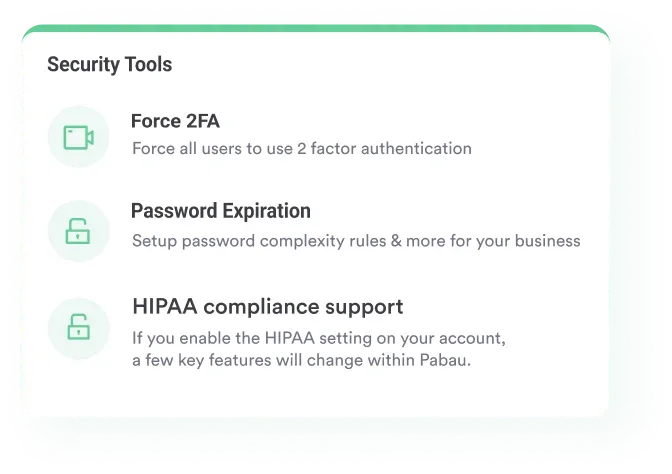
Clinical staff need only the basics here. Settings that enforce good habits matter as much as the session itself, because a password rule holds when memory does not. Our data protection best practices cover the policies that keep those habits in place.
Breach Notification Rule training teaches staff to spot potential breaches and report them through the right internal channel. Most practices name a privacy officer or a single point of contact. Staff need to know who that is, what counts as a reportable breach, and that good-faith reporting carries no retaliation.
Slow internal discovery is a consistent factor in larger OCR penalties, and untrained staff are usually the reason. If an incident does happen, the steps for when you violate HIPAA set out the reporting clock.
Once a year, plus a retraining round whenever something material changes. HIPAA sets no interval of its own, but annual training is the de facto standard, and OCR investigators treat it as the baseline.
A practice that cannot show annual HIPAA refresher training in its records faces an uphill conversation during any investigation. Practices that already run an annual safety cycle, such as an OSHA emergency action plan review, can fold the refresher into the same month.
Three events trigger retraining regardless of when the last session ran:
Between sessions, short HIPAA reminders for staff keep the material alive. A two-minute note on phishing, or on discussing patients in the hallway, meets the Security Rule’s security reminder specification and costs nothing to send.
For practices managing multiple locations, scheduling consistency is the main operational problem. Centralizing training records and setting reminders before renewal dates stops one site running current while another sits six months overdue.
Building renewal dates into the practice schedule keeps them visible to whoever builds staffing each month.
HIPAA training for new employees has to be finished before they access PHI, or within a reasonable time after they join. HHS has never defined “reasonable time” in hours or days, which leaves practices to interpret it. Most compliance attorneys read it as before the employee’s first independent look at patient records.
In practice that means day one, or at the latest before their first solo shift. A workable onboarding sequence looks like this:
Structuring it this way makes training completion a hard dependency for system access. A new front desk coordinator cannot log into the scheduling system until training is confirmed. That single decision removes the risk of a new hire reaching PHI before they know the rules.
A medical assistant and a billing coder both need HIPAA training, but the scenarios that matter to each are different. Role-based training matches content to the PHI each job touches. It also keeps sessions short enough that people pay attention.
Staff management tools that hold role assignments alongside training status let you send the right curriculum to the right person. Here is how training depth usually maps to role category:
Practices in higher-sensitivity specialties should add a layer on special category PHI, which carries stricter disclosure limits. That applies to behavioral health, fertility practices, and sexual health services.
The baseline HIPAA obligation stays constant across specialties. What changes is the risk scenario, which is why a physical therapy program and a dermatology program end up teaching different examples.
Keep proof of who trained, when they trained, what the session covered, and how you know they finished. Under 45 CFR 164.530(j) those records run for six years. The clock starts at creation, or at the date the record was last in effect, whichever is later.
That window surprises managers who assumed standard employment record retention was enough. Every training record should capture:
OCR investigators request training records as a standard first step. A spreadsheet of who trained and when, backed by signed acknowledgments, satisfies the requirement. A compliance module or learning management system that stores certificates automatically does the same job with less effort. What fails is a record you cannot retrieve when an investigator asks.
The obligations, their cadence, and the evidence behind each one rarely sit in one place. The table below is the whole program on a single page.
The role-change and post-incident rows are where most programs slip. Neither event generates a training task on its own, so the trigger has to be written into your process rather than remembered.
Practices that hold a regular multidisciplinary review can add training status to the same agenda. Treating it as a standing item keeps the records current instead of turning them into a pre-audit scramble.
Audit your training records before someone else does. Once a quarter, pull a list of every active staff member and match it against your training log. Flag anyone overdue for renewal and anyone whose role changed without a retraining trigger. Check that new hires from the past 90 days have a signed acknowledgment on file. Fixing this quarterly costs an hour. Fixing it during an OCR investigation costs far more.
Every row in the checklist above needs an owner, a date, and a file someone can produce on request. Manual tracking gets harder each time you hire someone or change a policy. Practice management software like Pabau closes that loop, and its compliance management tools keep staff records beside clinical and operational data.
Sign-off is the column that usually fails. When completion is stored against the staff record, the person who signs it off can see who is current at a glance.
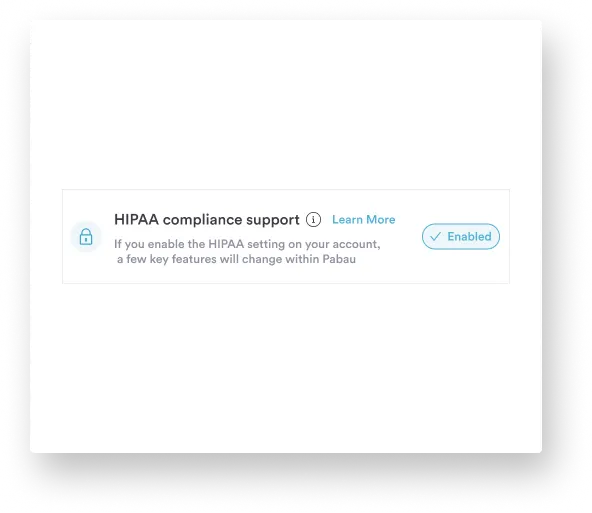
For practices already using Pabau for appointments, digital forms, and patient records, compliance tracking does not need another platform. Training completion dates, certificate uploads, and renewal reminders sit in the system your team already opens daily. When a renewal is approaching, Pabau flags it instead of waiting for someone to spot it on a spreadsheet.
Running a paperless practice is the wider goal, and staff training records are the clearest place where paper creates audit risk. Storing signed acknowledgments digitally, with timestamps and version history, gives you the trail OCR expects without the filing cabinet.
Building the whole program on a HIPAA-compliant platform also cuts the coordination work that usually lands on one practice manager. Scheduling, clinical records, and compliance tracking stop living in three places.

Pabau’s compliance management tools track staff training status, store completion certificates, and flag overdue renewals automatically. Your practice stays audit-ready without the manual chase.

Skipping HIPAA training exposes a practice to civil monetary penalties that start at $145 per violation and reach $2,190,294. OCR enforcement actions regularly cite inadequate workforce training as a primary violation or a contributing factor.
Penalties scale with culpability and with how fast the problem is corrected. The last column shows the kind of training failure that usually sits behind each tier.
Source: HHS OCR enforcement guidance. These are the inflation-adjusted amounts effective January 2026, and OCR revises them every year. Penalties are set case by case.
Financial penalties are only part of it. A documented training failure raises the odds of a corrective action plan, which puts the practice under OCR monitoring for one to three years. For a small practice, that is a heavy operational load.
OCR publishes enforcement actions on its website. The reputational damage can affect patient trust and referral relationships long after the penalty is paid.
Treat HIPAA training as a recurring workflow rather than an onboarding checkbox. It follows every new hire, every policy change, and every annual cycle, with a six-year record requirement underneath.
The practices that handle it cleanly do one thing differently. They tie training to system access and let the calendar do the chasing. That turns an audit request into a five-minute export.
If your documentation would not survive an OCR request tomorrow, work down the checklist above and fill the empty cells first. Book a demo to see how Pabau tracks staff training, stores certificates, and flags renewals in one place.

Posting about patients on social media? HIPAA and social media flags where practices most often run into trouble when posting online.
Not sure how long to keep records? Medical record retention rules explains that state law sets clinical retention at 5 to 10 years, not HIPAA’s 6-year rule.
Checking documentation before payers do? Medical chart audit explains how a systematic records review catches coding errors before payer scrutiny.
Need to share records with a third party? Authorization for release of health information gives a HIPAA-compliant consent form for sharing patient records with a third party.
Ready for an evacuation or shelter-in-place event? Emergency action plan template covers evacuation procedures, contact directories, and shelter-in-place steps under OSHA 29 CFR 1910.38.
HIPAA training for employees is structured education on handling protected health information (PHI) under federal law. Workforce members at covered entities and business associates must complete it. It is legally required under 45 CFR 164.530(b) and 45 CFR 164.308(a)(5), covering the Privacy, Security, and Breach Notification Rules.
All workforce members who have any possibility of accessing PHI must receive HIPAA training. This includes clinical staff, administrative and billing staff, IT personnel, contractors, volunteers, and students. Business associates must also train their own workforce on applicable HIPAA policies.
Annual HIPAA training is the industry standard and OCR’s baseline expectation, even though no specific frequency is mandated by law. Retraining is also required whenever policies change, a staff member’s role changes, or after a breach or security incident occurs.
Yes. HIPAA sets no required format, so online modules, live sessions, and recorded webinars all qualify. What matters is that the content reflects your own policies and that you can prove completion. Online modules make the proof easier, because most log the date and the score automatically.
Failure to train workforce members can bring OCR civil monetary penalties. The inflation-adjusted tiers effective January 2026 run from $145 to $2,190,294 per violation, depending on culpability. Annual caps range from $36,505 to $2,190,294. Practices may also face a corrective action plan with OCR monitoring for one to three years.
No federal body accredits or certifies HIPAA training programs. HIPAA does not require training from an approved vendor or accredited provider. What matters is that training covers your organization’s specific policies and procedures relevant to each workforce member’s job function.
Training records must be kept for six years under 45 CFR 164.530(j). The clock starts at creation or at the date the record was last in effect, whichever is later. Each record should show the trainee’s name and role, the completion date, a content description, and evidence such as a signed acknowledgment.