HIPAA compliant texting: What you can send patients & how to communicate securely
HIPAA compliant texting is possible when a text holds no protected health inform...

Last Updated: Oct 16, 2026
A termination note is the clinical record that closes a patient’s treatment.
It documents why care ended, what the treatment achieved, and where the patient goes next. Written at or just after the final contact, it gives the next provider, an insurer, or a licensing board a signed account of the ending.
It is shorter than a discharge summary, which reviews the whole course of care. Below you’ll find a free template, the fields to complete, and three worked examples. We also cover retention, where one rule is widely misquoted: in the US, state law sets how long you keep the note, not HIPAA.
A three-page form covering patient and clinician details, treatment duration, modalities used, and ten tick-box reasons for termination. It also has space for the treatment summary, patient progress, discharge plan and referrals, contact attempts, and a signed clinician attestation.
Download template
A termination note documents the formal end of a treatment relationship and is expected under professional ethics codes and record-keeping standards.
Core components include the reason for termination, a treatment summary, goal progress, referrals, and the date of final contact.
A termination note is a short closing record, while a discharge summary is a full clinical review of the whole course of care.
In the US, state law sets how long you keep the note, since HIPAA sets no retention period for clinical records.
Pabau, the practice management platform we build, stores signed termination notes in the patient’s record alongside their session history.
A termination note is a clinical documentation form that records the formal ending of care. It shows that the relationship has concluded, the final contact has taken place, and any transition plan is on file.
It is also different from a closing letter. The termination note is an internal clinical record kept in the patient’s file. A therapy termination letter is the correspondence you send the patient, and it may accompany the note.
You write a termination note whenever a treatment relationship formally ends. The trigger depends on the clinical context and on whether the ending is planned or involuntary.
A complete termination note records the facts of the ending and the plan for any ongoing care. The treatment summary and goal progress fields are only as specific as the case notes written during care. The fields below match the downloadable template.
Practitioners often treat a termination note and a discharge summary as the same document. Both close care, but they serve different purposes and audiences.
Many practices complete the termination note at the final session. They prepare a full discharge summary later, if the patient requests their record or an insurer asks for it.
A defensible termination note uses neutral language and specific facts. Follow these five steps.
Finish with the attestation and your signature, then store the note in the patient’s clinical record. Use encrypted storage that meets HIPAA’s security requirements.
Different endings call for a different emphasis in the note. Here are three worked examples.
Reason for termination: Patient and clinician agreed the treatment goals have been achieved. Final session September 15, 2026.
Treatment summary: 16 weekly individual psychotherapy sessions for major depressive disorder, May to September 2026.
Goal progress: (1) Increase mood stability: achieved, with the PHQ-9 score reduced from 24 (severe) to 6 (mild). (2) Resume social engagement: achieved, as the patient attends weekly community group meetings. (3) Return to part-time work: achieved, with a 20-hour-a-week role started in August.
Outstanding concerns: None. The patient shows stable mood, good coping strategies, and a social support network.
Referral: Discharged without ongoing referral. Crisis contact details provided (988 Suicide and Crisis Lifeline), and the patient was advised to return if symptoms re-emerge.
Reason for termination: Non-attendance policy enforced. The patient missed five consecutive appointments (August 1, 8, 15, 22 and 29, 2026) without canceling. Voicemail left September 1 and certified letter sent September 2, 2026.
Treatment summary: Four individual psychotherapy sessions for anxiety and work stress in July 2026. The treatment plan called for 12–16 weekly sessions.
Goal progress: Limited. The patient reported reduced anxiety after a medication adjustment. Long-term progress could not be assessed because treatment was interrupted.
Outstanding concerns: Active anxiety symptoms at the last attended session (July 29, 2026), with a prescriber review recommended. Current status unknown.
Referral: Referred to mental health services with prescriber support. The patient was invited to contact the practice to re-engage or to seek another provider.
The numbers in this example come from the notes written at each visit. A PT SOAP note template records range of motion in degrees and muscle strength grades, so the termination note has figures to quote. The opening examination is captured on an orthopedic exam template, which covers gait, range of motion, and special tests by region.
Reason for termination: Functional goals achieved, and the patient is discharged to a home exercise program. Final session September 20, 2026.
Treatment summary: 12 physical therapy sessions for rehabilitation after ACL reconstruction, June to September 2026. Treatment focused on range of motion, strength, proprioception, and return-to-sport readiness.
Goal progress: (1) Full knee range of motion: achieved (0–130° flexion). (2) Leg press at 80% of the uninjured side: achieved. (3) Return to recreational running: achieved, with a pain-free 3K at week 10. (4) Single-leg hop test above 90% limb symmetry: achieved (94%).
Outstanding concerns: None. The patient shows an appropriate healing trajectory and good adherence to the home program.
Referral and ongoing plan: Home exercise program provided and filed in the record. The patient should contact the practice if pain or swelling increases or progress plateaus. No ongoing therapy required.
A poorly written termination note exposes the clinician to liability and regulatory risk. Watch for these errors.
A termination note is a legal clinical document, so retention and access rules apply to it like any other record.
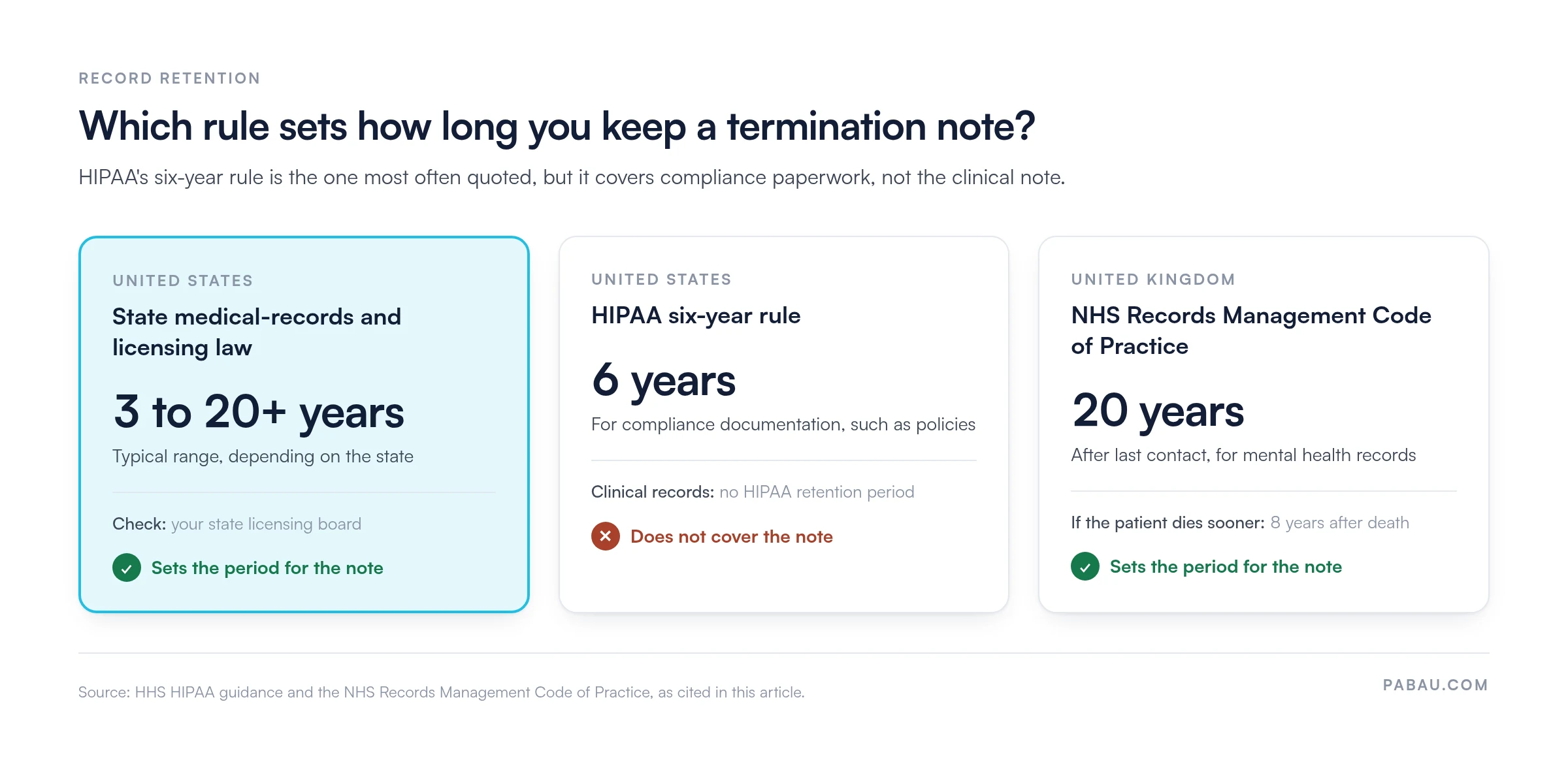
US record retention: HIPAA sets no retention period for patient records. Its six-year rule covers compliance documentation, such as policies, not clinical notes. State medical-records and licensing laws set the period, which ranges from about 3 to more than 20 years. Check your state licensing board for the rule that applies to you.
UK requirements: The NHS Records Management Code of Practice requires mental health records to be kept for 20 years after the last contact. If the patient dies sooner, the period is 8 years after death. Under UK GDPR, the Information Commissioner’s Office (ICO) also expects you to keep data no longer than you need it.
The comparison below sets the three retention rules side by side.
Secure storage and access: Store termination notes in an encrypted system, with access limited to the staff who need them. AI-assisted clinical notes and standard templates keep documentation consistent across clinicians.
Patient access: Under HIPAA’s right of access, patients can request a copy of their termination note, and you generally have 30 days to provide it. Write every note on the assumption that the patient will read it.
Many practices still close a case on paper or in a Word file, then scan the signed note into a folder. The note ends up detached from the appointment history it summarizes.
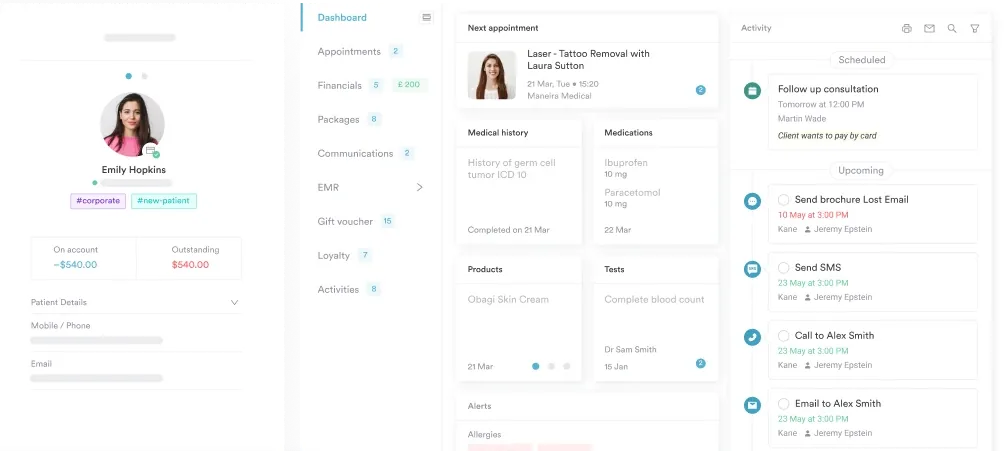
Pabau keeps the termination note inside the patient’s record instead, as one step in connected therapy practice management. You can rebuild this template as a digital form, mark the fields you never want skipped as required, and sign it on screen.
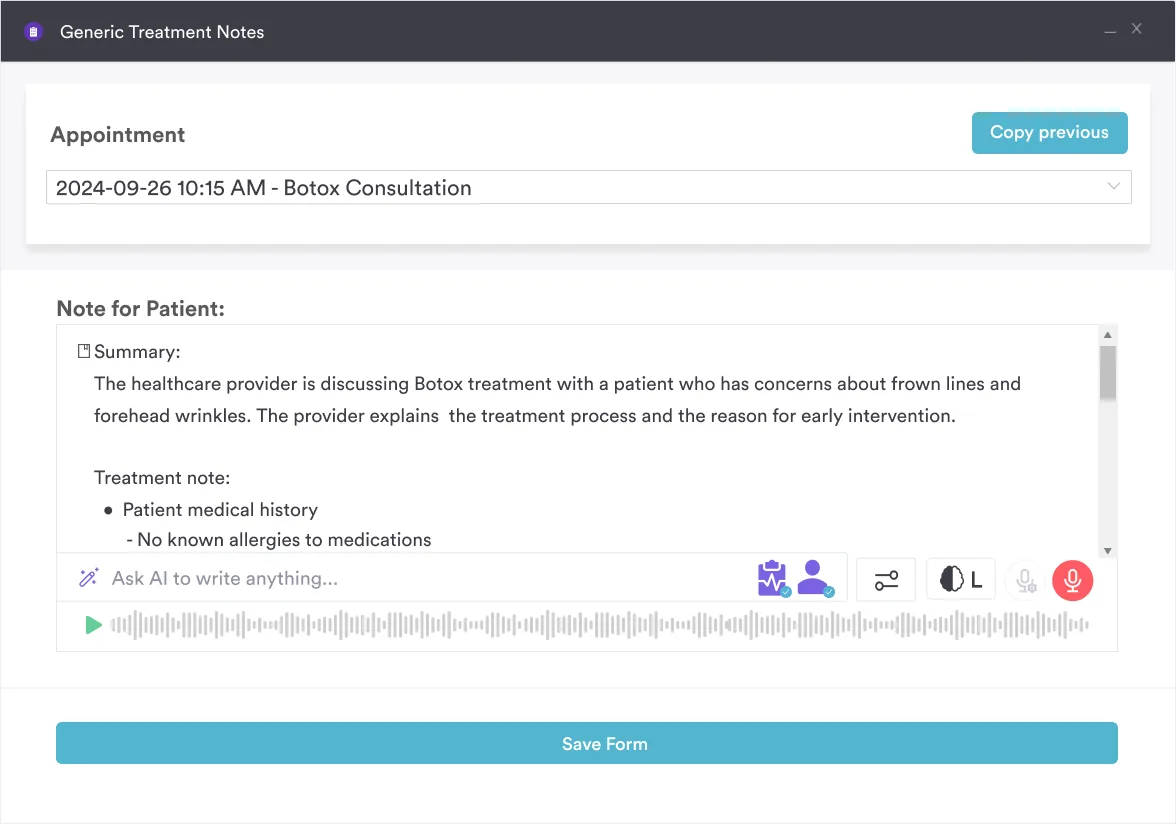
Pabau Scribe turns the final session into a structured note, so the treatment summary starts as a draft. When a patient asks for a copy, the signed note is already filed with the rest of their record.

Pabau keeps termination notes, signed forms, and session history in one patient record. Your team closes cases faster, and every file is ready for an audit or a records request.

Write the termination note within a day of the final contact, while the details are still fresh. A note drafted weeks later is harder to defend if a board or an insurer asks questions.
The endings you didn’t plan carry the most risk. Record every contact attempt, the referral you offered, and any safety concern, even when the patient never replies.
Then check your state’s retention rule, or the NHS code in the UK, and file the note where it can be found for that long. Book a demo to see how Pabau keeps termination notes signed, stored, and ready for review.

Need to tell the patient in writing? Therapy termination letter shows how to word the letter that accompanies your termination note.
Working through the final sessions together? Therapy termination worksheet gives patients a structured way to review progress before care ends.
Writing progress notes before the final session? GIRP note template structures each session around goals, so goal progress is easy to summarize at termination.
Prefer the SOAP format for session notes? SOAP note for mental health template keeps each session in a consistent shape your termination note can draw on.
Looking to streamline your clinical workflows? Mental health EMR keeps termination notes, forms, and session history in one secure record.
A termination note is a brief clinical record documenting the formal end of therapy. It states why care is ending, summarizes the treatment, tracks goal progress, and records any referrals. It is the legal record of closure for compliance and continuity of care.
Write it in five steps. State the reason for ending care in neutral language, then summarize the treatment and its duration. Record each goal as met, partially met, or not met. Note any outstanding concerns, then give the referral or explain why none is needed. Always include the final contact date.
Include the date of final contact, the reason for termination, a summary of treatment, and progress toward goals. Add any outstanding clinical concerns, referral information, and how the ending was communicated. Close with the clinician’s attestation, signature, and date.
A termination note is a brief closing record, usually one to two pages. A discharge summary is a full clinical review of the whole course of treatment, often three to five pages. The termination note is written at the final contact, and the discharge summary follows when it is requested.
In the US, state medical-records and licensing laws set the period, from about 3 to more than 20 years. HIPAA sets no retention period for clinical records. In the UK, the NHS Records Management Code of Practice sets 20 years after last contact for mental health records. If the patient dies sooner, it is 8 years after death.
Ethics codes expect more than a silent ending. APA Standard 10.10 calls for pre-termination counseling and suggested alternative providers where practicable. The NASW Code requires steps to minimize harm to the patient. Written notice with a referral is the standard way to show you met those duties.