Exilis patient treatment record: Free PDF for RF sessions
An Exilis patient treatment record is the session log for BTL’s radiofrequ...

1
Last Updated: Oct 23, 2026

A skin analysis form is a structured clinical assessment tool that documents skin type, concerns, medical history, and treatment goals during client consultations.
Fitzpatrick and Glogau scales are industry-standard frameworks for classifying skin tone and photoaging severity, enabling evidence-based treatment recommendations.
GDPR and HIPAA require explicit informed consent before collecting health and skin condition data in digital or paper forms.
Digital skin analysis forms in practice management software like Pabau automate data capture, reduce documentation errors, and remove paper-storage compliance risks.
Download the free skin analysis form (PDF) below — a printable, customizable esthetician consultation template you can use on paper or digitize inside Pabau.
A ready-to-use assessment form covering client demographics, skin type classification, skin concerns, medical history, current treatments, lifestyle factors, and personalized treatment recommendations using clinical assessment scales.
Download templateA skin analysis form, also called a skin assessment form, is a structured clinical consultation document that captures comprehensive information about a client’s skin condition, type, concerns, and treatment history. Estheticians, dermatologists, and aesthetic practitioners use it to run systematic skin assessments during client consultations.
The form documents five core areas: client demographics, skin type classification, specific skin concerns, medical history and contraindications, and previous treatments or skincare routines. This structured data enables practitioners to develop evidence-based, personalized treatment recommendations.
Skin condition data may count as protected health information under HIPAA if a US practice qualifies as a covered entity, or as special-category health data under UK GDPR. Both frameworks expect informed consent before you collect it.
HIPAA only binds covered entities and their business associates, so many spas and independent estheticians fall outside its scope unless they work with a covered medical practice. Either way, a well-designed form includes consent declarations so clients understand how their data is stored, used, and protected.
A typical skin analysis form guides practitioners through five structured steps during a client consultation:
Practitioners fill the form during the consultation on a tablet or desktop, and data saves instantly to the client record. Paper forms require manual data entry, increasing documentation time and introducing transcription mistakes.

How leading platforms handle clinical notes varies widely; our roundup of top medical spa software compares them directly.

See how Pabau’s digital forms replace paper consultations and connect assessments directly to treatment planning and client records.

Skin analysis forms are essential for any practice or practitioner offering aesthetic treatments or skincare advice. This includes:
Any medical spa or aesthetic practice that wants to replace inconsistent handwritten notes, cut consultation time, and improve treatment compliance should adopt a standardized skin analysis form.
Clinical consistency: A structured form ensures every client receives the same systematic assessment. Without one, practitioners rely on memory and subjective notes. This leads to missed concerns and inconsistent recommendations across team members.
Informed consent and legal protection: A well-designed form with clear consent declarations protects the practice. This reduces liability if adverse reactions occur.
Better treatment outcomes: Documented medical history and contraindications prevent unsafe recommendations. A client on isotretinoin cannot safely receive certain treatments, both during use and for the standard period afterward. A proper skin analysis form flags this before proceeding.
Time efficiency: A structured assessment helps practitioners complete consultations faster and more confidently.
Data security and compliance: Paper forms create storage and disposal compliance risks. Digital forms encrypt data automatically, restrict access by role, and generate audit trails. These features are essential for GDPR and HIPAA compliance.
Flag contraindications explicitly on your skin analysis form. Create a separate section listing absolute contraindications (recent surgery, active infection, pregnancy-related skin changes) and relative contraindications requiring practitioner judgment. This prevents liability claims from clients with overlooked medical restrictions.
Two clinical frameworks standardize skin assessment across practitioners. The Fitzpatrick Scale classifies skin tone into six categories (Type I–VI) based on melanin content and sun sensitivity. It guides choices for laser treatments, chemical peels, and sun protection advice. A client with Fitzpatrick Type I (fair, always burns) needs different laser parameters than Type VI (deeply pigmented, never burns) to prevent post-inflammatory hyperpigmentation.
The Glogau Scale grades photoaging severity (I–IV) based on wrinkles, dyspigmentation, and skin texture changes. Grade I (minimal aging) may need only preventive skincare. Grade IV (severe aging, often with actinic keratoses and a history of skin cancers) warrants a dermatologist referral. Both scales provide objective benchmarks and help clients understand why certain procedures are recommended.
However, practitioner judgment and direct visual assessment remain essential for accurate classification.
Paper forms are familiar and require no technology setup. They also create operational and compliance vulnerabilities:
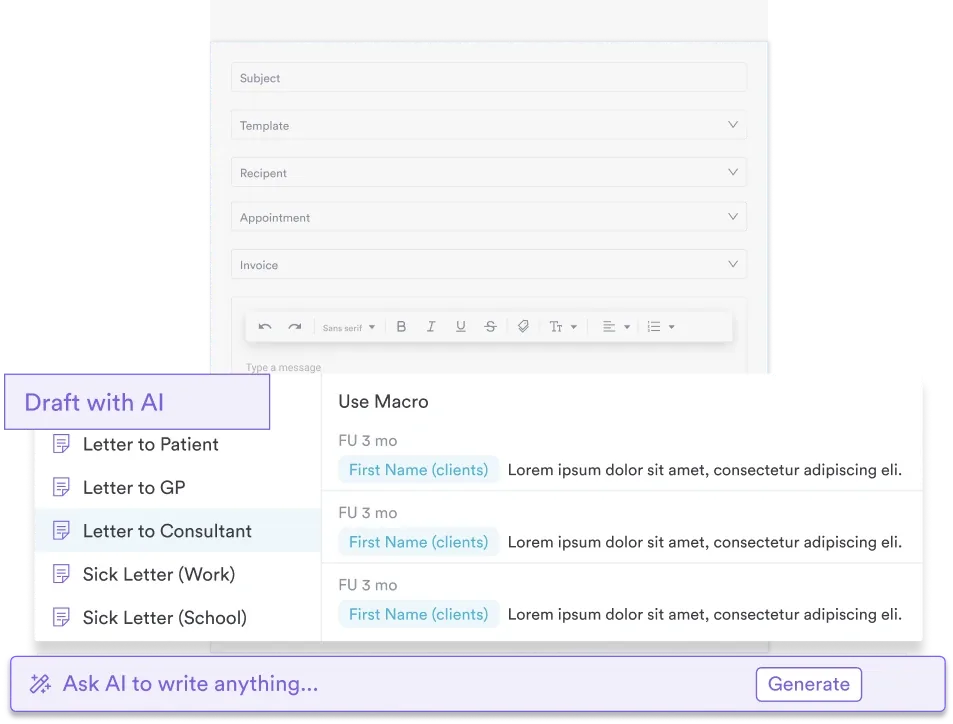
Digital forms in practice management software like Pabau remove these risks. Practitioners complete each form during the consultation on a tablet or desktop, and the data flows straight into the client record with no transcription.
The system enforces required fields and checks that every consent box is ticked. It also keeps automatic backups, role-based access controls, and audit trails, so you can prove compliance during a regulatory inspection.
A standardized skin analysis form gives every client the same systematic assessment, documents consent, and steers safer treatment decisions. Download the free template above to standardize your skin assessment process, or digitize it fully with Pabau’s connected forms and client records.

Want to automate skin analysis data entry? Skin clinic management software integrates consultation forms with client records and treatment planning.
Need a consultation form template for other treatments? Facial consultation form templates adapt the skin analysis approach to specific procedures like Botox or dermal fillers.
Treating patients on isotretinoin? Accutane aftercare instructions covers skincare, sun protection, contraception, and warning signs for patients finishing isotretinoin treatment.
A skin analysis form is a structured clinical assessment document used by estheticians and dermatologists to document client skin type, concerns, medical history, and personalized treatment recommendations during consultations. It typically includes Fitzpatrick Scale skin tone classification, Glogau photoaging grading, and contraindication screening.
A comprehensive form includes client demographics, skin type and condition assessment, specific skin concerns, relevant medical history and contraindications, current medications and skincare routine, previous aesthetic treatments, and personalized treatment recommendations with documented rationale.
Paper forms can comply if they include explicit informed consent and are stored securely. Digital forms in practice management software are more reliable because they enforce consent workflows, auto-encrypt data, and generate audit trails proving compliance during regulatory inspections.
Yes. The template above provides a standard structure, but you can add specialty-specific sections (e.g. laser treatment contraindications, chemical peel assessment) or expand questions based on your treatment menu and common client concerns.
Digital forms are preferable because they eliminate handwriting errors, automatically save data to client records, enforce required fields, and simplify GDPR/HIPAA compliance with automatic encryption and audit trails. Paper forms work for small practices with minimal regulatory burden, but scale poorly.