Anja Dodevska
Exilis patient treatment record: Free PDF for RF sessions
An Exilis patient treatment record is the session log for BTL’s radiofrequ...

3
Last Updated: Oct 23, 2026
Free PDF 2 pages, print-ready Clinician-reviewed
More than 86 million US adults have borderline-high or high total cholesterol, meaning a reading at or above 200 mg/dL. Around 25 million sit at 240 mg/dL or higher, according to CDC figures. Diet is still the first change practitioners ask for in metabolic health programs, before medication.
A well-organized low cholesterol diet food list turns lipid guidelines into something patients can act on at the grocery store. This guide covers the foods that lower LDL, the foods to cut, and snacks that hold up between meals. It also covers the handout workflow, which means printing the list, sending it, and checking adherence at the recheck visit.
A printable one-page list that groups foods to eat and foods to limit by category, with portion targets for oats, plant sterols, and fatty fish. It also carries a seven-day meal pattern patients can follow straight from the page.
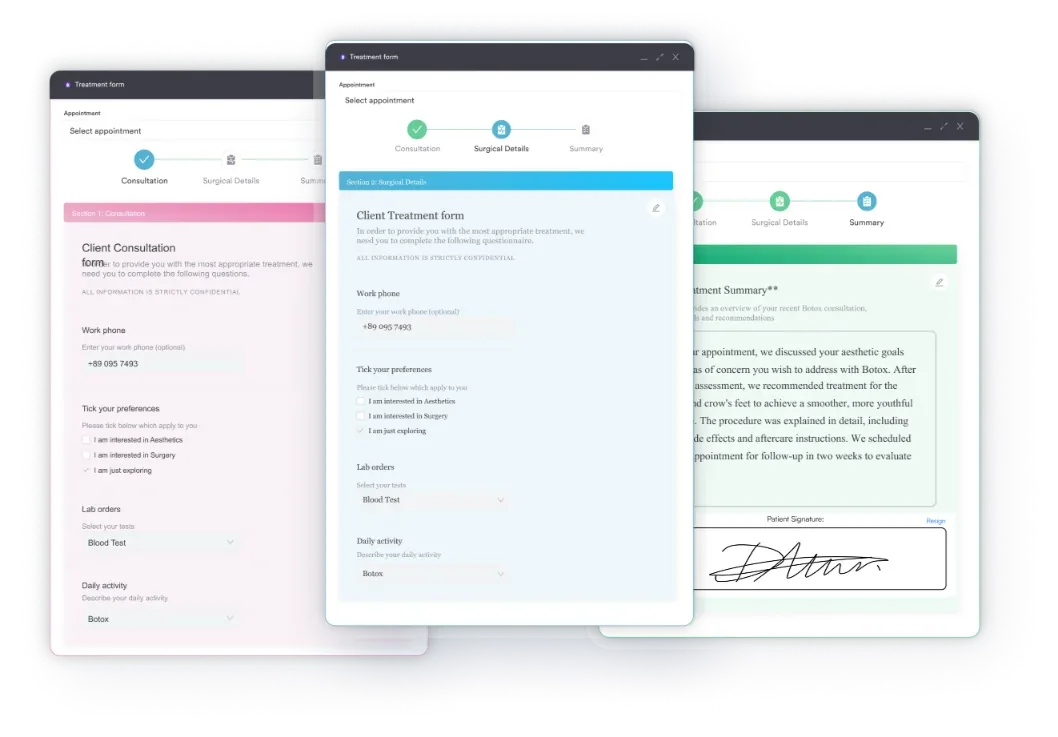
Upload this PDF, or any form you already use, and Pabau's AI Form rebuilds it with tick boxes, text fields and a signature. Attach it to the treatment once, and every patient gets it on time.
AI Form rebuilds the consent, history and aftercare forms you already use. You review each one, then publish.
Patients complete forms on their phone before they arrive, so the front desk stops retyping paper.
Every signed form is versioned and attached to the treatment record, ready when you need it.
Set how long a consent stays valid. Returning patients skip forms they have already signed.
Supports HIPAA and GDPR compliance AES-256 encryption 4.8 on G2 4.7 on Capterra Trusted by 4,000+ practices worldwide

A low cholesterol diet food list groups heart-healthy foods by category, so patients can see what to buy without reading a study.
Foods that lower LDL cholesterol work through three mechanisms: soluble fiber, unsaturated fats, and plant sterols.
Saturated fats, trans fats, and refined carbohydrates do the opposite, raising LDL and triglycerides while pushing protective HDL down.
Oats and barley need about 3 grams of beta-glucan a day, which is roughly 1.5 cups of cooked oatmeal.
Printed as a handout, the list gives patients one page to work from and gives you something to review at follow-up.
Cholesterol moves through the blood in two main forms. LDL cholesterol is the form that builds up in artery walls. HDL cholesterol carries LDL back out again. A low cholesterol diet lowers the first while protecting the second.
Dietary cholesterol from eggs and shellfish has little effect on most people. Saturated and trans fats are the ones that push LDL up. Baseline numbers frame the target.
Three mechanisms make a food cholesterol-lowering. Soluble fiber binds cholesterol in the digestive tract. Unsaturated fats replace the saturated fats that raise LDL. Plant sterols and stanols block cholesterol from being absorbed at all. Every category below uses at least one of them.
These categories carry the strongest clinical evidence for LDL reduction. Print this section if you want to send patients out with a shopping guide they can hold.
Oatmeal and oat bran are the most researched cholesterol-lowering foods. Beta-glucan, the soluble fiber in oats, blocks part of the cholesterol the gut would otherwise absorb. The FDA health claim threshold is 3 grams of beta-glucan a day, or roughly 1.5 cups of cooked oatmeal.
Barley and legumes supply soluble fiber too. Brown rice and whole wheat bread are mostly insoluble fiber, so they add bulk and general heart-health value rather than the same LDL effect. Ask patients to log a week of breakfasts on digital intake forms so you can see the starting point.
Omega-3 fats from fatty fish lower triglycerides and nudge HDL up. Olive oil and avocado bring monounsaturated fats that lower LDL without touching HDL. The benefit comes from the swap, so these fats have to replace saturated fat rather than sit on top of it. The same fats anchor the DASH diet plan.
Nuts, seeds, and legumes carry soluble fiber and unsaturated fats with no cholesterol at all. Soy foods such as tofu, edamame, and soy milk have lowered LDL in trials against other protein sources.
Swapping red meat for beans or tofu twice a week is an easy change to sustain. A high protein meal plan keeps the protein target intact while the meat comes down.
Apples, pears, berries, and citrus fruits carry pectin, a soluble fiber that pulls LDL down. Cruciferous vegetables and leafy greens add fiber and antioxidants for very few calories. Fresh or frozen produce beats canned, which often carries added sugar. A healthy eating plan helps patients spread produce across the day.
Plant sterols and stanols occur naturally in nuts, seeds, and vegetable oils, but only in small amounts. Fortified products carry them at therapeutic doses, including some spreads, orange juices, and yogurts. Clinical evidence supports 2 grams a day, which lowers LDL by roughly 6% to 15%. Below that dose the effect fades, so the label matters more than the brand.
Saturated and trans fats raise LDL and lower HDL. Refined carbohydrates raise triglycerides, which is a separate cardiovascular risk. Patients managing lipids and blood sugar together can cross-check our type 2 diabetes diet guidance, since the two lists overlap heavily.
Software for wellness practices keeps completed plans attached to each client’s journey.
Snacks are usually where a cholesterol plan comes apart, because the most convenient options are the ones loaded with saturated fat. Every choice below carries fiber, unsaturated fat, or both. A nutrition cheat sheet is worth keeping at reception for patients who ask for swaps on the way out.
A concrete week is easier to follow than a food list on its own. The table below shows how to build seven days out of the categories above. Patients who want more variety can rotate meals from a healthy meal plan or a fuller low cholesterol diet plan.
The printable PDF above condenses this guide onto a single page. These five steps put it into the consultation workflow rather than the recycling bin.
A diet built on soluble fiber, unsaturated fats, and plant sterols can lower LDL by 10% to 15%, according to the American Heart Association. Most patients see the change on a lipid panel within 3 to 6 weeks. Some move faster, and some still need a statin alongside the diet.
The mechanisms stack. A patient who combines oats, fatty fish, nuts, and olive oil can reach a 20% to 30% LDL reduction through diet alone. Lipids rarely travel alone either. Keeping diet notes beside lab results in the patient record makes the link visible to the patient.
Today the food list usually leaves the room as paper and nothing else. Nobody records which version the patient got, adherence lives in the patient’s memory, and the recheck gets booked only if someone remembers to book it.
Practice management software like Pabau keeps that trail in one place. You attach the handout to the patient record, log baseline lipids on an intake form, and set the recheck in the same few clicks. Automated reminders then chase the check-in, so you are not the one sending it.
Diet-led practices feel this most. Pabau GO, our iOS app, pulls up the last visit’s notes before the patient sits down. So the follow-up starts with what they changed, not with the same food list again.

Digital intake forms, patient portals, and automated recalls hold the handout, the baseline lipids, and the recheck in one place. Nothing depends on paper.

The food list is the easy part. What decides whether a patient’s LDL moves is whether the list survives a Tuesday grocery run, and whether anyone checks in afterward.
So print the list, mark the three or four foods that fit the patient’s actual diet, and book the recheck before they leave the room. That combination beats a longer list every time. Book a demo to see how Pabau keeps diet plans, baseline lipids, and recall reminders on one patient record.

Need a longer weight-loss meal plan? The 2 week diet plan lays out day-by-day meals and calorie targets you personalize per patient.
Need a structured baseline? Nursing nutrition assessment walks through the intake questions that show what a patient is actually eating before you hand over a food list.
Cutting sugar for a patient? The 2 week no sugar meal plan covers 14 days of meals, an eat-and-avoid list, and tips for cravings and withdrawal.
Need a full weight loss plan? 21-day weight loss plan gives daily meal guides, macronutrient breakdowns, and progress tracking charts for a three-week program.
Oats and barley, fatty fish such as salmon and mackerel, nuts and seeds, olive oil, avocados, legumes, and sterol-fortified foods. Each of these lowers LDL cholesterol through one of three routes: soluble fiber, unsaturated fat, or blocked absorption in the gut.
Most patients see a measurable LDL reduction within 3 to 6 weeks of following the diet. The size of the change usually lands between 10% and 30%. Baseline diet, genetics, and how many mechanisms the patient combines all affect the result.
Yes. The Mediterranean diet leans on olive oil, fatty fish, whole grains, nuts, and vegetables. Those are the same foods that anchor a cholesterol-lowering diet. Trials have found Mediterranean patterns cut cardiovascular events in high-risk patients by roughly 30%.
Yes. Oatmeal contains beta-glucan, a soluble fiber that binds cholesterol in the digestive tract. The FDA health claim threshold is 3 grams of beta-glucan a day, which is roughly 1.5 cups of cooked oatmeal. At that level, oats can lower LDL cholesterol by 5% to 10%. The effect is larger when oatmeal sits inside a wider diet change.
LDL cholesterol, or low-density lipoprotein, is the form that deposits in artery walls and raises heart disease risk. HDL cholesterol, or high-density lipoprotein, carries LDL back out of the arteries. The aim of the diet is to lower LDL while holding or raising HDL.
Nuts such as almonds and walnuts, fresh fruit, vegetables with hummus, whole grain toast with olive oil, and low-fat yogurt. Skip fried foods, pastries, and sugary snacks, which raise triglycerides and lower HDL cholesterol.