Grains food list: whole vs refined grains (free PDF)
A grains food list sorts grain foods into whole and refined groups, so patients ...

3
Last Updated: Oct 20, 2026
A nutrition intake form is a structured questionnaire that records a patient’s dietary intake, health history, and nutrition goals before the first consultation. Dietitians, nutritionists, and nutrition coaches use it as the starting point for a nutritional assessment.
The free three-page PDF below covers all six core areas, from weight history to the changes a patient is ready to make. Pabau, the practice management platform we build, sends the same questions as digital intake forms before the visit. The answers are ready when the session begins.
A three-page form for dietitians covering referral details, weight history and goals, diabetes history, physical activity, smoking, and alcohol. It also asks about food allergies, eating habits, common eating challenges, and the changes the patient is ready to make.
Download template
Dietitians need clinical detail, while coaches can use a lighter, goal-led version.
Diet history, medications, and supplements belong on every intake form.
The free PDF has no medication, supplement, or consent fields, so add them before clinical use.
Paper and PDF forms need manual re-entry into the patient file.
Pabau’s digital forms let patients complete intake before the appointment.
A nutrition intake form is the first document in a nutritional assessment. It records what a patient eats, what their health history looks like, and what they want to change.
The form captures what the patient reports, and the consultation adds the clinical detail and any diagnosis. Once the answers are in, a nutrition assessment form structures the practitioner’s own findings.
Professional bodies such as the Academy of Nutrition and Dietetics describe nutrition assessment as a structured process. An intake form is usually where that process starts.
Three groups of professionals use the form most:
Clinical versions tend to be longer and more structured than coaching versions. The core sections stay the same, though, so you can build one master form and adapt it.
A nutrition intake form should cover six areas: personal details, health history, dietary intake, body measurements, lifestyle factors, and nutrition goals. Each area answers a different question the practitioner needs before the first session.
The free PDF touches all six areas, though some only in part. It asks about weight history, diabetes, food allergies, eating out, activity, smoking, and alcohol. It closes with a checklist of eating challenges and the changes the patient plans for the next 30 to 60 days.
It has no lines for current medications, supplements, height, sleep, or stress, and no consent signature. The audit below shows what to add before you use it clinically.
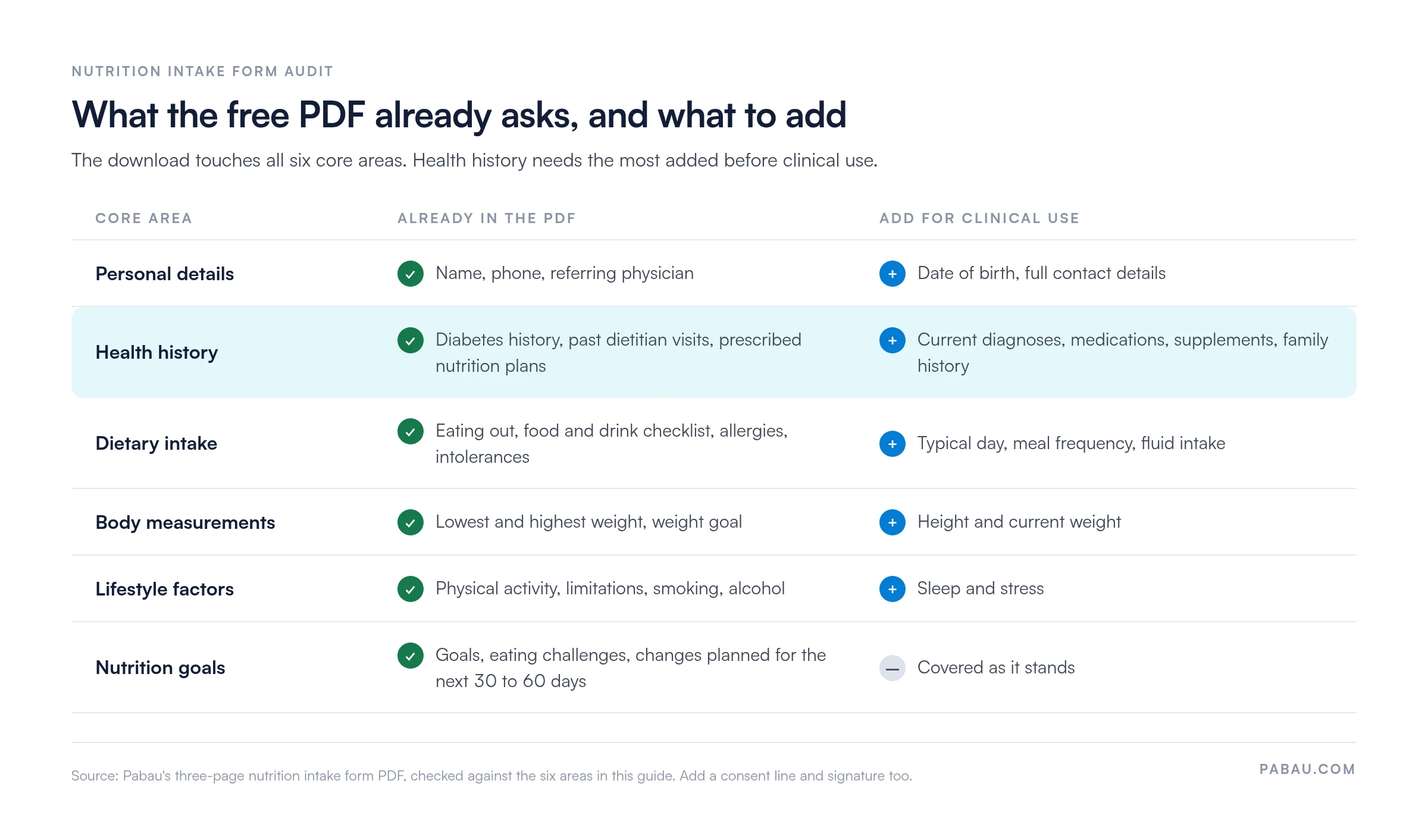
Clinical teams usually need more depth on health history than coaches do. Ask about current diagnoses, prescribed medicines, and supplements, because these shape what a safe nutrition plan looks like. Keep the medication questions factual and open, and avoid turning them into a screening tool.
Many dietitians pair the form with a few days of food records, which captures the typical day the PDF doesn’t ask about. Our food diary template gives patients a simple layout for it.
Keeping these fields current matters as much as collecting them. Update the medication and weight answers at each review, so the plan never rests on an out-of-date list.
Send the form before the first appointment, review it during the consultation, and file it with the first chart note. That order gives you time to read the answers before the patient arrives, and the five steps below follow it.
Step four turns the intake answers into decisions. Note which answers shaped each goal, so the reasoning is easy to follow at the first review. If your team writes notes after each session, Pabau Scribe, our AI scribe, can help with note writing. The intake answers then carry through to the record.
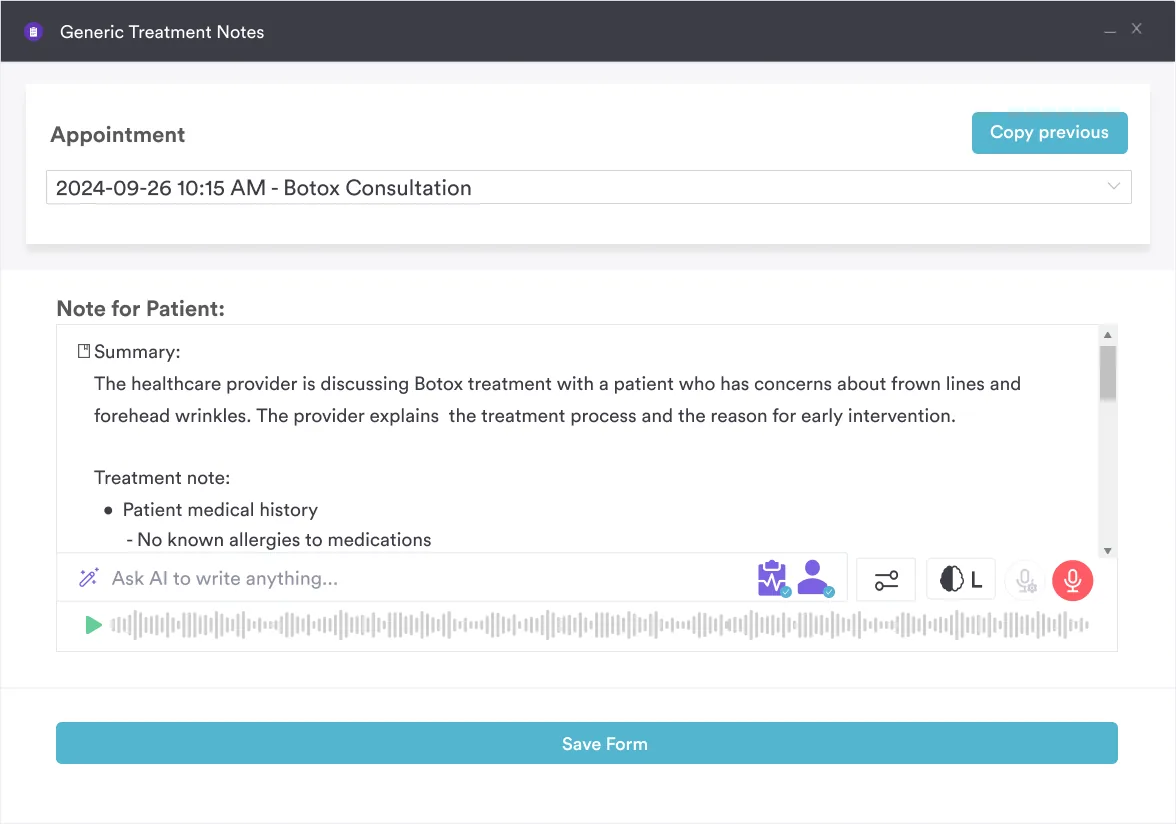
One template rarely fits every setting. The core sections stay constant, and the questions around them change by practice type.
Clinical dietitians often document care in the ADIME format: assessment, diagnosis, intervention, monitoring, and evaluation. Keep the PDF’s referral details and add a clear consent line, so the intake answers map onto each stage of that record. UK teams can also align their wording with guidance from the British Dietetic Association.
Coaches usually need less clinical detail and more on habits, motivation, and readiness to change. Keep the lifestyle questions, trim the diagnosis fields, and add a short coaching agreement at the end. The client still gets a clear picture of where they’re starting from.
Functional and integrative practices often ask more about digestion, energy, and sleep. They can add those questions and keep the core sections unchanged. Sports variants swap in training load and hydration instead.
Medical weight loss programs lean hardest on the body measurements and goals sections. The PDF’s weight history and weight goal questions give you a baseline, so add height and current weight to complete it. Practices running these programs often keep follow-up readings in weight loss clinic software, next to that intake baseline.
Intake forms hold sensitive health data, so consent and storage matter as much as the questions. US practices should check their HIPAA obligations, and UK practices must follow UK GDPR. UK dietitians are registered with the Health and Care Professions Council, which sets the standards they must meet.
Before you roll a form out, map where intake data is stored and who can access it. Compliance management software keeps those policies and checks in one place.
Pabau supports compliant workflows, but no single form guarantees compliance. Confirm your obligations with your regulator or legal advisor before patients start filling it in.
With a downloadable PDF, someone still has to email it, chase it, and type the answers into the patient file. Paper and static PDF workflows repeat that re-entry at every review.
In Pabau, the intake form goes out ahead of the appointment as one of the patient’s pre-visit steps. Answers flow straight into the patient record, alongside appointments and notes, so the practitioner reviews one profile before each session.
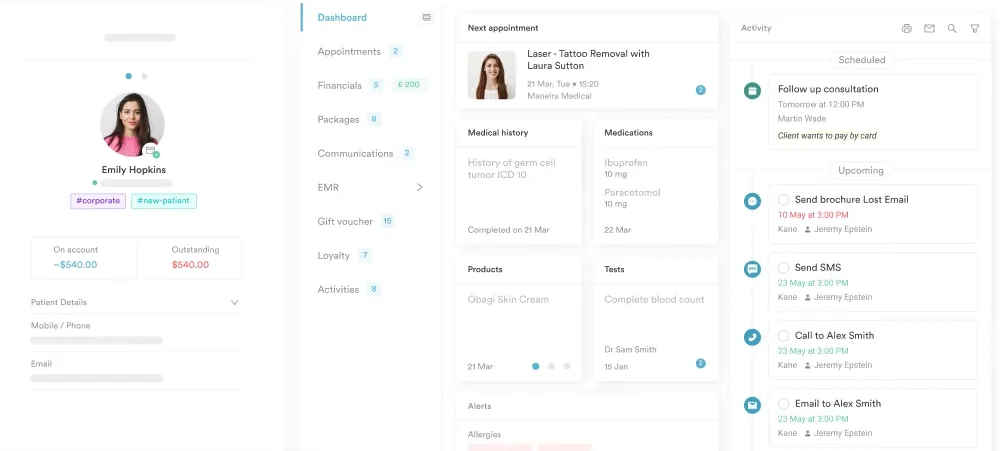
Less re-entry frees time for the consultation itself, and the first session starts with the facts already in place.

Pabau’s digital forms send intake questions before the visit and file the answers in the patient record. The first session starts with the facts in place.

Start with the free PDF, then extend it before clinical use. Add medication, supplement, height, sleep, and stress questions, plus a consent signature, and you have a form a dietitian can work from.
The bigger decision is what happens after the patient fills it in. A form filed in a folder gets read once, while answers stored in the patient record shape every review that follows.
If you’d like intake answers waiting in the record before each first session, book a demo to see how Pabau handles nutrition intake.

Assessing nutrition on the ward? Nursing nutrition assessment gives nursing teams a structured format for assessing nutrition.
Running a bariatric program? Bariatric intake form covers the intake questions weight loss surgery teams ask first.
Need a portion reference for patients? Food calorie chart lists calories by food group and portion size for meal planning.
Want a one-page handout? Nutrition cheat sheet sums up nutrition basics in a quick-reference format.
The intake form is the questionnaire, while the nutrition assessment is the full process of evaluating a patient’s nutritional status. The form feeds the assessment, which also includes the consultation, measurements, and clinical judgment.
Most nutrition assessments ask about dietary intake, health history, medications and supplements, body measurements, lifestyle factors, and goals. The exact wording depends on the setting and the patient group.
Yes. The download card in this article links to a free nutrition intake form in PDF format. Review it against your own scope of practice before using it with patients.
Start with the six areas in the table above and keep each question short. Add a consent line and a signature block, then test the form with one patient before using it across the practice.
No. An intake form collects information, but it does not replace a clinical assessment or diagnosis. Clinical decisions stay with the qualified practitioner.