Anja Dodevska

Does Medicaid cover GLP-1? The 10 states that still pay for weight loss (November 2026)
Does Medicaid cover GLP-1 drugs? Every state program covers them for type 2 diab...

Last Updated: Nov 5, 2026
Free PDF 2 pages, print-ready Clinician-reviewed
A hypothyroidism diet plan PDF is a printable template that pairs a 7-day meal plan with the timing rules for levothyroxine. This one opens with a dose-separation table, because calcium, iron, soy, fiber and coffee all reduce absorption. It then covers the nutrients that matter, from iodine to vitamin D, and a week of breakfasts, lunches, dinners and snacks. A daily log records dose time, first food, energy and weight. Diet supports treatment but does not replace levothyroxine, and TSH is rechecked about six weeks after any change.
A two-page plan with a levothyroxine timing table, a nutrient guide and a 7-day meal plan with snacks. A daily log tracks dose time, first food, energy and weight, and a closing note covers when to recheck TSH.
Start from scratch, or upload this PDF or any form you already use, and Pabau's AI Form rebuilds it with tick boxes, text fields and a signature. Attach it to the treatment once, and every patient gets it on time.
AI Form rebuilds the consent, history and aftercare forms you already use. You review each one, then publish.
Patients complete forms on their phone before they arrive, so the front desk stops retyping paper.
Every signed form is versioned and attached to the treatment record, ready when you need it.
Set how long a consent stays valid. Returning patients skip forms they have already signed.
Supports HIPAA and GDPR compliance AES-256 encryption 4.8 on G2 4.7 on Capterra Trusted by 4,000+ practices worldwide

Diet supports levothyroxine treatment but never replaces it, and dose changes stay with the prescriber.
Dose timing matters more than food choice, so levothyroxine goes on an empty stomach 30 to 60 minutes before breakfast.
Calcium, iron, soy and high-fiber meals each need a four-hour gap from the dose.
Cooked cruciferous vegetables are fine in normal portions, so broccoli, cabbage and kale stay on the menu.
TSH is usually rechecked about six weeks after any change that could affect absorption.
A hypothyroidism diet plan PDF is a printable patient handout that pairs a 7-day meal plan with the timing rules for levothyroxine. This two-page version also covers the nutrients that matter for thyroid function. It ends with a daily log for dose time, energy and weight.
According to the American Thyroid Association, no specific diet is proven to treat hypothyroidism. The plan says so in its closing note: it is general education, not individualized medical or dietetic advice.
Work through the plan at the first dietary review, then revisit it whenever the dose or routine changes. Where the patient’s wider eating habits are unknown, start with a nutrition assessment form.
Levothyroxine is absorbed poorly when taken with food, so timing comes first on the plan. MedlinePlus advises taking it on an empty stomach, 30 minutes to 1 hour before breakfast. The plan also allows bedtime dosing, at least three hours after the last meal.
Either routine works if the patient keeps to it every day. Some foods and supplements need a much longer gap than breakfast does, as the chart shows.
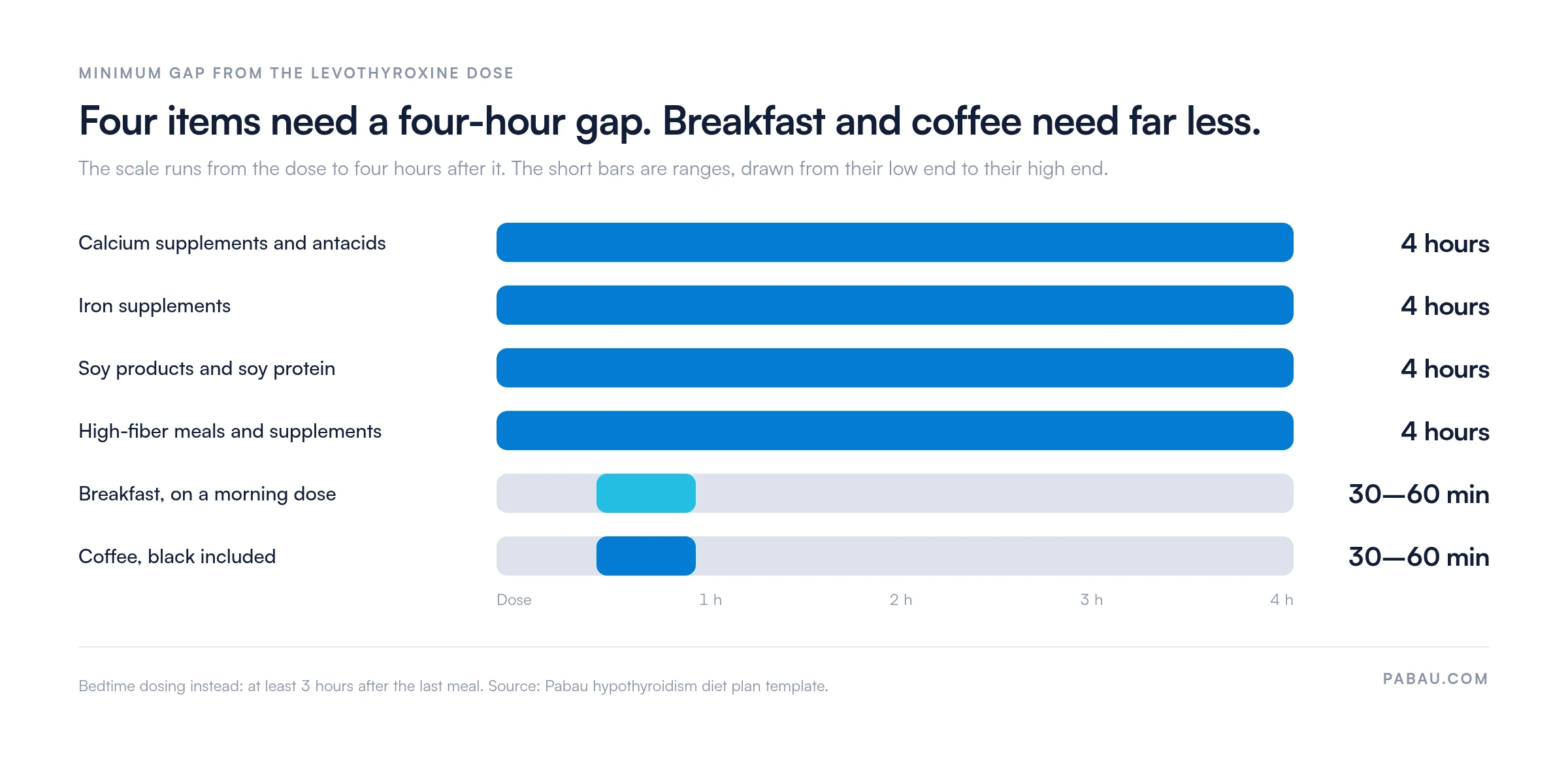
Calcium and iron bind levothyroxine and block its absorption, which is why they need the longest gap. Proton pump inhibitors are the one item without a fixed gap. They raise stomach pH and may change absorption, so the plan leaves that question to the prescriber.
Several micronutrients support the production and conversion of thyroid hormones. Iodine is the most important, and iodine deficiency is the leading cause of hypothyroidism worldwide. In iodine-sufficient countries, autoimmune causes such as Hashimoto’s thyroiditis are more common.
More is not better with two of these. Excess iodine can worsen thyroid function, so the plan rules out high-dose iodine and kelp supplements unless a clinician recommends them. Two or three Brazil nuts a day cover selenium, and more can cause toxicity.
The meal plan follows a Mediterranean-style pattern of vegetables, whole grains, lean protein and healthy fats. Most days include several foods from the nutrient table.
Few foods need to go completely. The ones worth limiting either interfere with treatment or add little nutrition.
Cruciferous vegetables such as broccoli, cabbage and kale contain goitrogens. In normal cooked portions they do not affect thyroid function in people with adequate iodine, so the plan keeps them on the menu.
Each day has a breakfast, lunch, dinner and snack. The menu leans on eggs, fish, dairy, legumes and seeds, and swaps work as long as they keep the same nutrients.
Treat the menu as a starting point, since portions, calorie targets and allergies need individual review. Below the menu, the daily log records dose time, first food time, an energy score from 0 to 10, weight and notes. After a week, it shows the prescriber whether the patient kept a consistent routine.
Weight gain in hypothyroidism is largely hormonal, so diet supports weight management but does not resolve it on its own. Adequate thyroid hormone levels come first. Diet then helps with satiety and steady energy.
Patients often respond well to high-fiber meals, regular protein at each meal and planned snacks. Record weight and symptom changes at each review so the prescriber can judge progress.
Women with hypothyroidism go through hormonal changes across the menstrual cycle, pregnancy and perimenopause. Iron deficiency is also more common in women, and iron reduces levothyroxine absorption if the two are taken together. Where weight loss is the main goal, our thyroid diet chart for women focuses on it.
Hashimoto’s thyroiditis is the most common autoimmune cause of hypothyroidism. The core dietary approach is the same, with added attention to selenium and inflammatory eating patterns. Our Hashimoto’s diet plan covers that version in more depth.
A gluten-free diet is not a universal recommendation for hypothyroidism. Evidence supports it mainly for people with confirmed celiac disease alongside Hashimoto’s. Check for celiac testing before recommending elimination, then use a gluten-free nutrition plan once the diagnosis is confirmed.
Most practices hand this plan out on paper. The completed log comes back at the next visit if it comes back at all, and the TSH result sits in a separate system.
Pabau, the practice management platform we build, sends the plan as a digital form before the consultation. The completed copy lands in the patient record next to treatment notes, so each review starts from the same baseline. Our digital forms cover intake and consent too, so diet questions can sit in the wider intake.
Practices running thyroid or weight programs can go further. Our weight loss clinic software and metabolic health software keep diet plans, progress notes and follow-up bookings together.

Pabau sends the hypothyroidism diet plan as a digital form and files the completed copy in the patient record. Your team reviews diet, dose timing and progress in one place before each follow-up.

The plan earns its place when the patient changes how they take the dose, more than what they eat. Settle the routine first, then build the menu around the four-hour gaps. Book the TSH recheck before the patient leaves.
The trade-off is follow-through. A paper plan is easy to hand out and hard to review, so keep the log where the prescriber can see it. Book a demo to see how Pabau files diet plans and dose logs in the patient record.

Starting with a new patient? Nutrition assessment form captures diet history before you build a plan.
Want patients to log meals between visits? My food diary gives them a simple daily record to bring to the review.
Want a shopping list that matches the menu? Mediterranean diet grocery list turns the same eating pattern into a printable list.
It is a printable template that pairs a 7-day meal plan with levothyroxine timing rules, a nutrient guide and a daily dose log. It supports treatment and does not replace medical care.
No. Diet is adjunctive to levothyroxine and should never be used to replace or reduce a prescribed dose without medical advice.
No. Levothyroxine is usually taken on an empty stomach, 30 to 60 minutes before breakfast. Bedtime dosing, at least three hours after the last meal, is the alternative, with timing confirmed by the prescriber.
Wait 30 to 60 minutes. Coffee reduces absorption, black coffee included, so it falls in the same window as breakfast.
The core approach is similar. Hashimoto’s adds attention to selenium and inflammatory patterns, and gluten avoidance is only relevant with confirmed celiac disease.