Grains food list: whole vs refined grains (free PDF)
A grains food list sorts grain foods into whole and refined groups, so patients ...

3
Last Updated: Oct 20, 2026

A nursing nutrition assessment systematically evaluates patients’ nutritional status using four domains: Anthropometric, Biochemical, Clinical, and Dietary (ABCD) data.
The ABCD framework differentiates comprehensive nutritional assessment from rapid screening; both are essential but serve different clinical workflows.
Validated tools like the Mini Nutritional Assessment (MNA), MUST, and NRS-2002 guide clinicians in identifying nutritional risk quickly and reliably.
Digital intake forms and structured clinical documentation, such as Pabau’s digital forms and AI-assisted notes, streamline assessment data collection and support compliance with care standards.
A ready-to-use assessment form covering anthropometric data, biochemical markers, clinical signs, dietary history, and space to plan nutrition interventions.
Download templateA nursing nutrition assessment turns a patient’s nutritional status into documentation nurses can act on, from dietitian referrals to daily care planning. This template gives nurses a structured, ABCD-based form for capturing that information consistently, whether at the bedside or during an outpatient visit.
Following this template supports early identification of malnutrition risk. It gives every clinician on the care team the same starting point, whether the patient is on a hospital ward or in an outpatient practice.
A nursing nutrition assessment is a systematic clinical evaluation that identifies and documents a patient’s nutritional status and related health risks. The assessment gathers objective data (measurements, lab values) and subjective information (dietary habits, medical history.
Unlike a general intake form, a comprehensive nursing nutrition assessment follows a structured framework. This lets clinicians detect malnutrition, food insecurity, medication-nutrient interactions, and swallowing difficulties early. Non-clinical intake tools. A weight loss intake form follows the same structured approach for patients starting a weight management program.
Healthcare regulators, including The Joint Commission, require nutritional screening within 24 hours of hospital admission and a full assessment when risk is identified. This guideline reflects evidence that early nutritional intervention improves wound healing, reduces infection rates, shortens hospital stays, and supports better long-term patient outcomes.
Nurses are the frontline clinicians who conduct these assessments and document findings that inform dietitian referrals and care planning.
Screening and assessment serve complementary but distinct roles. Screening is a rapid, standardized process that identifies patients at nutritional risk; assessment is a comprehensive evaluation of those flagged during screening. Understanding this distinction prevents unnecessary delays and ensures resources are allocated efficiently.
These systems also flag high-risk patients automatically before the clinician interview begins.
The ABCD framework is the gold standard for organizing nutritional assessment data. Each letter represents a distinct domain of information that together paints a complete picture of nutritional health. NIH StatPearls and clinical nursing education consistently recommend the ABCD approach because it ensures no clinical dimension is overlooked.
Anthropometric data quantifies body composition using objective measurements. Height, weight, body mass index (BMI), waist circumference, and skinfold thickness provide baseline metrics and track changes over time. A patient’s BMI classification alerts clinicians to potential undernutrition (BMI <18.5) or the risks a weight-loss practice manages closely (BMI ≥30). Unintentional weight loss exceeding 5% of usual body weight in one month signals acute nutritional compromise and warrants further investigation. Weight loss clinic software keeps measurements, prescriptions and review appointments against one patient record.
Laboratory markers reveal nutritional status at the cellular level. Serum albumin (normal 3.5-5.0 g/dL) and prealbumin (normal 20-40 mg/dL) reflect protein reserves, though both can be suppressed by inflammation independent of nutritional intake. Complete metabolic panel results highlight glucose control, renal function, and electrolyte balance, all affected by dietary intake and illness.
A total lymphocyte count below 1,200/mm³ signals immune compromise, which can also slow nutritional recovery. Lipid panels round out the biochemical picture for metabolic risk, and an at-home cholesterol test gives a between-visit reading when repeat bloodwork is impractical. Clinicians must interpret labs in context of acute versus chronic illness.
Physical examination findings communicate nutritional status directly. Muscle wasting, loss of subcutaneous fat, hair loss, nail brittleness, poor wound healing, dermatitis, and dependent edema are visible indicators of malnutrition. A nutrition-focused physical exam (NFPE) systematically documents oral health, dentition, swallowing function, and signs of dehydration.

Dietary data collection captures what patients eat and drink. Methods include several structured approaches:
Open-ended questions uncover food insecurity, cultural preferences, medication side effects affecting appetite, and swallowing difficulties. Asking “Tell me about a typical day of eating” yields richer information than checklist questions.
For patients pursuing weight loss, a structured plan can turn assessment data into concrete action. A vegan meal plan for weight loss is one example nurses can hand to the patient directly. Pregnancy shifts the targets, so review an expecting patient’s reported intake against a meal plan while pregnant.
Storing completed assessments in patient management software keeps every score searchable within the patient’s record.
Three validated screening instruments guide clinical decision-making and ensure consistency. Each targets a specific population and uses evidence-based scoring to quantify risk.
Wellness and nutrition-focused practices often use MNA or MUST as part of intake workflows. Both tools are evidence-based, quick to administer, and accepted by regulators.
Structured scoring tools extend well beyond nutrition. Physical therapists use the Tardieu Scale to grade muscle tone in neurological patients with the same evidence-based logic.
Once assessment data is gathered, clinicians translate findings into nursing diagnoses that drive care planning. Common nutrition-related NANDA International diagnoses include:
Each diagnosis includes specific indicators (defining characteristics) and related factors that justify the conclusion. Pairing diagnoses with measurable expected outcomes and evidence-based interventions ensures accountability and guides interdisciplinary team communication. Where the diagnosis is Overweight, interventions pair dietary change with activity, and the Body for Life plan sets out a structured exercise routine.
Documentation is the clinical record. Clear, organized charting ensures continuity of care, satisfies regulatory compliance, and protects practitioners legally. When documenting a nursing nutrition assessment, structure your note using SOAP format (Subjective, Objective, Assessment, Plan) or your institution’s standard template.
Subjective information includes:
Objective information includes:
Assessment: Synthesize the ABCD data into a clinical judgment. For example: “Patient presents with a 10 lb unintentional weight loss over two months, a BMI of 19, and low serum albumin at 3.1 g/dL. The patient reports decreased appetite secondary to medication side effects. Nursing diagnosis: Inadequate Nutritional Intake.” Plan: List nursing interventions, a dietitian referral if indicated, and monitoring parameters.
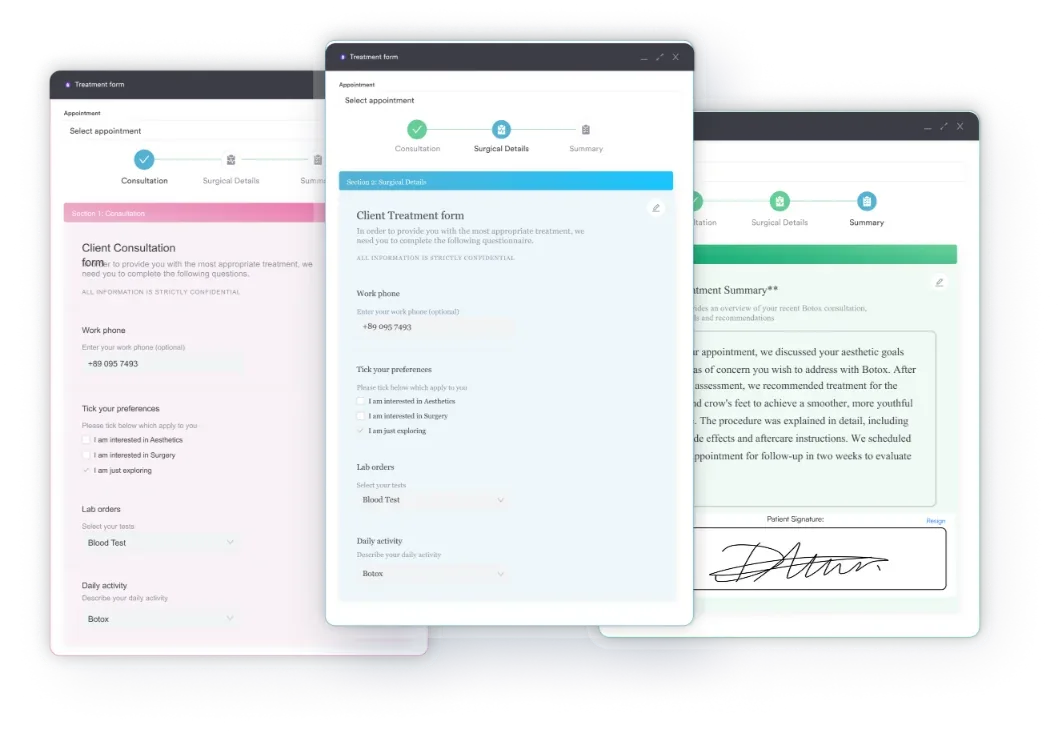
Practices managing patient nutrition increasingly rely on integrated software that centralizes assessment data, automates workflows, and ensures compliance. Pabau’s clinical management platform includes standardized medical forms that mirror the ABCD framework: anthropometric fields, lab results, exam checkboxes, and dietary history.
Every field pre-populates with prior data, so nurses avoid redundant entry and complete each assessment faster. Teams can build a nutrition assessment template that matches their workflow, pre-fill patient demographics, and capture data tablet-side during patient interactions.
Once data is captured, clinicians draft assessment notes using Pabau’s structured clinical documentation. Pabau Scribe, our AI medical scribe, transcribes verbal assessment summaries into SOAP-formatted notes in real time, reducing post-visit documentation burden and ensuring completeness.
The client record retains a searchable history of all past assessments, enabling trend tracking and continuity when multiple clinicians see the same patient. Automated workflows can flag patients due for reassessment based on assessment date, triggering reminders to clinicians and ensuring no patient is overlooked.

Pabau’s digital forms and Pabau Scribe, our AI medical scribe, capture ABCD assessment data and turn it into structured notes automatically. Automated reassessment reminders help nursing teams stay ahead of every patient’s nutritional risk.

Consistent nursing nutrition assessment turns a nurse’s clinical impression into evidence another clinician can act on immediately. That consistency is what shortens the path from a flagged risk to a dietitian referral and a documented care plan.
The trade-off nurses should weigh is time: a full ABCD assessment takes 20 to 45 minutes that a busy shift rarely has to spare. Screening exists to protect that time for the patients who genuinely need the full assessment.
Book a demo to see how Pabau’s digital forms and Pabau Scribe, our AI medical scribe, cut nursing nutrition assessment charting time.

Managing a patient with hypertension? DASH diet plan template sets out a seven-day meal plan with sodium targets aligned to NHLBI guidance.
Tracking sodium and fat intake together? heart healthy diet tracker is a three-day worksheet for logging sodium, fat, and sugar targets with the patient.
Working with a plant-based patient? vegan meal plan template provides a seven-day plant-based plan structured to support healthy, sustainable weight loss.
The ABCD framework covers four areas: anthropometric measurements (height, weight, BMI), biochemical data (lab values like serum albumin), and clinical signs of malnutrition. It also includes dietary assessment, covering food intake history and eating patterns.
Screening is a rapid process that identifies patients at nutritional risk; assessment is a comprehensive evaluation performed when screening indicates risk. Screening takes 5-10 minutes; assessment takes 20-45 minutes and generates a detailed care plan.
The Mini Nutritional Assessment (MNA) is validated specifically for older adults aged 65 and above. It takes about 10 minutes and is used in outpatient and long-term care settings. The MNA captures factors like cognitive status and living situation that affect nutritional intake in elderly populations.
Serum albumin below 3.5 g/dL and prealbumin below 20 mg/dL suggest protein malnutrition, though both may be low in acute illness independent of nutritional status. Total lymphocyte count below 1,200/mm³ indicates immune compromise. Interpret labs alongside clinical findings rather than relying on any single value.
In acute care settings, reassessment occurs every 7 days or sooner if clinical status changes significantly. In outpatient or long-term care, reassessment is typically annual unless a change in weight, appetite, or functional status triggers an interim assessment.
Nurses conduct preliminary nutritional assessments as part of their scope of practice. Dietitians perform specialized medical nutrition therapy assessments when complex conditions require intensive dietary intervention. Nursing assessment identifies risk and informs referrals; dietitian assessment creates the detailed nutrition care plan.