Newborn assessment
A newborn assessment is a structured head-to-toe check of a baby’s health,...

3
Last Updated: Oct 9, 2026
A meal plan while pregnant is a structured eating guide built around each trimester’s changing nutritional demands. It supports fetal development and maternal health from conception through delivery. A pregnancy-specific template tracks folic acid, iron, calcium, protein, and DHA against daily targets. It also plans around nausea, bloating, and fatigue, which a generic diet plan ignores.
Planning meals in advance is what keeps fetal brain development, bone formation, and immune function adequately fed. Prenatal vitamins cover part of that load, though they cannot replace what comes off the plate. A steady eating pattern also stabilizes blood sugar, lowers gestational diabetes risk, and supports postpartum recovery.
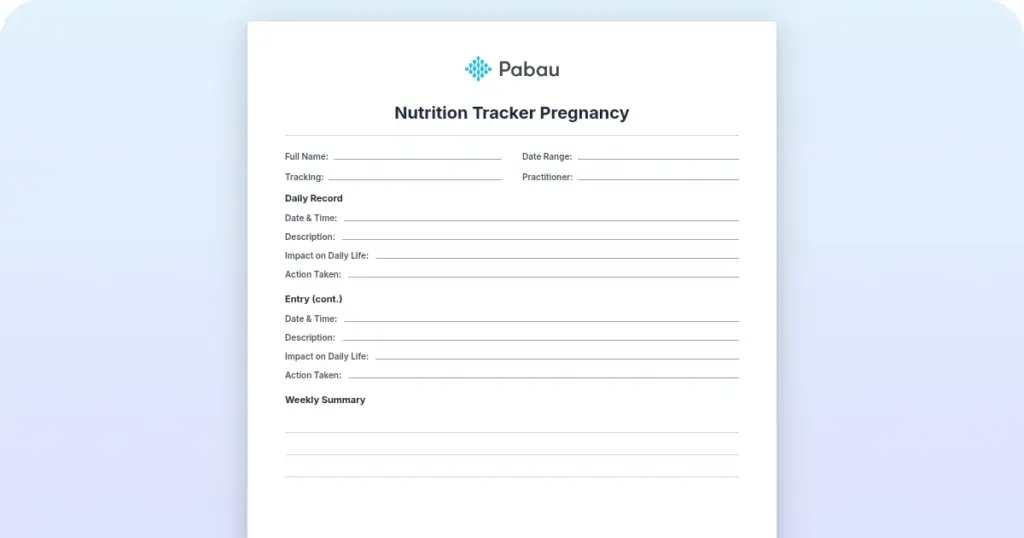
A trimester-by-trimester planner with daily nutrition targets, breakfast, lunch and dinner ideas, key nutrients by stage, foods to avoid, and hydration guidance. Built for clinicians to hand to patients, and printable for anyone who wants to fill it in at home.
Download template
A pregnancy meal plan is a trimester-specific eating guide built around folic acid, iron, calcium, and DHA.
Most pregnant women need no extra calories in the first trimester, 340 more per day in the second, and 450 in the third.
High-mercury fish, unpasteurized dairy, raw meat, alcohol, and more than 200 mg of caffeine a day are the foods to avoid.
Prenatal vitamins still matter, because food alone rarely delivers enough folic acid, vitamin D, and iodine.
Practice management software like Pabau lets you share a customized plan, track adherence, and send prenatal reminders.
A structured approach covers the micronutrients behind neural tube closure in weeks 1 to 4 and organ formation in weeks 5 to 8. Growth then accelerates from week 20 to delivery, and the nutrient load rises with it.
Explaining the reason behind each food choice matters as much as the list itself. Patients who understand why a nutrient is on the plan stick with it, and worry less about eating the wrong thing.
Women who follow a structured prenatal nutrition plan have fewer gestational diabetes diagnoses, fewer low-birth-weight infants, and shorter labor. Tracking that plan alongside every visit note is one of the jobs OBGYN EMR software is built for.
Calorie and nutrient needs shift sharply across the three trimesters, and each stage brings its own obstacle:
A trimester-based plan anticipates each of these and shows what normal looks like at every stage.
Eight nutrients need particular attention during pregnancy, because a shortfall in any of them affects fetal outcomes. The table below sets out the daily target, the best food sources, and why each one matters.
Expectant mothers do not eat for two in the first trimester. Calorie requirements scale gradually and peak in the third trimester, when the baby grows fastest.
These figures assume an average pre-pregnancy weight and activity level, so individual needs vary. A practice that records each patient’s baseline weight can set personalized targets from her BMI and clinical history.
Calories are only part of what moves. The nutrient that leads and the eating pattern change too, as the chart below sets out.
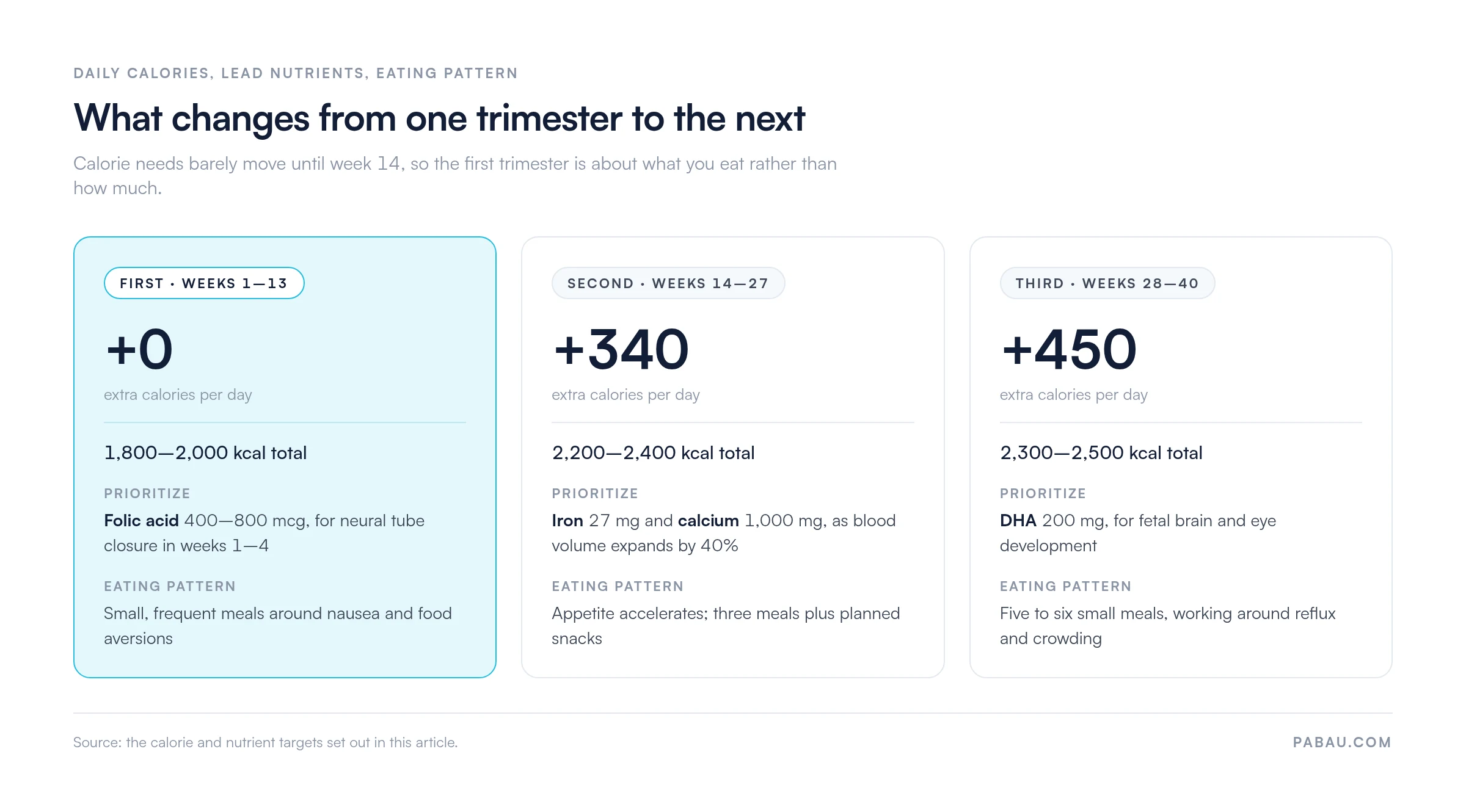
Weeks 1 to 13 are critical for neural tube closure and organ formation. Nausea, fatigue, and food aversions often make eating feel like a chore, so aim for nutrient density over quantity and small meals over large ones.
First trimester tip: If nausea strikes, keep ginger tea, lemon water, and dry crackers on hand. Small amounts through the day often feel better than larger meals. Folic acid is non-negotiable. Most prenatal vitamins contain 400 to 800 mcg, and leafy greens add more folate on top.
Weeks 14 to 27 bring a stronger appetite and the start of visible fetal growth. Iron demand spikes as maternal blood volume expands by 40%, so iron-rich foods and supplementation prevent anemia and fatigue.
Calcium matters as much as iron in the second trimester. When a patient is lactose intolerant or vegan, a dietary assessment at the visit points her toward fortified plant milks, leafy greens, and tofu.
Weeks 28 to 40 demand the highest calorie and nutrient intake, but reflux and a crowded stomach make large meals uncomfortable. Frequent small meals, five to six a day, become the norm.
DHA matters most in the third trimester, when fetal brain and eye development accelerate. Salmon, sardines, and anchovies are the easiest sources. Where mercury is a worry, note it in the patient record and recommend an algae-based DHA supplement.
Nutrient needs change again once the baby arrives, and the postpartum diet plan template picks up where this one stops.
Frequent snacking stabilizes blood sugar and energy through the day. Choose nutrient-dense options that combine protein, healthy fat, or carbohydrates:
Certain foods carry a risk of infection or toxicity during pregnancy. Explaining the reason alongside the restriction keeps patients compliant without frightening them:
A structured meal plan does not replace prenatal vitamins. Three nutrients are hard to reach from food alone in adequate amounts: Folic acid, vitamin D, and iodine. Folic acid matters most in the first trimester, while the neural tube is forming.
A prenatal multivitamin typically supplies 400 to 800 mcg of folic acid, 600 IU of vitamin D, and 150 mcg of iodine. Discuss supplementation at the first prenatal visit, then record adherence on digital intake forms at every follow-up.
Fluid needs increase during pregnancy to support the expanding blood volume, amniotic fluid, and placenta. Most pregnant women need 8 to 10 glasses of water a day, and more in warm climates or with heavy activity.
A plant-based pregnancy works, but it needs deliberate planning around protein, iron, calcium, B12, and DHA. Vegan patients have to supplement B12, because plant foods carry no bioavailable form of it. Most also need an algae-based DHA supplement.
Iron from legumes and fortified cereals absorbs less readily than iron from red meat. Pairing it with citrus, tomatoes, or bell peppers improves absorption.
Vegan patients should see a registered dietitian early in pregnancy to confirm intake and adjust supplementation. Record that referral in the patient notes, and revisit the dietary pattern at each appointment.
Nutritious pregnancy eating does not require premium prices. Affordable, nutrient-dense foods include dried beans and lentils, eggs, canned fish, frozen vegetables, whole grains, and seasonal produce. Shopping in bulk and meal-prepping on weekends maximizes value and reduces last-minute takeout temptation.
Six steps take the template from a download to something a patient will actually follow.
Store the completed template in the patient’s chart, on paper and electronically, and revisit it at each trimester transition. If nausea, new cravings, or aversions arise, revise the meal selections and note the update date on the form.
Practices that follow patients from conception through delivery keep the plan in the same record as the scans and bloodwork. That single record is what software for fertility practices is built to hold.
A paper meal plan handed over at the booking visit is rarely seen again. The next appointment starts with the same questions about what the patient has been eating, because nothing was written down.
Pabau, our practice management software, stores the plan on the patient record alongside the intake form and the visit notes. You attach the customized PDF once, and every clinician who opens the chart sees which version the patient is following.
Automated reminders then carry the plan between visits, with hydration prompts in the third trimester or a supplement check at week 12. Patients reply from their phone, so the answer lands in the record without a phone call.

Share a customized meal plan, send trimester reminders, and track adherence from the patient record. Nutrition targets stay visible at every prenatal visit.

The nutrient targets in this article hold whether a patient eats meat, avoids it, or shops on a tight budget. Only the food sources change, which is why one template covers every patient on your list.
Hand the template over at the first prenatal visit rather than the second. Neural tube closure is done by week 4, so the advice that matters most is the advice given earliest. Revisit the plan at each trimester transition and note what changed.
Whatever you hand over, record the version and the date in the chart. Book a demo to see how Pabau keeps prenatal nutrition plans, reminders, and adherence in one patient record.

Want to track blood pressure alongside nutrition through pregnancy? Blood pressure pregnancy chart gives practices a trimester-by-trimester template for monitoring a key prenatal vital alongside diet.
Need a birth plan to hand out alongside the nutrition plan? Mama Natural Birth Plan Template covers the delivery-preferences conversation that naturally follows the meal-planning one.
Planning what comes after delivery? Postpartum care plan extends the same structured approach into the fourth trimester.
No extra calories in the first trimester. The second trimester adds 340 calories a day, and the third adds 450. Those figures assume an average pre-pregnancy weight and activity level. Calorie needs vary widely, so treat this as a baseline and adjust to the weight gain trajectory.
Yes, with deliberate planning around protein, iron, calcium, B12, and DHA. Vegan patients must supplement B12 and take an algae-based DHA supplement. Meeting a dietitian early in the pregnancy confirms intake is adequate. The nutrient targets stay the same whatever the diet pattern.
Yes, prenatal vitamins are still necessary. Food alone cannot consistently provide 400 to 800 mcg of folic acid, adequate vitamin D, and iodine in bioavailable quantities. Folic acid matters most in the first trimester, while the neural tube is forming. Treat the vitamins as a safety net that runs alongside whole food.
Focus on small, frequent meals rather than three large ones. Ginger tea, crackers, and lemon water often sit well during nausea. Protein and fat slow digestion and prevent the blood-sugar dips that worsen nausea. If vomiting persists beyond week 14 or causes weight loss, discuss hyperemesis gravidarum with your clinician. IV hydration or anti-nausea medication may be needed.
No. Calorie restriction during pregnancy increases miscarriage risk, slows fetal growth, and compromises maternal health. Weight loss diets are contraindicated. If weight is a concern, raise it with your clinician. Balanced eating and moderate activity, once you are cleared for it, are the appropriate route.