List of vitamins: All 13 with RDAs and deficiency signs
A list of vitamins names the 13 essential vitamins the body needs from food or s...

10
Last Updated: Oct 8, 2026
A paleo diet plan is an eating plan built on whole, unprocessed foods like lean meat, fish, eggs, vegetables, fruit, nuts, and healthy fats. It cuts out grains, legumes, dairy, and processed foods, based on what people are thought to have eaten in the Paleolithic era.
This guide gives you a free, fillable paleo diet plan template, a 7-day sample menu, and food lists to work through with patients. It also covers the nutrients to watch once grains and dairy are gone, and what the short-term research does and doesn’t show.
A three-page fillable form with patient details, blank foods-to-include and foods-to-avoid boxes by food group, and one sample-day meal plan. The last page tracks progress at each follow-up visit.
Download template
A paleo diet plan removes grains, legumes, dairy, and processed foods and builds meals around lean protein, vegetables, fruit, nuts, and healthy fats.
The free template is a fillable intake and tracking form, so you complete the food lists and a sample day with each patient.
Short-term trials show weight loss and some metabolic improvements, but evidence beyond six months is limited.
Cutting grains, legumes, and dairy lowers fiber, calcium, and vitamin D intake, so check all three at every follow-up.
Patients who are pregnant, have kidney disease, or take medication affected by diet should start the plan under supervision.
The paleo diet rests on the idea that the human body is adapted to foods eaten before farming introduced grains and processed ingredients. Advocates say a hunter-gatherer eating pattern helps with blood sugar control, lowers inflammation, and cuts calorie intake without counting.
Patients often bring it up when they are managing a metabolic disorder, an autoimmune condition, or their weight. Because it excludes refined grains and processed oils, it’s also a common request in functional medicine and integrative nutrition. It comes up just as often in weight loss clinics, where it’s one structured option among several.
The food list centers on nutrient-dense whole foods. Walk through each group with the patient and note the options they will eat.
Built around these groups, meals deliver plenty of protein and keep patients full, with no processed ingredients.
The plan removes four food groups entirely:
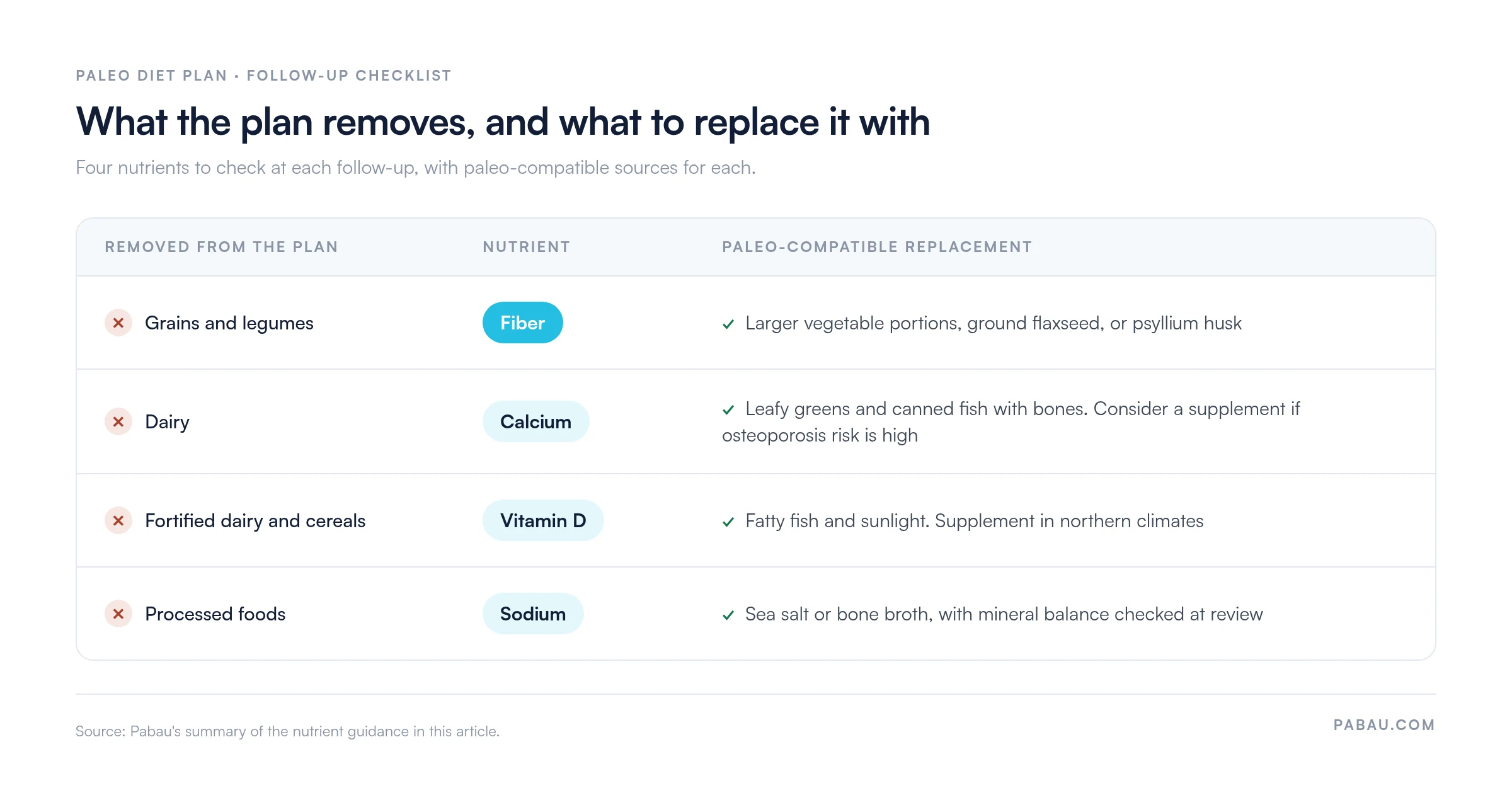
Removing grains, legumes, and dairy also removes major sources of fiber and calcium. Plan paleo-compatible replacements with the patient from the start, such as leafy greens, canned fish with bones, and supplements where needed. A patient following the blood type O list drops the same three groups, so run the same fiber and calcium checks.
The evidence for paleo is encouraging in the short term and thin beyond it. Here is what the trials show so far:
Those blood pressure cuts came from short trials, so a patient with diagnosed hypertension still needs a dedicated DASH-based meal plan.
The sample week below gives you and the patient a starting point to adapt. Each day covers breakfast, lunch, and dinner:
Every meal includes a protein source, which helps keep blood sugar steady. The rotation of fish, poultry, and red meat also keeps the week from getting repetitive.
The PDF is a blank working document, not a pre-filled menu. It runs to three pages, and each page maps to one step of the consultation.
The template holds one sample day, not a full week. Use the 7-day structure above to build out the rest of the week with the patient. Keep this guide’s food lists open as a reference while you fill in the boxes.
Most patients drop a new diet on busy weekdays, so prep matters as much as the food list. Before the first session, send digital intake forms that record what the patient eats now. That baseline makes adherence easier to judge later.

Note adherence and results in the progress notes at each visit. Over several appointments, those notes show which prep habits stuck and where the patient needs more support.

Because the plan drops whole food groups, some nutrients need planned replacements. The chart below maps each one to a paleo-compatible source:
Paleo supports weight loss in three main ways. Higher protein intake increases fullness, fewer processed foods lower calorie density, and steadier blood sugar can reduce hunger.
Short-term trials of 8 to 24 weeks show paleo matching other structured diets. Typical losses run 3 to 5 kg, or about 7 to 11 lb. Data on long-term adherence is still limited.
Results vary widely with baseline metabolic health, exercise habits, and how closely the patient follows the plan. Share that range at the first visit and review progress at least every three months.
Patients often ask how paleo compares with related diets. All three favor whole foods, but they differ on grains and legumes:
Some patients can’t keep grains and legumes out for long. For them, an anti-inflammatory meal plan keeps much of the same food list while allowing select whole grains and legumes back in. Patients who would rather not cut out any food group can try a points-based Weight Watchers diet plan, which favors flexible eating over elimination.
Filling in the plan is the easy part. The harder part is knowing, six weeks later, whether the patient stuck to it and what changed. Paper copies and emailed PDFs scatter that answer across folders and inboxes.
Pabau keeps the plan on the patient record. You can rebuild the template’s food lists and sample day as a digital form and send it before the appointment. The completed version is stored in the patient file.
At each follow-up, your progress notes sit beside the original plan. Your team sees what the patient agreed to, what they reported, and when they are due back, without searching email threads.

Pabau turns the paleo template into a digital form, stores the completed plan on the patient record, and logs every follow-up note beside it.

A paleo diet plan works best as a structured starting point, not a strict prescription. The short-term evidence on weight and metabolic markers is encouraging, but long-term data is thin.
Removing grains, legumes, and dairy also lowers fiber, calcium, and vitamin D intake, so plan replacements from day one. Screen for conditions that need supervision before a patient starts.
Fill in the template with each patient rather than handing over a generic list. Then review the progress page at every follow-up and adjust the food lists as the patient’s results come in.
Book a demo to see how Pabau keeps each patient’s diet plan, progress notes, and follow-up appointments in one record.

Need a version that keeps some grains? Anti-inflammatory meal plan template suits patients who want similar whole foods with select grains and legumes.
Working with a low-carb patient? 7-day keto meal plan lays out a week of ketogenic meals you can compare with the paleo menu.
Patient asking about an all-meat approach? Carnivore diet plan template covers the stricter animal-only plan and what it removes.
Want a less restrictive whole-food option? Clean eating meal plan focuses on unprocessed foods without excluding whole food groups.
Worried about fiber intake? High-fiber diet meal plan gives you a 7-day template built around fiber-rich foods.
The PDF is a three-page fillable form. It includes patient-detail fields and blank foods-to-include and foods-to-avoid boxes grouped by food type. It also has one sample-day meal plan with breakfast, lunch, snack, dinner, and hydration lines, plus a progress page you complete at follow-up visits.
Short-term paleo eating appears safe for most healthy adults. A 2015 meta-analysis of four randomized trials found better metabolic results than guideline-based diets over six months or less. Long-term safety data remain limited. Patients with diabetes, heart disease, or kidney disease, or on medication affected by diet, should follow it under professional supervision.
Some patients report better energy and digestion within one to two weeks, and measurable weight loss within four to six weeks. Results vary with baseline health, adherence, and exercise habits.
Paleo works well for many adults. Pregnant women, children, people with chronic kidney disease, and those on certain medications should consult a healthcare provider before starting. Assess each patient individually.
Standard paleo is meat-centric, so a strict vegetarian version is hard to build. Patients can emphasize eggs, nuts, seeds, healthy fats, and vegetables, accepting lower protein density as the trade-off.