Grains food list: whole vs refined grains (free PDF)
A grains food list sorts grain foods into whole and refined groups, so patients ...

3
Last Updated: Oct 20, 2026

The numeric pain rating scale (NPRS) asks patients to rate current pain intensity from 0 to 10, across 11 whole-number points.
It is validated for cognitively intact adults, so young children, non-verbal patients, and patients with dementia need a different tool.
A drop of 2 points, or 30 percent from baseline, is the smallest change patients reliably notice.
Ask the same question with the same timeframe at every visit, or the trend data will not be comparable.
Digital intake forms collect the score before the appointment, so the number reaches the record without anyone retyping it.
A printable 0-10 scale with the anchor wording written out, plus fields for patient name, date, body site, and the timeframe you asked about. It also carries rows for recording scores across follow-up visits.
Download templatePain is subjective, and your patients are the only authority on what they feel. Yet decisions about treatment intensity, medication changes, and progress toward functional goals all depend on measuring it. The numeric pain rating scale (NPRS) is the tool most practices reach for, in primary care, physical therapy, sports medicine, and pain management.
This guide covers what the scale is, how to administer and score it, and what the evidence supports. It also covers the habit that decides whether your trend data is usable. That comes down to asking the same question, in the same words, at every visit.
The numeric pain rating scale is an 11-point tool for rating pain intensity from 0 to 10. Zero means no pain and 10 means the worst pain imaginable. It takes seconds, needs no training, and is the most widely used pain measure in clinical practice.
Who it’s for: cognitively intact adults who are comfortable working with numbers. The scale is validated in acute pain after surgery or injury, in chronic and neuropathic pain, and in cancer pain.
It is not validated for children under about seven, for patients with significant cognitive impairment, or for non-verbal patients. Those patients need a different instrument. The Abbey pain scale suits people living with dementia, and Wong-Baker FACES suits younger children.
Why it works: the scale is sensitive to the changes patients actually notice, and a single number is easy to follow over time. Physical therapists use it to monitor treatment response and to document progress in a form payers and regulators recognize.
Administration is straightforward. You can take the score out loud or on paper, in the room or over video. How you frame the question matters more than the format you use.
In emergency and acute care, the score is taken alongside the primary trauma survey and repeated once treatment starts. The first number becomes the baseline everything after it is measured against.
Verbal or written: research supports both, so choose the one that fits your workflow. Verbal suits a busy schedule and telehealth. Written suits self-report forms and patient portal intake. Plenty of practices use both, with a written score at intake and a verbal check in the room.
There is no formula to work through. The number the patient gives you is the score. What needs structure is what you do with it.
The minimum clinically important difference (MCID): a change of 2 points, or 30 percent from baseline, is the smallest difference patients reliably notice. It is also the difference that justifies continuing a course of treatment.
A patient who moves from 8 to 6 has made a change worth acting on. A move from 8 to 7.5 is measurable, but it will not feel like much to them. Use the 2-point rule to set your reassessment intervals and to decide when a plan needs changing.
The template above prints out or fills in on screen. It carries a large 0 to 10 scale, plus fields for name, date, and body site. There is also space to record the timeframe you asked about. Keep copies in the waiting room and in every treatment room.
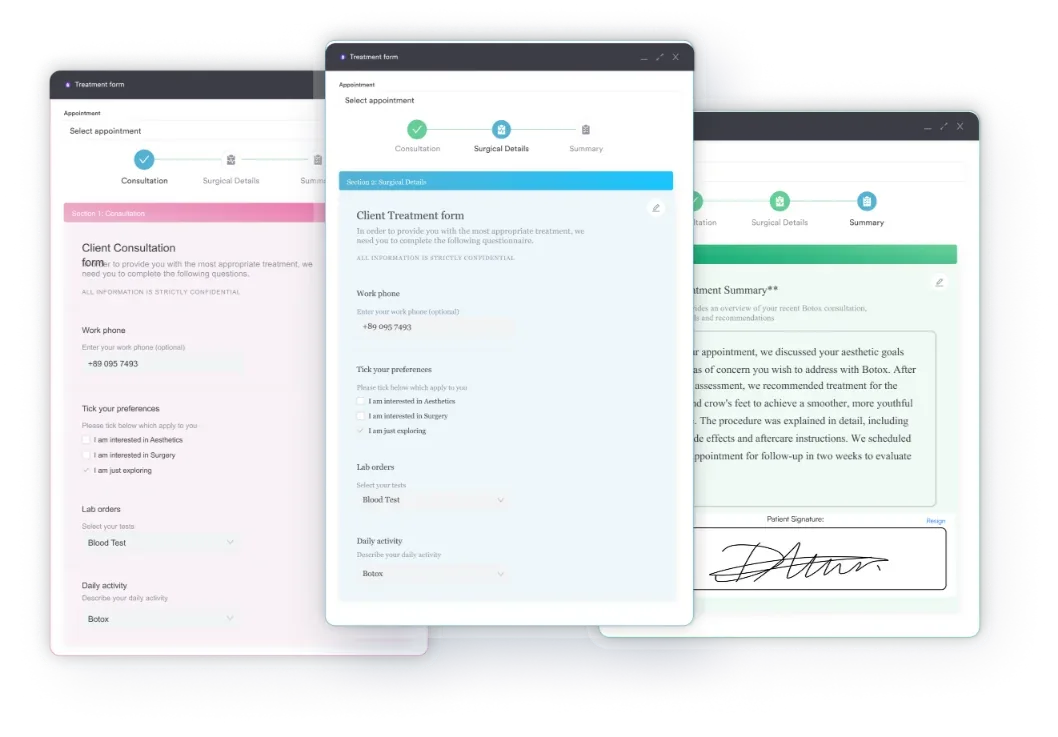
Paper tracking gets unwieldy once you are following dozens of patients across months. Workflow automation removes the transcription step entirely. The patient answers before the appointment, the score lands on their record, and the team reads the trend without typing anything.
The NPRS is one of the most researched pain measures in clinical practice. Its evidence base holds up across several populations and care settings.
Those properties are why CMS, The Joint Commission, and NICE accept the scale as a standardized outcome measure for pain documentation.
The scale is useful rather than complete. Knowing where it stops keeps you from over-reading a number.
None of this makes the number unreliable. It makes the context you record alongside it part of the measurement.
The NPRS is the default for adult practice. Reach for an alternative when age, cognition, literacy, or language get in the way. This table sets the common options side by side.
Whichever tool you pick, use the same one for that patient every time. Switching scales part-way through a course of treatment makes the trend meaningless, because the two sets of numbers were never measuring on the same terms.
A single score answers today’s question. A run of scores tells you whether treatment is working. Paper makes the second one hard, because someone has to pull the file and rebuild the history by hand.
In rehabilitation, that baseline usually sits next to a fitness assessment and return-to-activity criteria. Sports medicine practices chart pain and function on one timeline, so the patient can watch both move together.
Compliance tracking matters here too. An audit asks for evidence that you assessed pain and acted on what you found. A digital record produces that trail on demand, rather than after a week of digging.
Most practices still take pain scores on paper and type them into the record later. The number arrives late, sometimes with a transcription slip, and the trend has to be rebuilt by hand at discharge.
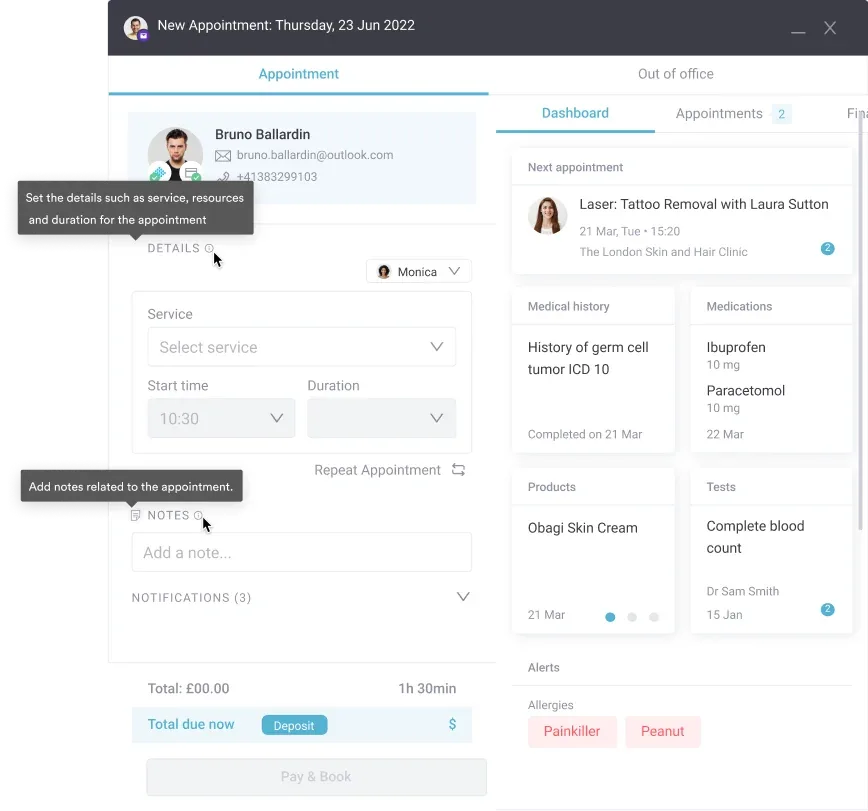
Practice management software like Pabau moves that work upstream. The scale sits inside the digital intake form patients complete before the appointment, worded the same way every time. The score writes itself to the client record, so nobody transcribes anything.
From there it behaves like any other field on the record. You can read it across visits, pull it into a discharge summary, and hand a payer the baseline and final numbers on request. That is how a digital-first longevity practice keeps forms, notes, and scores in one system.
Every Pabau subscription includes every feature, so digital forms, records, and outcome reporting come as standard. There is no higher tier to buy before your pain scores start tracking themselves.

Pabau’s digital intake forms collect the pain score before the appointment and write it straight to the client record. Your team reads the trend at a glance, with nothing to retype and nothing to chase.

The numeric pain rating scale earns its place because it is quick, well evidenced, and sensitive to the changes patients care about. What usually goes wrong sits around the tool rather than inside it.
Two clinicians word the question differently. A paper score never reaches the record. The trend never gets calculated, so nobody can say whether the last six weeks helped.
So settle the wording, write it into the form, and keep the timeframe fixed. Reassess on a schedule you have documented, and treat a 2-point move as the point where you decide something.
Do that and the score stops being a box to fill in. Patients see their own progress, payers get the outcome data they ask for, and your team stops rebuilding history from paper. Start with the free template above. Book a demo to see how Pabau captures and tracks pain scores for you.

Assessing a patient’s balance and fall risk? Mini BESTest template scores 14 items across four balance systems to flag fall risk.
Explaining a 1-10 pain score to a patient? pain scale 1-10 guide explains what each score means and when a result needs escalation.
Building a return-to-activity baseline? A personal trainer assessment pairs movement and fitness measures with the pain data you already collect.
Ruling out an occult hip fracture? patellar pubic percussion test reads the percussion sound difference to catch a hip fracture that a clean X-ray misses.
Need a function score for upper-limb cases? The QuickDASH outcome measure tracks disability while the pain scale tracks intensity.
The numeric pain rating scale asks patients to rate pain intensity from 0 to 10. Zero means no pain, and 10 means the worst pain imaginable. It is the most widely used pain measure in clinical practice, and it is validated for cognitively intact adults.
A score of 7 sits in the severe range, which runs from 7 to 10. Pain at that level is usually limiting what the patient can do. Scores in this range call for active treatment and frequent reassessment, weekly or more often.
Assess at every visit in acute pain, and every four weeks or so in chronic pain. Document the interval you chose in the treatment plan. After any treatment change, reassess within two to four weeks to see whether the 2-point difference has been reached.
Yes. Test-retest reliability is strong, with ICC values usually above 0.7. Construct validity holds across acute, chronic, cancer, and neuropathic pain. CMS, The Joint Commission, and NICE recognize it as a standardized outcome measure, and the Shirley Ryan AbilityLab publishes the psychometric detail.
Children aged about seven and older can usually use it, once they handle numbers reliably. Younger children do better with a faces scale such as Wong-Baker FACES, which asks nothing of their numeracy.
A change of 2 points, or 30 percent from baseline, is the smallest difference patients reliably notice. A move from 8 to 6 counts as clinically important. A move from 8 to 7.5 is measurable, but it will not feel like much to the patient.