Reflection questions: 14 examples and a free template
Reflection questions are open-ended prompts that guide a person through structur...

7
Last Updated: Oct 16, 2026

A personal trainer assessment records health history, fitness baselines, movement quality, and goals before you write a single session.
A PAR-Q is separate from health history, so screen with it first and get medical clearance for any yes answer.
Objective baselines let you set an honest starting load and prove progress later, which is what keeps clients renewing.
Retest every four to six weeks for most goals, and every two to four weeks while a client is recovering from injury.
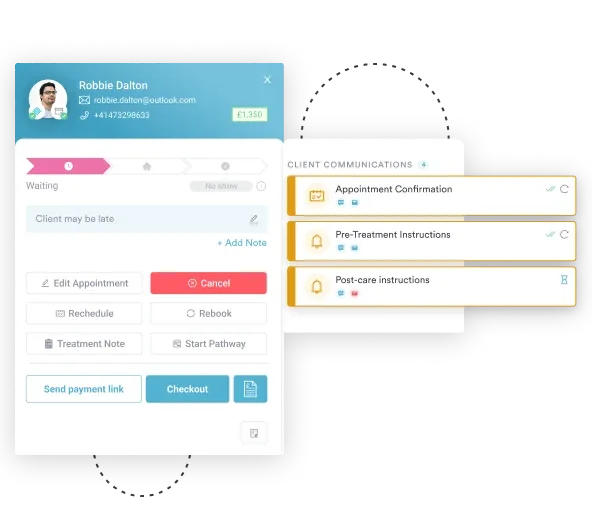
Practice management software like Pabau sends the form out before the session and files every result against the client record.
A printable form covering client details, health history, current fitness and lifestyle, movement assessment, body composition, work capacity, and loaded assessments. Fill it in during the session, then file it against the client record.
Download templateA personal trainer assessment is the hour that decides whether a client’s first twelve weeks work. It’s a structured record of health history, fitness baselines, movement quality, and goals, taken before you write a single session.
The template above gives you the fields to fill in. Choosing the right tests and repeating them on schedule is what turns those fields into a program that works.
A personal trainer assessment is a structured evaluation you run with a new client before designing their program. It gathers baseline data on health status, fitness levels, movement quality, lifestyle, and goals.
Two kinds of data go into it. Subjective data is what the client tells you: conditions, medications, old injuries, sleep, stress, and what they want out of training. Objective data is what you measure yourself, from body composition and cardiovascular capacity through to strength, flexibility, and movement patterns.
Neither half stands up alone. A client can describe a shoulder that “twinges sometimes” and still fail an overhead reach test in front of you. That’s why most coaching software treats the assessment as step one of onboarding rather than an optional extra.
An hour spent assessing pays back in four places, and only one of them is safety.
Without it, you’re programming from a conversation. That works until a client with an undiagnosed condition or a badly healed ankle turns up in front of you.
A complete form covers seven areas. Each one feeds a different programming decision, so a missing section usually shows up later as a guess.
The PAR-Q, or Physical Activity Readiness Questionnaire, is the screening step that comes before any testing. Its yes/no questions flag cardiovascular, metabolic, and musculoskeletal conditions that need medical clearance first. One yes answer means the client sees a physician before you load them.
Health history fields don’t replace it. Asking for conditions, injuries, allergies, medications, and family history gives you context, not clearance. Run the PAR-Q+ alongside those fields and keep both answers on the same record.
Take resting heart rate and blood pressure while you’re there. Both take two minutes, and both change what you’re able to prescribe. When a client describes an old injury vaguely, a pain locator chart gets you a clearer answer than another question will.
“Get fitter” is not something you can program against. Convert it in the session into a target that is specific, measurable, achievable, relevant, and time-bound. “Add 20 pounds to my bench press in 12 weeks” gives you something to retest in week 12.
Around the goal, record weekly activity, sleep hours, general nutrition, stress, and whether the job is sedentary or active. The federal activity guidelines give you a reference point of 150 minutes of moderate activity per week. A client sitting at 30 minutes needs a different starting volume than one already at 200.
Five measurements do most of the work. Keep the selection short so the client finishes fresh enough to give you honest numbers.
For deconditioned or older clients, a functional status questionnaire is often more useful than a strength test. NASM’s assessment guidance and ACSM both publish protocols worth following for the tests you do run.
The template follows the same shape, with three things worth knowing before you print it.
None of that is a problem on paper. It becomes one when a second trainer picks the form up in six weeks and can’t tell which number was the cardio result.
The order matters more than the length. Front-load the talking, keep the hardest test until the client is warm, and finish on something they can do well.
Write results down as you go, not afterwards from memory. Automated workflows can handle the summary email and the next-session details, which removes the one admin job trainers reliably put off.
The same five errors show up again and again, and each one has a cheap fix.
Raw numbers only matter once they change a variable. Map each finding to intensity, volume, exercise selection, or progression rate.
Here’s how that looks with a real set of numbers. Take a 42-year-old office worker who wants to lose 20 pounds. She walks 20 minutes a week, manages eight push-ups on her knees, and her heels lift in a bodyweight squat. Her PAR-Q comes back clean.
Those three figures write the first block on their own. Cardio starts as low-intensity steady state, three times a week, because 20 minutes is the honest baseline. Strength starts at bodyweight, since eight knee push-ups won’t survive added load. Ankle mobility work goes in before any barbell squatting.
Then retest at week four. If the push-up count moves and the heels stay down, the next block has earned its load.
Retest intervals follow the goal, not the calendar. Too often and adaptation hasn’t happened yet, too rarely and the client loses the thread.
Weight-loss clients need the shorter interval because motivation depends on visible movement. Strength and general fitness need longer, since adaptation takes time to show. Booking the retest as a recurring appointment is the simplest way to stop it slipping.
Most trainers still run this on paper. The form comes out of a folder, gets filled in during the session, and goes back into the folder. Six weeks later, nobody can find the week-one push-up count, so the retest starts from scratch.
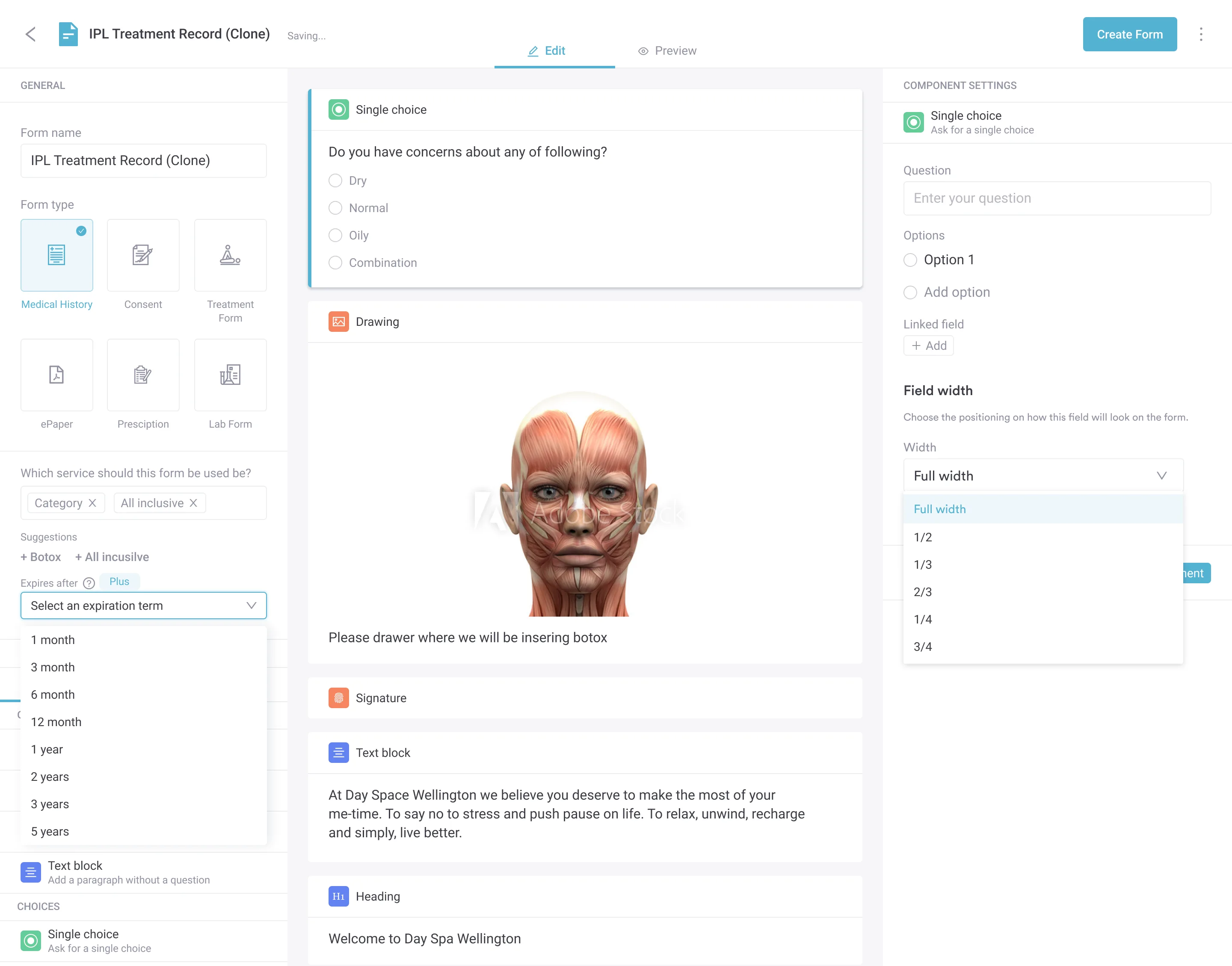
Practice management software like Pabau moves the whole sequence onto one record. Digital intake forms go out through the client portal 48 hours ahead, so health history and goals arrive before the client does. You read them first, flag anything needing clearance, and walk in already knowing which tests are safe to run. Recording measurements the same way each visit is what makes progress visible, and physical therapy EMR software enforces it.
Measurements then land in the same record as the appointment. Progress tracking charts weight, body fat, and circumferences against the week-one figures, so a retest conversation takes a screen rather than a folder. Nothing gets re-typed, and nothing goes missing between trainers.
The outcome is less admin between sessions and a client record you can search. That matters most when someone returns after eight months away and you need to know what they could do last time.

Pabau’s digital intake forms and client portal collect health history before the session starts. Progress tracking then stores every retest against the client record, so you spend the hour coaching instead of filing.

An assessment run as paperwork produces paperwork. Run it as the first coaching session and the client leaves understanding why their program looks the way it does.
So print the template, run the PAR-Q alongside it, and set the retest date before the client walks out. That last step is the one most often skipped, and it’s what turns a baseline into evidence.
Keeping those records somewhere searchable is what separates a filing habit from a coaching tool. Book a demo to see how Pabau collects assessment forms before the session and tracks every retest afterwards.

Shoulder pain showing up in your movement screen? Neer’s test explains the impingement check that tells you when to refer out instead of program around it.
Working with a client who has a voice disorder? spasmodic dysphonia guide covers types, diagnosis, and treatment options for this often misdiagnosed voice condition.
Screening a client for neck-related nerve pain? Spurling’s test guide details the procedure, interpretation, and clinical accuracy for reproducing radicular symptoms at the neck.
Training a client through an injury? A pain journal lets them log symptoms between sessions, so your two-week retest rests on more than memory.
Need a bedside test for a meniscus tear? Steinman test guide outlines the procedure, interpretation, and diagnostic accuracy for this fast, bedside knee assessment.
In most US states there is no license for personal trainers, but employers and insurers expect an accredited certification. NASM, ACE, and ACSM are the ones asked for most often. Your certification also defines which tests sit inside your scope.
Partly. Health history, goals, and lifestyle questions work fine over video. Body composition, grip strength, and blood pressure need you in the room. Run the subjective half remotely, then book a short in-person slot for the measurements.
Note the refusal on the form, then work with what you have. Body composition is the section clients decline most often, and performance tests will still show you progress. Never push a test someone has already said no to.
Skinfold calipers and bioelectrical impedance both carry an error margin of several percentage points. Treat the figure as a trend line rather than a fact. Measure at the same time of day, with the same tool, every time.
Many trainers fold it into the first package instead of billing it separately. Charging for it does set the expectation that the hour has value. Either way, price it deliberately rather than giving away an hour by default.