Hell’s Itch pain scale
The Hell’s Itch pain scale is a numeric rating system that quantifies the ...

5
Last Updated: Oct 5, 2026

Depression self-assessment tools like the PHQ-9 screen for symptoms. They can’t diagnose depression on their own.
The PHQ-9 is the most widely used depression tool in primary care, scoring nine DSM-5 symptoms 0 to 3 for a total of 0 to 27.
Severity bands guide the next step: 5-9 mild, 10-14 moderate, 15-19 moderately severe, 20-27 severe, and any positive answer on item nine needs same-day follow-up.
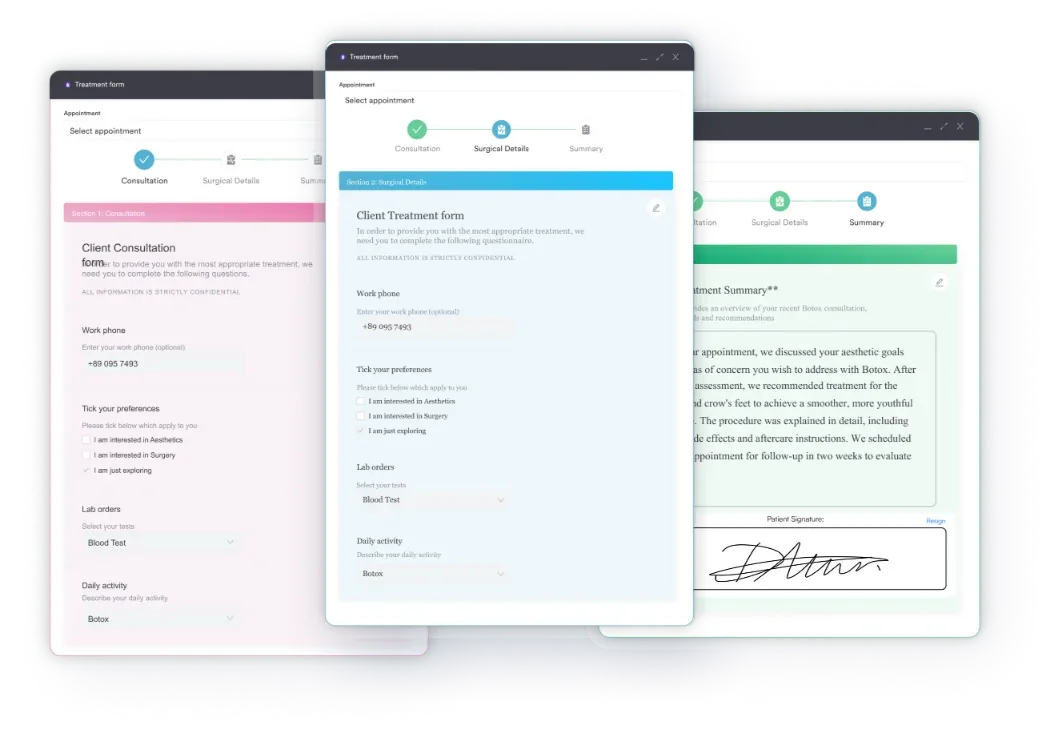
Pabau’s digital intake forms can embed a validated screening tool at check-in, score it automatically, and flag a high-risk result for staff follow-up.
A validated screening questionnaire covering mood, sleep, energy, and other core depression symptoms, plus scoring guidance for the PHQ-9, WHO-5, and Zung scale.
Download templateA patient tells you they’re just tired lately, sleeping badly, and not enjoying much. That could be a rough month, or it could be depression hiding behind vague complaints. A ten-minute conversation rarely settles it either way.
A depression self-assessment gives you a faster, more reliable read. The PHQ-9 turns nine simple questions into a score you can act on within minutes, and it’s the tool most practices reach for first. Get the scoring right, though, and one single answer on that list can matter more than the total ever will.
A depression self-assessment is a validated questionnaire that flags patients who may have depression. It doesn’t diagnose anything. The most common version, the PHQ-9 (Patient Health Questionnaire), scores nine symptoms drawn straight from the DSM-5 criteria for major depression.
Those nine symptoms cover mood, interest, sleep, energy, concentration, appetite, guilt, movement, and thoughts of self-harm. Patients rate how often each symptom showed up over the past two weeks. They use a simple scale from 0 to 3: not at all, several days, more than half the days, or nearly every day.
That distinction matters more than it sounds. A self-assessment score is a starting point for a conversation, not an endpoint. The WHO’s depression self-assessment tool, for example, asks about diagnosis history, prior treatment, and current symptoms, then calculates and evaluates a score. Turning that score into a clinical judgment, and deciding what happens next, is still down to a trained health professional. A private practice reviewing outcomes needs the same measure captured at intake and at review.
The US Preventive Services Task Force gives depression screening in primary care a Grade B recommendation. That means it should be offered to every adult patient. The PHQ-9 is the tool most guidelines point to for that job. It takes just two to three minutes and maps directly onto DSM-5 criteria.
Each PHQ-9 item maps to one DSM-5 depression criterion. That lets a clinician see exactly which symptom is driving a high score.
That last item, question nine, deserves its own flag. Any answer above “not at all” needs a same-day safety conversation, no matter what the total score comes out to. We’ll come back to that in the scoring section below.
Appetite change is easy to underestimate on a nine-item form. A whole food diet plan template gives you a simple way to track intake changes alongside the score, rather than letting that answer get lost in the total.
Practices often send a binge eating screener as a pre-visit form, then file the score, severity band and clinical impression in the chart. Moderate results point toward a registered dietitian, and severe results toward an urgent specialist eating disorder referral.
The PHQ-9 isn’t the only validated option. Clinicians pick a tool based on setting, patient population, and how much time they have. The table below lines up the most common ones.
Public domain tools cost nothing and need no license request. The Beck Depression Inventory is the exception. It’s copyrighted by Pearson and requires a paid license, which is why most primary care practices default to the PHQ-9, WHO-5, or Hamilton scale instead.
Add up the nine item scores for a total between 0 and 27. That number sorts into five severity bands, and each band points to a different next step.
A score under 5 needs no action beyond routine care. From 5 to 9, watchful waiting is enough, with a repeat PHQ-9 at the next visit. Once the total reaches 10, it’s time to build a treatment plan that may include counseling, medication, or both. From 15 to 19, that treatment should already be active.
Anything at 20 or above calls for pharmacotherapy right away. If the impairment is severe or the response is poor, add an expedited referral to a mental health specialist.
Item nine overrides the total score. If a patient answers anything other than “not at all” on the suicidal ideation question, ask directly about intent and plan. Confirm access to means before they leave the room. A low total score doesn’t cancel out a positive answer here. Document exactly what you asked and what the patient said, not just the number.
The PHQ-9 isn’t always the right fit. Some practices prefer a shorter well-being check, others need a more detailed research-grade tool. Two options come up often.
The WHO-5 skips symptom checklists and asks about well-being instead. Patients rate five statements, like feeling cheerful or waking up rested. Each uses a scale from 0 to 5 over the past two weeks. Add the five scores for a raw total of 0 to 25, then multiply by 4 to get a percentage. A result of 50 or below suggests low mood. A result of 28 or below points to probable depression that needs a fuller assessment.
The Zung scale takes longer. It has 20 items, each rated on a 4-point frequency scale, for a raw total between 20 and 80. It digs deeper than the PHQ-9, which makes it more common in psychiatry and research than in a busy primary care visit. Converted to the standard SDS index, a result of 50 or higher generally signals clinical depression that needs specialist evaluation.
The PHQ-9 works best as a rhythm, not a one-off. Most practices give it at intake, then repeat it every few weeks during active treatment. They give it again at discharge to prove the treatment actually worked.
Between those scores, a plan for a mild or moderate result often includes physical activity alongside counseling. An exercise motivation inventory separates enjoyment and challenge from appearance and outside pressure, and that split predicts whether a routine lasts.
A few mistakes show up again and again. Handing over the form without context, so the patient rushes through it or feels judged. Filing the score without recording the severity band, which leaves the next clinician guessing. And treating a positive item nine as routine because the total score wasn’t high, when a single symptom can outweigh the sum.
Practice management software like Pabau lets you build the PHQ-9, or any validated tool.
Patients complete it on a tablet or their phone before the appointment, and the score calculates itself, with the result landing in the patient record automatically, so there’s no spreadsheet or paper file to lose track of. The same setup works whether you’re running general intake or a dedicated mental health EMR.
That single record matters more than it sounds. When screening lives next to treatment notes and prescriptions, nothing gets missed because a form sat in a drawer. Automated workflows can flag a high-risk score for staff follow-up, so it doesn’t wait for someone to notice.
Self-assessment tools screen. They don’t diagnose. A high PHQ-9 or WHO-5 score doesn’t rule out other causes behind the same symptoms. Thyroid disease, anemia, medication side effects, grief, and substance use can all push a score up. A clinical interview still decides what’s actually going on.
Treat a self-assessment score as one input, not the whole decision.
Depression screening isn’t just good practice. In most settings, it’s billable too, provided the documentation holds up.
Medicare covers one annual depression screening a year under HCPCS code G0444, but the billing rules depend on the visit. It’s bundled into the Initial Preventive Physical Exam (G0402) and the Initial Annual Wellness Visit (G0438).
Both already require depression screening as a core element, so G0444 can’t be billed separately alongside either one. A Subsequent Annual Wellness Visit (G0439) doesn’t require screening as a core component, which makes G0444 separately billable there. It can also stand alone at another covered visit, provided the documentation supports it.
Outside Medicare, most commercial payers use CPT code 96127 instead, for a brief emotional or behavioral assessment with a standardized instrument. It’s billed per instrument.
There’s no specialty restriction on who can use this code. Any qualified professional can bill it for a tool like the PHQ-9 or GAD-7. Payer rules and per-day unit caps still apply.
Once you’ve screened, two quality codes track the outcome for MIPS reporting. Neither pays directly; they’re quality-measure codes. Picking the wrong one creates a documentation mismatch an auditor will catch.
A validated depression self-assessment, most often the PHQ-9, turns a vague hunch into a number you can act on. It won’t diagnose anyone. What it will do is flag who needs a closer look and track whether treatment is working. It also gives you a defensible record of what happened when a score demanded action.
If you’re ready to build a screening tool straight into your intake process, rather than chasing paper forms, book a demo. We’ll show you how Pabau handles the scoring and the follow-up automatically.

Screening for anxiety too? GAD-7 anxiety assessment uses the same scoring style and pairs naturally with the PHQ-9 at intake.
Working with a younger patient? Children’s depression inventory is the validated pediatric equivalent of the PHQ-9.
Want a calming exercise to use in session? Mindful breathing script offers settling instructions and breath-awareness cues for individual or group sessions.
Working with clients on their relationship with food? Mindful eating worksheet uses a 1-10 hunger scale and emotional trigger prompts to guide sessions.
Not the standard adult version. Clinicians use the PHQ-A, a modified version validated for ages 11 to 17, which adjusts the wording and adds context around self-harm risk. Using the adult PHQ-9 on a younger patient can misread normal teenage mood swings as clinical symptoms.
The PHQ-2 asks only the first two PHQ-9 questions, mood and interest, scored 0 to 6. A result of 3 or higher means you follow up with the full nine-question PHQ-9. It’s a fast pre-screen, not a replacement.
No. The PHQ-9, WHO-5, and Zung scale are all self-administered, so a patient can complete one in the waiting room without clinical supervision. Interpreting the result and deciding what to do next still needs a trained clinician.
It’s part of the medical record, protected like any other health information under HIPAA or GDPR. It has no automatic link to employment. Life or health insurers only see it if a patient authorizes a full records release during underwriting.
A self-assessment is a fixed set of questions producing a score. A mental status exam is a broader, in-person clinical observation covering appearance, speech, thought process, and mood, carried out by a clinician rather than a form.