Patient follow up letter template
A patient follow up letter template lets your practice confirm a patient’s...

2
Last Updated: Oct 21, 2026

A character strengths assessment measures 24 positive traits that the VIA Classification groups under six virtues.
The free template on this page is a printable 24-statement form, and the client rates each statement from 1 to 5.
The form carries no virtue headings, no scoring boxes, and no interpretation notes, so you rank the ratings yourself.
The VIA Survey is the validated online alternative, with 96 questions for adults and a separate youth version.
Practice management software like Pabau stores completed forms and strength-based goals on the client record.
A printable two-page form listing 24 character strength statements, each rated from 1 to 5 by the client. It carries header fields for patient and practitioner details, and it leaves the scoring and interpretation to you.
Download templateStrength-based work starts with one question. What does this client already do well? A character strengths assessment turns that question into something you can record, revisit, and build a care plan around.
This page gives you a free printable form and the guidance that goes with it. The template lists 24 character strength statements. The client rates each one from 1 to 5, and the conversation takes over from there.
You’ll find what sits inside the file and how to score it by hand. The last section compares the paper form with the validated online surveys.
A character strengths assessment identifies the positive traits a person draws on most. It sits inside positive psychology rather than diagnosis. Instead of cataloging what is wrong, it gives the clinician something to build on.
The classification side of intake sits on a separate form. Practices that need both run a structured diagnostic assessment alongside the strengths work.
The best-known framework is the VIA Classification of Character Strengths and Virtues, published by Christopher Peterson and Martin Seligman in 2004. It names 24 strengths and groups them under six virtues. Creativity, kindness, bravery, and gratitude are four of them.
A completed assessment ranks those 24 strengths. The highest few are usually called signature strengths, meaning the ones that feel most natural and energizing to use. Those become the anchor for goal setting, resilience work.
A character strengths assessment sits apart from personality and ability testing. The Myers-Briggs Type Indicator sorts people into types, and an IQ test measures capacity. This one measures character, meaning how someone shows up in relationships, work, and community.
If a type-based picture would help too, our personality test template compares the Big Five, MBTI, and VIA side by side.
The file is a two-page clinical form, and it’s deliberately plain. Here is exactly what opens when you download it.
That’s the whole file. There are no virtue headings on the form, no totals or subscale boxes, and no interpretation notes printed alongside the items. The scoring and the meaning-making stay with you, which is what the next section covers.
Keep that in mind when you hand it over. Clients who have taken an online strengths survey will expect a report at the end. Tell them upfront that you will walk through the results together instead.
Scoring takes about five minutes and needs nothing but the sheet itself.
One caution matters here. Each strength on this form is measured by a single statement, so the result is a conversation starter and not a test score. Treat a low rating as something to ask about, never as evidence that the strength is absent.
Need data you can defend in a report or a research write-up? Send the client to the free VIA Survey, and keep the paper form for the discussion in the room.
Occupational therapists often score assessments like this directly inside occupational therapy software, keeping results attached to the treatment plan.
The assessment slots into intake, into a mid-treatment review, or into the first coaching session. A five-step workflow keeps it consistent across a team.
Mental health clinicians use it to build alliance early. Naming what a client does well in the first session changes the tone of everything that follows. Strengths work has become routine in trauma recovery, in anxiety and depression, and during life transitions.
HR and occupational health teams run it at onboarding, in team development, and in leadership coaching. Mapping the strengths across a team informs who takes which role and where friction is likely.
School counselors and educators use the youth version in character education and pastoral work. It gives students language for what they are good at, which supports peer connection and academic resilience.
The adult wording on this form suits clients aged 18 and over. The VIA Youth Survey is validated for ages 8 to 17. Neurodivergent clients and trauma survivors often find a strengths conversation a relief after years of deficit-focused assessment.
It builds alliance and hope. Opening with strengths signals that you see the client as capable. That shifts the dynamic toward collaboration rather than repair.
It makes goals more specific. Reduce anxiety is a wish. Use your courage to take one small step toward the feared situation this week is a goal. Strength-based goals also tend to stick, because they run on something the client already enjoys.
It gives your notes something to track. Recording which strengths a client leaned on during a hard month builds a picture of what works for that person. That picture feeds relapse prevention and booster sessions.
It supports personalized care planning. A documented strengths conversation shows how a plan was agreed with the client rather than handed to them. Keep completed forms in psychology practice software with access controls and an audit trail.
It reduces shame and improves retention. Clients who feel seen for more than their symptoms tend to stay in treatment longer. That matters most in mental health, where low self-worth is often the presenting problem itself.
Record the client’s own words about their top strengths during the review. One client named creativity and said she feels most alive when solving problems in unusual ways. Map that straight to a goal, such as testing creative coping strategies for anxiety. Her sentence will do more work at the next review than a rating ever does.
The VIA Classification groups the 24 strengths under six virtues. Knowing the structure helps you read a completed form and choose an intervention that fits.
The virtues do not hold equal numbers. Wisdom and transcendence carry five strengths each, courage and temperance four, and humanity and justice three.
Expect one thing when the form comes back. The 24 statements are not grouped by virtue, and their order does not match the table above. The printed form follows the earlier taxonomy Seligman set out in Authentic Happiness in 2002, where forgiveness, humor, and zest sat under transcendence.
The 2004 VIA Classification later moved forgiveness to temperance and zest to courage. Humor stayed under transcendence in both versions. Neither sequence is an error, so group the items yourself if the virtue categories matter for your notes.
A client scoring highest in wisdom strengths tends to respond to psychoeducation and cognitive work. Courage-strong clients do well with behavioral activation. Humanity-strong clients often prefer relational or group work.
The printed form is not competing with the validated instruments. It does a different job, and the table below shows where each option fits.
All of them describe the same 24 strengths, so the vocabulary carries across. The VIA Survey is free to complete and the in-depth reports are sold separately, which is worth explaining before you send a client to it.
Check the current licensing terms on the publisher’s site before you use any instrument with a group or inside a paid program.
Most practices hand this form over on paper. It comes back with 24 ratings on it, someone types a short summary into the notes, and the sheet goes into a folder. A year later, nobody can say whether the client’s top strengths moved.
Practice management software like Pabau closes that loop. You rebuild the 24 statements as a digital form, send it before the appointment, and the client completes it on a phone. The answers land on their record without anyone retyping them.
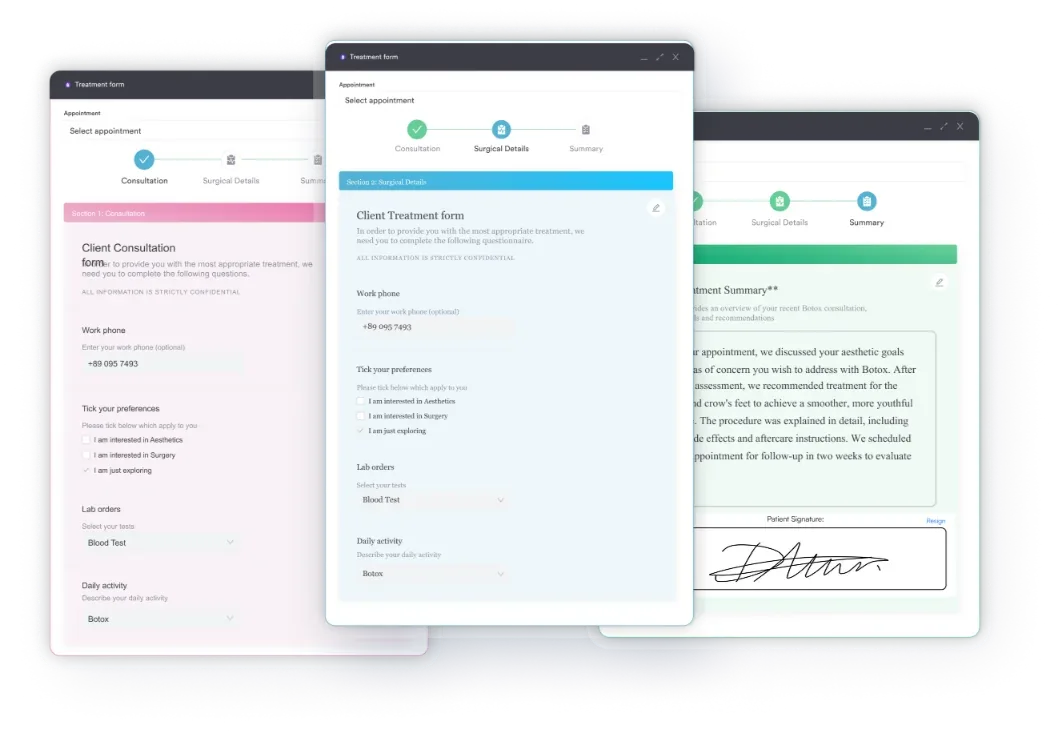
From there the strengths sit next to the treatment plan, the session notes, and the measures you already track. At review you can open the record, compare this year’s ratings with last year’s, and see what actually changed.
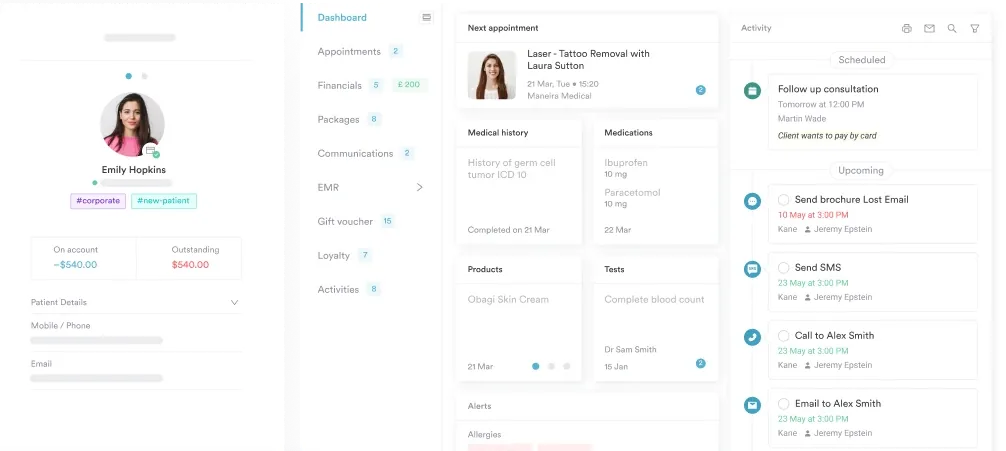
The outcome is a strength-based history your team can use, rather than a paper form nobody reads twice.

Pabau’s digital forms and client records let you send the assessment, store the ratings, and track strength-based goals over time. Everything sits in one place, so a review session starts with the history already in front of you.

A character strengths assessment earns its place when it changes what happens next in the room. The ratings matter less than the conversation they open.
Use the printed form for that conversation, and be straight with clients about what it is. It’s a structured checklist, not a scored report. When you need validated, ranked data, send them to the VIA Survey and keep both results on file.
The trade-off is worth remembering. Five minutes on paper buys a shared language for the rest of the work. That only holds if somebody writes the result down where the next clinician will find it. Book a demo to see how Pabau stores completed assessments and strength-based goals alongside the rest of the client record.

Need to assess adaptive functioning too? Vineland Adaptive Behavior Scale documents adaptive functioning across communication, daily living, socialization, and motor skills.
Running strengths work in a group? Group therapy informed consent explains what to include, covering confidentiality limits, rules, and boundaries.
Supporting a client with visual schedules? Visual schedule autism template plans activities and transitions with built-in anxiety reduction strategies.
Curious what a client defends against? Defense mechanisms worksheet pairs the strengths conversation with the coping patterns sitting underneath it.
Closing out a course of therapy? Therapy termination letter gives you the wording for a clean, documented ending.
A character strengths assessment measures 24 positive traits that the VIA Classification groups under six virtues. Practitioners use it to identify the handful of strengths a client relies on most. Those signature strengths then shape goals in therapy, coaching, and personal development.
No. The form is a flat list of 24 statements, each rated from 1 to 5, with one line explaining the rating scale. There are no virtue headings, no totals, and no interpretation notes. You rank the ratings yourself and discuss the highest ones with the client.
Copy the ratings onto one sheet, then sort the 24 statements from highest to lowest. Everything rated 5 goes into the top group. Ask the client which of those feel most like them, and record the four or five they choose as signature strengths.
No. Each strength is measured by a single statement, so the result is not reliable enough to be treated as a test score. Use it as a structured conversation starter. When you need validated data, send the client to the free VIA Survey instead.
Character strengths assessments measure virtues and positive qualities that support well-being and resilience. Personality tests such as the Myers-Briggs Type Indicator sort people into stable types instead. One is strength-focused and therapeutic, the other is descriptive.
Yes. The VIA Institute on Character offers the VIA Survey free of charge at viacharacter.org. The adult version runs to 96 questions and takes 10 to 15 minutes. In-depth reports are sold separately.
Yes. The VIA Youth Survey is validated for ages 8 to 17, which suits school counseling and youth coaching. The printed form on this page uses adult wording, so read it aloud with younger clients or use the youth survey instead.