Reflection questions: 14 examples and a free template
Reflection questions are open-ended prompts that guide a person through structur...

7
Last Updated: Oct 16, 2026

The couple communication worksheet is a free PDF holding 16 open-ended questions for partners to answer in their own words.
Its four sections cover communication styles, conflict resolution, emotional connection, and relationship goals.
Each partner answers separately, so comparing the two sets of answers gives you a ready-made agenda for the session.
The four communication styles are passive, aggressive, passive-aggressive, and assertive, and section I usually reveals which one a client defaults to.
Practice management software like Pabau sends the worksheet digitally and files completed answers in the client record.
The PDF gives each partner 16 open-ended questions to answer across four sections: communication styles, conflict resolution, emotional connection, and relationship goals. It also carries fields for both partners’ details and space for additional notes.
Download templateCouples rarely arrive in therapy able to describe how they communicate. They arrive with the argument they had on Tuesday. A structured worksheet moves the conversation from that one argument to the pattern sitting underneath it.
This free worksheet gives each partner 16 open-ended questions to answer in their own words. Therapists, counselors, and relationship coaches can send it out before a first appointment or set it as homework. The rest of this page covers what each section is for, what to listen for in the answers, and how to run the debrief.
A communication worksheet is a guided practice tool that helps clients look at how they speak and listen. It pairs reflection prompts with structured exercises, aimed at one specific challenge. That might be stating a need without blame, listening without interrupting, or staying calm during a disagreement.
The format does three jobs in a practice:
Send it as a digital intake form through your client portal. The answers then land in the client record instead of a folder on your desk.
Poor communication sits underneath a large share of relationship distress and unresolved conflict. Work in cognitive behavioral therapy (CBT) and family systems theory points the same way. Teaching couples explicit skills, such as assertive requests and active listening, lowers conflict and lifts relationship satisfaction.
Within a therapy practice, a worksheet turns that teaching into something concrete. Couples who write their answers down tend to hold the skill longer than couples who only talk it through in the room.
All communication falls into one of four styles. Helping each partner spot their own default is where the work starts.
Most people default to one of the first three, usually learned early in family life. Section I of the worksheet asks how each partner states a need, and how they react when a need is stated to them. The answers tend to make the default style obvious before you name it.
Active listening means hearing what your partner said before deciding how to answer. Most people listen reactively. They catch a few words, build a rebuttal, and wait for their turn to speak.
You can teach the skill in session with three moves. Partners reflect back what they heard, name the emotion they picked up, then ask one clarifying question before replying.
Nonviolent communication is a framework developed by Marshall Rosenberg. It breaks a difficult conversation into four steps. You state what happened, name the feeling it raised, identify the need behind that feeling, and make one specific request.
Take a line like: You always ignore me. Reframed, it becomes: When you did not reply to my message, I felt hurt, because I need to feel heard. The request follows: Would you check in with me each day?
That shift moves a conversation from blame toward connection. Section III of the worksheet asks what gets in the way of feeling emotionally connected, which is where the reframing earns its keep.
Each partner answers the same 16 questions alone, then you compare the two sets in session. The distance between the answers usually tells you more than the answers themselves.
Keeping both sets of answers in the client record next to your session notes keeps the thread visible across appointments. A pattern that surfaces in session two is far easier to spot when session one is on the same screen.
When one partner’s answers keep sliding away from the question, a defense mechanisms worksheet makes a useful follow-up.
Abstract goals like communicate better rarely survive a bad week. Section IV works best when you help the couple turn its answers into something countable. One active listening reflection a day, or one I-statement per disagreement, both qualify.
Track those goals appointment by appointment and progress becomes visible to the couple, not only to you. A circle of influence worksheet helps when a partner keeps setting goals that depend on things they cannot control.
Emailing a PDF works until you need to know who actually filled it in. Answers come back as attachments, or they do not come back at all, and nothing reaches the record. A mental health EMR closes that loop.
With practice management software like Pabau, the worksheet goes out as a digital form from the client portal. Each partner completes it on their phone, and the answers save straight to the couple’s record. Reminders chase anyone who has not finished, so you are not opening the session with an apology.
Shared records also keep a practice team aligned when a couple sees more than one clinician.
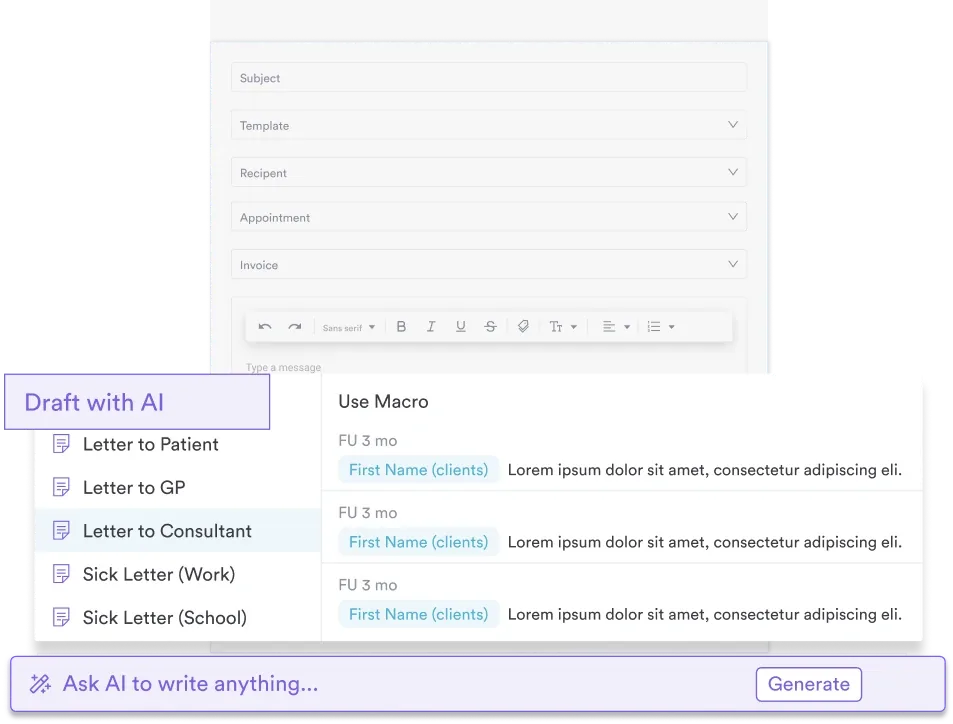

Pabau’s client portal and digital forms send the couple communication worksheet, chase completion, and file both partners’ answers in one client record.

The worksheet is only worth the conversation it starts. Its 16 questions get both partners’ assumptions onto paper, where you can set them side by side and ask why they differ.
Download it, assign it before your next couples appointment, and read both sets of answers beforehand. That single change turns the first ten minutes of the session from catch-up into work.
Across a full caseload, practice management software handles the sending, the chasing, and the filing. Book a demo to see how Pabau puts completed worksheets straight into the client record.

Closing a course of therapy? Therapy termination letter gives you the wording and structure for a clean discharge.
Working with coaching clients too? Coaching evaluation form collects structured feedback at the end of a program.
Improving how you diagnose ADHD? ADHD visual test covers visual attention screening and processing speed tasks that support diagnosis.
Need to measure outlook over time? Herth Hope Index scores a client’s sense of hope at intake and at review.
Running a coaching caseload? Coach notebook keeps session plans and client notes in one place.
A communication worksheet gives clients structured prompts about how they speak, listen, and handle conflict. Therapists assign it as homework, then use the written answers to guide the next session and track progress on communication goals.
The four styles are passive, aggressive, passive-aggressive, and assertive. Passive communication avoids stating a need, aggressive communication states it at someone else’s expense, and passive-aggressive communication shows frustration indirectly. Assertive communication states needs and boundaries clearly while still respecting the other person.
Yes. Work in cognitive behavioral therapy and family systems theory links assertive communication with less conflict escalation and higher relationship satisfaction. Passive, aggressive, and passive-aggressive patterns tend to leave the underlying need unspoken, so the same argument keeps coming back.
Nonviolent communication is a framework developed by Marshall Rosenberg. It breaks a difficult conversation into four steps: stating the observation, naming the feeling, identifying the need, and making one specific request. The structure moves an exchange away from blame and lowers defensiveness.
A worksheet asks clients to write down what they heard their partner say before they write their own reply. In session, they rehearse the same three moves out loud: reflecting back, naming the emotion, and asking one clarifying question.
Yes. Couples therapy depends on communication skills, and a worksheet gives both partners the same questions to answer in their own words. Comparing the two sets of answers in session shows exactly where their assumptions differ.
The PDF runs to three pages and holds 16 open-ended questions. They are grouped into communication styles, conflict resolution, emotional connection, and relationship goals. It also carries fields for both partners’ details and space for additional notes.