Mental health self-care checklist
A mental health self-care checklist is a structured daily tool for tracking the ...

5
Last Updated: Oct 20, 2026

The Hoarding Rating Scale (HRS) is a validated 5-item clinician-administered tool measuring clutter, discarding difficulty, acquisition, distress, and impairment on a 0-8 scale.
Each item scores 0-8 for a total range of 0-40, and a validated cutoff of 14 or above indicates clinically significant hoarding.
The clinician-administered HRS-Interview yields more reliable severity data than the patient-facing HRS-Self-Report, though both serve different clinical contexts.
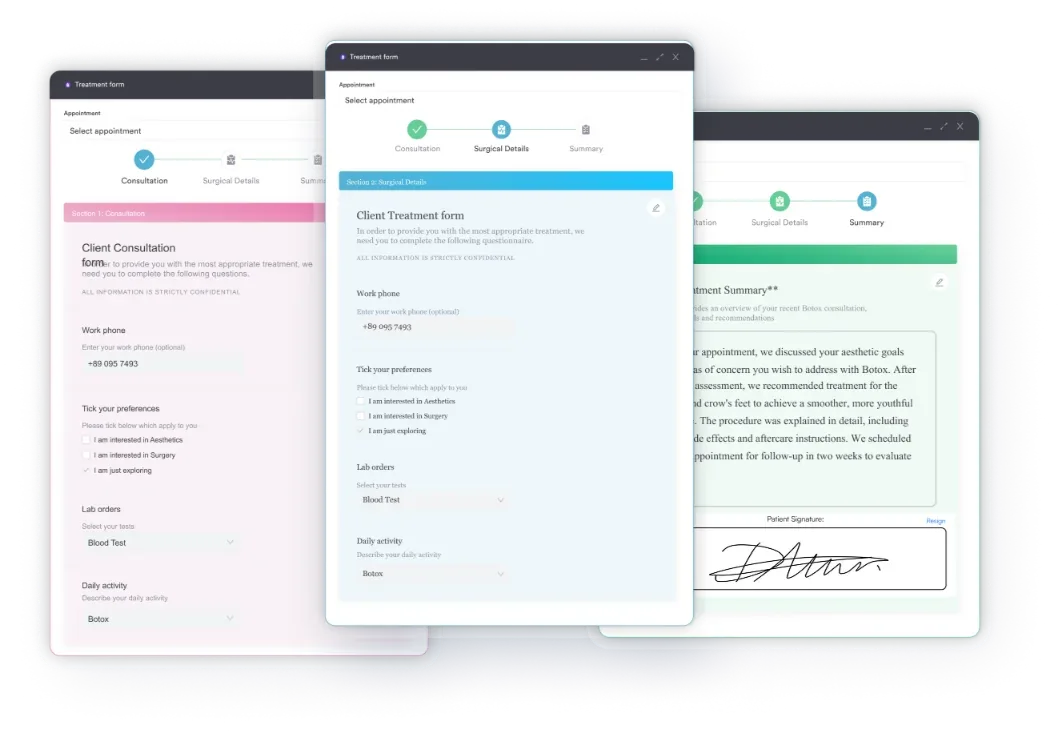
Practice management software like Pabau lets clinicians administer, store, and monitor HRS responses securely with digital forms and assessment tracking.
A validated 5-item assessment measuring clutter, difficulty discarding, acquisition, distress, and functional impairment. Each item scores 0-8, for a total range of 0-40, so you can track hoarding disorder severity and treatment response over time.
Download templateHoarding disorder affects millions of people globally and causes significant functional impairment — difficulty with daily activities, social isolation, and home safety risks. Accurate clinical assessment is the foundation for diagnosis, treatment planning, and tracking recovery.
The Hoarding Rating Scale is a validated, evidence-based tool clinicians use to systematically measure hoarding severity. It captures five critical dimensions: clutter level, difficulty discarding, compulsive acquisition, associated distress, and real-world functional impairment.
A single five-minute interview yields a clear severity score (0-40 range) that clinicians can repeat over time to document symptom change during cognitive-behavioral therapy or other interventions.
This guide covers administration, scoring interpretation, complementary assessment tools.
The Hoarding Rating Scale (HRS) is a brief clinician-administered interview designed to assess the severity of hoarding disorder and compulsive hoarding behaviors. Developed and validated by Tolin and colleagues in 2010, it provides a standardized, psychometrically sound measure of hoarding symptom severity in a format that takes 5-10 minutes to administer.
The HRS contains five items, each rated on a 0-8 scale:
Total score ranges from 0-40. The HRS is used in clinical and research settings to diagnose hoarding disorder per DSM-5 criteria, measure baseline severity, and track treatment progress.
Unlike self-report questionnaires alone, the interview format lets clinicians probe responses, clarify ambiguities, and observe the patient’s emotional reactions to hoarding-related questions. This yields more reliable severity data. According to the NIH validation study, the HRS shows strong internal consistency.
Cronbach’s alpha is 0.97 in clinic settings and 0.96 in home visits, with strong convergent validity against other hoarding measures.
The Hoarding Rating Scale interview is straightforward to administer in a clinical session. Follow these five steps to complete a structured assessment:
After scoring all five items (each 0-8), sum the total. Record the date and total score in the patient’s clinical notes. Store the assessment record securely using digital intake forms so scores are traceable across sessions for outcome measurement.
The Hoarding Rating Scale is designed for mental health professionals working with hoarding disorder across multiple settings:
Any clinician working with psychiatric patients or broader mental health caseloads can integrate the HRS into standard assessment protocols for systematic, evidence-based measurement of hoarding severity.
Turning this scale into a digital form with form capture software removes double entry and keeps every score legible.
Standardized assessment: The HRS provides a validated, evidence-based framework that clinicians and patients understand consistently. Instead of subjective impressions of clutter, you have a numerical score (0-40) that is comparable across patients and sessions.
Efficient administration: The five-item interview takes 5-10 minutes, making it practical for routine clinical use in outpatient, community, or telehealth settings. Brevity does not compromise psychometric quality. The HRS demonstrates strong reliability and validity despite its length.
Treatment outcome measurement: Repeating the HRS at baseline, mid-treatment, and discharge allows you to document meaningful symptom change during cognitive-behavioral therapy (CBT) or other interventions. Showing a patient that their HRS score dropped from 28 to 16 over six months of treatment reinforces progress and motivation.
Audit and compliance documentation: Recording structured HRS scores in patient notes demonstrates systematic, evidence-based practice. This supports clinical audit, regulatory compliance (CQC in England, HIS in Scotland), and HIPAA-compliant mental health record-keeping.
Research and benchmarking: HRS data can be aggregated to monitor clinic-wide outcomes, benchmark hoarding severity against published norms, and contribute to outcomes research in psychology practice settings.
One of the most powerful clinical applications of the HRS is tracking symptom severity over the course of treatment. Cognitive-behavioral therapy (CBT) and exposure and response prevention (ERP) are evidence-based interventions for hoarding disorder. By administering the HRS at the start of treatment, at regular intervals (e.g. every 4 weeks), and at discharge, you create an objective record of whether therapy is working.
Baseline and mid-treatment measurement: Administer the HRS at the first session and then monthly. Plot scores on a simple chart. A patient who starts at 32 and drops to 25 after eight weeks shows tangible progress. This objective measurement encourages both clinician and patient: you have data-driven evidence that CBT is reducing compulsive acquisition and discarding avoidance, not just subjective clinical impression.
Motivating behavior change: Patients often struggle to see progress in hoarding disorder because change is gradual. Pointing to a lower HRS score or reduction in a specific item (e.g. clutter rating dropped from 7 to 4) validates their effort and sustains engagement in challenging exposure work and discarding exercises.
Outcome documentation: Store HRS scores in a secure patient record so the full trajectory is visible. This supports clinical governance, demonstrates treatment effectiveness to funding bodies, and enables therapy practice management teams to audit outcomes across the practice.
While the HRS is a gold-standard severity measure, these companion tools add clinical context. The Clutter Image Rating, Saving Inventory-Revised, and ADL-H are validated psychometric instruments. The Home Safety Assessment, by contrast, is a structured clinician checklist rather than a scored, validated tool.
A comprehensive hoarding assessment battery typically combines the HRS (severity interview) with the CIR (visual clutter), SI-R or ADL-H (patient perspective), and often a home safety check. This multi-method approach captures the full clinical picture: objective severity, patient-reported distress, functional disability, and safety risks. Store all assessment results in secure digital forms for easy retrieval across treatment phases.
Many practices tracking hoarding disorder keep HRS scores on paper, in a spreadsheet, or in a separate assessment tool that never touches the patient’s main record. That split makes it hard to see the trend across sessions, and harder still to hand a clean progress summary to a referring provider or a funding body.
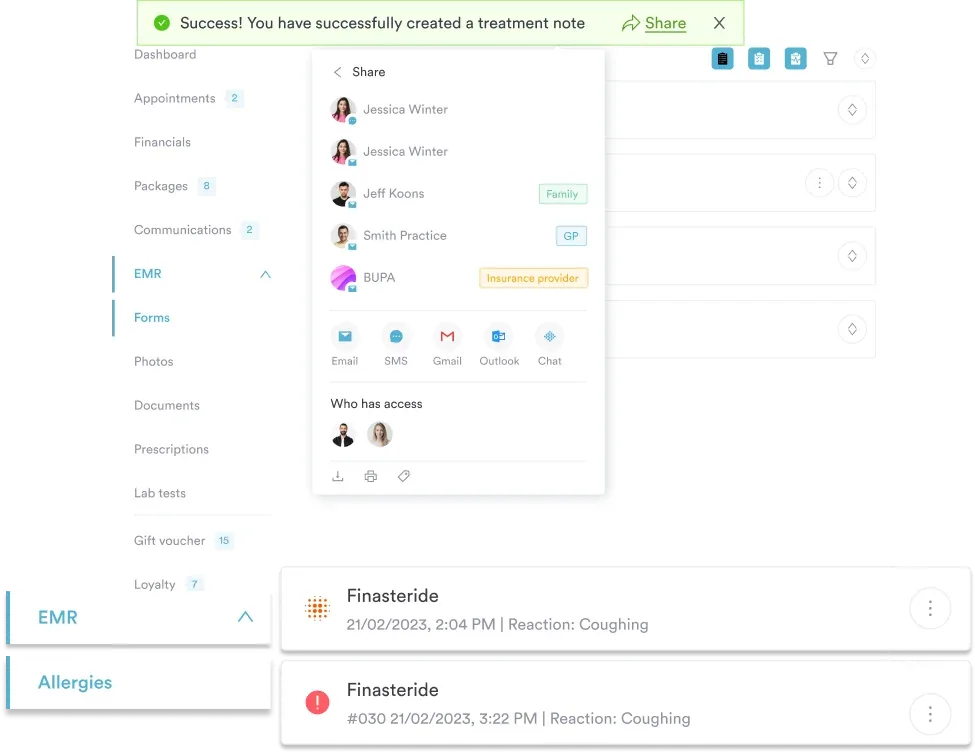
Practice management software like Pabau keeps HRS scores in the same digital record as the intake form, treatment notes, and every other assessment a clinician runs. Recording a new score takes a few minutes at the end of a session, and the platform keeps every prior score attached to that patient so the full trajectory stays visible.
That visibility matters most at review points: a mid-treatment check-in, a discharge summary, or an audit request. The clinician pulls up the patient’s record and shows the HRS trend directly, instead of digging through paper files, which speeds up clinical governance reviews and keeps documentation ready for HIPAA-compliant record-keeping.

Pabau’s digital forms and assessment tracking keep every HRS score attached to the patient’s record, so clinicians can review the full severity trend at a glance and keep documentation ready for compliance and outcomes reporting.

Hoarding disorder responds to treatment, but only when assessment is systematic rather than a clinical impression jotted down at intake. The Hoarding Rating Scale gives you that structure. A five-item interview turns a subjective sense that things look bad into a number you can defend, repeat, and compare across sessions.
Download the template above, add it to your intake and progress-monitoring protocol, and score it at the same intervals every time. The value is in consistency, not any single number. One HRS score tells you little, but a score repeated at baseline, mid-treatment, and discharge shows whether your CBT or ERP work is actually landing.
Book a demo to see how Pabau keeps every HRS score attached to the patient record it belongs to, so nothing gets lost between sessions.

Working through emotions beyond hoarding behavior? Letting go of resentment worksheet guides clients through acknowledging resentment, exploring forgiveness, and planning next steps.
Need a broader self-assessment tool for clients? Life checklist is a one-page template for rating current status and aspirations across life areas.
Need a grounding exercise to use in session? Equanimity meditation script gives you a guided script for calming acquisition-related anxiety before exposure work.
Working with patients who struggle to name their distress? Emotions card template helps patients identify and communicate feelings tied to discarding and clutter.
The Hoarding Rating Scale is a validated five-item clinician-administered interview that measures hoarding disorder severity across clutter, difficulty discarding, acquisition, distress, and functional impairment on a 0-8 scale per item (total 0-40). It takes 5-10 minutes to administer and is psychometrically sound for diagnosis, baseline assessment, and treatment outcome measurement.
The HRS-Interview (HRS-I) is clinician-administered in a session, allowing the clinician to probe, clarify, and observe emotional reactions. The HRS-Self-Report (HRS-SR) is a patient-completed questionnaire. The interview format yields more reliable severity data. The self-report is faster and can be used for screening or repeat administration between sessions.
A total HRS score of 14 or above indicates clinically significant hoarding that requires intervention. This cutoff, from the original Tolin, Frost, and Steketee (2010) validation study, correctly identified hoarding cases with 97% sensitivity and 97% specificity. Clinical judgment and a functional impairment assessment should still accompany score interpretation.
Yes. Administer the HRS at baseline, every 4-6 weeks during treatment, and at discharge. Dropping from 28 to 15 over six months of CBT demonstrates objective treatment response. This data supports motivation, clinical governance documentation, and outcomes reporting.
The HRS is a comprehensive clinician interview measuring five domains (clutter, discarding, acquisition, distress, impairment) in one score. The CIR is a photographic visual scale (1-9) for assessing clutter in specific rooms. Both are validated, and using them together provides clinician-reported severity plus objective visual clutter assessment.
Yes. If a home visit is possible, conduct the HRS interview on-site so you can directly observe clutter, safety hazards, and functional impairment. If the patient is seen in a practice setting, use their descriptions and photos as anchors. Either context produces valid HRS scores for diagnosis and monitoring.