Mental health self-care checklist
A mental health self-care checklist is a structured daily tool for tracking the ...

6
Last Updated: Oct 20, 2026

Emotional reasoning is a cognitive distortion where clients treat feelings as proof of truth — ‘I feel afraid, so I must be in danger’
The emotional reasoning worksheet helps therapists guide structured identification and challenging of this distortion during CBT sessions
This evidence-based tool works across anxiety, depression, PTSD, and other conditions where emotion-driven thinking undermines treatment progress
Practice management software like Pabau includes digital forms that make distributing and tracking completed worksheets part of your existing client management workflow
A therapeutic assessment tool designed to help clinicians identify and address cognitive distortions where clients mistake feelings for facts. This evidence-based worksheet supports CBT and REBT sessions with structured exercises that help clients recognize when emotions are influencing their perception of reality.
Download templateEmotional reasoning is one of the most stubborn cognitive distortions therapists meet in practice. A client believes their feelings are proof of reality: “I feel anxious, therefore something bad will happen.” The emotional reasoning worksheet is a structured way to break that cycle.
It helps clients build the awareness that emotions are information, not evidence. The worksheet turns that principle into a step-by-step exercise clients complete during sessions and review between appointments, so the insight sticks once they leave your office.
An emotional reasoning worksheet is a structured psychoeducational tool that helps clients and therapists identify moments when feelings are being treated as proof of reality.
The worksheet guides clients through three core steps: (1) naming the emotion they’re experiencing, (2) identifying the thought or belief that emotion triggered, and (3) examining the evidence for and against that thought using logic rather than emotion.
Aaron Beck laid the groundwork by identifying cognitive distortions in his early work on cognitive therapy in the 1960s.
Psychiatrist David Burns coined and popularized the specific term “emotional reasoning” in his 1980 book Feeling Good: The New Mood Therapy, building on Beck’s framework. Albert Ellis’s Rational Emotive Behavior Therapy (REBT) addresses similar patterns of emotion-driven belief as a parallel therapeutic tradition.
It differs from other distortions because the “evidence” the client believes in is entirely internal, a feeling, rather than external facts. Unlike catastrophizing (predicting bad outcomes) or mind reading (assuming what others think), emotional reasoning treats the emotion itself as irrefutable proof.
Clinicians use the worksheet across anxiety, depression, PTSD, eating disorders, and personality-related conditions, where emotion-driven thinking undermines progress. It belongs to the wider family of structured cognitive restructuring worksheets, which help clients weaken their belief in distorted thoughts when used consistently between sessions.
The fastest way to teach clients what emotional reasoning sounds like is to show it in everyday situations. Each example below follows the same pattern: a feeling shows up, the client treats it as fact, then a balanced thought puts the feeling back in its place.
| Situation | Feeling | Emotional reasoning thought | Balanced thought |
|---|---|---|---|
| Presenting at work | Anxiety | “I feel nervous, so I’m going to fail.” | “Nerves are normal before presenting. I’ve prepared and done this before.” |
| A partner goes quiet | Insecurity | “I feel unwanted, so they must be pulling away.” | “I feel insecure right now. They’ve been tired this week, so I can ask instead of assuming.” |
| Making a mistake | Shame | “I feel like a failure, so I must be one.” | “I feel embarrassed about one mistake. One error doesn’t erase my track record.” |
| A social event | Dread | “I feel like everyone will judge me, so they will.” | “I feel self-conscious. My fear isn’t proof of what other people actually think.” |
Walk through one or two of these with a client before they try their own. Seeing the distortion in a neutral example lowers defensiveness and makes it easier to spot the same pattern in their own week.
The emotional reasoning worksheet works best when introduced after psychoeducation about cognitive distortions. Here’s how to guide your clients through the five operational steps:
Distribute the worksheet at the beginning of session or as homework. When clients complete it between appointments, review it together in the next session and log the outcome in a mental health note. This shows you exactly where emotional reasoning is operating and what evidence-gathering skills need strengthening.
Platforms differ widely in how they handle clinical worksheets; comparing Carepatron competitors shows the gaps quickly.
The emotional reasoning worksheet applies across multiple mental health settings and clinical populations, from therapy practices to specialized tools like an emotional support animal assessment.
Therapy and counseling practices using CBT or REBT frameworks integrate this worksheet as a core intervention. Individual therapists in private practice use it with clients across anxiety disorders, depression, and trauma processing. Psychology and assessment practices embed the worksheet into broader treatment plans for personality disorders, where emotional dysregulation drives many presenting problems.
Psychiatry practices use the worksheet alongside medication to address cognitive patterns that pharmacotherapy alone won’t resolve. ADHD assessment practices find it valuable because emotional reasoning often co-occurs with executive function difficulties, and the worksheet provides external structure that compensates for internal disorganization.
Occupational therapy and speech therapy practices incorporate it when emotional regulation impacts functional goals.
It’s also useful in clinician wellness and supervision settings, where therapists themselves apply the worksheet to manage vicarious trauma and practice self-compassion.
Accelerates cognitive restructuring. Rather than relying on discussion alone, the worksheet creates a written record. Clients see their distorted thoughts on paper, which makes them easier to examine and challenge. The Centre for Clinical Interventions (WA Health) publishes the kind of evidence-based CBT worksheets clinicians use worldwide for exactly this reason.
Pairing it with a broader tool like an emotional intelligence test can help clients build wider emotional awareness alongside the targeted distortion work.
Reduces therapist burden during sessions. Clients arrive with homework already completed, which directs session time toward deepening insight rather than explaining the concept repeatedly. This is especially valuable in holistic patient care management where clinicians balance high caseloads.
Provides evidence for treatment progress. Worksheets create a paper trail of changing thoughts and beliefs. When clients review past worksheets, they see concrete evidence of skill development, which reinforces motivation and compliance. This pairs well with standardized measures like the Beck Depression Inventory for tracking symptom change alongside belief change.
Transfers responsibility appropriately to the client. The worksheet shifts the locus of change from therapist expertise to client agency. Clients learn they can challenge their own distorted thoughts, which builds self-efficacy and reduces dependency on therapy over time.
Emotional reasoning is often confused with related distortions because they all involve faulty thinking. The distinction matters clinically because interventions differ.
Emotional reasoning: “I feel afraid, so there must be danger.” The feeling itself is the “proof.”
Catastrophizing: “If I make a mistake, everything will fall apart.” The client predicts a negative outcome based on probability-distorted thinking, not feelings.
All-or-nothing thinking: “If I’m not perfect, I’m a complete failure.” The client evaluates themselves on an extreme binary scale, not based on emotion or prediction.
Mind reading: “They think I’m stupid.” The client assumes they know what others think without evidence, but the mechanism is cognitive assumption, not emotional conviction.
When a client states “I feel like I’m failing,” probe further: Is it emotional reasoning (“Because I feel anxious, I must be failing”), catastrophizing (“My anxiety means I will fail”), or all-or-nothing (“Any mistake means I’m a total failure”)? The answer shapes which worksheet variant to use and where cognitive restructuring needs to focus.
For anxious and depressed adults: Use the standard worksheet. Most adults have sufficient metacognitive ability to distinguish emotions from facts once the concept is explained.
For adolescents (age 12-17): Simplify language. Use relatable scenarios (peer relationships, school performance). Include a visual emotion thermometer and examples that matter to teens (social exclusion, academic pressure).
For trauma survivors (PTSD): Emphasize safety planning before using the worksheet.
Emotional reasoning in PTSD often involves legitimate threat detection (“I feel unsafe because my nervous system remembers danger”), so distinguish between emotional reasoning distortions and valid somatic cues requiring grounding techniques.
For clients with autism spectrum conditions: Use concrete language and provide explicit examples. Many autistic clients are highly literal and may need scaffolding to understand the distinction between feeling and fact.
Complete the emotional reasoning worksheet WITH your client during the first use rather than assigning it as homework. Modeling the thinking process reduces shame and increases accuracy. Once they understand the steps, homework assignments become more effective.
The emotional reasoning worksheet integrates into your workflow at multiple touchpoints. Use it during sessions when clients describe a distressing thought loop.
Assign it as homework with clear instructions: “Complete one example this week of a time you felt a strong emotion and write down the thought you believed.” Clear instructions like this also support patient compliance with homework assignments generally.
Practice management software like Pabau stores completed worksheets as digital forms inside each client’s record, so you and the client can pull them up between appointments. Review progress by tracking how many worksheets a client completes and whether their belief ratings drop over time.
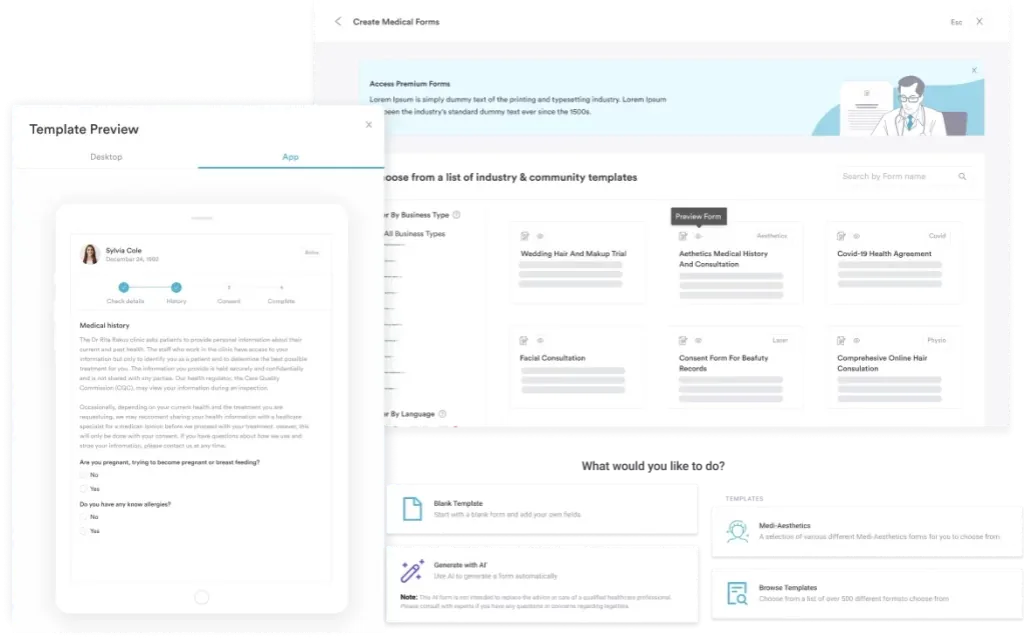
Using practice management software built for psychology practices, store templates in your EHR so every clinician can access the same version. This ensures consistency across your team and makes it easy to pull worksheets during supervision or training.
The emotional reasoning worksheet is a measurement tool as well as an intervention. Track the belief rating clients assign to their automatic thoughts at the beginning and end of treatment. A client who starts at 8/10 belief (“I’m going to fail”) and drops to 3/10 after 8 weeks of worksheets demonstrates concrete progress.
Count frequency: How many emotional reasoning episodes per week does the client identify? Improvement appears as fewer episodes and faster recognition of the distortion pattern. Document these metrics in a SOAP note for mental health for insurance, supervision, and outcomes tracking.

Pabau’s client management system stores completed worksheets, tracks client progress on cognitive goals, and ensures all clinicians access the same templates. Book a demo to see how digital worksheet management accelerates therapy outcomes.

Challenge: Clients resist writing. Some clients say “talking is easier.” Reframe: “Writing forces your brain to slow down and examine the thought. It’s harder, but that’s what makes it work.” Offer to scribe the first one together, then assign homework once they see the value.
Challenge: Clients complete worksheets but don’t change beliefs. This often signals that the automatic thought is a realistic assessment rather than a distortion, so treatment moves from cognitive disputing to regulating emotions.
Pause and validate: “You might genuinely be in a difficult situation. Let’s use the worksheet to identify which thoughts ARE distortions and which are accurate, so we can focus your energy on what you can control.” In these cases.
Challenge: Therapists forget to review completed worksheets. Build it into your session structure: first 10 minutes = review homework, including any worksheets completed. This signals to clients that the work matters and improves accountability on both sides.
Challenge: Worksheets feel repetitive after multiple uses. Vary the format. Use the standard version, then try the “evidence court” variant (client argues both sides of the thought), then the “values clarification” version (how does this distortion block your values?). Rotation keeps engagement high.
Cognitive restructuring is one of the most studied parts of CBT, with a strong evidence base for anxiety, depression, and trauma-related disorders. The worksheet approach aligns with the treatment guidelines published by the American Psychological Association.
When worksheets are a routine part of your sessions, clients arrive with insight already forming rather than starting from scratch each week.
The emotional reasoning worksheet transforms how you address one of the most pervasive cognitive distortions in mental health practice. By guiding clients through structured identification and evidence-gathering, you help them move from emotion-driven thinking to balanced, reality-based cognition. The worksheet creates accountability, reduces therapy time spent repeating the same points, and gives clients agency over their own cognitive change.
Distribute it early and often, review completed worksheets together, and track belief-rating changes to measure progress. Used consistently, the emotional reasoning worksheet becomes a reliable part of an efficient, evidence-based practice.
Ready to streamline how you track and manage client worksheets? Book a demo of Pabau’s client management system to see how digital worksheet storage accelerates your clinical workflow.

Need a defusion exercise for session too? Leaves on a Stream script guides a five-minute cognitive defusion exercise you can read aloud in session.
Need a validated depression screen too? Major Depression Inventory screens mood, guilt, and physical symptoms against ICD-10 and DSM-IV criteria in 10 items.
Need to document mood versus affect clearly? Mood and affect list distinguishes a patient’s sustained mood from the affect observed during a mental status exam.
Emotional reasoning is treating feelings as proof of reality. For example, “I feel anxious, therefore something bad will happen” or “I feel like a failure, therefore I am one.” The feeling itself becomes the evidence, which is logically flawed because emotions reflect our interpretation, not objective fact.
For acute conditions (active anxiety, depression, PTSD), one worksheet per week during therapy is standard. For maintenance and relapse prevention, monthly or as-needed completion suffices. Frequency depends on the client’s ability to self-monitor and the severity of emotional reasoning patterns.
Yes, with age-appropriate adaptations. Children under age 10 usually benefit from verbal discussion paired with drawing or visual worksheets. Ages 10-14 can use simplified written versions with concrete examples. Teenagers can use the standard adult worksheet with brief psychoeducation about brain development and emotion regulation.
Emotional reasoning uses feelings as proof. Catastrophizing predicts negative outcomes. All-or-nothing thinking evaluates on extremes. Mind reading assumes you know others’ thoughts. Each distortion requires slightly different worksheets and interventions, though the core cognitive restructuring approach applies to all.
Track belief ratings: does the client rate their belief in the distorted thought lower over time? Count frequency: do they identify fewer emotional reasoning episodes weekly? Review clinical outcomes: are anxiety, depression, or trauma symptoms improving? Worksheets are working if all three metrics show improvement.