Mental health self-care checklist
A mental health self-care checklist is a structured daily tool for tracking the ...

6
Last Updated: Oct 20, 2026

The M-CHAT-R screens toddlers aged 16 to 30 months for autism risk, and it never produces a diagnosis.
Scores of 0 to 2 are low risk, 3 to 7 medium risk, and 8 to 20 high risk.
Items 2, 5, and 12 are reverse scored, so a yes answer counts toward risk on those three.
A medium-risk score needs the follow-up interview before anyone decides on a referral.
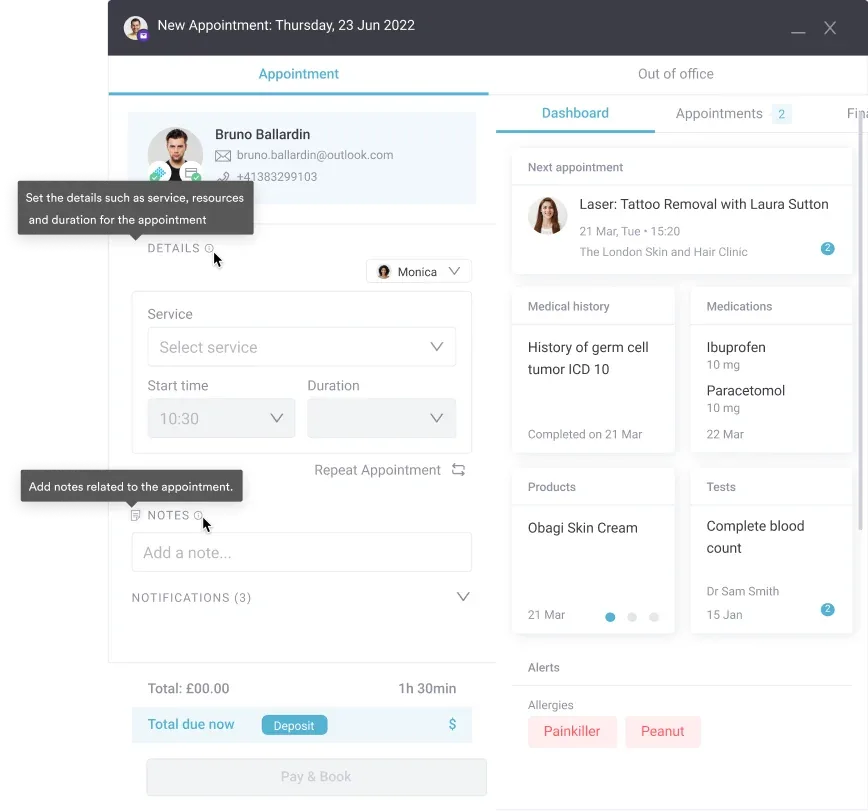
Digital forms and automated recall keep screening and follow-up on track in practice management software like Pabau.
All 20 parent-answered questions, the scoring key with the three reverse-scored items marked, and the risk cutoff table. Print it for the exam room, or rebuild it as a pre-visit digital form.
Download templateThe M-CHAT-R is a 20-item questionnaire that parents complete to flag autism risk in toddlers aged 16 to 30 months. A total of 0 to 2 is low risk, 3 to 7 is medium risk, and 8 to 20 is high risk.
The screen itself takes minutes. The parts that go wrong sit on either side of it. Three items score in reverse, and every medium score needs a second stage before a referral decision. Both are easy to miss on a busy well-child day.
This guide covers the questions, the scoring key, the follow-up interview, and where the referral goes. It also covers how the screen gets billed, and how to stop follow-up appointments from quietly slipping.
The M-CHAT-R is a parent-completed questionnaire that screens toddlers for autism spectrum disorder (ASD) risk. Diana Robins, Ph.D., and colleagues developed it. It identifies children who warrant a fuller developmental evaluation, well before any formal ASD diagnosis is on the table.
It is free to use in clinical and research settings, though the instrument stays copyrighted, so the item wording cannot be altered. It replaced the earlier M-CHAT, which ran to 23 items. Downloads come from the official M-CHAT-R site.
A positive screen is not a diagnosis. It is a reason to look harder. The American Academy of Pediatrics (AAP) asks for autism screening at the 18-month and 24-month well-child visits. The CDC backs early identification through validated tools.
Parents and caregivers complete it, answering yes or no from what they see day to day. Pediatricians, developmental specialists, and allied health professionals hand it out during routine well-child visits. It takes less than 5 minutes to complete, which is why it survives in high-volume settings.
The screen sits inside a broader pediatric assessment, alongside growth, hearing, and vision checks. US practices bill developmental screening under 96110, which requires a standardized instrument that is scored and documented at the visit.
Every item is a yes or no question. Together they cover joint attention, pointing, eye contact, pretend play, response to name, and early language. Each answer scores 0 for typical or 1 for at-risk, and the total sets the risk band.
Typical items ask whether the child looks at you when you call their name, points to show you something interesting, or plays pretend. The full set sits in the template above, and Autism Speaks hosts a copy too.
Add up the at-risk answers and you have the score. On 17 of the 20 items, a no answer is the at-risk one. Items 2, 5, and 12 are reverse scored. On those three, a yes answer scores 1.
That reversal is where hand-scoring goes wrong. A quick tally that reads every yes as reassuring will drop a medium-risk toddler into the low-risk band. With the key in front of you, scoring the whole form takes under a minute.
A low-risk score points to a typical developmental trajectory and calls for standard surveillance at the next visit. A medium-risk score is unresolved rather than negative, so it routes into the follow-up interview. A high-risk score justifies referral for full evaluation without delay.
The tool has been validated against formal ASD diagnosis and performs reasonably on sensitivity and specificity. False positives still happen, especially in general-population screening. Clinical judgment outranks the number every time.
Language delay, hearing loss, motor delay, and household stress all shape how you read a borderline result. So does what the parent tells you in the room.
The M-CHAT-R/F adds a structured follow-up interview for medium-risk scorers. Its clarifying questions separate a genuine developmental concern from a passing behavior or a misread question. You can run it in the same visit, or at a short follow-up appointment.
A high-risk score warrants referral to a developmental pediatrician, a child psychologist, or an autism evaluation center. In the US, a positive screen makes families eligible for Early Intervention services under Part C of IDEA. In the UK, referral usually runs through the NHS to a community child health team.
Referrals often branch. Speech and language delay is the most common companion finding, so speech therapy practices see many of these children early. Occupational therapy and audiology follow close behind.
Automated recall and reminders keep medium-risk families from disappearing between the screen and the interview. Give every referral a date, an owner, and a line in the chart, or it stalls.
The tool measures risk, not diagnosis. It carries documented false positive and false negative rates, and it replaces nothing in a comprehensive developmental evaluation.
Some autistic children score low, particularly those with average verbal skills, and girls whose presentation is quieter. Children with global developmental delay, speech delay, or plain shyness can score high with no autism to find.
There is also a hard age window of 16 to 30 months. Outside it, results are unreliable, so reach for a tool built for that age instead. The ASQ-3 covers broader development covers broader development, and the SNAP-IV handles attention and behavior handles attention and behavior in older children.
Validation work has centered on English-speaking populations, so treat a translated version with the same care. Cultural expectations about early development shape how a parent answers.
The fastest version of this workflow sends the form out before the visit. Parents answer at home, the responses land in the record, and the score is waiting at check-in. Practices already sending a parent survey or intake pack have the delivery route in place.
Translations exist in Spanish, French, Mandarin, and other languages, which matters in a multilingual patient list. Check that the version you use has been validated in that population, because screening performance shifts between translations.
For the follow-up interview, use a professional medical interpreter rather than a family member. A sibling paraphrasing a scoring question changes the answer you record.
The template above holds all 20 questions, the scoring key with the reverse-scored items marked, and the risk table. Print it for the exam room, or rebuild it as a digital form in your psychology practice software.
The form is free for clinical use. Credit Diana Robins, Ph.D., and colleagues in your clinical notes. Do not reword the items, because the validation belongs to the exact wording.
Most practices lose time on either side of the screen, not during it. Someone prints the form, someone else scores it by hand, and the follow-up interview gets booked only if the front desk remembers to book it.
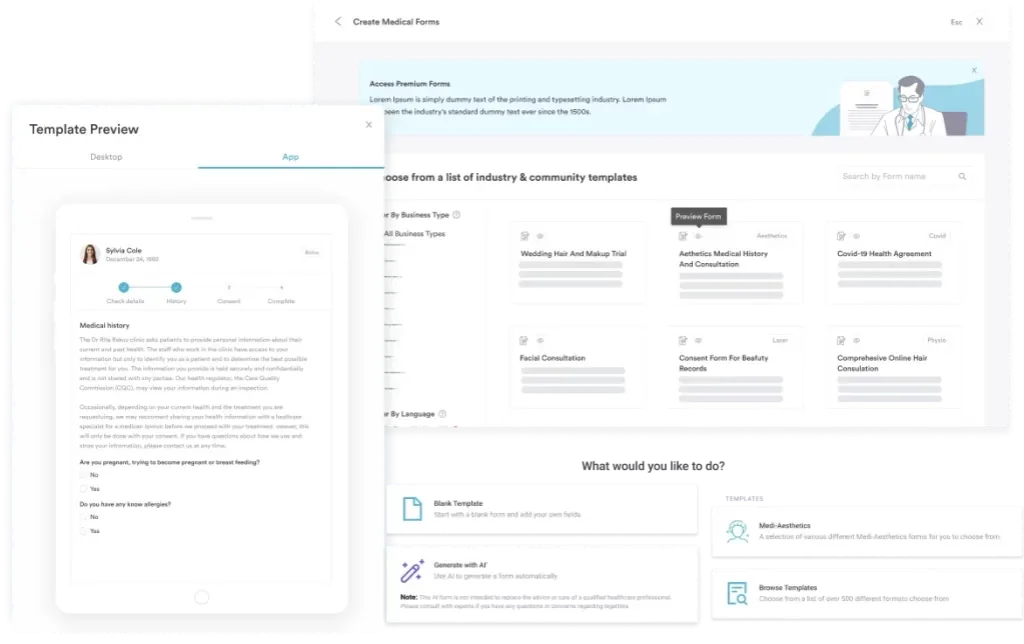
Practice management software like Pabau moves both ends into one place. You build the 20 items as a digital form and send it with the appointment reminder. Answers arrive in the patient record before the visit starts, so the score sits with the rest of the chart.
Automated workflows then handle the part that usually slips. A medium-risk score can trigger the follow-up booking, a message to the parent, and a task for the clinician. The referral gets an owner and a due date instead of a sticky note.
That matters most at volume. A practice running 40 well-child visits a week is holding dozens of open screens at any moment, and every one of them needs an ending.

Pabau turns the M-CHAT-R into a digital form that parents complete before the visit. Scores land in the patient record, and the follow-up interview gets booked for medium-risk families. Fewer paper forms, and fewer referrals left hanging.

Screening is the easy part. What separates practices is what happens to the medium-risk scores in the two weeks after the visit.
So settle the workflow before you settle the form. Decide who scores it, who books the follow-up interview, and who owns the referral. Write those three answers down and the screen does the job it was designed to do.
The trade-off worth remembering is that false positives are the price of catching children early, and it is a price worth paying. Book a demo to see how Pabau handles screening forms, scoring, and follow-up in one record.

Need the household context behind a screen? Family dynamics worksheet maps the relationships and stressors that shape how a toddler presents.
Is it autism or a speech delay? Autism and speech delay separates the two presentations and shows where they overlap.
Screening a school-age child instead? Autism spectrum screening questionnaire is the ASSQ, built for ages 6 to 17.
Supporting a family after diagnosis? Visual schedule for autism gives parents a routine tool they can start using at home.
Watching for difficulties at school age? Dyslexia worksheet covers the signs that surface once a child starts to read.
The M-CHAT-R is a 20-item questionnaire that parents complete to screen toddlers aged 16 to 30 months for autism risk. It flags children who need a fuller developmental evaluation. It is not a diagnostic tool.
Score 1 for each at-risk answer and add them up. On 17 items the at-risk answer is no, but items 2, 5, and 12 are reverse scored. Totals of 0-2 are low risk, 3-7 medium risk, and 8-20 high risk.
The M-CHAT-R is validated for toddlers aged 16 to 30 months and should not be used outside this age range.
Medium-risk scores of 3 to 7 trigger the follow-up interview to clarify the concern. High-risk scores of 8 to 20 warrant immediate referral to a developmental pediatrician or an autism evaluation team.
Yes. Spanish, French, Mandarin, and other translations exist, though clinicians should verify that the version they use is validated in the target population.
No. The M-CHAT-R screens for autism risk only. A positive screen still needs a full evaluation by a qualified clinician before any diagnosis is made.