Mental health self-care checklist
A mental health self-care checklist is a structured daily tool for tracking the ...

5
Last Updated: Oct 20, 2026

A family dynamics worksheet is a structured tool for assessing family roles, communication patterns, boundaries, and attachment.
Completing it in session surfaces the roles, communication blocks, and boundary problems you can turn into treatment goals.
It works in individual, family, and group sessions, and it is especially useful in addiction treatment.
Where more than one family member fills it out, the disagreements between their answers are the most useful part.
Digital intake forms keep the responses inside the client record, so follow-up never depends on finding a paper copy.
A full assessment covering family roles, communication patterns, boundaries, attachment, and conflict resolution. Ready to complete with a client in your next session, with no customization needed.
Download templateFamily systems don’t operate in isolation. The roles people take on, the way they talk to each other, and the boundaries they hold shape every session you run. A family dynamics worksheet gives you a structured way to map those patterns with the client sitting in front of you.
Below you’ll find what the worksheet asks, how to run it in session, and how to read answers that contradict each other. The template above is free and ready to use as it is.
A family dynamics worksheet is a structured assessment tool for evaluating how family members relate, communicate, and handle boundaries. Instead of working from a client’s narrative alone, you ask the same questions every time. That consistency is what makes a pattern visible across sessions.
The worksheet covers five areas:
Family dynamics worksheets come out of family systems theory, developed largely by Murray Bowen. That model treats the family as one interconnected unit. Change a single relationship and the effect travels through everything else. Bowen’s eight concepts describe the mechanics, and a clinical assessment template turns them into something you can write into a note.
Not every version asks the same questions. The one you reach for depends on what you are trying to see.
The template on this page pulls from all five categories. Use it whole, or work only the sections that match your client’s presenting concern.
Sequencing matters more than the questions do. Most clinicians work through it like this:
When more than one family member completes the worksheet, the disagreements are the most useful part. Two people describing the same household differently tells you where the system is under strain. Three of those mismatches are worth writing into the note:
The worksheet earns its place in group work too, where knowing each member’s family role helps you catch the moment a group starts reproducing it. If you run structured programs, an 8-week group counseling plan is where those observations belong week to week.
Substance use disorders are family illnesses. The person using occupies a role inside a system that has already adapted around the use. The worksheet is powerful here because it makes that adaptation visible to everyone in the room.
In addiction work, four roles turn up again and again:
A codependency worksheet pairs well with the assessment when one relative’s whole identity has organized around the using. Therapy practice management software keeps both documents attached to the same record across individual and family sessions.
SAMHSA’s family therapy guidance reports that involving the family improves recovery outcomes. Completing the worksheet with relatives present is one low-friction way to bring them into the treatment rather than around it.
Clinical note-writing practices apply here as well. Keep the completed worksheet in the permanent record, and link it to the diagnosis, the treatment goals, and the session it came from.
Therapists often ask how this compares with a genogram, or with a validated measure like the Family Assessment Device. Each one answers a different question.
Most clinicians use the worksheet as the opening move. The answers tell you whether the next step is multi-generational history or a validated score.
Paper works. It just leaves the assessment somewhere other than the rest of what you know about the client. Practice management software like Pabau lets you rebuild the worksheet as a digital intake form that writes straight into the client record. Session notes, worksheet answers, and the treatment plan then sit together.
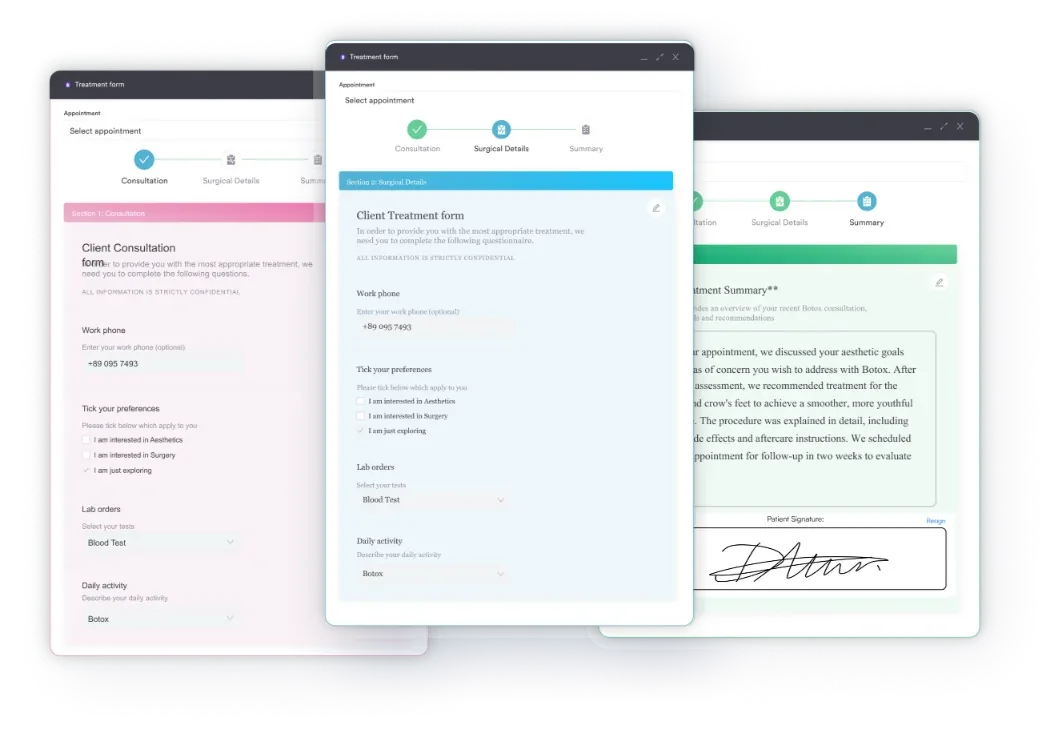
Pabau Scribe, our AI medical scribe, drafts the session note from the conversation, including the worksheet findings you flagged. You stop retyping the same insight every fortnight. Across a course of therapy the record keeps family themes in one thread, so progress and drift are both easy to see.
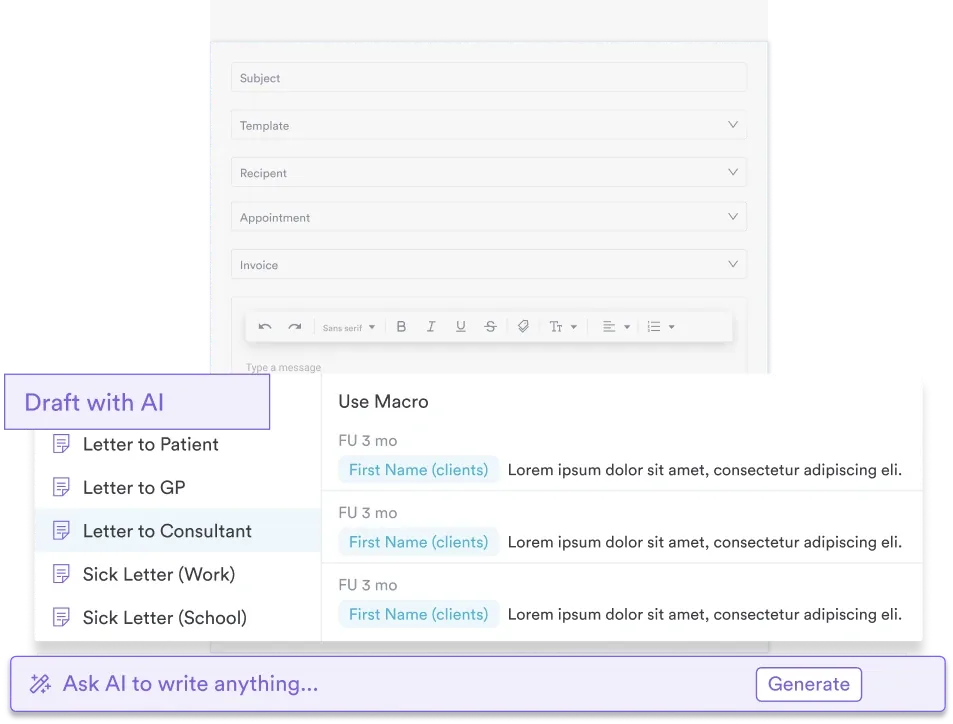
For practices doing addiction or family-systems work, mental health EMR software with assessments built in removes a whole category of admin. Fewer documents to scan, no separate form library, and nothing to reconcile on a Friday afternoon.

Pabau rebuilds your family dynamics worksheet as a digital form that writes straight into the client record. Notes, assessments, and treatment plans stay in one place, so nothing gets scanned twice.

The worksheet earns its place by turning a vague sense that the family is difficult into something you can point at. Roles, boundaries, and communication habits become items on a page, and items on a page can be worked on.
One trade-off is worth remembering. A structured form buys you consistency rather than truth. It records how one person saw the family on one day. Run it again a few months later and the comparison will tell you more than either sitting did alone.
Download the template above, work through it with your next client, and keep the completed copy where the rest of the record lives. Book a demo to see how Pabau turns family assessments into digital forms that file themselves.

Need to track trauma symptoms alongside family work? PCL-5 PTSD checklist walks through administration, scoring, and how to read a change in score.
Working with an adult client’s family of origin? Setting boundaries with parents worksheet gives you a focused exercise for that specific relationship.
Choosing which model to work from? Counseling theories chart compares the main therapeutic frameworks side by side, family systems included.
Client stuck in an enmeshed relationship? Emotional boundaries worksheet helps them separate their own feelings from everyone else’s.
Ready to map the generations? Genogram example shows a completed diagram and explains the notation behind it.
It is used to assess family roles, communication patterns, boundaries, and attachment in a consistent way. The answers give you and the client a shared reference point, and they give you a starting position for treatment planning.
Both work. In individual therapy it helps a client see how an old family role still shapes their symptoms and relationships. In family sessions it puts the same set of questions in front of every member.
Each answer points at a specific target. Rigid boundaries become boundary work, a communication breakdown becomes skills practice, and an enabling pattern becomes work with the wider family.
Yes. Substance use reshapes family roles, and the worksheet makes the enabling and codependent patterns easy to name. SAMHSA guidance reports that involving the family improves recovery outcomes.
Use the download button near the top of this page. The template is free, needs no registration, and is ready to complete with a client in session.