Receptive one word picture vocabulary test: What it measures and how to interpret scores
The receptive one word picture vocabulary test is a norm-referenced assessment o...

Last Updated: Sep 23, 2026

Aphasia is a language disorder affecting speech, understanding, and written communication following brain injury or stroke – not a hearing or intellectual problem.
Aphasia worksheets target receptive and expressive language, word retrieval, and sentence formulation using structured exercises grounded in evidence-based therapy approaches.
Digital aphasia worksheets paired with clinical documentation tools enable SLPs to track progress, streamline note-taking, and integrate therapy planning into practice management workflows.
Pabau’s digital forms and client records support efficient worksheet delivery and progress tracking across individual and group speech therapy sessions.
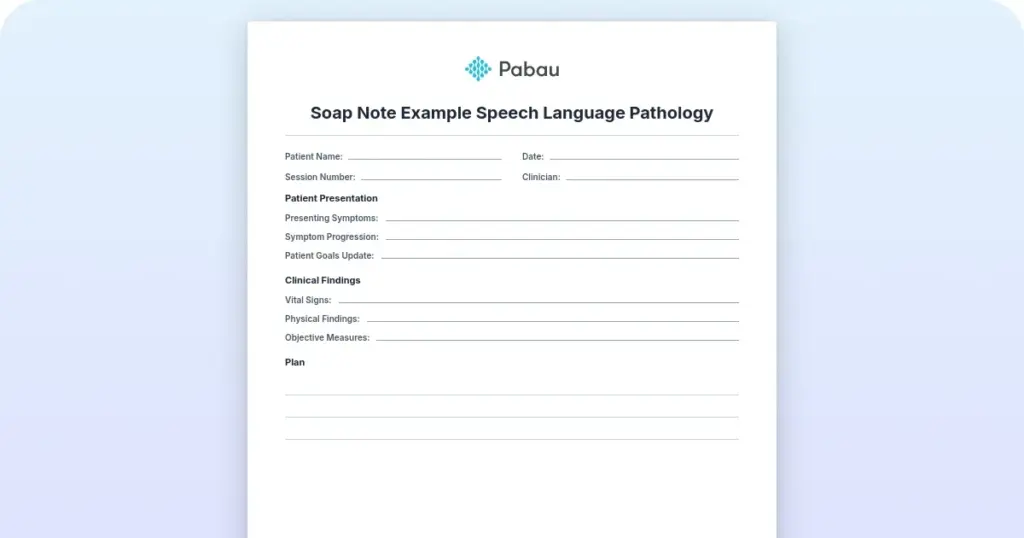
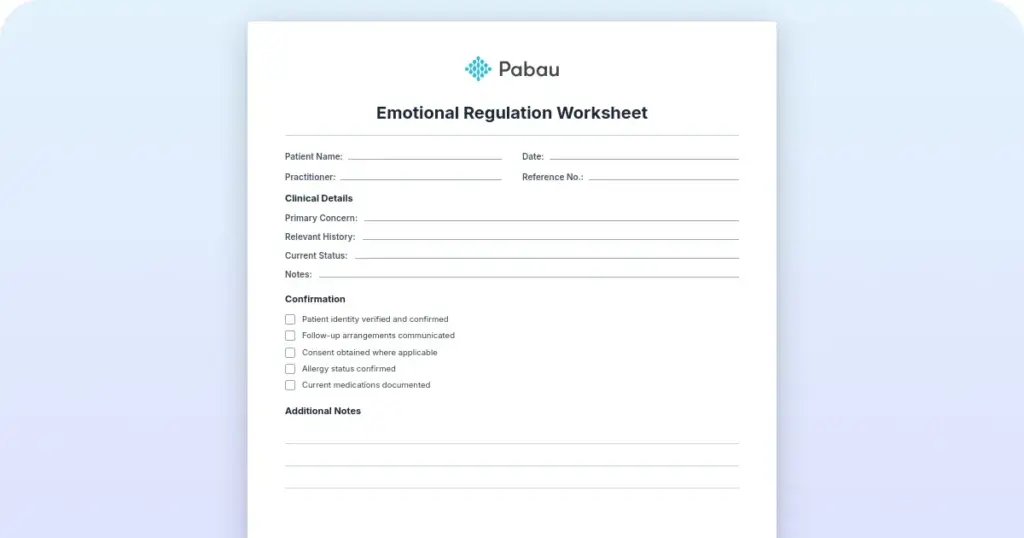
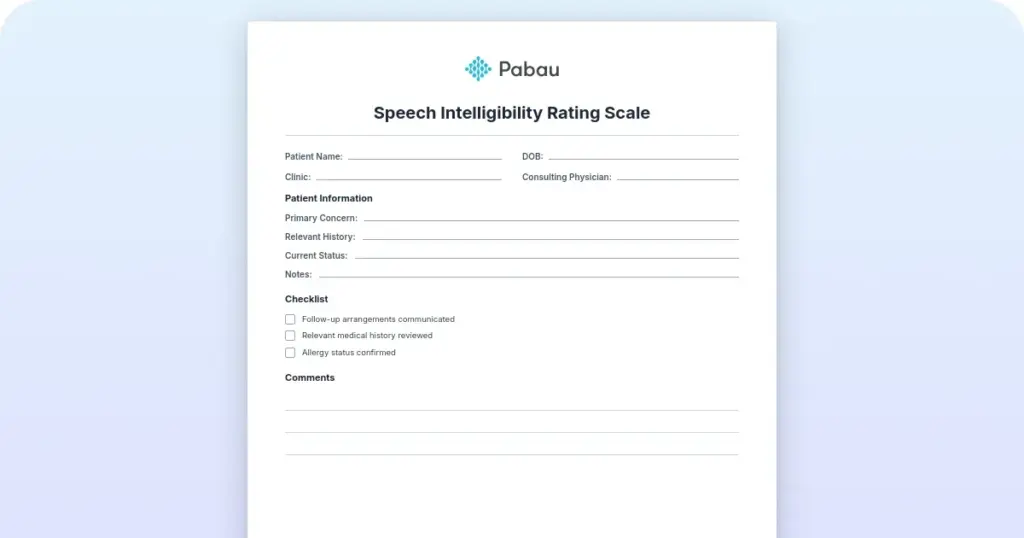
A comprehensive assessment tool designed to help speech-language pathologists evaluate language comprehension, expression, and cognitive communication skills. Includes sections for receptive language assessment, expressive language tasks, word retrieval exercises, and sentence formulation activities with structured scoring guidance.
Download templateAn aphasia worksheet is a structured tool speech-language pathologists use to assess language deficits, plan targeted interventions, and document patient progress—whether in clinical settings, telehealth sessions, or home practice programs.
Aphasia affects approximately 1-2 million Americans, with stroke being the leading cause. Worksheets structured around VNeST (Verb Network Strengthening Treatment) and semantic feature analysis have demonstrated measurable improvements in word-finding and sentence production.
An aphasia worksheet is a structured therapeutic document that targets specific language skills disrupted by aphasia – a communication disorder resulting from brain injury, stroke, or neurological conditions. Unlike general language exercises, aphasia worksheets are designed for adults recovering language function and address the cognitive, linguistic, and pragmatic dimensions of communication breakdown.
Aphasia has four primary types: Broca’s aphasia (nonfluent, affecting speech production and grammar), Wernicke’s aphasia (fluent but with comprehension deficits), conduction aphasia (repetition difficulties), and global aphasia (severe deficits across all language modalities). Each type requires targeted worksheet activities.
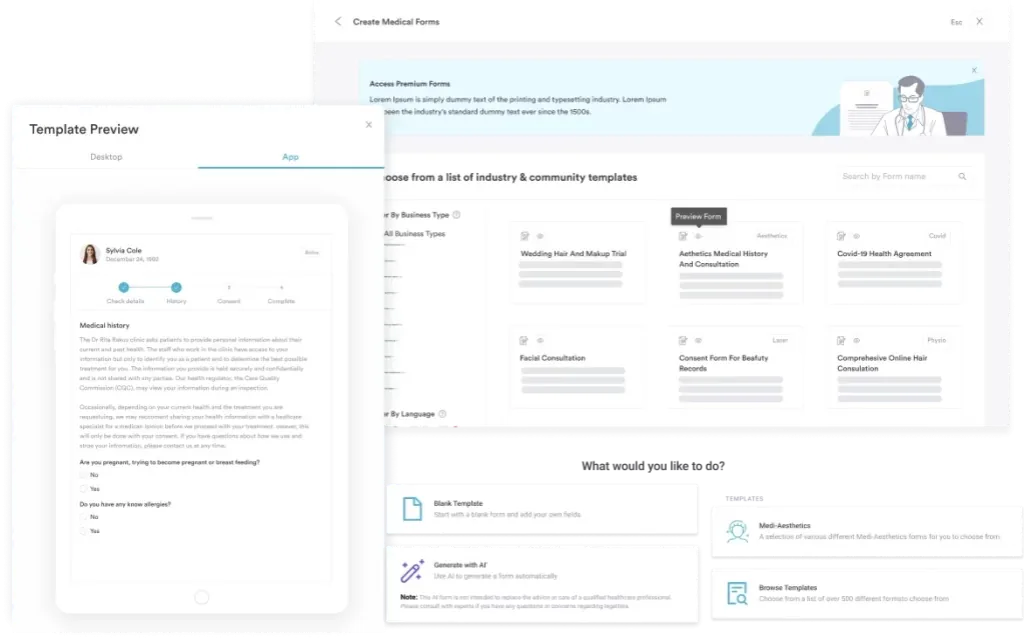
Modern aphasia worksheets integrate patient intake software to streamline data entry and progress tracking. HIPAA-compliant fillable PDFs allow clinicians to document baseline scores, session-by-session improvements, and functional outcome measures without manual transcription – essential for meeting CMS billing documentation standards and supporting insurance authorization requests. A therapy progress notes cheat sheet gives speech-language pathologists the same structured format for documenting session notes and outcomes.
Using an aphasia worksheet effectively requires a systematic five-step workflow that integrates assessment, treatment, and documentation into a single therapeutic episode.
Speech-language pathologists in multiple clinical settings use aphasia worksheets as a core intervention tool:
In software built for occupational therapy practices, scores from scales like this feed straight into progress notes.
Structured aphasia worksheets deliver measurable clinical and operational benefits:
Patients completing intensive aphasia worksheet programs often report faster return to functional communication. Sustained, structured worksheet therapy over several months can support a return to work or modified-duty roles for working-age adults. Gains in word retrieval and sentence formulation translate directly to real-world communication demands in the workplace.
Track response latency (time to respond), not just accuracy. Aphasia patients often produce correct responses after a 3-5 second pause – a significant functional improvement even without accuracy change. Worksheets that time responses reveal processing speed gains that conversation alone misses. Document response time improvements in your clinical notes to demonstrate subtle but meaningful progress to insurance reviewers.
Telehealth delivery of aphasia worksheets requires minor workflow adjustments. Use screen-share features in Zoom, Teams, or Thera-LINK to display the worksheet in real time. Ask patients to have a printed copy and mark responses on paper; simultaneously, you mark the same copy in your digital worksheet. This parallel marking ensures accuracy and provides immediate visual feedback.
For literacy-based worksheets, use larger fonts (18pt minimum) and high-contrast backgrounds. Pause 2-3 seconds between items to allow processing time.
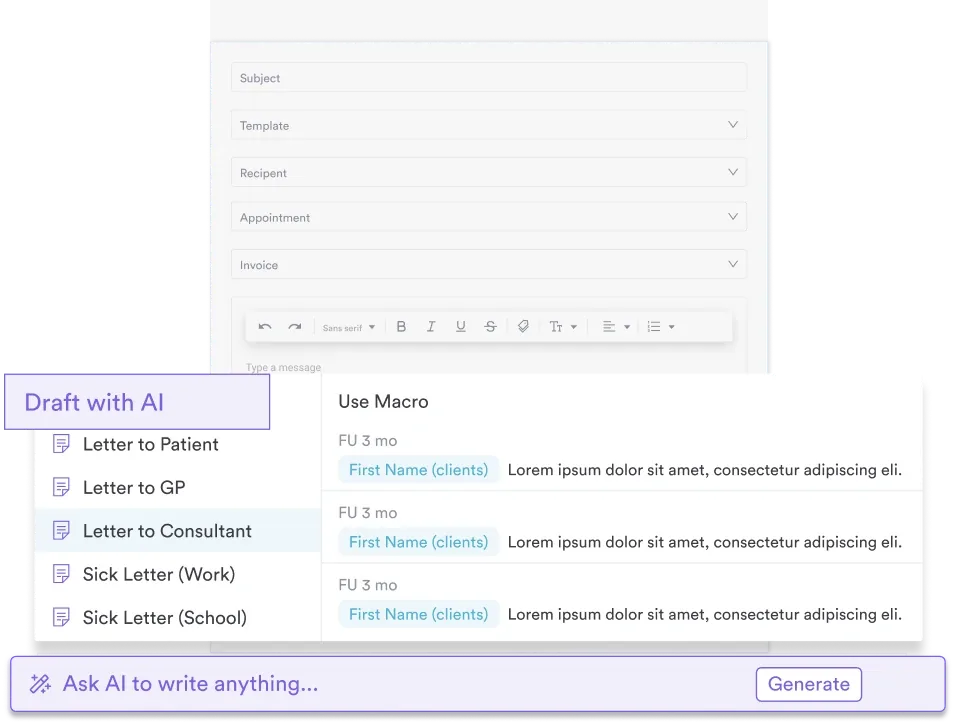
Virtual worksheets also support home-practice programs: send patients downloadable PDF worksheets via email with written instructions and practice schedules. Track completion via digital patient portals, where patients upload completed worksheets or photos of handwritten work for clinician review between sessions.
Family-administered aphasia worksheet practice significantly accelerates recovery. Train primary caregivers (spouse, adult child, friend) to administer one worksheet section 3-4 times weekly. Provide caregivers with: (1) a written protocol listing exact administration steps, (2) an answer key for quick scoring, (3) a simple tracking sheet (date, section completed, % accuracy), and (4) a brief monthly feedback call to review progress and adjust difficulty.
Combining caregiver-supported home practice with regular in-practice therapy can meaningfully increase total treatment intensity. This model is particularly valuable for patients with transportation barriers, limited insurance authorization for therapy frequency, or rural location constraints.
Digital aphasia worksheets integrated with Pabau’s practice management software eliminate manual scoring and note-taking. Automatically track baseline scores, session progress, and functional outcomes in one organized system – so you spend less time on admin and more time on patient care.
Aphasia worksheets are the evidence-based foundation of recovery for patients with language disorders. Whether delivered in practice, telehealth, or home-practice formats, structured worksheets targeting receptive language, expressive language, word retrieval, and sentence formulation produce measurable gains that translate to functional communication improvements.
Integrating digital worksheets into your practice workflow – combined with family involvement, systematic progress monitoring, and HIPAA-secure documentation – ensures both clinical effectiveness and operational efficiency. Book a demo with Pabau to see how practice management software streamlines worksheet administration, progress tracking, and outcome documentation for speech therapy teams.

Need guidance on structuring therapy notes? SOAP notes for social work is a practical guide to writing effective SOAP notes for mental health professionals.
Need more visual tools for language practice? Speech therapy flashcards offers free printable sets for articulation, aphasia, autism, and language practice.
Ready to digitize your therapy workflow? Speech therapy practice management shows how digital tools integrate worksheets, client records, scheduling, and outcomes into one system.
An aphasia worksheet is a structured assessment and treatment tool that helps speech-language pathologists evaluate and treat communication deficits resulting from brain injury, stroke, or neurological conditions. Worksheets target receptive language (listening/reading comprehension), expressive language (spoken/written production), word retrieval, and sentence formulation through evidence-based activities.
The four primary types are: Broca’s aphasia (nonfluent, speech production difficulties), Wernicke’s aphasia (fluent but with comprehension deficits), conduction aphasia (repetition and word-finding problems), and global aphasia (severe deficits across all language domains). Each requires targeted worksheet activities matched to the specific language breakdown.
Evidence supports intensive, structured therapy for measurable functional gains – typically 2-5 practice sessions per week, plus regular home practice facilitated by caregivers. Higher treatment intensity is generally associated with greater improvement in word-finding and sentence complexity.
Yes. Telehealth delivery uses screen share, fillable PDFs, and parallel marking by clinician and patient. Use 18pt+ fonts, high-contrast backgrounds, and 2-3 second pauses between items. Patients can download worksheets for home practice and upload completed sheets via digital patient portals for clinician review between sessions.
Digital worksheets with baseline scores, session-by-session progress metrics, and functional outcome measures help satisfy CMS documentation requirements for objective, measurable outcomes. Progress data showing week-to-week improvement in accuracy or response latency provides the quantitative evidence insurers require to approve continued therapy authorization.
VNeST (Verb Network Strengthening Treatment) is an evidence-based protocol that improves word-finding and sentence production by building sentences around action verbs. The patient receives a verb, then generates who/what participants and modifiers to build increasingly complex sentences – a particularly effective approach for Broca’s aphasia with agrammatism.