GLP-1 diet plan
A GLP-1 diet plan is a structured eating framework for patients taking semagluti...

1
Last Updated: Oct 13, 2026

The Hawaii Early Learning Profile (HELP) is a criterion-referenced, family-centered developmental assessment for children from birth to 6 years.
HELP evaluates six developmental domains: cognitive, language, gross motor, fine motor, social-emotional, and self-help skills.
Two versions exist: HELP 0-3 (birth to 36 months) and HELP 3-6 (ages 3 to 6), each with its own kit components.
Scoring is criterion-referenced, rating each skill as pass, emerging, not yet, or atypical rather than as a percentile.
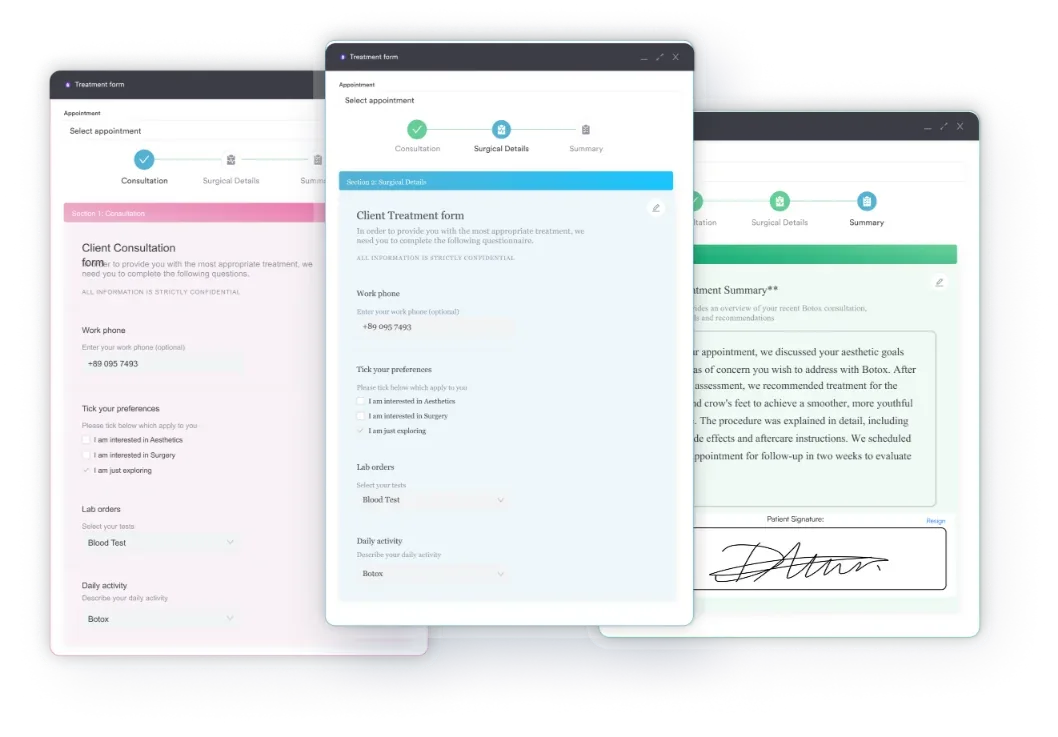
Pabau’s digital forms and automated workflows help early intervention teams document HELP-based goals, track progress, and streamline IFSP reporting.
The Hawaii Early Learning Profile (HELP) is a criterion-referenced developmental assessment for children from birth to age 6. Rather than comparing children to a normative peer group, it rates skills against developmental milestones.
As a result, speech-language pathologists, occupational therapists, physical therapists, and early intervention specialists use it across the US. Compare eight platforms in our guide to medical spa management software if your practice also runs self-pay aesthetic services. A rehab practice reporting outcomes to a payer needs consistent measures, not narrative summaries.
Because HELP items describe observable behaviors, findings translate straight into IFSP and IEP goals. In fact, that is the practical reason teams keep choosing it over norm-referenced instruments for planning work. Specifically, this guide covers the six domains, both versions, administration, scoring, and the documentation load that follows.
HELP is a criterion-referenced developmental assessment for children from birth to 6 years. Originally, it was created by VORT Corporation, whose HELP titles were acquired by Shine Early Learning in 2023. Today, Shine is the publisher and distributor.
The assessment covers six developmental domains. Instead of standardized norm comparisons, clinicians gather evidence through observation, structured play activity, and caregiver interview.
Criterion-referenced means HELP measures a child’s skills against developmental milestones, not against a peer group. Therefore, it suits early intervention, where the job is pinpointing which skills need support and planning for them. In other words, ranking a child against population averages is not the point.
HELP is not a diagnostic instrument. Instead, results inform intervention planning and goal-setting. Additionally, eligibility decisions under IDEA Part C need evaluation data beyond HELP scores alone.
The family-centered design is central to how HELP works. For example, caregivers take part directly through observation reports and structured interviews. As a result, clinicians get a fuller picture of everyday functioning than a single clinic session can provide. Overall, it reflects best practice for engaging families in therapy and other early intervention services.
HELP comes in two versions covering different age ranges. Accordingly, each has its own kit components, strand books, and activity guides matched to that age group.
HELP 0-3 is the version most often referenced in early intervention literature. In fact, most published psychometric research on the instrument is based on it. Meanwhile, HELP 3-6 extends coverage into the preschool years and supports transition planning from Part C to Part B.
Both versions cover the same six domains. However, the specific milestones and observable behaviors differ substantially between age groups. For a child sitting right at the boundary between versions, administering both is sometimes appropriate, depending on clinical judgment.
HELP evaluates six developmental domains. Each covers a distinct area of child development, and together they form a comprehensive functional profile. Specifically, the table below summarizes what each one assesses.
The multi-domain structure is what makes HELP useful across disciplines. For instance, a speech-language pathologist works mainly in the language domain. Meanwhile, an occupational therapist covers fine motor and self-help.
Similarly, a physical therapist takes the gross motor findings and may add a motor assessment scale for detail.
Because all three clinicians use the same instrument and record, HELP builds one shared developmental picture. For a family dealing with autism and speech delay, for example, that view is often their first look at strengths and challenges together.
In that case, teams often follow a weak social-emotional strand with social-emotional learning activities a caregiver can run at home.
HELP is administered by observing the child during play and everyday routines, not in formal testing conditions. As a result, this lowers the anxiety that structured testing can produce in very young children. For this age group, it also produces more accurate results.
For speech therapy practices serving pediatric caseloads, accurate results depend on two things. Specifically, clinicians need training in structured observation, and they need strong caregiver communication skills. For that reason, the HELP training packet from the Early Intervention Training Program at the University of Illinois is a useful starting point.
HELP uses a criterion-referenced scoring system with no percentile ranks and no standard scores. Instead, each item on the strand checklist is rated against a specific developmental milestone. Specifically, the rating records whether a skill is present, emerging, or absent relative to that expectation.
Common scoring categories across HELP versions include:
Results map onto a developmental strand chart, so you can see where skills cluster and where a child needs support. In turn, that strand profile feeds IFSP goal-writing in Part C services and IEP objectives in Part B programs. For example, a speech therapy goal bank helps turn emerging-skill ratings into wording a family can follow.
Keeping strand charts current across a full caseload is where documentation time piles up fastest. In fact, every reassessment adds a new layer to a record that several disciplines are already writing into.
HELP is one of the most widely used assessments in Part C programs across the United States. It ties to functional outcomes rather than statistical comparisons. As a result, this makes it a strong starting point for goals families understand and clinicians can track between visits.
In practice, HELP results feed directly into three planning processes:
For children moving from Part C to Part B at age 3, HELP 3-6 provides continuity. As a result, teams can compare findings across versions and show a developmental trajectory to IEP teams and families. In addition, reading those results alongside Beery VMI scoring supports a fuller evaluation at transition.
Peer-reviewed research has examined HELP’s reliability and validity as a developmental assessment. Specifically, research documented in ERIC supports its content validity, which rests on established developmental sequences. In addition, inter-rater reliability has been documented across trained evaluators.
Key psychometric considerations for practitioners:
Documentation matters for billing, too. When a child carries a diagnosis code such as R62.50, for example, record HELP findings alongside it for eligibility reporting. However, HELP results do not establish a medical diagnosis, so label them clearly as developmental assessment data in the record.
No single developmental tool covers every clinical need. HELP has clear strengths that make it a leading choice in early intervention. That said, it also has limits worth accounting for when you select or interpret assessment tools.
Clinicians who also use the Sensory Profile 2 often run the two together. In practice, HELP shows which skills are emerging and where to target intervention, while a norm-referenced tool places the child against their age group for eligibility purposes.
HELP was developed in Hawaii and stays closely tied to the state’s early childhood framework. Specifically, the Executive Office on Early Learning (EOEL) oversees early learning standards and programs statewide.
In turn, the Hawaii Early Learning and Development Standards (HELDS) set what children should know from birth through kindergarten entry.
HELP’s domain structure maps closely to the HELDS domains. As a result, it is a natural choice for programs funded or regulated under Hawaii’s early learning system.
Practitioners in the Early Intervention Section (EIS), the Hawaii Department of Health’s Part C program, commonly use HELP as a primary instrument. That’s because it lines up with both federal IDEA requirements and the state standards.
Outside Hawaii, programs use HELP independently of state-specific standards. Confirm that your own state’s early intervention program accepts HELP findings for eligibility and IFSP purposes, because that recognition varies by state.
When you document HELP findings, note the assessment date and the version used (0-3 or 3-6). Record the administering clinician’s discipline and which domains were assessed in full versus screened. That level of detail supports IFSP team review and protects the clinical record in an audit.
Early intervention teams face a specific documentation problem. Specifically, HELP produces detailed multi-domain strand data that has to link to IFSP goals, session notes, progress summaries, and billing records. As a result, doing that on paper, across a caseload of dozens of children, invites version mismatches and late reports.
Practice management software like Pabau is built for this kind of structured, repeating work. For example, Pabau’s digital forms let teams build HELP recording templates and caregiver questionnaires that feed straight into a child’s record. As a result, clinicians capture findings during the session instead of transcribing paper afterward.
Pabau’s automated workflows then handle the reassessment cycle these programs run on. Specifically, they schedule 6-month re-evaluation reminders, send caregiver questionnaires ahead of a planned reassessment, and alert supervisors when progress notes fall behind.
For teams spread across several locations or supervision structures, centralized client records keep every discipline on the same current developmental picture. That removes version conflicts and duplicate data entry, so your evenings stop going on paperwork.
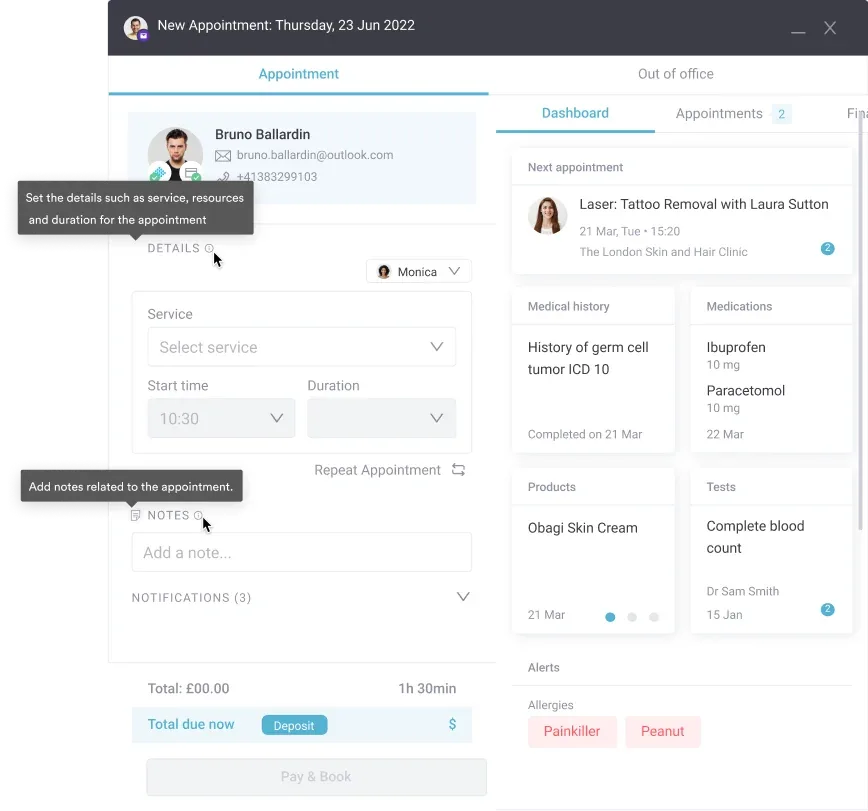

Pabau keeps assessment records, digital forms, and care plans in one place, with automatic reminders for every reassessment. Your team spends more time with families and less time chasing paperwork.

HELP earns its place because its findings convert straight into goals a family can act on. If you need standard scores for an eligibility decision, pair it with a norm-referenced instrument. In other words, stretching HELP past what it was designed to do is where teams get into trouble.
The trade-off is administrative. Six-month reassessments, strand charts, and IFSP links stack up quickly across a caseload, and that is the work that eats a clinician’s evening. Therefore, decide how you will store and update HELP records before the caseload grows, not after.
Get that decision right and the assessment starts paying for the time it costs. Book a demo to see how Pabau keeps HELP records, reassessment reminders, and IFSP documentation together in one place.

Need a standardized foot posture assessment? Foot Posture Index FPI-6 template covers talar head palpation, arch height, and other criteria used to score foot posture.
Need an outcome measure for stroke recovery? Fugl-Meyer Assessment form measures motor function, balance, and sensation to track sensorimotor recovery after a stroke.
Looking for a functional outcome measure in OT? Canadian Occupational Performance Measure shows how to score self-care, productivity, and leisure goals with the family involved.
Need to track patient function beyond diagnosis? Functional status questionnaire covers six functional domains with a scoring grid and interpretation thresholds for rehab settings.
The Hawaii Early Learning Profile is a criterion-referenced, family-centered developmental assessment for children from birth to 6 years. It covers six domains: cognitive, language, gross motor, fine motor, social-emotional, and self-help. VORT Corporation created it, and Shine Early Learning has published it since acquiring VORT’s HELP titles in 2023. Early intervention and preschool special education teams use it to guide IFSP and IEP goal planning.
HELP covers children from birth to 6 years through two versions. HELP 0-3 runs from birth to 36 months, and HELP 3-6 covers ages 3 to 6 years. Each version uses age-appropriate milestones and its own kit components.
HELP 0-3 targets infants and toddlers from birth through 36 months and is most common in IDEA Part C early intervention programs. HELP 3-6 targets preschool-age children and is typically used in Part B special education and pre-K inclusion settings. Both versions assess the same six domains, but they use different milestone benchmarks and activity guides.
No. The full HELP instrument is a commercially published assessment, now issued by Shine Early Learning after its 2023 acquisition of VORT Corporation’s HELP titles. It is not legally available as a free download. Sample materials and university training packets are sometimes free, but they do not replace the published kit for clinical use.
HELP is typically administered by early intervention specialists, speech-language pathologists, occupational therapists, and physical therapists. Depending on the state and the program, developmental specialists and special education teachers may also administer it under supervision. Qualifications vary by state licensure and early intervention program guidelines.
HELP results inform eligibility under IDEA Part C or Part B, but they do not decide it alone. Eligibility requires a multidisciplinary evaluation using several tools, including at least one standardized, norm-referenced instrument in most states. HELP findings are most useful for functional planning and goal-writing once eligibility is established.