Fair fighting rules worksheet
A fair fighting rules worksheet is a therapy handout that sets out ground rules ...

3
Last Updated: Oct 21, 2026

The 7-column thought record is a structured CBT tool developed by Christine Padesky that helps clinicians and clients identify, examine, and reframe negative thoughts.
The seven columns guide users through emotion rating, evidence gathering, and generating balanced alternative thoughts—a proven approach for anxiety and depression.
Completing worksheets in session strengthens emotional insight; Pabau’s digital forms let clients continue therapeutic work between appointments.
Integrating this template into your practice workflow reduces documentation burden and scales your clinical capacity across multiple clients.
A ready-to-use worksheet that guides clients through cognitive restructuring. Seven prompts help clinicians facilitate step-by-step thought examination, from emotion rating through evidence gathering to generating balanced alternative thoughts.
Download templateThe 7-column thought record is one of the most effective clinical documentation tools in cognitive behavioral therapy (CBT). Christine A. Padesky PhD developed the worksheet in the late 1970s and copyrighted it in 1983 through the Center for Cognitive Therapy.
It later appeared in Mind Over Mood: Change How You Feel by Changing the Way You Think (Greenberger & Padesky, 1st edition, Guilford Press, 1995), which remains a standard reference for helping clients challenge unhelpful thinking patterns.
Mental health practitioners—therapists, psychologists, counselors, and psychiatrists—use it daily to structure sessions, guide clients through cognitive restructuring, and document treatment progress.
For practices managing multiple therapy cases, a standardized 7-column thought record template keeps workflow consistent across clinicians.
A 7-column thought record is a structured assessment tool that breaks down unhelpful thinking into manageable steps. Unlike informal talk therapy, the thought record creates a paper trail: clients see their own thinking patterns in writing, can revisit them between sessions, and track shifts as they practice cognitive restructuring.
The worksheet originated from cognitive therapy theory (Albert Ellis, Aaron Beck) but was refined by Padesky into a user-friendly format. The NHS Every Mind Matters programme now recommends the thought record as a self-help CBT technique. Practices use it for anxiety disorders, depression, social anxiety.
This layout treats the client’s thought as a hypothesis to test rather than a belief to dismiss as irrational, so clients gather evidence like a scientist. Column 7, the alternative thought, becomes the new lens through which they view the situation.
Many automatic thoughts trace back to identifiable cognitive distortions, such as catastrophizing or mind reading. Naming the distortion in Column 4 makes Column 6 (Evidence Against) easier to complete.
The workflow depends on your client’s comfort level and the complexity of their automatic thoughts. Many clinicians complete the first four columns (Situation through Unhelpful Thought) in the session, while the memory is fresh. They then ask the client to complete Evidence For and Against at home, and to return with column 7 (the alternative thought) drafted for refinement next session.
A 5-column thought record omits the Evidence columns and moves straight from Unhelpful Thought to Alternative Thought. It’s faster and suits clients who are already metacognitive or who need cognitive work to feel less daunting at first appointment.
The 7-column thought record is more thorough and powerful for clients who benefit from structure, data-gathering, and behavioral evidence (e.g. “I said I’d fail the exam, but I passed the last two, so the thought isn’t accurate”). Use 7-column when clients are ready for deeper cognitive work or when the automatic thought has strong emotional grip.
Pro tip: Some clinicians start with 5-column to build confidence, then graduate clients to 7-column as they develop skill.
Whichever format you choose.
Therapists using therapy practice management software can send resources like this to clients between sessions.
Imagine a client with social anxiety triggered by an upcoming work presentation. Column 1: “Meeting with my team tomorrow to present the budget.” Column 2: Anxiety 85%, self-doubt 90%. Column 3: Racing heart, sweaty palms. Column 4: “I’ll mess up and they’ll think I’m incompetent.”
In Column 5 (Evidence FOR), the client might write: “I stumbled in the last presentation.” But in Column 6 (Evidence AGAINST), they recall: “I’ve given eight presentations and gotten positive feedback on six. My manager said my last report was detailed and clear.”
Column 7 (Alternative Thought): “I might feel nervous, but I’m prepared. Even if I stumble, my team knows my work is solid.” Re-rate: Anxiety drops to 50%, self-doubt to 40%.
For depression, the same tool works. A depressed client might think (Column 4): “I’ll never get better; therapy won’t help.” Evidence FOR: “I’ve felt depressed for months.” Evidence AGAINST: “Two months ago I had one good week where I went to the gym and felt lighter. The therapist has taught me tools I didn’t know before.”
Alternative: “Recovery isn’t linear, but I’ve seen small improvements, so change is possible.” This reframe is subtle.
Before starting thought record work with a depressed client, many practices establish a baseline with the Beck Depression Inventory and confirm the diagnosis using the appropriate ICD-10 code for depression.
Mental health practitioners (therapists, counselors, psychologists, psychiatrists) use this worksheet across diagnoses. It’s most effective for anxiety disorders, depression, social anxiety, PTSD, and any condition involving unhelpful automatic thoughts. It also works well in group settings when paired with proper group therapy informed consent documentation.
Occupational therapists and occupational therapy practices use thought records when addressing cognitive and emotional barriers to function. Speech therapists working with clients on social communication or confidence can adapt the tool. Coaches (executive, career, wellness) use it to shift limiting beliefs.
The key: if your client experiences distressing automatic thoughts that drive behavior or emotions, the 7-column thought record is a fit.
New clients typically complete a mental health intake form before their first thought record session, which flags relevant history and current stressors.
Thought records also pair well with theme-specific worksheets: abandonment therapy worksheets for attachment-related fears, fear of vulnerability assessments for clients guarded in relationships.
Digitizing the 7-column thought record in practice management software like Pabau streamlines your mental health practice workflow. Store completed worksheets in your client portal so clients can revisit them between sessions and keep the cognitive work going between appointments.
Use digital assessment forms to auto-populate client name, date, and session notes. Link thought records to session notes for easy reference during chart reviews and clinical supervision.
A thought record is a psychotherapy tool, so it belongs in your session notes, not your testing codes. If you also run formal psychological testing in the same visit, bill that testing separately. Technician-administered testing, for instance.
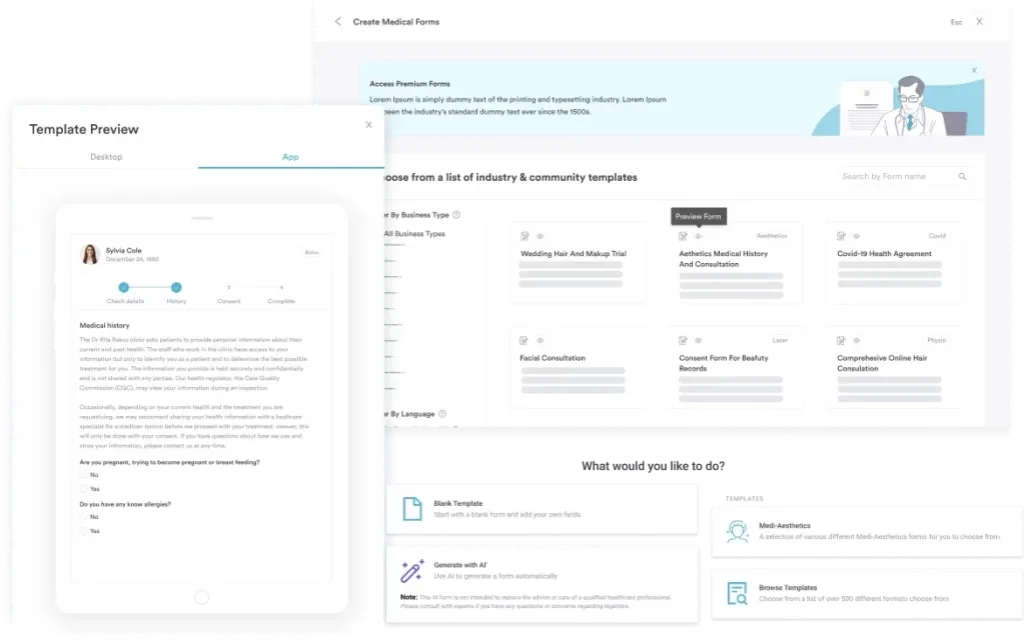
Set up automated therapy workflows to remind clients to complete their home columns before the next appointment, ensuring continuity and reducing no-shows.
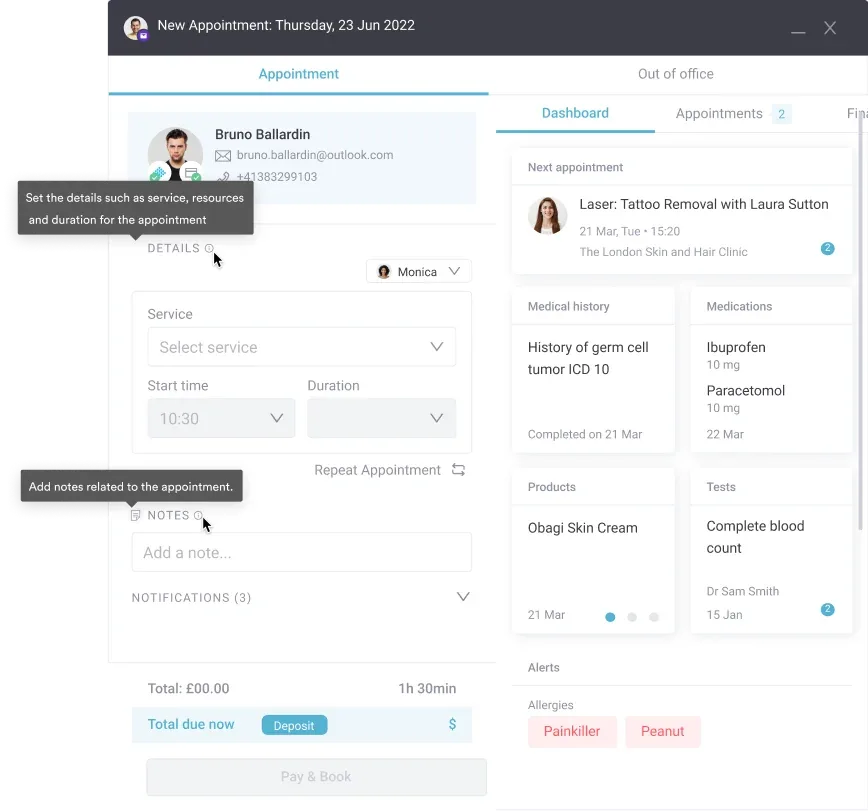
Consider a therapist working with a client on perfectionism and procrastination. The client delays starting a work project, spirals into anxiety, then feels shame. Here’s how a completed 7-column record guides the reframing:
The therapist can now bookend this with behavioral work: “Let’s make a deal. Go work on the project for 10 minutes, notice how the anxiety shifts once you start, and we’ll review in our next session.”
Help clients distinguish thoughts from feelings. “I feel anxious” is an emotion. “I think I’ll fail” is a thought. Column 4 should have thoughts, not emotions.
Avoid letting Column 7 become generic positivity (“Everything’s great!”). Instead, aim for realistic, compassionate reframes that acknowledge the situation while loosening the emotional grip.
Don’t overload early sessions. Start with one thought record, normalize that it’s a skill, and build confidence before assigning homework columns 5-7.
The free 7-column thought record PDF is ready to print or email to clients. Add your practice name and logo to the header for consistent branding, and keep printed copies in your session room for clients who prefer writing by hand.
Store digital copies in client files for easy retrieval and to track progress over time. Some practices scan completed worksheets into their EMR for permanent record-keeping, which supports documentation compliance.
High caseloads strain a team’s capacity to keep up with this kind of documentation. See this guide on recognizing and preventing therapist burnout if session load is affecting staff well-being.
The 7-column thought record is a timeless CBT tool that works because it balances structure with flexibility. By guiding clients through systematic thought examination—from trigger to emotion rating to evidence-gathering to cognitive shift—it teaches the core skill of cognitive restructuring.
Whether you run a solo practice or a multi-clinician mental health team, downloading and implementing this template speeds clinical work and scales your impact.
Store completed templates in a centralized EMR and set up client reminders for the homework columns, so the cognitive work carries on between sessions.
Want to simplify your entire mental health practice workflow—from intake forms to between-session tools to clinical documentation? Book a demo with Pabau to see how digital practice management scales your practice without adding stress.

Coding symptoms that don’t fit a clean diagnosis? unspecified anxiety disorder coding guide This guide covers F41.9 diagnosis, coding, and treatment when symptoms resist a clear category.
A 7-column thought record is a structured CBT worksheet that guides clients through cognitive restructuring in seven steps: situation, emotions, body sensations, automatic thought, evidence for, evidence against, and a balanced alternative thought. Christine Padesky PhD created it in the late 1970s; it remains a standard tool for therapists treating anxiety, depression, and unhelpful thought patterns.
Start in session: write the triggering situation in Column 1, rate emotions in Column 2, describe body sensations in Column 3, and capture the automatic thought in Column 4. Assign Columns 5 and 6 (Evidence For/Against) as homework, then co-create Column 7 (Alternative Thought) in the next session using Socratic questioning and re-rate the original emotions.
The 5-column version omits the Evidence FOR and Evidence AGAINST columns, moving directly from Automatic Thought to Alternative Thought. It’s faster and suits clients new to CBT or who feel overwhelmed. The 7-column format includes evidence-gathering, which deepens cognitive work and is more effective for clients who benefit from structure and behavioral proof of thought inaccuracy.
Christine A. Padesky PhD developed the 7-column thought record worksheet in the late 1970s and copyrighted it in 1983 through the Center for Cognitive Therapy. It was later included in Mind Over Mood: Change How You Feel by Changing the Way You Think (Greenberger & Padesky, 1st edition, Guilford Press, 1995). The tool has since become the most widely used thought record in CBT practice worldwide.
A dysfunctional thought record (another name for the 7-column thought record) helps clients identify and challenge unhelpful automatic thoughts that drive emotional distress and problematic behavior. It’s used across anxiety disorders, depression, social anxiety, PTSD, perfectionism, and other conditions where negative thinking patterns amplify suffering, teaching clients to examine thoughts objectively and build more balanced, realistic perspectives.