Mental health self-care checklist
A mental health self-care checklist is a structured daily tool for tracking the ...

5
Last Updated: Oct 20, 2026

The PCL-5 is a 20-item self-report checklist that scores PTSD symptoms against DSM-5 criteria.
Totals run from 0 to 80, and a score of 31 to 33 is the validated cutoff for probable PTSD.
Items 1 to 5 cover intrusion, 6 to 7 avoidance, 8 to 14 negative thoughts and mood, and 15 to 20 arousal.
The DSM-5 algorithm needs one item from criterion B, one from C, two from D, and two from E, each rated 2 or higher.
No official severity bands exist beyond that cutoff, so treat any published ranges as informal guidance.
The file holds all 20 items in their standard wording, with the five response options printed beside every question. Print it for the waiting room, or email it ahead of the session so the patient arrives with it done.
Download templateThe PCL-5 is a 20-item self-report checklist that scores PTSD symptoms against DSM-5 criteria. Patients rate how much each symptom bothered them in the past month, from 0 to 4.
Score it loosely and a questionnaire ends up carrying a diagnosis on its own, but score it too strictly and a treatable patient walks out untreated. Below you’ll find the item list, both scoring methods, and how to track change across a course of therapy.
The PCL-5 measures the 20 PTSD symptoms listed in the DSM-5, the fifth edition of the Diagnostic and Statistical Manual of Mental Disorders. Patients complete it themselves, usually in under 10 minutes. Totals run from 0 to 80.
Three jobs make it worth handing out. It screens trauma-exposed patients who have never been assessed, tracks whether symptoms shift during therapy, and supports a provisional diagnosis once a total crosses the cutoff.
The National Center for PTSD at the US Department of Veterans Affairs wrote it after the DSM-5 revision. It replaced the PCL-C and PCL-M, both built on DSM-IV criteria.
The checklist sits in the public domain, so clinical, research, and teaching use costs nothing. The National Center for PTSD holds the authoritative version.
Every item names one symptom and asks how much it bothered the patient in the past month.
Item 1 covers unwanted memories, item 20 covers trouble sleeping, and the 18 in between work through the rest of the DSM-5 list, in a fixed order.
Each item uses the same five-point scale. A 0 means not at all, a 2 means moderately, and a 4 means extremely. Nothing is reverse-scored, so the arithmetic stays simple.
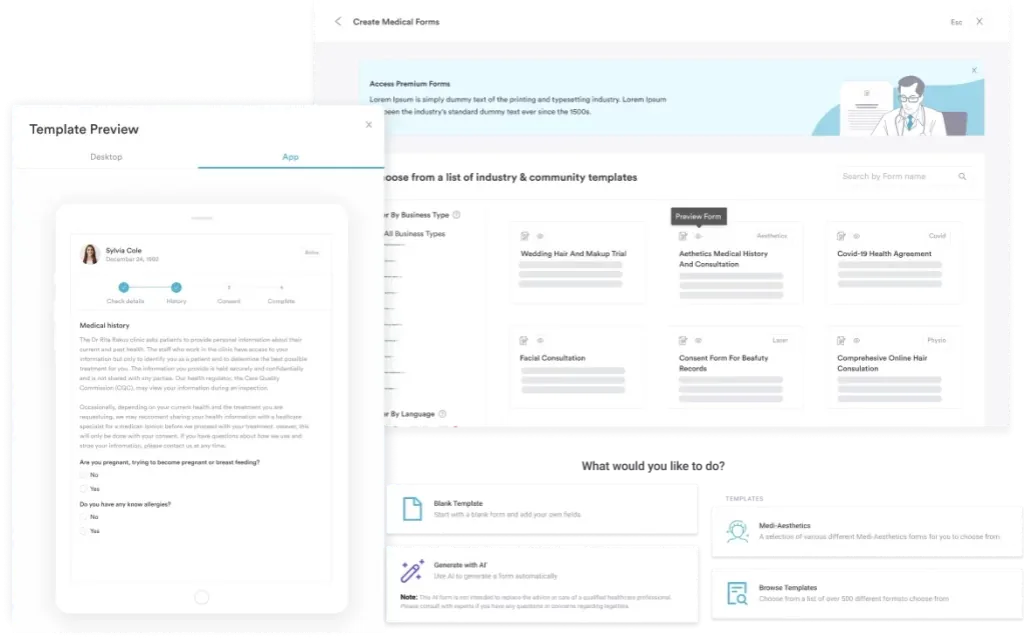
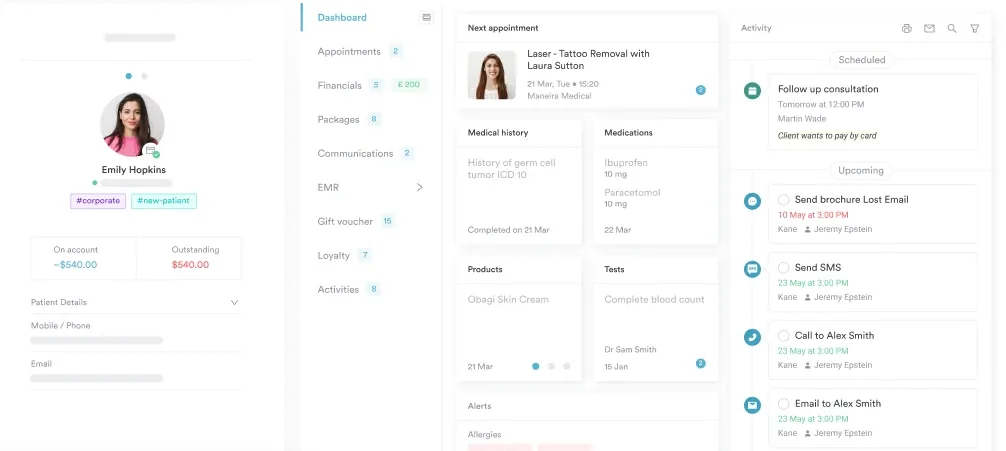
Practice management software like Pabau can carry the same 20 items as a digital intake form, so patients answer on a phone before they arrive.
The items sit in four groups, one for each DSM-5 symptom criterion. Knowing which item belongs where is what makes cluster scoring possible, and tells you which part of the picture is driving a high total.
The DSM-5 rule is stricter than one symptom per cluster. An item only counts when the patient rates it 2 or higher. A provisional diagnosis then needs one endorsed item from criterion B, one from C, two from D, and two from E items.
Criterion D is where trauma-focused therapy usually does its work, since those items track the beliefs a patient forms about themselves after the event. A core beliefs inventory explores the same ground in more depth. Record which cluster drove the score in your clinical notes, because that detail shapes the plan.
There are two scoring methods, and they answer different questions. The total tells you how severe things are, while the DSM-5 algorithm tells you whether the symptom pattern fits the criteria. Most practices run both, because either one on its own leaves a blind spot.
Sum every response and you get a number between 0 and 80. That single figure is what you compare across appointments, and it is the one clinicians quote to each other. A total of 31 or above puts probable PTSD on the table.
Work through the clusters instead of the total. Count an item as endorsed only when it is rated 2 or higher, and check for one B item, one C item, two D items, and two E items. Meet all four conditions and the pattern fits DSM-5, even when the total sits below 31.
This is the method to use when a report has to stand up to scrutiny. It is also slower by hand, which is why the cluster scores are worth storing rather than recalculating each visit.
A total of 31 to 33 is the one interpretation figure with validation behind it. Everything else you may have seen is convention.
The table below lists the numbers that carry weight and what each one supports.
Notice what is absent. The PCL-5 has no official mild, moderate, or severe bands. Ranges such as 21 to 35 for moderate circulate widely, but the National Center for PTSD has never validated them.
Use that shorthand if your team finds it helpful, but label it as informal. Keep 31 to 33 as the only figure you defend in a report. And remember that a score below 31 does not rule PTSD out, which is why a clinical interview stays part of the process.
Four options circulate, and picking the wrong one costs you comparability later:
Switching from past-month to past-week partway through treatment makes the series unreadable. Trauma also travels with other problems, so many practices pair the checklist with a drug and alcohol evaluation at intake.
Readminister at baseline, then every four to eight weeks, then at discharge. That rhythm shows whether cognitive processing therapy or prolonged exposure is shifting anything. A flat or rising total after eight weeks is a signal to change the plan.
Two numbers tell you how to read the movement. A drop of 5 to 10 points counts as reliable change. A drop of 10 to 20 points counts as clinically significant, and that is the figure worth putting in a discharge summary.
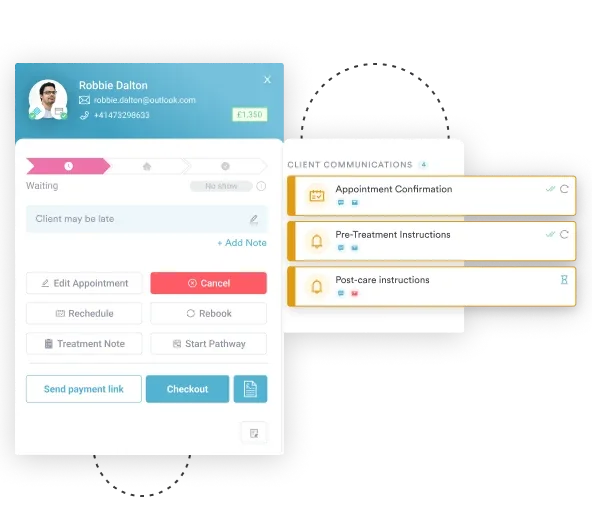
The hard part is remembering to send it. Automated reminders can trigger the form at set intervals, which is how a therapy practice keeps a 12-week series intact.
Set against a structured interview, the PCL-5 catches most cases and over-calls a fair few. In the veteran sample studied by Bovin and colleagues in 2016, sensitivity at the 31 to 33 cutoff sat around 0.80 to 0.82. Specificity sat around 0.70 to 0.71.
In plain terms, roughly four in five people with PTSD screen positive. About three in 10 people without it screen positive too. That is acceptable for a screening tool, and it is exactly why the result needs an interview behind it.
Reliability is the stronger half of the picture. Internal consistency usually lands around 0.94, and test-retest reliability over two to three days sits above 0.80. Validation work spans veterans, disaster survivors, civilians exposed to mass violence, and adults with childhood trauma.
In most practices the checklist lives on paper. Someone prints it, the patient fills it in, and the sheet gets scanned into a folder. The total ends up handwritten in a note, which turns any comparison between week 1 and week 12 into a manual job.
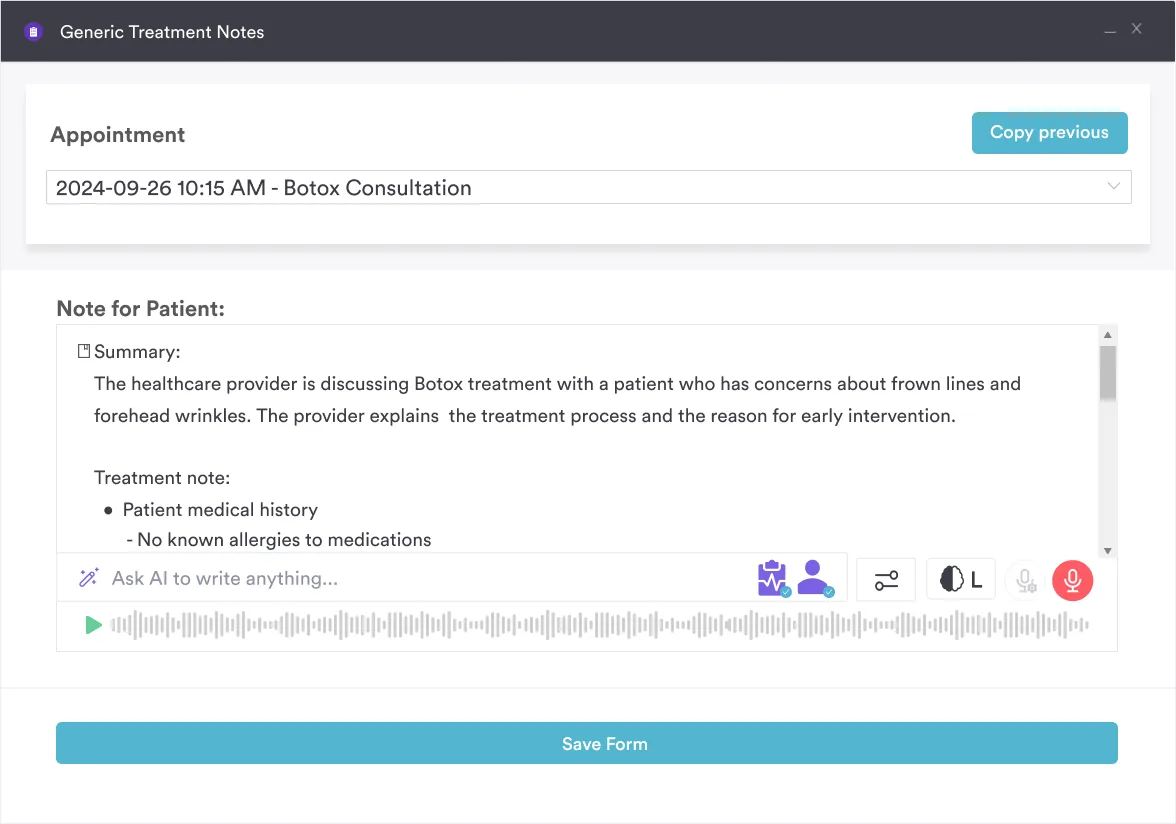
Pabau keeps the whole loop in one place. The checklist goes out as a digital form before the appointment, and the responses save straight to the client record. Pabau Scribe then drafts the session note, so you can talk the result through with the patient instead of typing.
Because every result is stored the same way, a mental health EMR view shows the series at a glance. You can see whether a total moved 5 points or 15, and you can show the patient the same line. Storage stays HIPAA compliant throughout.

Pabau sends the PCL-5 as a digital form, stores every result against the client record, and charts totals across a course of therapy. Your team stops chasing scanned sheets and starts seeing the trend.

The PCL-5 earns its place because it is short, free, and tied directly to DSM-5 criteria. What it cannot do is make the diagnosis for you. A total of 34 means one thing after a documented assault. It means something else entirely in a patient who has never described a qualifying event.
So treat the number as a prompt rather than a verdict. Run the DSM-5 algorithm alongside the total, repeat the checklist on a fixed schedule, and label any severity band you find online as informal.
The practices that get real value from it are the ones where readministration is automatic instead of optional. Book a demo to see how Pabau sends, stores, and charts PCL-5 results across a course of therapy.

Working on the beliefs trauma leaves behind? Core beliefs inventory gives you a worksheet for the criterion D material the PCL-5 flags.
Need a broader measure of distress? Outcome questionnaire template covers general symptoms and functioning, where the PCL-5 stays trauma-specific.
Running DBT alongside trauma work? Dialectical thinking worksheet helps patients hold two opposing truths when emotions run high.
Screening for substance use at intake? Drug and alcohol evaluation captures the history that often sits behind a high PCL-5 total.
Hearing voices reported alongside trauma? Auditory hallucinations worksheet gives patients practical strategies to use between sessions.
No. The PCL-5 is validated for adults aged 18 and over. For younger patients, use a measure built for that age group, such as the Child PTSD Symptom Scale for DSM-5.
No. The standard version rates symptoms only. To document a qualifying event, pair it with the Life Events Checklist and the Criterion A probe, which ask what happened and when.
Any trained team member can give out the form and total the responses. Interpreting the result is a clinician’s job, because a score on its own never establishes a diagnosis.
Most patients finish in five to 10 minutes. That makes it practical at intake, and short enough to repeat every few weeks without eating into session time.
No. The PCL-C and PCL-M were written for DSM-IV and carried 17 items. The PCL-5 has 20 items and follows DSM-5, so totals from the two are not comparable.