CCSD code G5100: Bypass of duodenum billing guide
CCSD code G5100 bills a bypass that leaves the duodenum in place CCSD code G5100...

Last Updated: Oct 16, 2026
S9485 is the HCPCS Level II code for crisis intervention mental health services, per diem.
According to an ASPE/HHS brief on crisis services billed to Medicaid, S9485 is reimbursed by seven of eight studied state Medicaid programs, making it one of the most widely used HCPCS codes for crisis intervention. It is not valid for Medicare billing, though select commercial payers with behavioral health carve-outs also reimburse it.
Let Pabau's smart automation suggest the right codes, reduce claim denials, and keep your practice compliant—effortlessly.
Automate repetitive tasks and focus on what matters most—your patients.
Reduce coding errors and ensure compliance with the latest regulations.
Clean claims, fewer denials, and faster reimbursements.
Powerful insights and reporting to help your practice thrive.
HIPAA compliant SOC 2 certified GDPR-compliant Trusted by 4,000+ clinics worldwide

HCPCS Code S9485 describes crisis intervention mental health services billed on a per diem (per-day) basis for individuals in acute psychiatric crisis.
S9485 is NOT valid for Medicare billing; coverage is primarily through Medicaid (7 of 8 studied states) and select commercial payers.
A single provider cannot bill both S9484 and S9485 for the same crisis episode for the same member; choose one code per encounter day.
Practice management software like Pabau helps behavioral health practices track per diem billing rules, payer-specific coverage requirements, and documentation compliance through built-in claims management tools.
HCPCS Code S9485 describes crisis intervention mental health services billed on a per diem basis. The code belongs to the Level II HCPCS system maintained by the Centers for Medicare and Medicaid Services (CMS) and falls within the Miscellaneous Supplies and Services range (S9381-S9485), as classified by AAPC’s Codify database.
The code was added to HCPCS on January 1, 2000, and carries an action code of N (no maintenance), meaning no subsequent additions or deletions have altered its structure. It applies to intensive mental health services delivered to individuals experiencing acute psychiatric symptoms that require immediate clinical attention and cannot be safely managed in a lower-level setting.
S9485 is a procedure code, not a diagnosis code, so it’s billed alongside whatever ICD-10 diagnosis explains the crisis. A common example is an acute adjustment reaction such as ICD-10 code F43.2, though the crisis code itself is billed independently of the underlying diagnosis.
Eligible providers vary by payer and state, but S9485 is generally billed by crisis stabilization units, mobile crisis teams, psychiatric emergency programs, and community mental health centers operating under a behavioral health benefit. Providers must be enrolled with the relevant Medicaid managed care organization or commercial payer before submitting claims.
Crisis intervention is billed separately from routine outpatient counseling. Programs offering both should note that HCPCS code H0004 covers standard behavioral health counseling sessions, while S9485 applies specifically to full-day crisis-level care. Many programs pair a standardized adult counseling intake form with the crisis assessment to capture psychosocial history before the crisis episode is billed.
For therapy and counseling practices that also provide crisis stabilization services, confirming provider-type eligibility with each payer before billing is the most important pre-billing step.
Per diem billing means one unit of S9485 covers all covered crisis intervention services delivered to a member on a given calendar day, regardless of how many clinicians were involved or how many contact hours occurred. You bill one unit per day of service, not per session or per hour.
This is a fundamental distinction from CPT-based encounter billing. Outpatient psychotherapy delivered during a crisis, for example.
When multiple clinicians document contact on the same crisis day, structured patient scheduling and appointment management keeps the day’s activity attributable to a single billable unit.
The table below summarizes the key technical properties of HCPCS Code S9485. Reimbursement rates are payer-specific; always verify with the relevant Medicaid fee schedule or commercial plan policy before billing.
S9485 sits in the S-code range, which means it is not valid for Medicare billing. As behavioral health billing experts at AAPC’s Codify platform note, S-codes are recognized by some commercial payers and state programs but are explicitly excluded from Medicare reimbursement.
Submitting S9485 to Medicare will result in an automatic denial. Use the appropriate behavioral health benefit codes (such as H-codes or applicable CPT codes) for Medicare-enrolled patients.
Medicaid is the primary payer for S9485. The ASPE/HHS brief cited earlier found that seven of eight studied state Medicaid programs reimburse crisis services using S9485. However, coverage is not automatic across all states, and reimbursement rates differ significantly by geography and managed care organization.
Key Medicaid considerations for teams tracking payer coverage and reimbursement rates:
Select commercial payers do recognize and reimburse S9485, particularly those operating behavioral health carved-out programs in states with strong crisis service infrastructure. Coverage is not universal, and some plans require prior authorization or limit the number of covered per diem days per benefit period. Verify plan-specific policies before billing to avoid unnecessary denials.
For practices managing multiple payer contracts.
Before submitting S9485 claims, run a payer-specific eligibility check for every member. Confirm that the member is enrolled in a Medicaid plan or commercial policy that covers S-codes, and check whether a separate behavioral health benefit applies. One eligibility check per admission prevents the bulk of downstream denials for this code.
Our primer on practice management software explains how systems keep unusual code sets like these organized.
S9484 and S9485 both describe crisis intervention mental health services, but they are not interchangeable. S9484 is the hourly code; S9485 is the per diem code. The clinical service may be identical, but the billing structure determines which code applies on a given day.
According to Arizona’s AHCCCS Crisis Service FAQs, a single provider cannot bill both S9484 and S9485 for the same crisis episode for the same member on the same day. This mutual exclusivity is a hard payer rule, not a suggestion. Billing both in the same claim will result in a denial and potentially trigger a compliance audit.
The practical decision point is the service model. Mobile crisis teams providing a few hours of stabilization typically bill S9484. Programs that provide overnight or multi-day crisis residential services typically bill S9485. When documentation shows a full program day with multiple clinical contacts, S9485 is the appropriate code.

Pabau helps mental health and crisis service providers track payer-specific coverage rules, automate claim submissions, and maintain the documentation trails that keep S9485 claims audit-ready. See how it works for your practice.

Per diem codes require documentation that clearly supports medical necessity for the full day of crisis intervention. Payers auditing S9485 claims look for evidence that a lower level of care was considered and clinically ruled out, and that the crisis services provided were consistent with the intensity of need documented at admission and throughout the service episode.
A standardized library.
A psychiatric review of systems template can standardize how clinicians capture presenting symptoms across a multi-day stay. Every S9485 claim should be supported by a clinical record that includes the following:
Structured client records and clinical documentation tools help crisis programs build the evidence trail payers require for per diem claims. When notes are timestamped, templated, and linked to the admission assessment, audits become less disruptive.
Programs that also bill service plan development separately from crisis intervention should reference HCPCS code H0032, which covers non-physician mental health service plan development. Comorbid diagnoses, such as those coded under ICD-10 code F54 when psychological factors affect a co-occurring physical condition, should also be cross-referenced against the crisis note to keep diagnosis and procedure coding aligned.
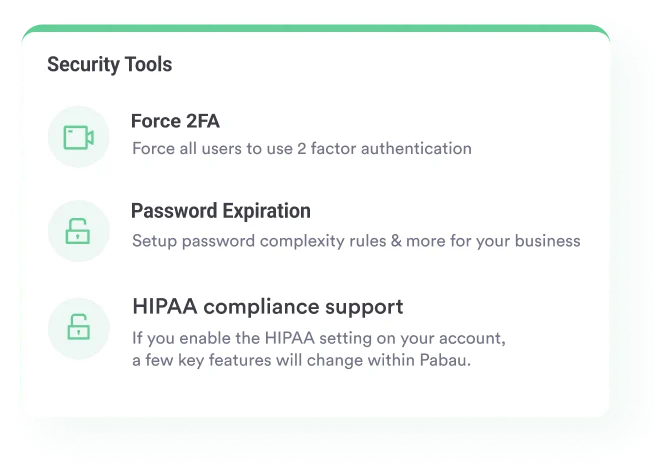
Crisis service records are subject to standard HIPAA protections and, in many states, additional state-level mental health privacy laws that restrict redisclosure.
Payers conducting claims reviews have specific rights of access, but the scope of those rights is narrower for behavioral health records than for general medical records in some jurisdictions. Practices should confirm their disclosure policies with compliance counsel when responding to payer audits for S9485 claims.
Using compliance management workflows within your practice management system helps ensure that only appropriate staff and authorized payer representatives can access crisis service documentation. A behavioral health practice management EHR that separates crisis documentation access by role helps enforce this distinction automatically.
Date and time every clinical contact note on the day it occurs. For S9485 per diem claims, payers will cross-check note timestamps against the claim’s service date. A cluster of backdated or undated notes from a multi-day stay is a common audit trigger. Digital forms with auto-timestamping are the most reliable way to avoid this.
Modifier usage for S9485 is payer-specific. Under certain payer policies, S9485 may be billed with modifier V1 (Level 1 crisis services) or V2 (Level 2 crisis services) to indicate the intensity of the crisis intervention provided.
This practice has been documented in policies from payers such as Mass General Brigham Health Plan (formerly AllWays Health Partners), which specifies modifier use for recovery support navigator services delivered alongside crisis intervention in emergency department settings.
Not all payers recognize V1 and V2 modifiers for S9485. Using them with payers that do not support them will result in claim rejection. Confirm modifier requirements in writing with each payer before applying them to claims, and document the payer’s instructions in your billing policies.
Crisis billing in the behavioral health space involves a cluster of related codes. Understanding where each one applies prevents miscoding and supports more complete revenue capture for programs that provide a continuum of crisis services. For broader mental health service coding beyond crisis intervention itself.
The 988 Suicide and Crisis Lifeline expansion has increased demand for mobile crisis and crisis residential services nationally, which in turn has increased scrutiny on crisis billing codes including S9485.
Programs that have seen volume increases post-988 should review their coding practices against current payer policies, as some states have updated their approved code sets in response to the expanded crisis infrastructure.
S9485 denials cluster around four recurring errors. Knowing them prevents the most avoidable revenue losses:
For crisis programs working with a high volume of Medicaid-managed-care members. Pairing automated checks with structured digital intake and assessment forms ensures documentation is complete before a claim is ever built.
Most S9485 denials are preventable. Confirming payer eligibility at admission, choosing between S9484 and S9485 based on service model and payer rules, and maintaining daily clinical documentation are the three disciplines that separate programs with clean claim rates from those with chronic billing backlogs.
Pabau’s claims management software gives behavioral health practices the tools to track payer-specific coverage, automate per diem billing workflows, and keep documentation linked directly to each claim. If your crisis program is managing S9485 billing across multiple payers and service lines, see how Pabau handles this by booking a demo.

Billing anesthesia for vitreoretinal surgery? Vitreoretinal surgery anesthesia billing guide breaks down the base units, time units, and modifiers for this layered billing structure.
Billing anesthesia for an eye exam? Ophthalmoscopy anesthesia billing guide covers billing for sedated eye exams in pediatric and cognitively impaired patients.
Billing anesthesia for an intraoral procedure? Intraoral procedure anesthesia billing guide covers base units and modifiers for anesthesia during tooth extraction and oral biopsy.
HCPCS Code S9485 is a Level II HCPCS code used to bill crisis intervention mental health services on a per diem basis. It covers all covered crisis intervention services delivered to a member in a single calendar day and is primarily used by crisis stabilization units, mobile crisis programs, and community mental health centers billing Medicaid or select commercial payers.
S9484 bills crisis intervention services by the hour; S9485 bills by the day (per diem). A single provider cannot bill both codes for the same member on the same day, for the same crisis episode. Use S9484 when billing discrete hours of mobile crisis contact, and S9485 when billing a full day of crisis residential or stabilization services.
No. HCPCS S9485 is not valid for Medicare billing. S-codes are excluded from Medicare reimbursement. Crisis programs serving Medicare-enrolled patients should use applicable CPT codes or Medicare-recognized behavioral health benefit codes instead.
Modifier V1 (Level 1) and V2 (Level 2) are used with S9485 under some payer policies to indicate the intensity of crisis services provided. Not all payers recognize these modifiers for S9485, so confirm requirements with each payer before applying them. Using unsupported modifiers will result in claim rejection.
Seven of eight state Medicaid programs studied in an ASPE/HHS analysis reimburse S9485. Select commercial payers also cover the code, particularly those with behavioral health carve-out programs. Coverage and reimbursement rates vary by state and payer; always verify plan-specific policies before submitting claims.