

CCSD code G5100: Bypass of duodenum billing guide
CCSD code G5100 bills a bypass that leaves the duodenum in place CCSD code G5100...

Last Updated: Oct 16, 2026
S0506 is the HCPCS Level II code for bifocal vision prescription lens (safety, athletic, or sunglass), per lens.
Let Pabau's smart automation suggest the right codes, reduce claim denials, and keep your practice compliant—effortlessly.
Automate repetitive tasks and focus on what matters most—your patients.
Reduce coding errors and ensure compliance with the latest regulations.
Clean claims, fewer denials, and faster reimbursements.
Powerful insights and reporting to help your practice thrive.
HIPAA compliant SOC 2 certified GDPR-compliant Trusted by 4,000+ clinics worldwide

HCPCS Code S0506 covers a bifocal vision prescription lens (safety, athletic, or sunglass), billed one unit per lens.
Medicare never covers S0506, so the claim goes to a state Medicaid program or a private commercial plan.
RT and LT modifiers show which lens each line represents. Confirm each payer’s modifier rules before you submit.
The Blue Cross Blue Shield Association and AHIP maintain the S-code series jointly, which is why Medicare sits outside it.
Practice management software like Pabau keeps the prescription, invoice, and payer details on one client record, so vision claims go out complete.
HCPCS Code S0506 is the billing code for a bifocal vision prescription lens, billed per individual lens. The official descriptor limits the code to safety, athletic, or sunglass lenses, so the product dispensed has to match.
Two mistakes cause most denials on this code. The first is submitting without checking coverage, because Medicare never pays S0506. The second is leaving off the modifier that says which lens the line covers.
This guide walks through the official descriptor, payer coverage, fee schedule context, modifier rules, and the neighboring vision supply codes. Practices that already run digital patient intake and billing forms can hold the code reference in the same place and cut transcription errors early.
The official descriptor for HCPCS Code S0506 is “Bifocal vision prescription lens (safety, athletic, or sunglass), per lens.” The parenthetical is part of the code, so check that the lens you dispensed fits one of those three categories.
The closing phrase, “per lens,” sets the billing unit. A patient who leaves with a complete pair generates two units of S0506, one for the right lens and one for the left. Billing a single unit for both lenses leads to underpayment or a rejected line.
S0506 belongs to HCPCS Level II, the code set administered by the Centers for Medicare and Medicaid Services (CMS). CMS does not maintain the S-code series itself. That job is shared by the Blue Cross Blue Shield Association (BCBSA) and America’s Health Insurance Plans (AHIP).
S-codes exist for payers other than Medicare. According to the CMS HCPCS overview, state Medicaid agencies and commercial insurers use them for items and services that Medicare Part B does not cover. State programs use the T-code series on the same principle, and T1020 is one example.
S0506 sits in the S0500-S0596 vision supplies range. Its neighbors cover single vision lenses, trifocal lenses, contact lenses, and other optical supplies.
Medicare does not cover HCPCS Code S0506. S-codes as a class fall outside Medicare Part B, because they describe products and services Medicare does not pay for. A claim sent there comes back denied. Confirm the patient’s vision benefits before the lens is ordered, so the write-off does not land on the practice.
Coverage under Medicaid and commercial plans varies widely. Some state Medicaid programs cover bifocal lenses. Others cover them only for specific groups, such as children under Early and Periodic Screening, Diagnostic, and Treatment (EPSDT) rules. Private payers often cover S0506 through a vision rider or a stand-alone vision plan, with benefit limits and network rules set by contract.
Because Medicare does not cover S0506, the code carries no Medicare Physician Fee Schedule rate. Individual payers set reimbursement instead. State Medicaid programs publish their own fee schedules, and allowed amounts vary from state to state and plan to plan.
Commercial insurers negotiate rates through provider contracts, so what a practice collects depends on its network agreement. To confirm that S0506 carries no Medicare fee, run it through the CMS Physician Fee Schedule lookup.
For state rates, check each Medicaid agency’s posted schedule or its provider portal. For commercial rates, the remittance advice and the explanation of benefits (EOB) are the most reliable sources. Linking payment processing to the billing record makes it easier to reconcile expected against paid amounts.
Before billing S0506, pull the patient’s current vision benefit summary or the eligibility response from the 270/271 transaction. Confirm the plan covers bifocal lenses rather than single vision lenses or contacts alone. Check the benefit frequency, since some plans allow new lenses only every 12 or 24 months. Note whether prior authorization applies. Doing this at the point of dispensing stops denials arriving after the lens has been made.
Submitting S0506 cleanly comes down to unit counting, modifiers, and the documentation each payer expects. A short pre-submission check catches almost every error on this code. Claims management software lets a practice build payer-specific rules into that check, so problems surface before the claim goes out. Compliance risk rises where one person codes, bills and reconciles without a second review.
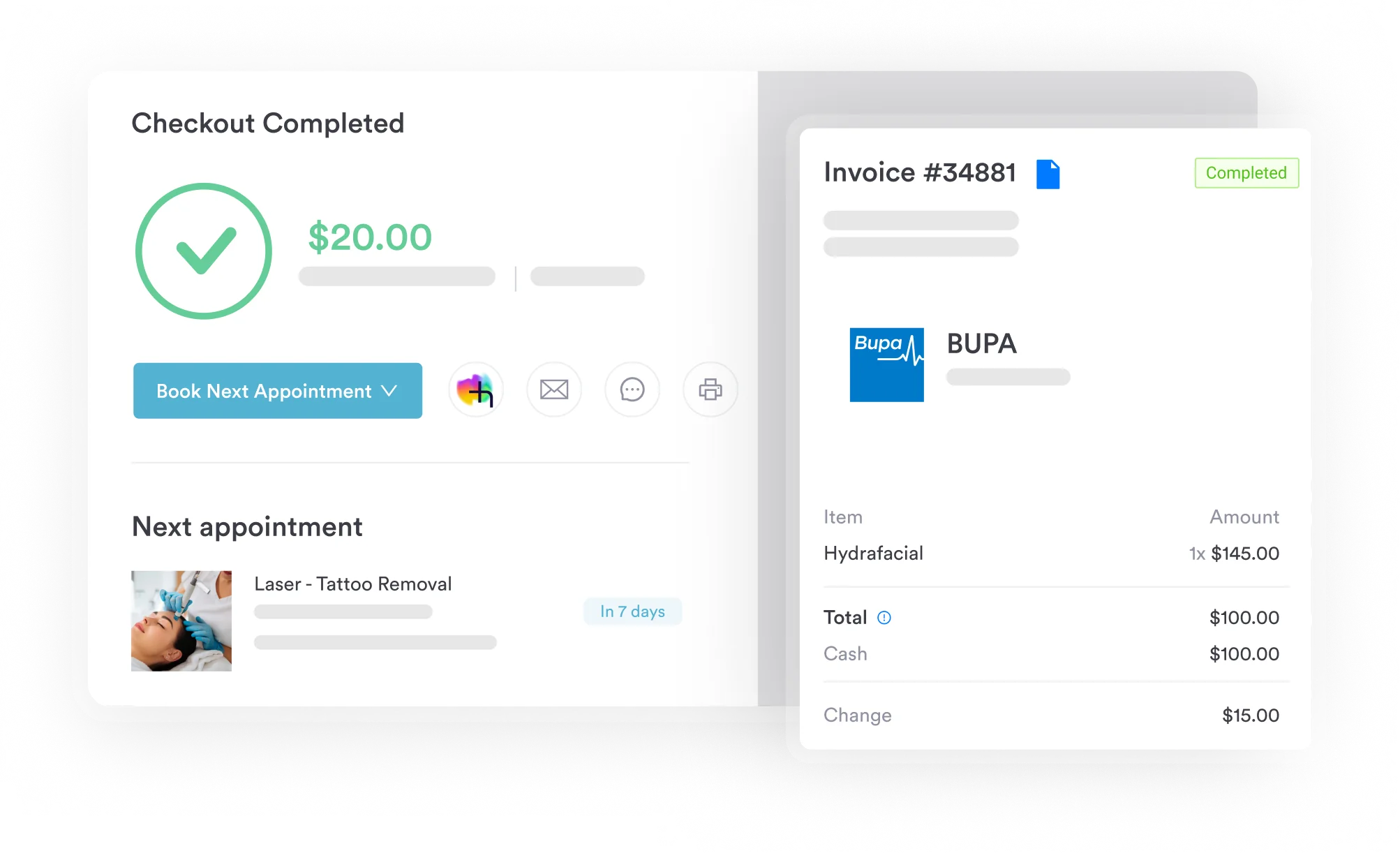
Laterality modifiers are the main modifier consideration here. Because the code is billed per lens, each line has to say which lens it represents.
Modifier rules are payer-specific. Some payers want each lens on its own line with a modifier, while others accept one line with a quantity of two. Client records that hold the prescription and the dispensing notes make it quick to answer a payer’s request after submission. The AAPC Codify HCPCS lookup carries code detail pages with modifier usage notes.
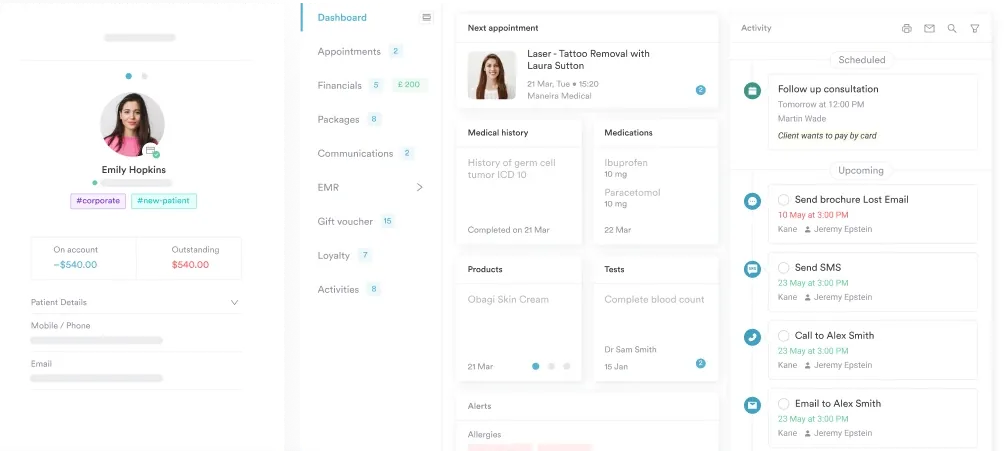
Any licensed provider or optical dispensary contracted with the payer to dispense prescription eyewear can bill S0506. The prescribing provider and the dispensing provider do not have to be the same entity, which is what trips billing staff up first. For practices running optometry practice scheduling and billing in one system, both functions sit against the same record.
Eligibility still comes down to the payer contract, so verify enrollment and any credentialing requirement before billing. Digital intake forms that capture insurance details at the point of service cut the chase for documentation later. The same enrollment questions come up elsewhere in insurance billing, including at primary care practices.
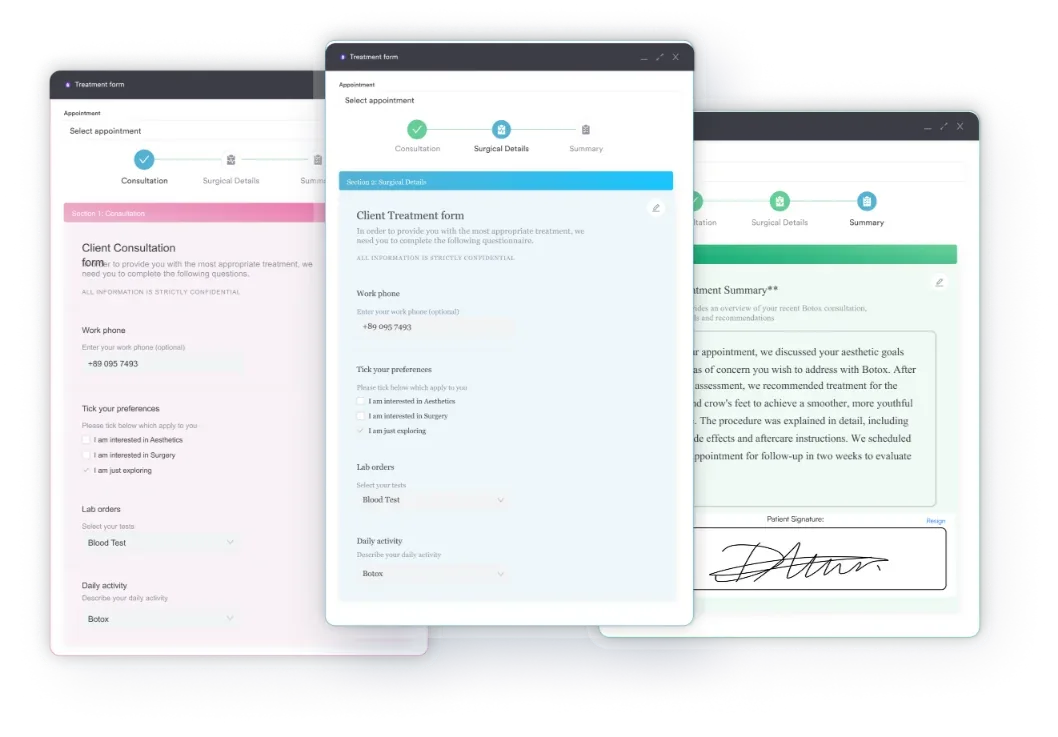
S0506 sits in the S0500-S0596 vision supplies range. Knowing the adjacent codes prevents miscoding when a patient leaves with a different lens type. Practices billing across several code sets can keep a medical coding cheat sheet at the front desk. Map every optical product to a code once, and the same error stops repeating across claims.
If the dispensed lens carries no refractive power, bill S0510 instead. That code covers the non-prescription safety, athletic, or sunglass lens.
S0504 applies only when the single vision lens is a safety, athletic, or sunglass lens. A routine single vision lens correcting astigmatism is billed from the V2100-V2199 range. There, V2108 is the spherocylinder lens code. It covers a plus or minus 4.25D to 7.00D sphere with a plus or minus 2.12D to 4.00D cylinder.
Progressive lenses are a frequent source of miscoding, and no S-code describes them. A patient asking for a no-line bifocal is describing a progressive lens. Bill that as HCPCS V2781, which is added alongside the base bifocal or trifocal V-code rather than replacing it. A standard bifocal carries a visible segment line, so billing S0506 for a progressive lens is an error.
Training dispensing staff on that distinction cuts downstream corrections. For practices carrying several lens lines, EHR billing integration that maps inventory items to codes catches the problem at the point of sale. The S-code series also runs well beyond vision supplies, and S0250 shows the same non-Medicare pattern shows the same non-Medicare pattern in another specialty.
HCPCS Code S0506 is listed as active for 2026 in current published data. The Blue Cross Blue Shield Association (BCBSA) and America’s Health Insurance Plans (AHIP) manage S-code updates jointly each year. CMS publishes the complete HCPCS Level II file annually, so verify status against that release rather than a third-party database.
The practice management software features that matter most here are automatic code file updates and payer rule synchronization. Both lower the risk of billing a code whose status or descriptor changed mid-year.
No descriptor change to S0506 has been published for 2026. The wording stays “Bifocal vision prescription lens (safety, athletic, or sunglass), per lens.” Payer policy can still move on its own cycle.
State Medicaid programs and commercial plans update fee schedules and coverage rules independently of the code file. Check each payer’s current policy at the start of every plan year.
Set a reminder in January, and another at the start of each new Medicaid plan year. Use it to pull updated fee schedule files from every payer you bill. S-codes are not updated through Medicare channels, so a CMS change notice will not warn you about a Medicaid or commercial plan change. Remittance advice is often the first signal that a payer has moved its coverage or its rate for a code.
Most vision practices split this work across systems. The prescription sits in the clinical record and the invoice sits in a payment tool. The payer’s rules live in a shared folder, or in someone’s head. Billing staff then rebuild each claim by hand.
Practice management software like Pabau holds all of it on one client record. The prescription, dispensing notes, insurer details, and the invoice for each lens live together. A biller preparing an S0506 line can see exactly what supports it, and claim status comes back to the same record.
You get fewer denials caused by missing detail, and far less rework when a payer asks for the prescription. The same workflow carries over to any specialty that bills insurers, from optometry to a physical therapy practice.

Pabau keeps prescriptions, dispensing notes, invoices, and insurer details on one client record. Every lens line then leaves your practice with the documentation payers ask for.

S0506 is a narrow code, and it rewards precision. Match the lens type to the descriptor, then count one unit per lens. Add the laterality modifier and route the claim to a payer that actually covers it.
The part worth remembering is that nobody will tell you when a payer changes its position here. The descriptor is stable, but coverage and rates move on each plan’s own schedule. Put the annual check in your calendar instead of waiting for a denial to raise it.
Book a demo to see how Pabau keeps vision billing records, invoices, and claim status in one place.

Billing Medicaid waiver services as well as vision supplies? T2025 walks through the documentation and payer rules behind waiver claims.
Billing a scoliosis instrumentation removal? scoliosis instrumentation removal guide covers CCSD code V4142 and the prior authorization and coding rules that keep claims from being rejected.
Billing a percutaneous spinal biopsy? spinal biopsy billing guide covers CCSD code V4740 and the prior authorization timelines interventional radiology teams must meet.
Billing an intramedullary tumor excision? intramedullary tumor billing guide explains CCSD code V4980 and why the tumor’s exact location affects whether the claim is approved.
HCPCS Code S0506 is a Level II S-code for a bifocal vision prescription lens (safety, athletic, or sunglass), billed per individual lens. Optometrists, ophthalmologists, and optical dispensaries use it to bill Medicaid and private commercial insurers for dispensed bifocal eyewear.
No. S-codes are non-Medicare HCPCS Level II codes and fall outside Medicare Part B. A claim submitted to Medicare comes back denied. Bill S0506 only to an applicable state Medicaid program or a private commercial vision plan.
The RT modifier marks the right side and the LT modifier marks the left, so each line says which lens it covers. Because S0506 is billed per lens, a bifocal pair needs two line items, one with RT and one with LT. Modifier rules vary by payer, so confirm them before submitting.
There is no Medicare fee schedule rate for S0506. State Medicaid programs and private commercial payers set reimbursement themselves, and rates vary widely by plan and state. Check your state Medicaid fee schedule or your provider contract for the applicable allowed amount.
S0504 is the single vision prescription lens code for safety, athletic, or sunglass lenses, while S0506 covers the bifocal version of the same lens types. Neither code describes a progressive lens. Progressive lenses are billed with HCPCS V2781, which is added alongside the base bifocal or trifocal V-code.
S0506 is listed as active in available 2026 HCPCS data. Verify current status against the official CMS HCPCS Level II annual release file before billing. Code status and payer coverage policies change independently of each other.



