

HCPCS code E0198: Water pressure pad billing guide
HCPCS code E0198 is a water pad for a standard mattress HCPCS code E0198 is the ...

Last Updated: Oct 13, 2026
S0250 is the HCPCS Level II code for comprehensive geriatric assessment and treatment planning performed by assessment team.
Let Pabau's smart automation suggest the right codes, reduce claim denials, and keep your practice compliant—effortlessly.
Automate repetitive tasks and focus on what matters most—your patients.
Reduce coding errors and ensure compliance with the latest regulations.
Clean claims, fewer denials, and faster reimbursements.
Powerful insights and reporting to help your practice thrive.
HIPAA compliant SOC 2 certified GDPR-compliant Trusted by 4,000+ clinics worldwide

HCPCS Code S0250 covers comprehensive geriatric assessment and treatment planning by an assessment team.
S0250 is an HCPCS Level II S-code paid by state Medicaid programs and some commercial plans.
Traditional Medicare fee-for-service does not reimburse S0250, so bill a CPT or G-code for those patients.
Rates are set by each payer, so verify coverage with the plan before the assessment is performed.
Practice management software like Pabau submits, tracks, and reconciles S0250 claims from one dashboard.
HCPCS Code S0250 is a Level II code within the Healthcare Common Procedure Coding System. That system is administered by the Centers for Medicare and Medicaid Services (CMS). The official short description is “Comp geriatr assmt team.” The long description reads: “Comprehensive geriatric assessment and treatment planning performed by assessment team.”
This is an S-series code, which places it in the HCPCS Level II S-codes category. S-codes are distinct from CPT codes, which the American Medical Association (AMA) maintains.
The Blue Cross Blue Shield Association (BCBSA) and the Health Insurance Association of America (HIAA) developed the S-code series. It was built for Medicaid programs and commercial payers, not for Medicare fee-for-service. The code covers the assessment and the treatment planning together, which reflects one full episode of team-based care.
The table below summarizes the key metadata for HCPCS Code S0250 as a quick reference for coders and billing staff.
A comprehensive geriatric assessment is performed by a multidisciplinary team, not by one clinician working alone. The descriptor specifies “assessment team,” and that is the requirement payers hold you to. Getting several clinicians into one episode is a patient scheduling problem first, and a patient care management problem second.
Comprehensive geriatric assessment (CGA) typically involves clinicians from several disciplines working together to evaluate a patient’s medical, functional, cognitive, and psychosocial status. The team composition varies by practice setting, but commonly includes:
Documentation must reflect the involvement of each participating team member. Payer reviewers look for evidence that several disciplines shaped both the findings and the treatment plan. A single provider’s note that lists the others as observers does not clear that bar. Using structured medical forms for each discipline’s input strengthens the record.
Each discipline usually documents in its own template, and that is where team evidence goes missing. A mobility assessment kept in occupational therapy software or a cognitive screen kept in a mental health EMR never reaches the coder. Pull every contribution into the same patient record before the claim is built. Our guide to MoCA score interpretation covers the screen most geriatric assessments record.
Coverage for HCPCS Code S0250 varies significantly by payer type. Getting this wrong means submitting to the wrong payer or expecting reimbursement from a program that categorically excludes S-series codes. The table below summarizes coverage by payer category.
State Medicaid programs that pay S0250 usually fund the surrounding care too. Home and community-based services are billed with separate codes such as separate codes such as T1020 and T2025. One assessment can therefore trigger several claims across the same program.
No. Traditional Medicare fee-for-service does not cover HCPCS Code S0250. S-series codes sit outside the Medicare Physician Fee Schedule and are not recognized under Medicare’s standard billing rules. Medicare Administrative Contractors (MACs) reject S-code claims submitted under traditional Medicare.
For patients with traditional Medicare, bill a covered CPT or G-code instead. The annual wellness visit codes G0438 and G0439 and the evaluation and management codes are the usual alternatives. Medicare Advantage is a separate question, since some plans cover S0250 through supplemental benefits. Verify that with the plan before the assessment.
Because S0250 is not a Medicare-covered service, there is no CMS Physician Fee Schedule national rate for this code. Reimbursement is set entirely by the paying entity. That means the state Medicaid fee schedule or the commercial plan’s contracted rate.
Rates vary significantly. State Medicaid programs that cover S0250 publish their own fee schedules. Amounts differ by state policy, by managed care contract, and by facility or non-facility setting. Commercial payers set their rates through provider contracts. The general rate framework for this service is:
Always confirm rates with the specific payer before performing the service. Rates published by third-party lookup tools may reflect estimated or historical figures and may not match current contracted amounts. Use the AAPC HCPCS code lookup for code reference data, but treat reimbursement amounts as estimates requiring payer verification.
Before billing S0250 to any Medicaid managed care plan, call the plan’s provider relations line and request written confirmation of coverage. Verbal confirmation is not sufficient for appeal purposes if a claim is denied. Document the date, representative name, and reference number for every coverage verification call.
Claim denials for HCPCS Code S0250 usually come down to three problems. The payer is wrong, the team documentation is thin, or the diagnosis does not support the service. All three are avoidable before the claim leaves your practice. Here are the core billing requirements:
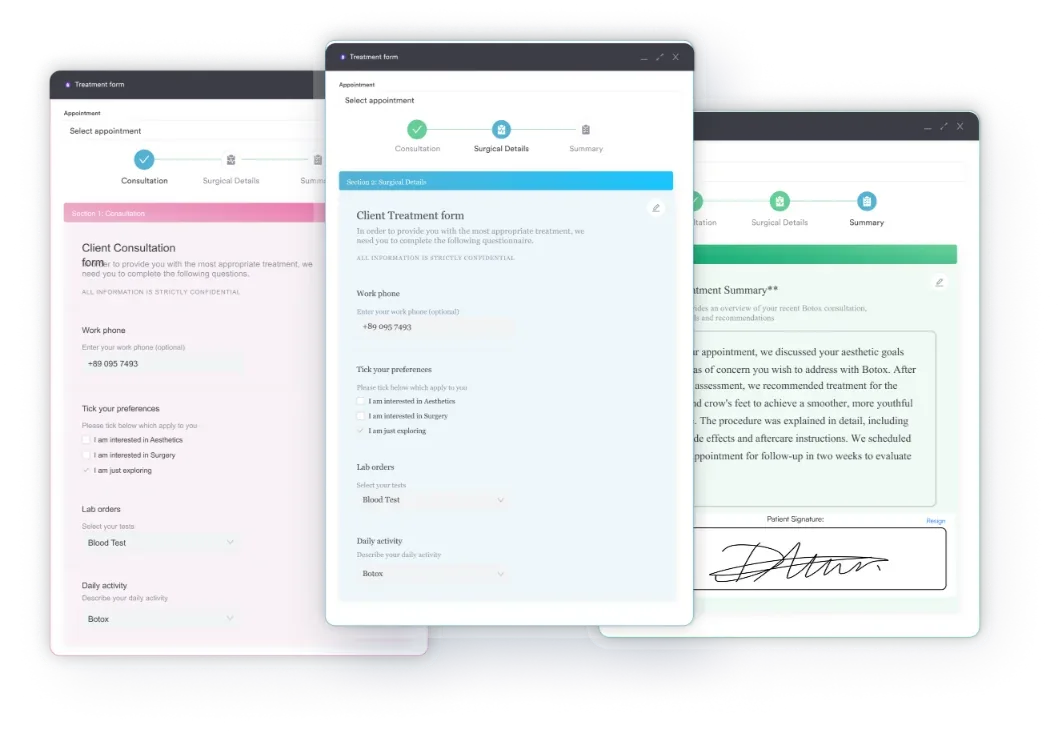
Maintaining HIPAA-compliant documentation throughout the assessment protects the practice during payer audits and appeals. Using digital intake forms captures each team member’s contribution consistently, so the record is easy to retrieve if a claim is challenged.
Understanding what triggers denials helps prevent them. Billing staff report these as the most frequent reasons S0250 claims are rejected or reduced:
A billing compliance checklist adapted for geriatric services helps teams review each requirement before claims go out.
Selecting the right ICD-10-CM codes is critical for establishing the medical necessity of a comprehensive geriatric assessment. The diagnosis codes on the claim must tell the clinical story that justifies why a full multidisciplinary evaluation was appropriate. The table below lists codes frequently paired with S0250 in geriatric care settings.
This list is illustrative, not exhaustive. Always check that each diagnosis code is valid for the current ICD-10-CM fiscal year against the official CMS ICD-10-CM code tables. Codes are revised and deleted every October. A shared medical coding cheat sheet keeps the team working from the same list, rather than a templated default.
Geriatric practices often need to choose between S0250 and other available codes depending on the payer, the service structure, and the documentation available. The table below cross-references the most relevant adjacent codes, including CPT alternatives that Medicare and other payers do recognize.
For Medicare patients, the evaluation and management codes 99205 and 99215 are the usual choice. The annual wellness visit codes G0438 and G0439 also apply. For Medicaid and commercial payers that accept S-codes, S0250 describes the team-based assessment more precisely than a single-provider E/M code.
Map these relationships in your billing system so the right code populates by payer and visit type. Practices that run EHR integration across several specialties usually maintain that map centrally.
Map your payers to accepted code types before your next billing cycle. Build a simple reference table with three columns. List the Medicaid plans that accept S0250, the commercial plans that accept it, and the payers where you bill a CPT alternative instead. Update it quarterly, because coders working from a current map submit far fewer incorrect-payer denials.
Plenty of practices track S0250 coverage in a spreadsheet and chase claim status by phone. Notes from each discipline sit in separate templates, so the coder rebuilds the team story by hand for every claim. That work is where denials start.
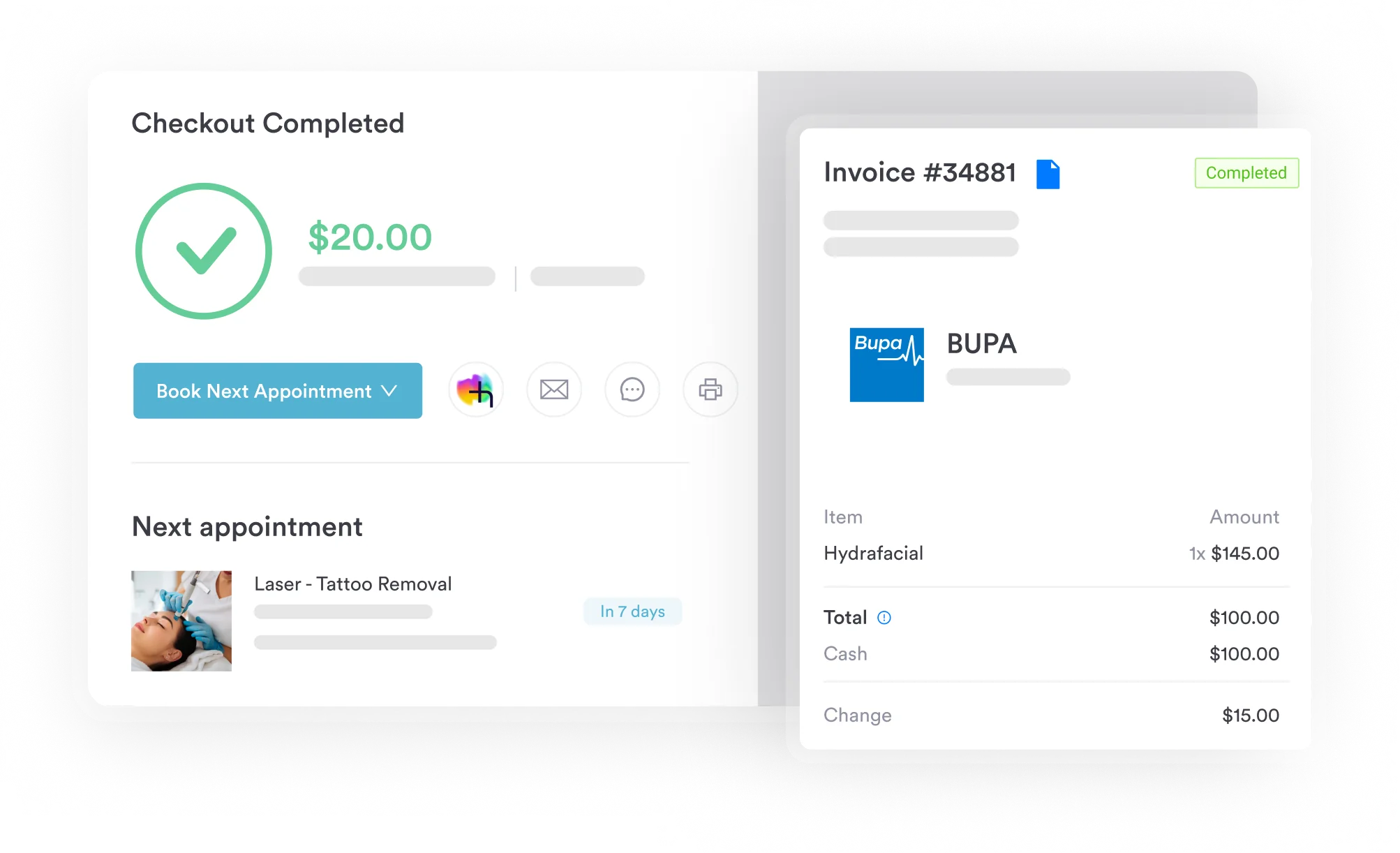
Practice management software like Pabau keeps that work in one system. Its claims management software pulls the patient, treatment, and insurer details from the record into a pre-filled claim. In the US that claim goes out electronically through Pabau’s Claim.MD connection, or by email where a payer prefers it.
Here is what that does for an S0250 claim.
Coverage rules themselves still sit with your billing team, since Pabau does not decide which codes a payer accepts. What it removes is the retyping, the status calls, and the resubmissions. Reviewing your practice management software features against that workflow shows where the manual steps remain.

Pabau’s claims management sends claims to your payers electronically and tracks each one’s status from the same dashboard. Your team sees what is paid, pending, or rejected without leaving the patient record.

S0250 is a narrow code with a specific job, and the payer decides whether it exists for you. Confirm coverage before the assessment, not after the denial. Keep each discipline’s note in the record, and pair the claim with a diagnosis that earns the evaluation.
When a plan says no, the CPT and G-code route is usually still open, so the assessment does not go unpaid. The trade-off is precision. A single-provider E/M code will never describe what a six-person team did in one episode. That is the argument for pressing your Medicaid and commercial plans on S0250 coverage.
Once coverage is settled, the remaining work is administrative. Pabau gives geriatric teams one place to submit S0250 claims, watch their status, and reconcile what comes back. Book a demo to see how that works with your payer mix.

Billing an orthopedic tendon repair instead? CCSD code T6782 guide CCSD code T6782 is the designated code for surgical repair of the distal biceps tendon.
Billing an Achilles tendon repair instead? CCSD code T6810 guide CCSD code T6810 covers secondary repair of the Achilles tendon in UK private practice.
Billing a reconstructive surgery add-on code? CCSD code T7602 guide CCSD code T7602 covers microvascular free tissue transfer when added to other codes, including closure of a secondary defect.
Billing a rotator cuff repair instead? CCSD code T7915 guide CCSD code T7915 covers arthroscopic rotator cuff repairs larger than 2 cm, classified as a MAJOR+ procedure.
Billing a lymph node dissection instead? CCSD code T8542 guide CCSD code T8542 covers block dissection of lymph nodes, one of the more demanding UK surgical billing codes.
HCPCS Code S0250 is a Level II HCPCS code describing comprehensive geriatric assessment and treatment planning performed by a multidisciplinary assessment team. It is used primarily by state Medicaid programs and some commercial payers. The assessment covers medical, functional, cognitive, and psychosocial status, alongside a coordinated treatment plan.
No. Traditional Medicare fee-for-service does not cover HCPCS Code S0250. S-series HCPCS codes are excluded from the Medicare Physician Fee Schedule as a class. Medicare Advantage plans may cover S0250 depending on the individual plan’s supplemental benefit structure, but this must be verified directly with each plan before billing.
Applicable modifiers vary by payer. Common modifiers for S0250 include location identifiers (such as POS codes distinguishing facility from non-facility settings) and provider-type modifiers required by specific Medicaid programs. Always review the billing manual of the specific payer before applying modifiers, as incorrect modifier use is a common denial trigger.
S0250 is an S-series HCPCS Level II code used by Medicaid and some commercial payers. Private payer associations developed the S-code series, while the AMA maintains CPT. Codes such as 99205 and 99215 describe evaluation and management visits, without the team-assessment requirement built into S0250. When Medicare is the payer, use a CPT or G-code alternative.



