

CPT Code 98981: RTM Treatment Management Billing Guide
CPT code 98981: Definition and official descriptor CPT code 98981 is an add-on c...

Last Updated: Nov 9, 2026
S0126 is the HCPCS Level II code for an injection of follitropin alfa, 75 IU, billed as one unit for each 75 IU administered.
Follitropin alfa is a recombinant follicle-stimulating hormone (FSH) used for ovarian stimulation, ovulation induction and assisted reproductive technology (ART) cycles. Medicare does not recognize S-codes for payment, and most commercial payers require prior authorization before they process a claim. Most denials trace to a wrong unit count, a missing National Drug Code (NDC) or an absent prior authorization.
Let Pabau's smart automation suggest the right codes, reduce claim denials, and keep your practice compliant—effortlessly.
Automate repetitive tasks and focus on what matters most—your patients.
Reduce coding errors and ensure compliance with the latest regulations.
Clean claims, fewer denials, and faster reimbursements.
Powerful insights and reporting to help your practice thrive.
HIPAA compliant SOC 2 certified GDPR-compliant Trusted by 4,000+ clinics worldwide

HCPCS code S0126 reports follitropin alfa injection in 75 IU units, so the unit count is the IU given divided by 75.
Medicare does not recognize S-codes for payment, and most state Medicaid programs exclude fertility drugs, so S0126 is mainly billed to commercial payers.
Most commercial payers require prior authorization for S0126, and a missing or expired authorization is a frequent cause of denials.
Follitropin beta (Follistim AQ) bills under S0128, and swapping the two codes triggers an NDC mismatch denial.
Pabau, the practice management platform we build, tracks the authorization code, dates and sessions on the patient’s case, with a warning when one is missing.
HCPCS code S0126 is defined as “Injection, follitropin alfa, 75 IU” in the Centers for Medicare and Medicaid Services (CMS) HCPCS Level II code set. The billing unit is each 75 IU administered. The unit count on the claim line is the number of 75 IU increments the patient received during that encounter.
Follitropin alfa is a biosynthetic (recombinant DNA-derived) form of FSH. It binds FSH receptors in the ovary to stimulate follicular development. The brand most commonly billed under S0126 is Gonal-F, manufactured by EMD Serono. Any FDA-approved follitropin alfa product maps to this code, so confirm the specific NDC for each product dispensed.
S0126 covers follitropin alfa injections given as part of ovarian stimulation, ovulation induction and IVF protocols. The most frequent scope error is billing a different gonadotropin under this code.
Covered under S0126:
Not covered under S0126:
Most miscoding on this code comes from mixing up follitropin alfa and follitropin beta. If the physician ordered Follistim AQ (follitropin beta), bill S0128, not S0126. Payer systems flag this mismatch and deny the claim.
Each unit of S0126 equals 75 IU of follitropin alfa administered. Bill the number of 75 IU increments the patient received in that encounter, not the number of vials opened or the total cycle dose.
Partial vials: Most payers expect rounding down to whole 75 IU units. If 100 IU was administered, bill 1 unit (75 IU). Confirm your payer’s wastage and rounding policy before you bill a partial increment.
NDC reporting: Most payers require the National Drug Code on the claim line alongside S0126. Report the 11-digit NDC without dashes, after the N4 qualifier, in the drug field of the CMS-1500 or 837P. Include the NDC quantity and unit of measure (UN for units, ML for milliliters). A missing NDC is one of the top S0126 denial triggers.
Check payer policy for maximum units edits (MUEs) before submitting large unit counts. CMS does not publish MUEs for S-codes, but commercial payers often cap daily units based on typical stimulation protocols. If you are billing 8 or more units in a single encounter, attach clinical notes showing the prescribed dose.
The two follitropin codes are the most frequently confused in fertility billing. S0126 and S0128 describe chemically distinct recombinant FSH molecules. Billing the wrong code triggers a mismatch denial, because the payer’s system cross-references the NDC against the code.
For the procedures in the same cycle, such as egg retrieval and embryo transfer, see the IVF procedure codes that pair with gonadotropin HCPCS codes. The S-code drug line and the CPT procedure line go on the same claim form as separate line items.
Every S0126 claim line needs a supporting ICD-10-CM diagnosis code that establishes medical necessity. Payers match the diagnosis against the drug to verify that the clinical indication is covered under their fertility benefit.
Use the most specific N97 subcategory the documentation supports. Payers that apply a diagnosis-to-drug crosswalk reject S0126 paired with an unrelated code. Check your payer’s medical policy for the ICD-10 codes it accepts as covered indications before you submit.
Most commercial payers require prior authorization for S0126. Fertility drug benefits are among the most closely managed in employer-sponsored plans. Requirements still vary by payer and plan design, so verify the patient’s plan before assuming PA applies.
Typical PA documentation requirements:
A medical prior authorization form keeps these items together in one request. Our guide to the prior authorization process covers each step from request to approval.
Medicare: Medicare does not cover S0126 or any fertility drug. S-codes are temporary national codes that Medicare does not recognize for payment. Do not submit S0126 to Medicare Part B or Part D.
Medicaid: Each state sets its own Medicaid coverage for fertility drugs, and most state programs exclude them. About 20 states have fertility insurance mandates, but those laws apply to commercial plans, not Medicaid. Check your state Medicaid agency’s fee schedule and drug policy before billing S0126 to Medicaid.
ERISA self-funded plans are a frequent source of unexpected denials for fertility practices. These plans are exempt from state insurance mandates, so employers can and do exclude fertility coverage entirely. Confirm the plan type at eligibility verification, not at claim submission.
S0126 claims are denied often because fertility benefits are closely managed and the documentation requirements are exacting. Good denial management strategies for fertility practices start by tracking these seven causes.
When you see CO-15 on an S0126 remittance, check whether the PA was submitted for the correct date range. Many fertility payers issue PA by cycle, not by calendar quarter, so a PA for one stimulation cycle does not extend to the next. Our reference on medical billing denial codes explains what each code in this table means.
Run a monthly audit of S0126 claims by denial reason code. If CO-15 (missing or invalid authorization) accounts for more than 20% of your denials, look at scheduling first. The authorization is usually missed there, not in the billing department. Build PA verification into the cycle-start checklist, not the claim-submission checklist.
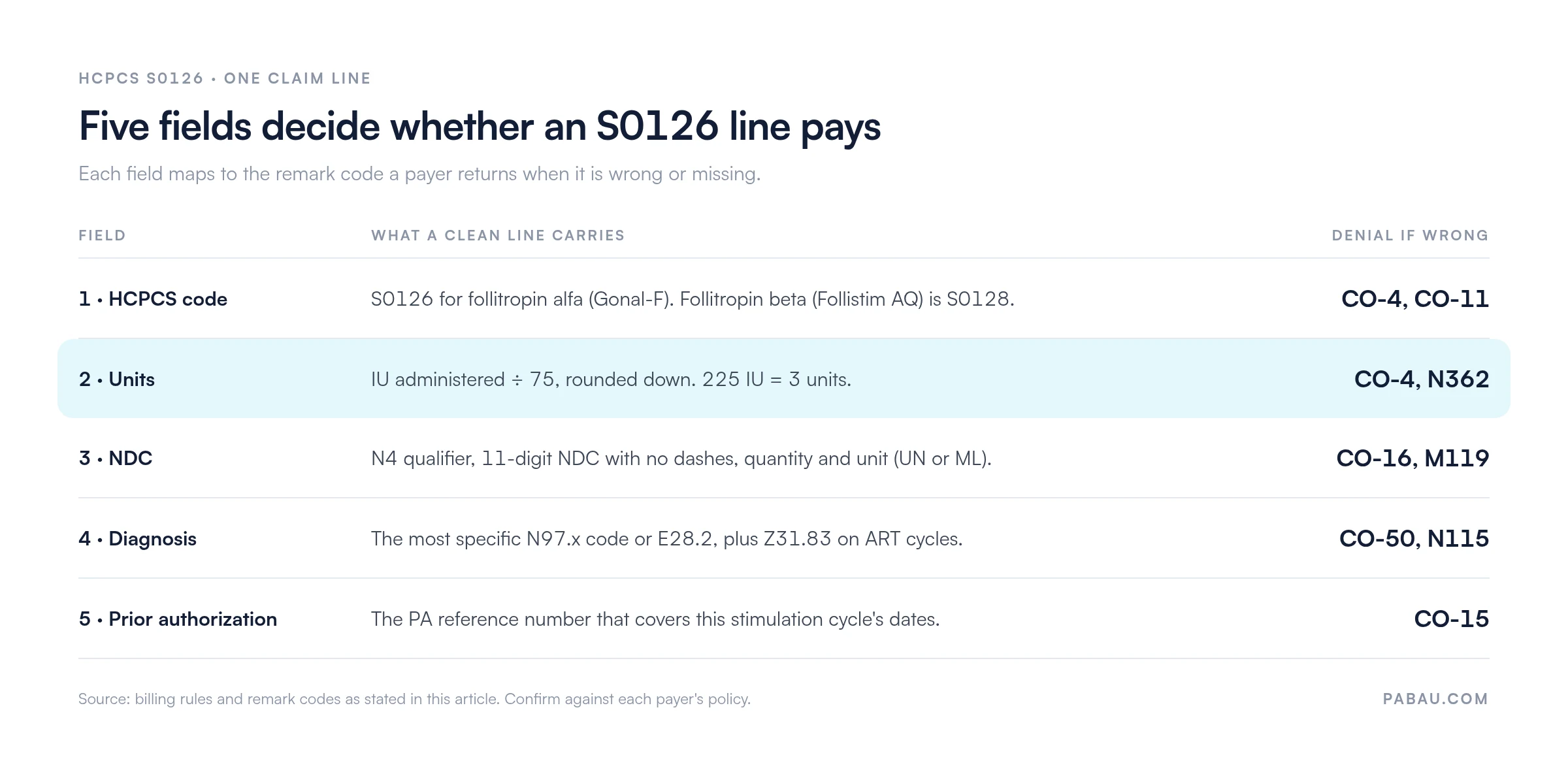
Five fields on the claim line map to these remark codes, so checking them before submission heads off most of the denials in the table.
Clean S0126 claims depend on chart documentation that matches every field on the claim line. These are the records an auditor expects to find, and the same records a payer will request in a post-payment review.
A structured template for cycle monitoring notes captures these fields at every visit, which lowers the risk of a missing data element on audit. The physician order, NDC and administered dose must all sit in the same encounter note. If one of them is absent, a payer can recoup the payment.
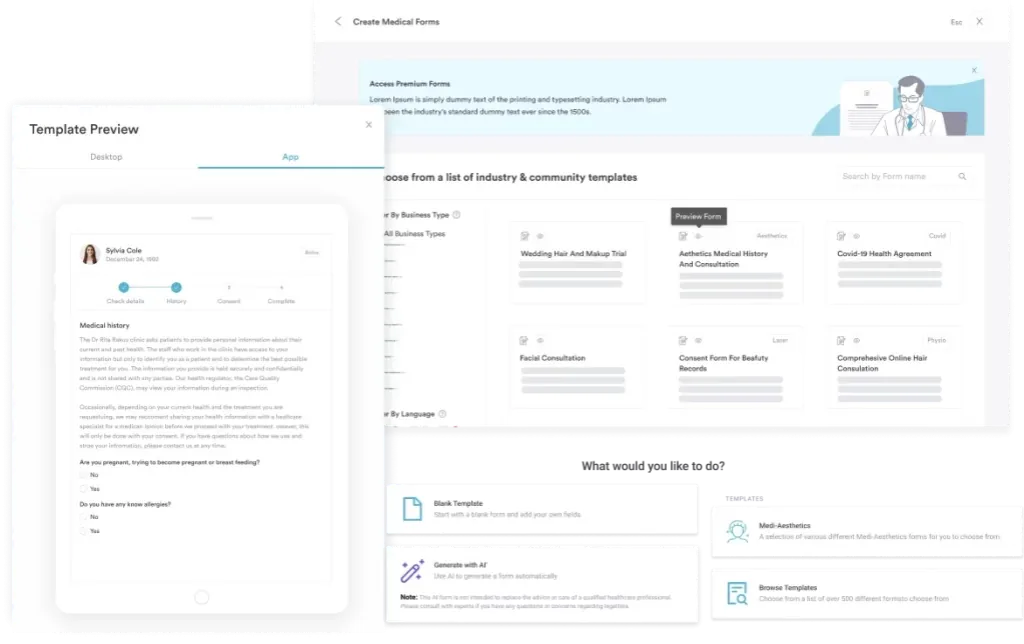
A fertility practice running several stimulation cycles at once tracks authorizations, doses and NDCs across dozens of encounters. When that tracking lives in spreadsheets and inboxes, an expired authorization often surfaces only when the remittance arrives.
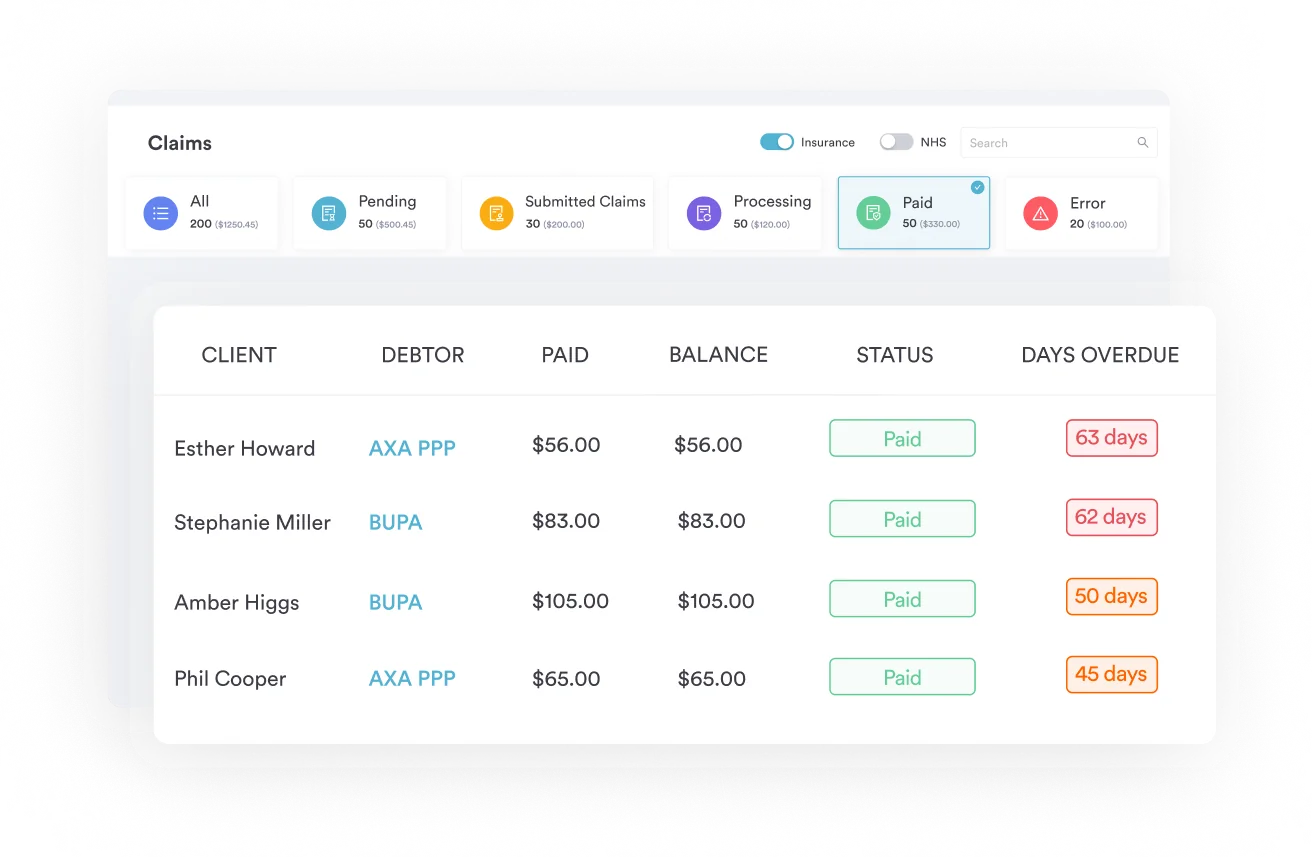
In Pabau’s claims management software, the authorization code, dates and sessions sit on the patient’s case, with a warning when one is missing. US practices send CMS-1500 and 837P claims through Claim.MD, run eligibility checks and receive ERA remittances in the same system.
Stock in Pabau carries a batch number and expiry date, and the lot is recorded against the patient and the appointment. Mapping the full medical billing workflow from documentation to adjudication shows where S0126 errors enter. Your team can then check those points before each claim goes out.

Pabau tracks the authorization code, dates and sessions on each patient’s case, with a warning when one is missing. See how it works for your practice.

The S0126 denial that costs least is the one stopped at cycle start. Confirm the plan type and the authorization’s cycle dates before the first injection, and the coverage questions are settled before any drug is given.
After that, hold every claim line to one check. The code is S0126 rather than S0128, the units equal the IU given divided by 75, and the NDC matches the product. The trade-off is a few extra minutes at intake against weeks of appeals and resubmissions.
Book a demo to see how Pabau keeps prior authorization details on each patient’s case for fertility billing teams.

Want the claims process end to end? What is medical billing explains the path from service documentation to payment posting.
Looking for denial recovery strategies? Denial management in healthcare outlines how practices reduce claim rejection rates across drug and procedure codes.
Billing another NDC-driven drug code? HCPCS code J2547 walks through units, NDC reporting and billing for peramivir.
Comparing tools for authorization tracking? Best prior authorization software reviews the platforms practices use to manage PA requests.
HCPCS code S0126 covers injections of follitropin alfa (recombinant FSH), billed per 75 IU administered, used for ovarian stimulation, ovulation induction, and ART cycles. It does not cover follitropin beta (use S0128), other gonadotropins, or compounded FSH preparations.
Bill one unit of S0126 for each 75 IU administered. If 225 IU was given, bill 3 units (225 divided by 75). Most payers expect partial doses to be rounded down to whole units, so confirm your payer’s wastage and rounding policy.
No. S-codes are temporary national codes that Medicare does not recognize for payment, and Medicare does not cover fertility drugs. Do not submit S0126 to Medicare Part B or Part D.
S0126 is for follitropin alfa (brand: Gonal-F), and S0128 is for follitropin beta (brand: Follistim AQ). They are chemically distinct recombinant FSH molecules. Payers cross-reference the NDC against the code, so the wrong code triggers an automatic denial.
Most commercial payers require prior authorization for S0126, though requirements vary by plan. Medicare does not cover the drug at all. Self-funded ERISA plans may exclude fertility benefits entirely, whatever the state mandate says. Always verify the patient’s plan before service.
The most common causes are a missing or expired prior authorization (CO-15) and a unit count not in 75 IU increments (CO-4). A missing NDC on the claim line (CO-16) is another frequent cause. A diagnosis that does not support the drug (CO-50) and follitropin beta billed under S0126 also trigger denials.
Yes, many commercial plans cover S0126, particularly in states with fertility insurance mandates. Fully insured and self-funded ERISA plans follow different rules. Prior authorization is usually required, and cycle or lifetime benefit limits commonly apply.




