

HCPCS code E0198: Water pressure pad billing guide
HCPCS code E0198 is a water pad for a standard mattress HCPCS code E0198 is the ...

Last Updated: Oct 13, 2026
J9217 is the HCPCS Level II code for leuprolide acetate (for depot suspension), 7.5 mg.
Chemotherapy administration codes and drug J-codes like J9217 sit inside the broader chemotherapy drugs category in HCPCS Level II. According to CMS, the official HCPCS Level II descriptor is: Leuprolide acetate (for depot suspension), per 7.5 mg.
CMS classifies the code under chemotherapy drugs, and the National Cancer Institute's SEER CanMED database further categorizes it as hormonal therapy, major drug class GnRH agonist, with an FDA approval year of 1989.
Let Pabau's smart automation suggest the right codes, reduce claim denials, and keep your practice compliant—effortlessly.
Automate repetitive tasks and focus on what matters most—your patients.
Reduce coding errors and ensure compliance with the latest regulations.
Clean claims, fewer denials, and faster reimbursements.
Powerful insights and reporting to help your practice thrive.
HIPAA compliant SOC 2 certified GDPR-compliant Trusted by 4,000+ clinics worldwide

HCPCS Code J9217 describes leuprolide acetate for depot suspension, billed per 7.5 mg unit, used in oncology and urology.
Units must match the dose administered exactly: a 22.5 mg injection bills as 3 units of J9217.
CMS has designated J9217 as a single-dose container code, requiring JW or JZ modifier documentation on every claim.
Pabau’s claims management software helps oncology and urology practices track drug units, modifiers, and ICD-10 pairings to reduce J9217 denial rates.
Both Lupron Depot and Eligard bill under HCPCS code J9217 at the 7.5 mg strength — the brand name doesn’t change the code, but payer-specific NDC rules can.
| Field | Value |
|---|---|
| HCPCS Code | J9217 |
| Official descriptor | Leuprolide acetate (for depot suspension), per 7.5 mg |
| HCPCS category | Chemotherapy drugs (J-codes) |
| Drug class | GnRH agonist / LHRH analog |
| SEER*Rx category | Hormonal therapy |
| FDA approval year | 1989 |
| CMS container type | Single-dose (JW/JZ modifier required) |
Leuprolide acetate is a synthetic nonapeptide analog of naturally occurring gonadotropin-releasing hormone (GnRH). The depot formulation creates a sustained-release intramuscular preparation that suppresses pituitary secretion of luteinizing hormone (LH) and follicle-stimulating hormone (FSH), driving sex hormone levels to castrate range. That mechanism underpins its clinical utility across multiple indications, each requiring its own ICD-10 pairing on the claim. Self-pay does not mean uninsured, and many patients recover part of the fee with a superbill.
Medicare coverage for J9217 is governed by CMS billing and coding article A52453, which maps approved ICD-10-CM codes to HCPCS J9217 in grouped diagnosis sets. Practices must pair the correct primary and, where applicable, secondary ICD-10 code to satisfy LCD requirements. Off-label billing without a covered diagnosis code will generate an automatic denial regardless of medical necessity documentation.
The principal covered indications and their associated ICD-10-CM codes are:
CMS article A52453 designates Group 6 codes for J9217, pairing primary ICD-10-CM codes with permissible secondary codes for prostate cancer staging and comorbidity documentation. Verify the current grouping in CMS billing and coding article A52453 before finalizing claims, as coverage policies are updated annually with the October ICD-10-CM release cycle.
Units errors are the leading cause of J9217 claim denials. The descriptor “per 7.5 mg” means one unit equals 7.5 mg of leuprolide acetate delivered. Every commercially available depot formulation maps to a specific unit count based on that denominator.
| Depot formulation strength | Dosing interval | J9217 units to bill |
|---|---|---|
| 7.5 mg | Monthly (1-month depot) | 1 unit |
| 22.5 mg | Quarterly (3-month depot) | 3 units |
| 30 mg | 4-month depot | 4 units |
| 45 mg | 6-month depot | 6 units |
Bill exactly the strength administered. Billing 4 units when a 22.5 mg (3-unit) preparation was given constitutes upcoding. Billing fewer units than administered leaves revenue uncollected and may misrepresent the treatment record. Both errors are audit triggers under NCCI edits.
J9217 depot formulations are single-dose containers: the entire reconstituted vial is administered in one injection. In practice, there is rarely a partial-vial situation with the standard depot strengths. However, CMS’s formal designation of J9217 as a single-dose container code triggers the JW/JZ modifier policy on every claim, regardless of whether any drug is actually wasted.
Injectable stock is expensive, and medical spa inventory software keeps vial counts honest against what was billed.
CMS drug wastage modifier policy requires practices to append either the JW modifier or the JZ modifier to every J9217 claim. The JZ modifier was optional from January 1, 2023 and became mandatory on July 1, 2023, with claim edits for missing or incorrect modifiers starting October 1, 2023.
The CMS JW/JZ modifier policy document explicitly lists J9217 among the single-dose container codes subject to this requirement.
| Modifier | When to use | Billing impact |
|---|---|---|
| JW | Drug wastage occurred from a single-dose container | Bill administered units with the primary line; bill wasted units on a separate line with JW appended. Only the administered line is reimbursed. |
| JZ | No drug was wasted (entire container administered) | Append JZ to the administered units line. Affirms zero wastage to the payer. Required even when nothing was wasted. |
Because standard J9217 depot vials are designed as single-dose preparations with no residual volume, the JZ modifier applies in the overwhelming majority of administrations. The JW scenario arises only when a vial is damaged during reconstitution, a smaller dose than the full container was ordered, or a preparation error renders part of the vial unusable.
Medicare follows CMS modifier policy exactly. Commercial payers vary. Some, including certain UnitedHealthcare contracts, mirror CMS policy; others have not yet aligned their systems to the 2023 JW/JZ mandate.
Check the payer’s current provider policy attachment before defaulting to CMS rules. Submitting JW/JZ modifiers to a payer whose adjudication system flags them as invalid will trigger a technical denial separate from any medical necessity review.
Pabau’s claims management software lets practices flag modifier requirements by payer at the service-level, so billing staff apply JW or JZ correctly on the first submission rather than discovering the requirement after a remit.
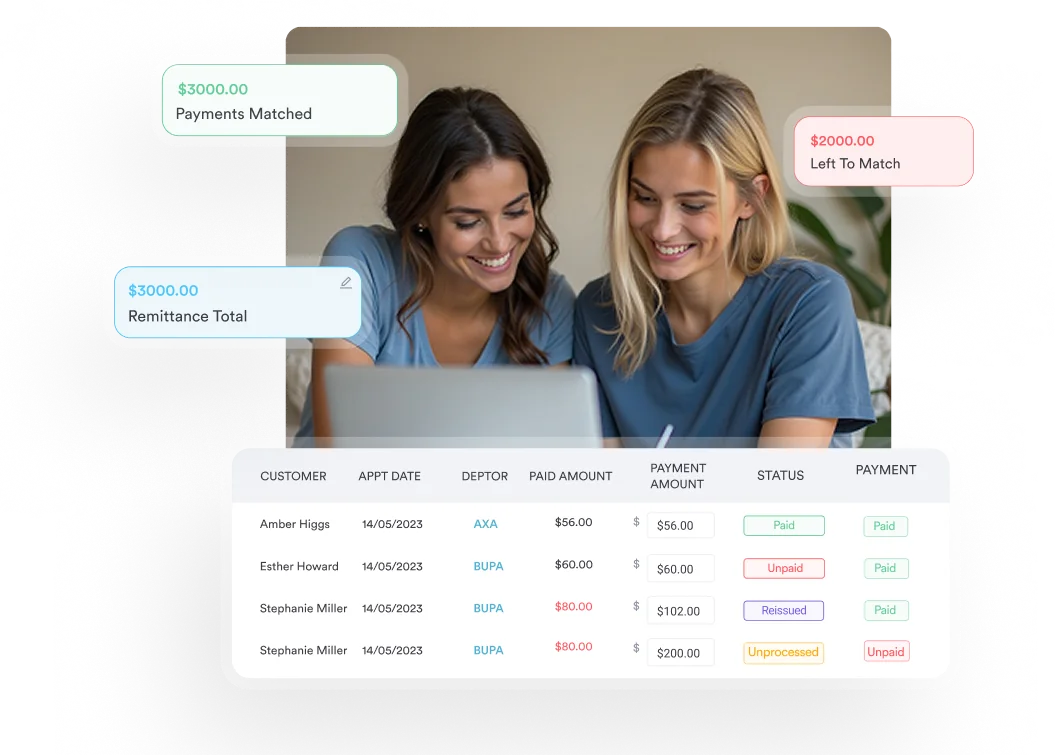

Pabau helps oncology and urology practices track administered doses, modifier requirements, and ICD-10 pairings for injectable drug codes including J9217. See how it works.

J1950 is the other active leuprolide HCPCS code. Noridian, the Medicare Administrative Contractor (MAC) for Jurisdictions E and F, has published explicit guidance distinguishing the two.
J1950 covers leuprolide acetate for depot suspension, per 3.75 mg, and is indicated for endometriosis, uterine leiomyoma, and malignant neoplasms of the breast. J9217 covers the 7.5 mg depot formulation, primarily used in advanced prostate cancer therapy.
Billing J9217 for endometriosis treatment using a 3.75 mg preparation is an incorrect code assignment. Noridian has cited this pattern as an audit finding, noting that providers treating prostate cancer billed J1950 (3.75 mg per unit) for doses that should have been reported as J9217 (7.5 mg per unit). The errors run in both directions.
Always verify the dispensed formulation strength against the NDC number before selecting the HCPCS code. For practices that handle reproductive endocrinology billing codes alongside oncology, this distinction is particularly easy to blur across specialties.
| Feature | J9217 | J1950 |
|---|---|---|
| Descriptor | Leuprolide acetate (for depot suspension), per 7.5 mg | Leuprolide acetate, per 3.75 mg |
| Formulation | IM depot suspension | IM depot suspension |
| Primary indication | Advanced prostate cancer | Endometriosis, uterine leiomyoma, breast cancer |
| HCPCS category | Chemotherapy drugs | Drugs administered other than oral method |
| JW/JZ modifier | Required (single-dose container) | Payer-specific; verify separately |
Payers increasingly require NDC-level reporting alongside the HCPCS J-code for injectable drugs. This is mandatory for Medicaid and applies to most Medicare Advantage plans. The NDC number must match the actual product administered, reported in 11-digit format on the claim, and NDC-to-J9217 crosswalk data is available through standard HCPCS lookup references.
AbbVie’s Lupron Depot is the leading brand-name leuprolide product mapped to J9217 for the 7.5 mg monthly strength. The units table above covers billing for the 22.5 mg, 30 mg, and 45 mg Lupron Depot presentations at 3, 4, and 6 units respectively.
Lupron Depot’s 3.75 mg presentation falls under J1950 instead (see J9217 vs. J1950 above). Confirm the NDC and dispensed strength before assigning either code.
Eligard’s J code is also J9217 at the 7.5 mg strength — there’s no separate CPT or HCPCS code for the brand, since HCPCS J-codes are assigned by drug and strength rather than by brand name.
Eligard (leuprolide acetate extended-release injectable suspension by Tolmar) does present a specific crosswalk wrinkle, though. Because it’s a subcutaneous polymer depot rather than an intramuscular suspension, some payers map its NDC numbers to a different code set or apply non-uniform unit conversion rules.
UnitedHealthcare publishes an NDC-for-packaged-drugs table that lists maximum units per NDC. Several Eligard NDC numbers in that table carry a maximum unit count of 1 or 3, depending on the depot strength. Verify Eligard’s HCPCS code assignment and unit cap against each payer’s current NDC policy before billing — don’t assume the Lupron Depot crosswalk applies unchanged.
For practices billing injectable drug billing codes across multiple payer types, maintaining a current NDC-to-HCPCS crosswalk table by drug lot and payer prevents the category of denial where the NDC reported does not match the billed J-code.
Medicare reimburses J9217 under the Medicare Drug Fee Schedule at the Average Sales Price (ASP) plus 6%, the standard Part B drug add-on percentage for physician-administered drugs. ASP rates are updated quarterly by CMS.
The actual reimbursement per unit changes each quarter and varies by locality due to Geographic Practice Cost Indices (GPCI) applied to the practice expense component. For current rates, use the CMS Physician Fee Schedule lookup tool, selecting “Drug” as the service type and entering J9217 in the code field.
Buy-and-bill economics for J9217 depend on the spread between the practice’s acquisition cost and the ASP reimbursement. That spread has narrowed over time as generic leuprolide products entered the market.
Practices considering buy-and-bill versus specialty pharmacy distribution should model reimbursement using current ASP rates, their GPO contract pricing, and the administration fee (typically billed with 96372 for subcutaneous or intramuscular injection).
Reimbursement rates differ by place of service (POS). POS 11 (office) receives a higher technical component than POS 22 (outpatient hospital) under Medicare’s site-neutral payment policies. Practices administering J9217 in an outpatient hospital setting should confirm whether their facility qualifies for the higher office-rate payment or whether site-neutral reductions apply.
For practices billing urology procedure codes alongside J9217.
Denial data from oncology billing operations points to a consistent set of errors for J9217 claims. Each one is preventable with the right documentation workflow.
Practices handling chemotherapy billing codes across multiple service lines benefit from structured pre-submission audits. Build a J9217-specific claim scrubbing checklist that validates: units match dispensed strength, JW/JZ modifier present, ICD-10 in approved group, NDC populated, and POS code matches the physical location of administration.
Accurate ICD-10 documentation also affects downstream reporting. Practices that link prostate cancer diagnosis coding to their clinical record systems reduce the manual step where billing staff interpret clinical notes to assign codes, which is where mismatch errors most commonly originate.
Medicare audits of J9217 claims focus on four documentation elements. Each must appear in the medical record before the claim date, not added retrospectively after a records request.
Good HIPAA-compliant documentation practices mean these records are stored securely, retrievable on demand, and time-stamped. Pabau’s prescription management software creates a structured drug administration record linked to the patient’s clinical note, which populates the data fields billing staff need without manual transcription from paper logs.

Diagnosis code accuracy across the patient record also matters at audit. When the problem list, the clinical note, and the claim all reference the same ICD-10 code, auditors can verify medical necessity without additional queries.
Practices that maintain consistent diagnosis coding across their EHR reduce the risk that conflicting codes in different parts of the record create audit findings.
Prior authorization (PA) requirements for J9217 vary substantially by payer and formulary tier. Medicare Part B does not require PA for most J9217 claims when the indication is covered under LCD A52453. Commercial payers are a different matter.
Many commercial plans require PA for J9217 administrations, particularly for non-prostate cancer indications where the payer may prefer a different hormonal agent on formulary.
PA requirements can also vary by practice site: a PA granted for an office administration may not automatically transfer if the administration setting changes to an infusion center. Always verify PA requirements for the specific payer, benefit plan, and POS before scheduling a J9217 administration for a commercially insured patient.
Some payers apply step therapy requirements for prostate cancer, requiring evidence of LHRH analog failure before covering specific formulations. Understanding these rules before the first administration prevents the scenario where a multi-month depot has already been purchased under buy-and-bill but the payer denies coverage because step therapy was not documented.
For practices managing multiple payer contracts and complex prior authorization workflows, structured tracking of PA status by patient, drug, and payer is essential. The combination of digital intake forms capturing patient insurance and authorization data upfront with a claims workflow that flags PA status at scheduling prevents last-minute authorization surprises.
Diagnosis coding checks built into the chart completion workflow further ensure that the diagnosis documented supports the PA that was obtained. For gynecology and multi-specialty teams.
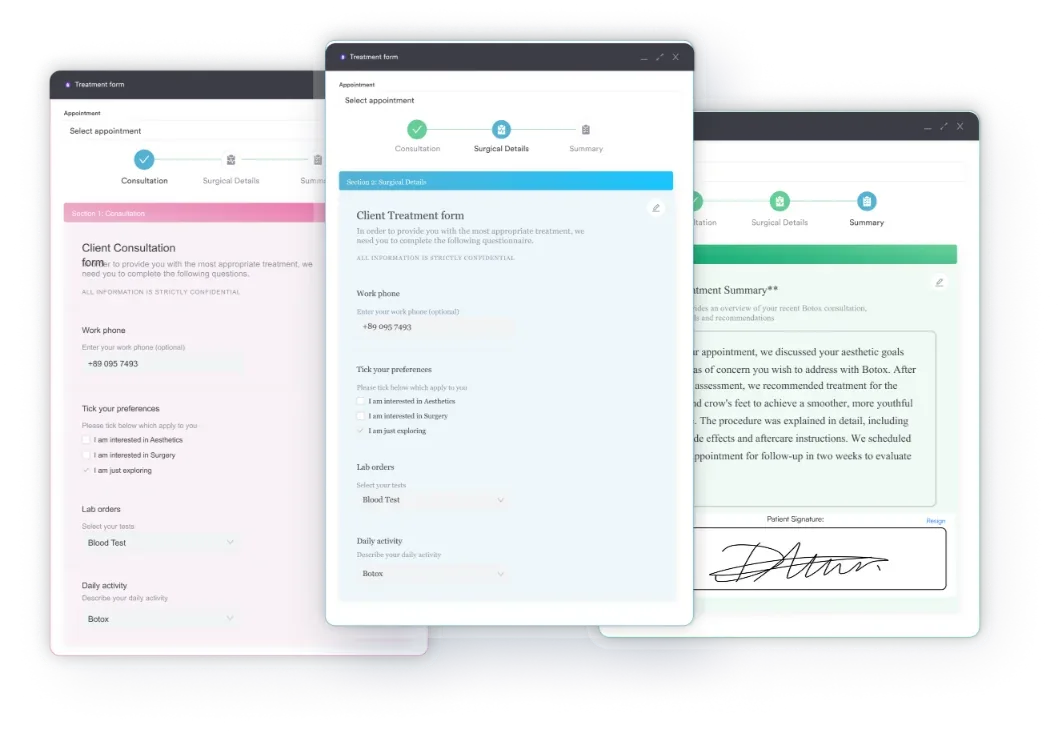
J9217 billing errors are predictable and preventable. Units calculation tied to dispensed strength, JW/JZ modifier compliance, ICD-10 pairing from the CMS A52453-approved group, and NDC-level documentation together account for the vast majority of clean-claim failures on leuprolide acetate depot billing.
Pabau’s claims management software gives oncology and urology practices a structured workflow for tracking drug administration data, modifier requirements, and diagnosis code alignment from the clinical note through to claim submission. To see how Pabau handles injectable drug billing documentation, book a demo with the team.

Coding burns covering most of the body? severe burn coding guide ICD-10 Code T31.91 covers burns over 90 percent of body surface with 10 to 19 percent third-degree involvement.
HCPCS Code J9217 is a Level II code that describes leuprolide acetate for depot suspension, billed per 7.5 mg unit. It is classified under chemotherapy drugs by CMS and used primarily to bill for in-office administration of leuprolide depot in advanced prostate cancer, endometriosis, uterine fibroids, and central precocious puberty.
Bill one unit of J9217 for every 7.5 mg administered. A 22.5 mg quarterly depot = 3 units; a 30 mg 4-month depot = 4 units; a 45 mg 6-month depot = 6 units. The unit count must exactly match the dispensed strength divided by 7.5 mg.
Yes. CMS designates J9217 as a single-dose container code, making JW or JZ mandatory on every claim since January 2023. JZ applies when the full vial was administered with no wastage, which is the standard scenario for depot formulations. JW applies when drug from the single-dose container was discarded and must be documented in the medical record.
J1950 covers leuprolide acetate for depot suspension, per 3.75 mg, and is indicated for endometriosis, uterine leiomyoma, and breast cancer. J9217 covers the 7.5 mg depot suspension formulation primarily used in advanced prostate cancer. Both are depot suspensions; the non-depot leuprolide form is billed with J9218 (per 1 mg). The dispensed NDC number determines which code applies.
Approved ICD-10 codes for J9217 include C61 (prostate cancer), N80.x series (endometriosis), D25.x (uterine leiomyoma), E22.8 or E30.1 (precocious puberty), and applicable breast cancer codes. CMS billing and coding article A52453 defines the approved Group 6 code set; claims must use a code from the approved list to avoid automatic denial.
Multiple NDC numbers map to J9217, covering AbbVie’s Lupron Depot and various generic leuprolide depot products. Eligard (Tolmar) is a subcutaneous polymer depot that some payers map separately by NDC; verify Eligard-specific crosswalk rules with each payer before billing J9217 for an Eligard administration. Confirm current NDC-to-J9217 crosswalk data in your payer’s NDC policy and the CMS HCPCS files before submission.
J9217 is an HCPCS Level II code, not a CPT code. CPT codes are maintained by the American Medical Association and generally cover procedures and services, while HCPCS Level II codes like J9217 cover drugs, supplies, and other items CPT doesn’t address. The mix-up is common because payers process both code sets on the same claim form — the same distinction applies to Eligard, which also bills under the HCPCS J9217 code rather than a CPT code.
No. Eligard doesn’t have its own CPT code — it bills under HCPCS code J9217 (the 7.5 mg leuprolide depot code), the same code used for Lupron Depot at the equivalent strength, since HCPCS J-codes are assigned by drug and strength rather than brand name. Confirm the dispensed NDC before billing, since some payers apply different unit caps to Eligard’s NDC numbers.



