CCSD code H4430: Examination of rectum under anaesthetic
CCSD code H4430 pays for the examination alone CCSD code H4430 is the UK private...

Last Updated: Oct 20, 2026
J1410 is the HCPCS Level II code for injection, estrogen conjugated, per 25 mg.
The code turns up in emergency uterine bleeding cases and in ongoing hormone therapy. That puts it on claims from OBGYN, primary care, and hospital outpatient teams.
Here is how the code works, what payers check, and where J1410 claims usually stall.
Let Pabau's smart automation suggest the right codes, reduce claim denials, and keep your practice compliant—effortlessly.
Automate repetitive tasks and focus on what matters most—your patients.
Reduce coding errors and ensure compliance with the latest regulations.
Clean claims, fewer denials, and faster reimbursements.
Powerful insights and reporting to help your practice thrive.
HIPAA compliant SOC 2 certified GDPR-compliant Trusted by 4,000+ clinics worldwide

HCPCS code J1410 covers injectable conjugated estrogen, also sold as Premarin IV, and it bills per 25 mg.
Unit math causes the most J1410 denials, so remember that 25 mg is one unit and 50 mg is two.
Medicare Part B pays J1410 at ASP plus 6% in the office and in outpatient hospital settings, and the rate changes quarterly.
Always bill an administration code beside J1410, either 96374 for IV push or 96372 for an intramuscular injection.
Practice management software like Pabau pre-fills the claim from the client record and carries HCPCS and ICD-10 lookup libraries.
J1410 is the HCPCS Level II drug code for “injection, estrogen conjugated, per 25 mg.”
It reports the drug itself, given intravenously or intramuscularly, almost always as Premarin IV. The J series covers drugs a clinician injects, which is why an oral estrogen tablet never lands here.
That “per 25 mg” phrase is the whole billing rule in four words. Every 25 mg administered equals one unit. Take the total milligrams from the note, divide by 25, and that is your unit count.
Conjugated estrogen injection has four accepted uses, and a claim outside them draws a medical necessity denial. Payers want the note to tie the drug to one of these.
Route follows the indication, and that matters later on the claim. For OBGYN practices and hospital billing teams, IV is the acute bleeding scenario.
IM shows up more in outpatient hormone therapy, usually when a patient cannot absorb an oral dose. Record the route either way, because the modifier and the administration code both hang off it.
Part B covers J1410 when a qualified provider administers it in a covered setting. Three conditions decide whether the claim pays.
Coverage is only half the question, though. Some plans add an approval step on top of it, and that step varies by MAC jurisdiction and by payer. Starting the prior authorization early keeps you from giving the drug before an approval exists.
Whichever contractor you fall under, Noridian, CGS, Novitas, or another, its LCD is the one that governs hormone therapy in your state.
Medicare pays J1410 under average sales price, known as ASP, at ASP plus 6% for each 25 mg unit. CMS republishes ASP figures every quarter. A rate you quoted last month may already be out of date.
To pull a current figure, open the CMS fee schedule lookup and search J1410. Two habits keep this clean. Price the quarter of the date of service, not the quarter you happen to be billing in. Then check facility against non-facility, because those two columns are rarely the same number.
For the drug figure itself, the quarterly ASP pricing files are the source CMS actually pays from. Download the current quarter rather than working from a spreadsheet someone saved in January.
Divide the milligrams given by 25, then round any partial unit up. That is the whole calculation, and it is still the most common J1410 error.
Here is how that plays out. A patient with heavy uterine bleeding receives 50 mg of conjugated estrogen by IV push in the office. The claim carries J1410 with 2 units, plus 96374 for the push. The note records 50 mg, the route, and the time.
Bill 1 unit instead and half the drug goes unpaid. Bill 2 units with only 25 mg in the chart and you have created an audit finding. Doses above 25 mg do happen, since 25 mg IV is the labeled acute dose, so anything larger needs its reason written down.
Most Medicaid programs and many commercial plans require the 11-digit national drug code, or NDC, alongside the HCPCS code on a drug claim. For J1410 the NDC identifies the exact Premarin IV vial you used.
Copy it off the label rather than a saved list. Manufacturers change packaging, and a retired NDC rejects at the clearinghouse before a human ever reads the claim. Premarin Intravenous currently ships as a 25 mg vial with 5 mL of diluent, carrying NDC 0046-0749-05, which becomes 00046-0749-05 in 11-digit form.
Format matters as much as accuracy. Report the NDC in 5-4-2 shape, meaning five digits for the labeler, four for the product, and two for the package. Medicaid also wants the unit of measure qualifier, usually UN or ML, plus the quantity dispensed.
Malformed NDC data is a leading cause of Medicaid rejections on this code. Practices running hormone therapy programs tend to solve it once. They keep the NDC field on the dispensing screen instead of chasing it at claim time.
Every J1410 claim needs an ICD-10 code that explains why injectable estrogen was the right call. The diagnosis has to sit inside the approved indications and inside your MAC’s LCD. These pairings come up most often.
One pairing trips people up more than the rest. Z79.890 is a status code, so it records ongoing hormone therapy without justifying it.
Lead with the clinical diagnosis and let Z79.890 sit behind it. Hormone and fertility claims get read closely at audit, which is why IVF CPT codes carry the same diagnosis-matching discipline.
No single modifier belongs on every J1410 claim. Route, setting, and payer decide, and a wrong or missing modifier draws a CO-4 denial.
Two questions come up every time a new biller works this code.
J1410 pays for the drug supply, so the act of injecting it needs its own CPT code. Leave that code off and you lose the administration payment. Worse, a lone drug line reads to many payers as bundled into the visit.
Who bills what depends on the setting. In the office, the treating provider reports J1410 and the administration code together.
In an outpatient facility, the facility reports the drug and the administration on its own claim, while the physician bills the professional service. Settle that split with your MAC before the first claim, not after the remit arrives.
Six steps sit between the vial and the payment, and each one is a place the claim can stop. Reading them in order tells you where your own denials are really coming from.
Step five is the one billers forget to watch. A clearinghouse rejection looks like silence rather than a denial, so those claims sit unworked for weeks. Pull the rejection report on the same schedule you work your remits.
Documentation prevents more J1410 denials than any appeal ever will. Eight elements do most of that work.
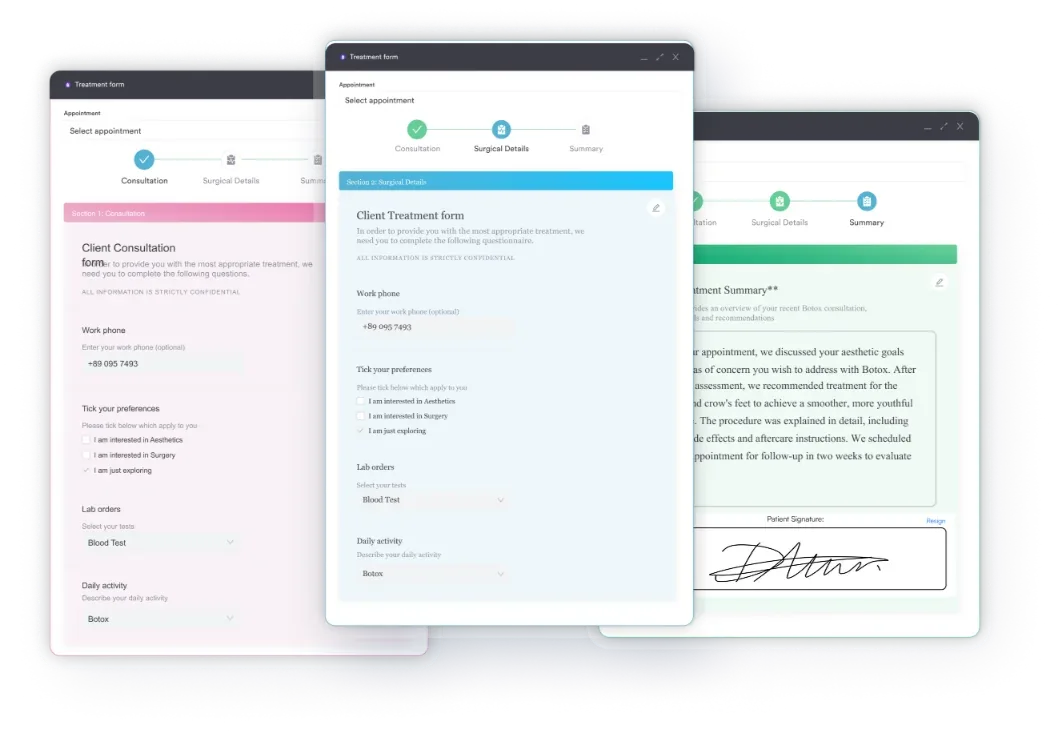
Structured forms help here, because an empty required field is visible before the patient leaves. Patient intake software can hold dose, route, and prescriber order as named fields rather than buried in free text.
Ask five questions before the claim leaves your office.
Audit a sample of J1410 claims every month. Three signals matter most: units that miss the documented dose, Medicaid claims with no NDC, and drug lines with no administration code. Those patterns cause most avoidable J1410 denials. Catching them in-house costs far less than answering a payer audit later.
The estrogen J-codes cover different drugs, so they cannot stand in for each other. Picking the wrong one is a coder error that a formulary check will catch, usually after the claim has already gone out.
The split is chemical. J1380 covers estradiol valerate, a synthetic ester of estradiol, while J1410 covers conjugated estrogens, a mixture of natural estrogen sulfates. So a Premarin order coded as J1380 fails on the drug name alone.
J1390 deserves a separate warning. It still appears on old cheat sheets and in stale code libraries. But it was deleted in 2011, so any claim carrying it will reject outright.
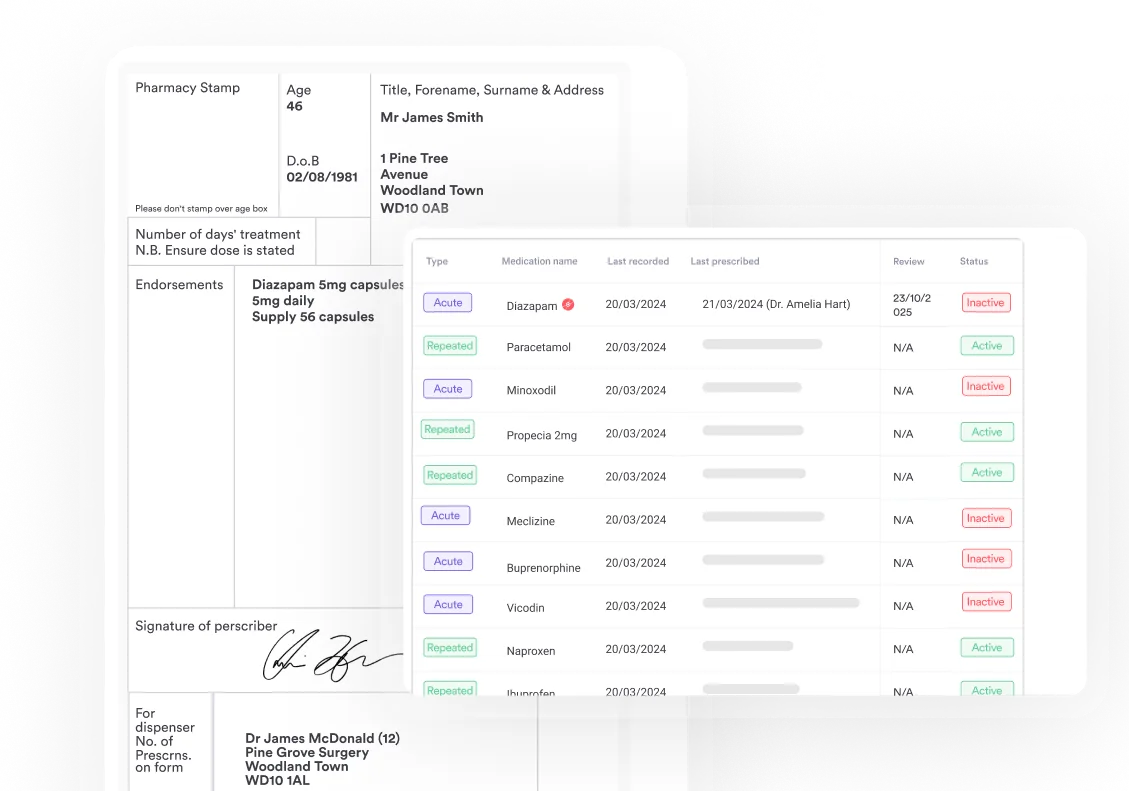
Reading the drug name off the order is the whole defense. Prescription management software keeps the dispensed product on the record, so nobody is guessing from a treatment name three days later.
Seven denial patterns account for most J1410 rework, and each one maps to a step in the workflow above.
Work these by pattern rather than by claim. When the same code shows up across a month of J1410 lines, the fix belongs upstream in charge capture.
Denial management gets cheaper the moment you stop treating every remit as a one-off. A shared denial code reference also helps the team name what they are looking at.
The drug sits on the dispensing record, and the codes sit in a lookup table somewhere else again. A biller then stitches all three together by hand at claim time, and every hop is a chance to drop a unit or a diagnosis.
Practice management software like Pabau closes that distance. Its claims management screen pre-fills the claim form from the client record, so codes already attached to the service land on the charge line. Recorded diagnoses seed the ICD-10 slots, and built-in HCPCS and ICD-10 lookup libraries sit right beside those fields.
That only works if the upstream data is in one place. Put dose, route, and prescriber order into structured fields on the clinical record.
Then whoever builds the claim reads data instead of hunting through free text. Pabau also confirms that claim-required fields are complete before the send button unlocks, which checks for blanks rather than judging your code choice.
Submission then runs through a clearinghouse. On US claims, the Claim.MD integration handles the electronic send, real-time eligibility checks, claim status tracking, and remittance posting. So a J1410 rejection surfaces where you built the claim, not in a portal someone remembers to check on Fridays.

Pabau pre-fills claim forms from the client record, carries HCPCS and ICD-10 lookup libraries, and confirms required fields are complete before submission. US claims go out through Claim.MD, with eligibility checks and remittance posting in the same place.

J1410 is a small code with a narrow clinical window and an unforgiving unit rule. Once the dose, the route, the NDC, and the diagnosis are settled at the point of care, the claim largely takes care of itself. That is the trade worth remembering. Five minutes of documentation discipline beats a three-week appeal.
So pick one habit to change this month. Reconcile units against the documented dose before claims go out, then watch what happens to your CO-151 volume. After that, start pulling the clearinghouse rejection report, which is usually the quietest place revenue disappears.
If the retyping between chart and claim is where your team loses its afternoons, that part is fixable. Book a demo to see how claim forms pre-fill from the clinical record and where J-code lookups sit in the billing workflow.

Billing another drug code with a 25 mg unit? J1438 works through the same unit math for etanercept injections.
Need the rules for an IV thrombolytic? J3365 covers urokinase administration, vial quantities, and coverage limits.
Coding antiemetic injections as well? J3250 sets out units and administration pairings for trimethobenzamide.
Also billing routine gynecological visits? S0613 explains what the annual exam code includes and what it leaves out.
Coding thumb base arthritis after an injury? Thumb arthritis coding guide covers M18.30 for post-traumatic thumb CMC joint osteoarthritis following a prior injury.
Check your MAC’s discarded-drug guidance, because the answer depends on it. Medicare asks for JZ when nothing is discarded from a single-dose vial, and JW for the discarded amount on a separate line. Confirm J1410’s status on your MAC’s current JW and JZ drug list before you file.
Yes. Acute uterine bleeding often presents in the ED, and conjugated estrogen stays a Part B drug there. The hospital reports the drug and the administration on its outpatient claim. The physician bills the professional service separately, so agree who reports what before filing.
Part B, because a clinician administers it. Part D covers drugs a patient collects and takes at home, which does not describe an injection given in your office. If a patient wants a home dose reimbursed, that request belongs to their Part D plan.
Send the clinical note with the dose and route highlighted, plus the NDC from the vial. Most J1410 denials come down to documentation rather than coverage, so the record usually settles it. Read the remit code first, though. A units or place-of-service denial often needs a corrected claim instead of an appeal.