

CCSD code G5100: Bypass of duodenum billing guide
CCSD code G5100 bills a bypass that leaves the duodenum in place CCSD code G5100...

Last Updated: Oct 16, 2026
Billable Code Specific Code
S61.314S is the billable ICD-10-CM code for laceration without foreign body of right ring finger with damage to nail, sequela.
Swap in D and you've said the wound is still open, which is a different claim entirely. The rest is documentation, and that's where sequela claims usually fall apart.
Let Pabau's smart automation suggest the right codes, reduce claim denials, and keep your practice compliant—effortlessly.
Automate repetitive tasks and focus on what matters most—your patients.
Reduce coding errors and ensure compliance with the latest regulations.
Clean claims, fewer denials, and faster reimbursements.
Powerful insights and reporting to help your practice thrive.
HIPAA compliant SOC 2 certified GDPR-compliant Trusted by 4,000+ clinics worldwide

ICD-10 code S61.314S is a billable code for the late effects of a right ring finger laceration with nail damage.
The 7th character S applies once the original wound has healed and a late effect brings the patient back.
Sequela claims carry two codes, with the late-effect condition listed first and S61.314S second.
Nail dystrophy, scar contracture, and lasting sensory changes are the sequelae that bring these patients back.
There is no time limit on a sequela, so healing status decides the 7th character, not the calendar.
S61.314S is a billable, specific ICD-10-CM code, valid for HIPAA-covered transactions. It sits in the 2026 code edition, which took effect October 1, 2025.
The official description reads: Laceration without foreign body of right ring finger with damage to nail, sequela. Nothing more is needed to make it valid, because it already carries its 7th character.
Codes move every October, so check the status before you rely on it. The CDC ICD-10-CM web tool mirrors the official annual release. CMS publishes the full code files and the official guidelines for each fiscal year alongside it.
The 7th character separates three clinically different encounters that all involve the same injury. For S61.314S that character is S, which stands for sequela.
Official guidelines define a sequela as a late effect that arises as a direct result of an earlier condition. The wound itself is finished. What’s left is the complication it caused.
Sequela coding almost always takes two codes. S61.314S names the injury behind the problem. A second code names the condition you’re treating today, such as a nail disorder or a scar.
Sequence the late-effect condition first and S61.314S second, per Section I.B.10 of the official guidelines.
The line between a subsequent encounter and a sequela is healing status, nothing else.
Say a patient cuts the right ring finger deep enough to damage the nail matrix. Three weeks later they come back for a wound check, and that visit is S61.314D. Six months later the nail grows back ridged and sore, and that visit is S61.314S.
The same encounter logic runs through the whole injury chapter, though fracture codes such as S82.026P draw on a wider 7th-character set.
If you want to see the three variants of this code side by side, the AAPC code lookup lists them together.
S61.314S is the most specific code available for this injury and this encounter type. Reading the hierarchy from the top confirms there’s nothing further down to choose.
The siblings sitting alongside it in the S61.31x series all describe lacerations without foreign body, with damage to nail:
One boundary is worth marking. If the finger was lost rather than cut, the injury leaves S61 altogether and takes an amputation code such as S68.612S.
A laceration without foreign body means torn soft tissue with nothing left inside the wound. With nail damage, the hit usually lands on the nail matrix, the nail bed, or the skin around the nail.
Blades, crush injuries, and traumatic nail avulsion are the common mechanisms. The repair itself often bills as something like CPT code 12051.
By the time S61.314S applies, that wound is closed. The patient is back because of what the injury left behind:
These problems rarely come back to whoever repaired the wound. Nail changes surface later in dermatology practices, while stiffness lands with hand and occupational therapists. Both need the original injury date on file.
That’s why the causal link belongs in the record rather than in someone’s memory.
Write the causal link as one plain sentence in the note. Something like: ‘Nail dystrophy of the right ring finger, sequela of a laceration with nail bed damage sustained on [date]. Original wound healed.’ A reviewer can lift that straight off the page, which is exactly what you want.
Three things have to be true before you reach for this code. The laceration has healed, the current visit treats a condition that injury caused, and the note ties the two together. These are the encounters where all three usually line up.
In every one of these, the late-effect condition leads the claim. Nail dystrophy, for example, is coded as L60.3 in the first position. S61.314S follows it to explain where the dystrophy came from.
Section I.B.10 of the ICD-10-CM Official Guidelines for Coding and Reporting governs sequela coding. Four rules do most of the work.
S61.314S carries no Excludes1 or Excludes2 note of its own. The broader S61 category does carry two Excludes1 notes worth knowing about. Traumatic amputation of the wrist and hand belongs in S68.-. An open fracture of the wrist, hand, or finger takes S62.- with 7th character B.
The note carries the burden here. It has to show the original injury, the condition you’re treating now, and the physician’s statement joining the two.
Pull a sample of S61.314D claims from the last quarter. Where the wound had already healed and the visit was about a nail change, scar pain, or numbness, S61.314S was the better code. An hour of sampling tells you whether the habit has spread across the team.
A sequela claim travels the same route as any other, but it leans harder on the clinical note. Everything downstream depends on the provider writing, in that day’s note, that the current problem came from the old laceration.
From there the sequence is short. The coder lists the late-effect condition first and S61.314S second. Billing builds the CMS-1500 and pushes it through a medical claims clearinghouse. That clearinghouse validates the file’s format and routes it to the payer.
Front-end edits catch most problems before a payer ever sees them. A clean claim check flags a missing second diagnosis or a code that doesn’t match the place of service. Whatever slips past shows up weeks later as a denial code on the remittance.
A denied sequela claim is usually recoverable, because the fix is a documentation problem rather than a coding one. Good denial management sends it back to the provider for an addendum, then rebills it with the causal statement in place.
Most practices split this work across two systems. The clinical note lives in the patient record, and the diagnosis codes get keyed again into a separate billing tool. When a claim depends on one sentence in that note, the retyping step is where the link gets lost.
Pabau is an all-in-one practice management system, so the encounter and the claim sit in the same place. Its claims management software seeds the diagnosis fields on the claim form from what’s recorded against the patient. A full ICD-10-CM lookup library sits behind the search box. Required fields have to be complete before the claim can be sent. A coding error surfaces as a cash flow problem weeks later, which is why the healthcare revenue cycle is measured end to end. A small billing team benefits more from a documented billing process than from extra hours.
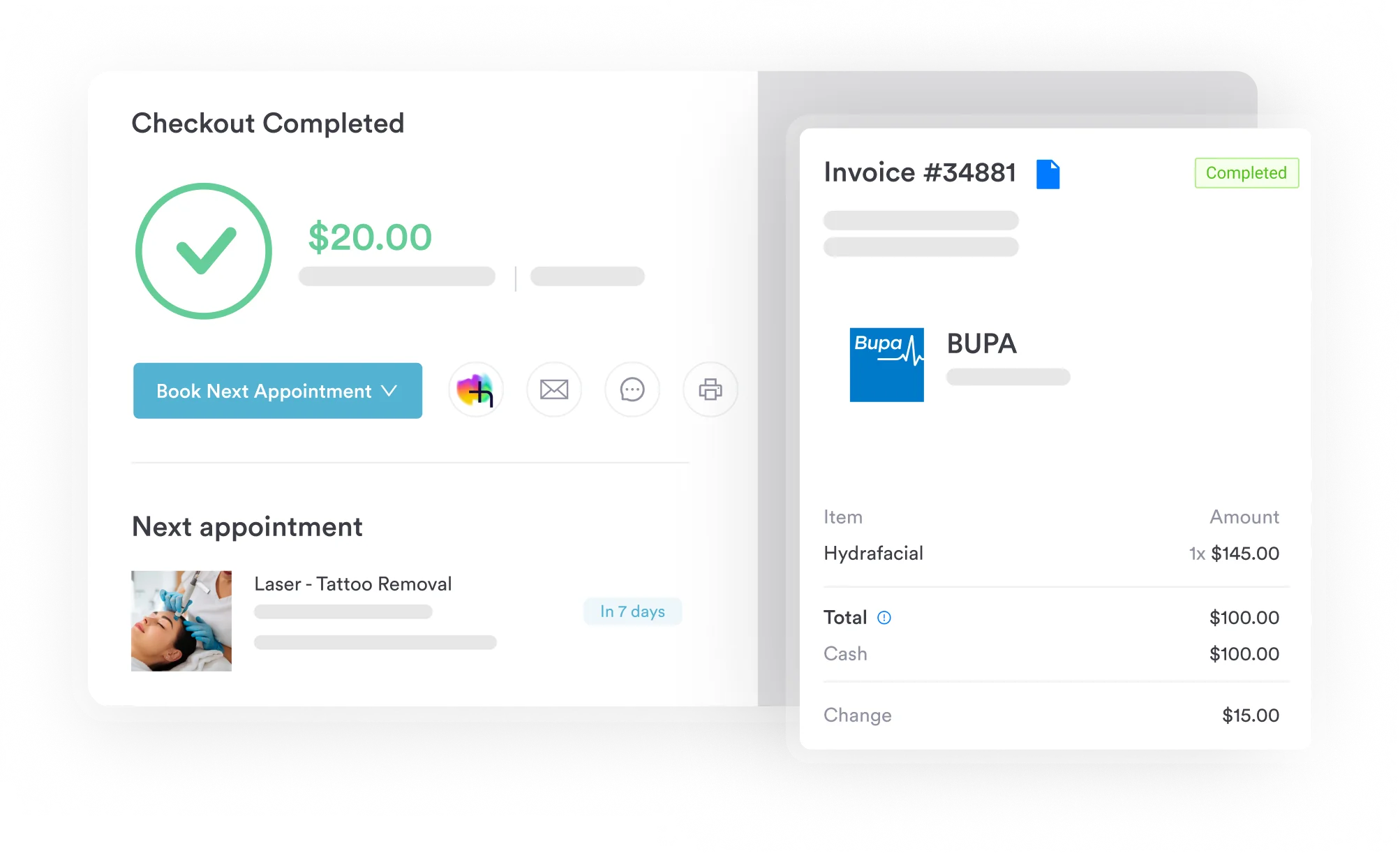
US claims go out through the Claim.MD integration, with eligibility checks, claim status, and remittance posting handled in the same screen. Six months later, the coder can open the original encounter and read exactly what was written at the time.
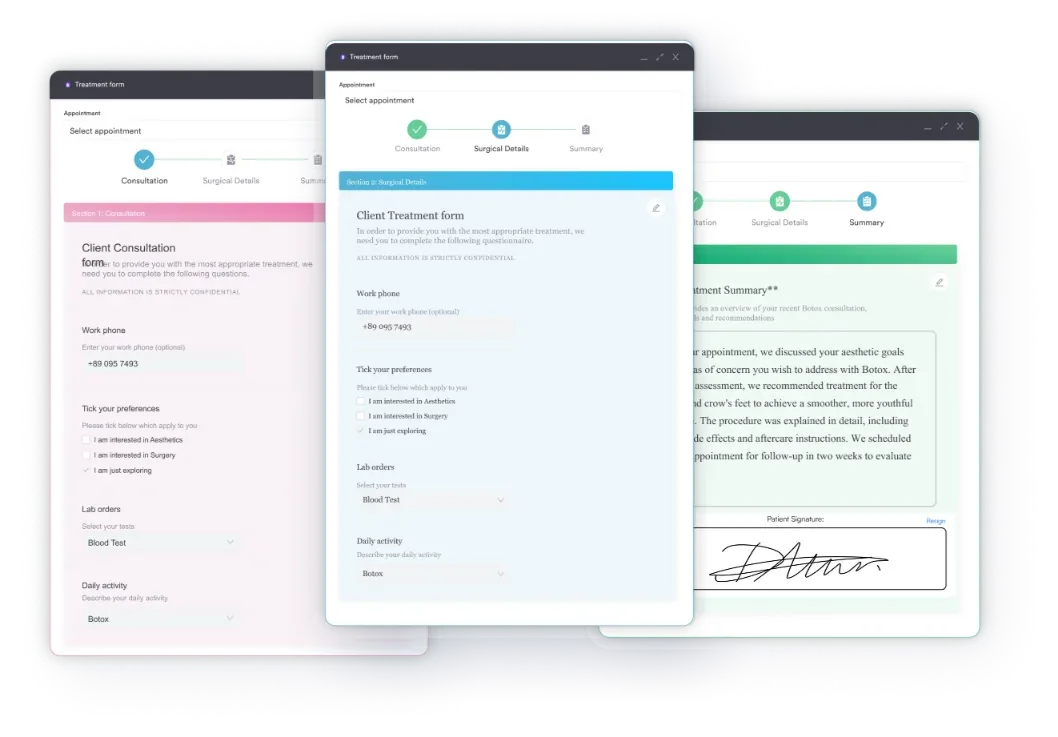

Pabau puts the clinical note, the diagnosis codes, and the claim in one system, so nothing has to be retyped between them. Fewer keying errors means fewer sequela claims coming back.

The whole code turns on one question. Has the wound healed? If it has, and the patient is back because of what it left behind, S61.314S is right. If the wound is still closing, the code is S61.314D, and no amount of elapsed time changes that.
Get the causal sentence into the note and the rest of the claim follows on its own. Skip it, and you’ll spend an afternoon appealing a denial that one line of documentation would have prevented. Book a demo to see how Pabau keeps your diagnosis codes and your clinical notes on the same page.

Coding a laceration somewhere other than the hand? S86.921A walks through laceration coding for the lower leg and how the 7th character changes the claim.
Chasing numbness after an injury? S94.20XA covers nerve injury coding, which often sits behind the sensory sequelae described above.
Billing the procedure as well as the diagnosis? CPT code 25676 shows how a hand and wrist procedure is documented and billed alongside its diagnosis.
Billing a Dupuytren’s contracture injection? Dupuytren’s enzyme injection billing guide covers the collagenase injection code and its 2026 payment alongside J0775.
Billing an ultrasound-guided joint injection? Ultrasound arthrocentesis billing guide explains why a missing image record shifts the claim from this code to 20605.
S61.314S is the diagnosis, so the procedure code depends on what you did that day. A practice reviewing a dystrophic nail usually bills an established-patient office visit. If you revise the scar or remove the nail at the same appointment, the relevant procedure code covers that work instead.
S61.314S is the right ring finger, the fourth digit of the right hand. The left ring finger has its own code, S61.315S. Laterality is built into the code itself, so never substitute one side for the other when the note names a side.
You need the provider to state, in this encounter’s note, that the current condition resulted from the earlier laceration. The original record does not have to sit in your system. Without that statement, a payer can read the claim as active wound care and deny it.
Put the late-effect condition in the first diagnosis field and S61.314S after it. Point the service line at both, keeping the late-effect code first. Reversing that order is a common reason these claims come back unpaid.
Yes, when the original laceration happened at work. Carriers usually want the date of injury, confirmation that the wound healed, and an external cause code showing how it occurred. Check each carrier’s filing rules, since they vary more than commercial payer rules do.



