

CCSD code G5100: Bypass of duodenum billing guide
CCSD code G5100 bills a bypass that leaves the duodenum in place CCSD code G5100...

Last Updated: Oct 16, 2026
A0100 is the HCPCS Level II code for non-emergency transportation; taxi.
Getting the code, modifiers, and documentation right on the first submission avoids denials.
Let Pabau's smart automation suggest the right codes, reduce claim denials, and keep your practice compliant—effortlessly.
Automate repetitive tasks and focus on what matters most—your patients.
Reduce coding errors and ensure compliance with the latest regulations.
Clean claims, fewer denials, and faster reimbursements.
Powerful insights and reporting to help your practice thrive.
HIPAA compliant SOC 2 certified GDPR-compliant Trusted by 4,000+ clinics worldwide

HCPCS Code A0100 is the Level II billing code for non-emergency transportation by taxi for ambulatory patients who require medically necessary transport.
Medicare does not routinely cover A0100; coverage is primarily through state Medicaid programs, MCOs, and other payers with specific eligibility requirements.
A0100 is billed at a base rate per trip, not per mile; A0090 is the companion per-mile code used by some payers alongside A0100.
Practice billing and claims tools, like Pabau’s claims management software, can help reduce documentation and submission errors on complex transport claims such as A0100.
HCPCS Code A0100 describes non-emergency transportation by taxi and falls under the “Ambulance and Other Transport Services and Supplies” category within HCPCS Level II, as maintained by the Centers for Medicare and Medicaid Services (CMS). It applies specifically to taxi transport, distinguishing it from the other non-ambulance vehicle types billed under the same A0 code family.
The official code descriptor is: Non-emergency transportation; taxi. It covers curb-to-curb transport for ambulatory patients traveling to and from covered medical services. The code implies the vehicle does not require wheelchair accessibility or specialized medical equipment. Because the patient can walk independently, no attendant or clinical oversight is built into A0100’s scope.
When a Medicaid trip does need an escort to ride along, the attendant component carries its own code. That service is reported under HCPCS code T2001, which pays for the attendant rather than the vehicle.
Understanding where A0100 fits within the broader patient scheduling and appointment management ecosystem helps practices avoid miscoding. Providers who coordinate transport alongside clinical visits often need to verify this code before confirming bookings.
A0100 belongs to the A0 code group, which covers non-ambulance transportation services. Knowing which code applies to which vehicle type prevents billing errors before a claim is ever submitted. Emergency ambulance transport is billed under a different code, such as A0427, not any code in this table.
A key distinction billers frequently misapply: A0100 is a base-rate code billed per trip. Some payers (particularly certain Medicaid MCOs) also require A0090 as a companion mileage code on the same claim. Others accept A0100 alone. Confirm the specific payer’s transport billing guidelines before submitting. Good medical practice scheduling software can flag these payer-specific rules at the point of booking.
Coverage for HCPCS Code A0100 is not guaranteed under any single federal program. Medicare, Medicaid, and managed care plans each apply different eligibility criteria.
Traditional Medicare does not cover A0100. Per CMS Medicare guidelines, Medicare covers ambulance services only when the patient’s medical condition requires ambulance transport. Non-emergency taxi transportation does not meet that standard. Billing A0100 to Medicare Part B will result in a denial. Providers who inform patients of this upfront, and document the conversation, avoid downstream billing disputes.
Medicaid is the primary payer for A0100 claims. All state Medicaid programs are required by federal law to provide non-emergency medical transportation (NEMT) as a covered benefit for beneficiaries who have no other means of reaching covered services.
Whether A0100 is accepted as the billing code, and at what rate, depends on each state’s Medicaid agency. Some Medicaid waiver programs use T2003 instead for a single NEMT encounter, so confirm which code your state or MCO expects before billing.
State Medicaid programs vary in several ways:
Billers managing multi-state NEMT operations should maintain a payer matrix by state. Reviewing HIPAA compliance requirements for medical offices alongside state Medicaid policies helps ensure documentation meets both federal and state standards.
Many Medicaid beneficiaries are enrolled in managed Medicaid plans. These MCOs often contract with NEMT brokers independently and may use different billing codes, rate structures, or authorization workflows than fee-for-service Medicaid. Always request a copy of the MCO’s transportation provider manual before submitting A0100 claims under that plan.
Before submitting an A0100 claim to any new payer, request their NEMT provider billing manual. Coverage rules, modifier requirements, and base rate amounts vary significantly between fee-for-service Medicaid and managed care plans in the same state.
Billing supply codes accurately starts with inventory management software that knows what actually left the shelf.
Accurate A0100 claims require more than the correct code. Modifier usage, units, and claim structure each affect whether a claim pays on first submission. Using claims management software that flags missing modifiers and incomplete claim fields helps catch errors before they reach the payer.
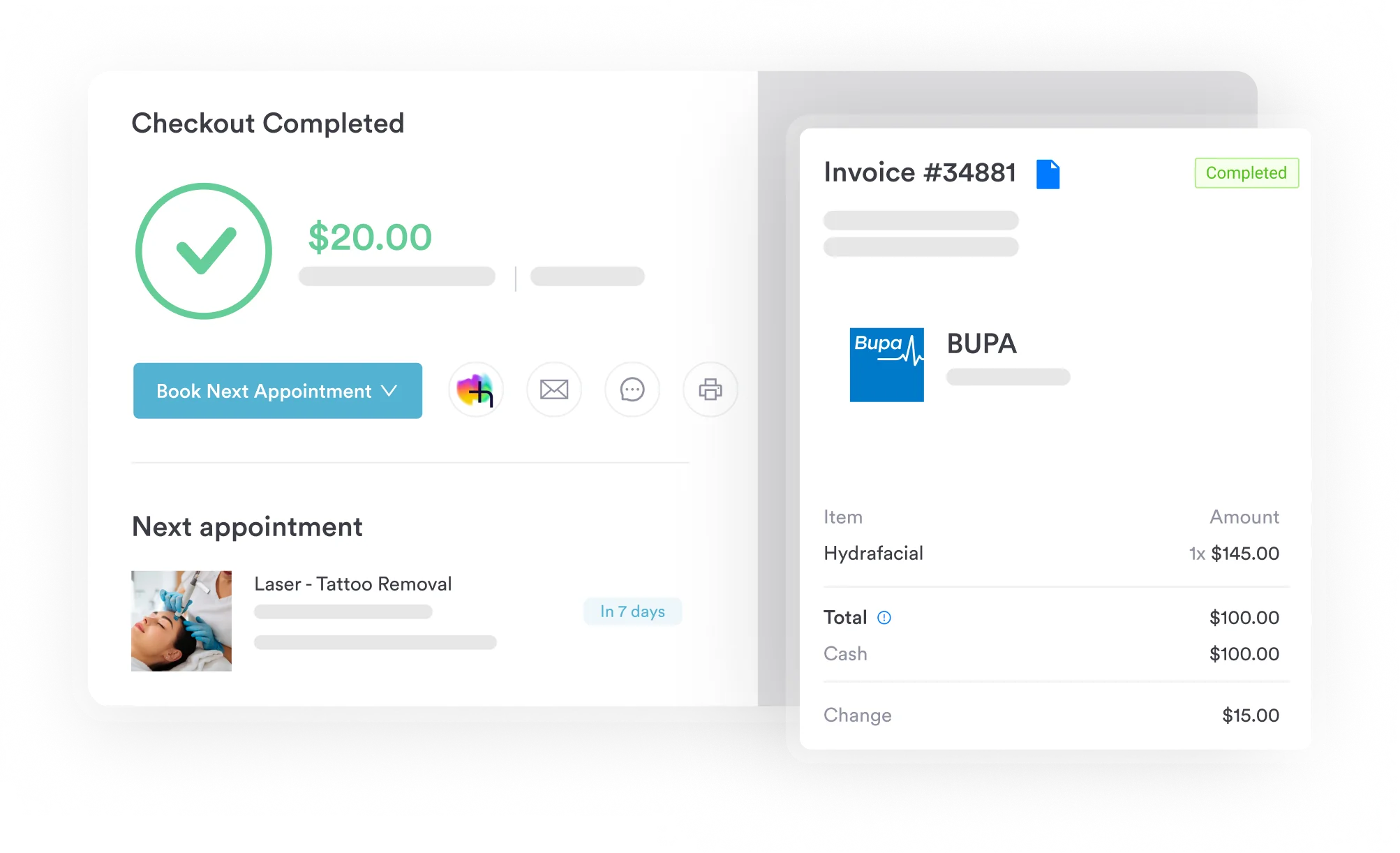
A0100 is billed per trip. One trip = one unit = one direction of travel. A patient traveling to a medical appointment and then home generates two separate billable trips, each requiring its own claim line. Some payers require separate claims; others accept both directions on a single claim with two units. Check the payer’s instructions before consolidating trip claims.
Modifier requirements vary by payer. The following modifiers appear frequently with A0100 claims, but always verify against the specific payer’s policy before appending any modifier.
Origin and destination modifiers are particularly important. A trip coded H-P (hospital to physician’s office) reads very differently to a payer than R-P (residence to physician’s office).
Incorrect modifier pairs are one of the most common reasons A0100 claims are flagged for review. Maintaining accurate medical forms at your healthcare practice that capture trip origin and destination at booking reduces this risk. When a claim on this code comes back unpaid, the denial reason codes on the remittance name the cause.

Practice billing and claims tools can help reduce documentation and submission errors before a claim reaches the payer. See how Pabau’s claims management features could fit your practice’s billing workflow.

Insufficient documentation is the second most common reason A0100 claims are denied after incorrect modifiers. Payers want proof that the transport was medically necessary and that the patient had no alternative means of travel.
Medical necessity for NEMT under A0100 typically requires a written order or certification from the patient’s treating provider. The documentation should address:
Some Medicaid programs also require prior authorization. Where authorization is required, the authorization number should appear on the claim. Reviewing your state Medicaid program’s transportation billing bulletin annually keeps your documentation templates current.
Structured digital intake forms can capture transport necessity information at the patient level and make retrieval straightforward during audits. A standardized HIPAA authorization form at intake keeps the necessary consent on file before transport begins.
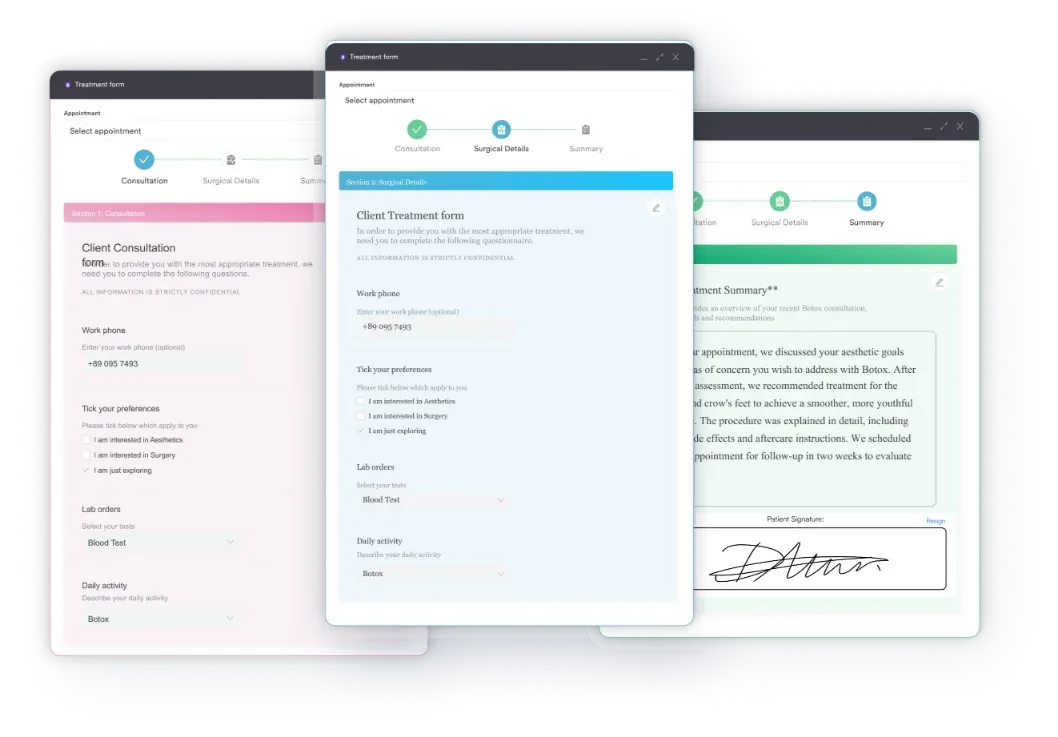
Beyond medical necessity, NEMT providers should maintain trip-level logs that document: driver name and vehicle identification, actual pickup and drop-off times, patient signature confirming transport was provided, and any incidents or no-shows. These records support post-payment audits and appeals. Organized HIPAA compliance documentation practices protect patient data held within these trip records.
Audit a sample of A0100 claims quarterly: pull 10 random claim lines, verify the trip log exists, confirm the modifier pair matches the origin and destination in the record, and check that the medical necessity statement is signed and dated. This exercise catches systematic errors before a payer audit does.
There is no single national fee schedule for A0100. Unlike ambulance codes that have CMS national base rates, non-emergency taxi transport reimbursement is set at the state or payer level. This means a provider operating across two states may receive materially different payments for the same service under the same code.
For Medicaid programs, rates are published in each state’s fee schedule, usually on the state Medicaid agency’s provider portal. The AAPC Codify HCPCS lookup provides current code data, while PGM Billing’s HCPCS lookup tool draws from older, 2015-era HCPCS data and is best used only as a supplementary reference.
Neither replaces state-specific fee schedule verification. For Medicare Advantage and managed Medicaid plans, the contracted rate in the provider agreement governs payment.
Key variables affect A0100 reimbursement:
Keeping fee schedule data current within your practice management system reduces write-offs caused by stale rate assumptions.
A0100 claims attract a predictable set of denials. Knowing the patterns makes resolution faster and prevention straightforward. Use automated billing workflows to flag these common failure points before submission. A denied claim on this code still generates a remittance advice, which spells out the reason for non-payment.
If your current system does not catch these errors automatically, our comparison of medical billing software can help you evaluate options built for claim-level error checking.
NEMT billing mistakes are largely preventable with the right documentation habits and payer-specific knowledge. HCPCS Code A0100 covers curb-to-curb taxi transport for ambulatory patients, billed at a base rate per trip primarily under Medicaid and MCO plans. Medicare does not routinely cover it, and reimbursement rates vary by state and plan.
Practice billing and claims tools can help reduce documentation and submission errors as you manage complex transport claims like this one. To see how Pabau’s claims management features could fit into your practice’s billing workflow, book a demo with the team.

Billing a speech generating device claim? Speech generating device billing Covers HCPCS code E2510, the broadest code for billing high-complexity augmentative communication devices.
Billing a general use wheelchair cushion? Wheelchair seat cushion billing Covers HCPCS code E2601 and billing the cushion to Medicare, Medicaid, and private payers.
Want to understand how digital forms support billing documentation? Capture forms software shows how structured digital forms capture the clinical and transport data payers require at point of care.
Billing a skin protection wheelchair cushion? Skin protection cushion billing Covers HCPCS code E2607 and the cushion’s dual function reducing tissue breakdown and correcting posture.
Coding for services beyond NEMT trips? Our guide to 00326 covers billing rules for pediatric anesthesia claims.
Billing an adjustable wheelchair seat cushion? Adjustable seat cushion billing Covers HCPCS code E2622 and the PDAC verification the cushion needs under LCD L33312.
HCPCS Code A0100 covers non-emergency transportation by taxi for ambulatory patients traveling to and from covered medical services. It is billed at a base rate per trip and applies to patients who can walk independently but have no other means of reaching their appointment. The code is classified under HCPCS Level II in the Ambulance and Other Transport Services and Supplies category.
No. Traditional Medicare does not cover A0100. Medicare covers ambulance services only when the patient’s condition requires ambulance-level transport. Non-emergency taxi services do not meet that medical necessity threshold. A0100 is primarily a Medicaid benefit. Dually eligible patients may receive coverage through Medicaid after Medicare denies the claim.
A0100 covers taxi transport for a single ambulatory patient. A0110 covers non-emergency transportation by bus, either intrastate or interstate. The key difference is vehicle type and capacity: A0100 is for a standard taxi, while A0110 applies to bus-based group transport. Both require the patient to be ambulatory and the service to be medically necessary.
The most commonly required modifiers are origin-destination modifier pairs, which use single-letter codes to identify where the trip started and ended (for example, R for residence, P for physician’s office, H for hospital). Some Medicaid programs also require QM or QN modifiers depending on how the transport was arranged. Modifier requirements vary by payer, so always confirm against the specific plan’s billing manual before submitting.
Bill A0100 once per trip direction with the appropriate origin-destination modifiers. Attach medical necessity documentation signed by the ordering provider and include the prior authorization number if the payer requires one. If the payer also requires mileage billing, add A0090 as a companion code for the miles traveled. Verify eligibility on the date of service before transport occurs.
There is no national fee schedule rate for A0100. Reimbursement is set by each state Medicaid program and by individual managed care contracts. Rates commonly run from $20 to $100 per trip depending on the state and broker model, though figures vary significantly. Always verify the current rate in your state Medicaid agency’s published fee schedule or your MCO contract before billing.



