HCPCS Code G0163: Skilled nursing observation and assessment
What is HCPCS Code G0163? HCPCS Code G0163 is a deleted Level II code for skille...

Last Updated: Oct 15, 2026

CPT Code 99393 covers periodic comprehensive preventive medicine visits for established patients aged 5 through 11 years only.
The visit must include age-appropriate history, physical exam, anticipatory guidance, and risk factor counseling to support the claim.
Modifier 25 is required when a separately identifiable sick-visit E/M service is billed alongside 99393 on the same date.
Pabau’s claims management software automates charge capture, ICD-10 pairing, and modifier application for preventive codes.
According to the American Medical Association (AMA), CPT Code 99393 describes a periodic comprehensive preventive medicine reevaluation and management service for an established patient in the late childhood age range of 5 through 11 years. The AMA maintains this code as part of the preventive medicine services section (99381-99397).
Unlike standard office E/M codes, CPT Code 99393 is not selected based on medical complexity, time, or medical decision-making. Selection depends entirely on two factors: the patient’s age at the date of service and their established patient status. This distinction matters because billing staff sometimes apply the wrong selection logic when coding preventive visits.
The full 99393 CPT code description covers these service components:
Note that the AMA descriptor explicitly states “established patient.” CPT 99393 does not apply to new patients. New patient preventive visits in the same age range use the 99383 code instead. Using 99393 for a new patient is a compliance error that may trigger a payer audit.
The 99393 age boundary is strict, where the patient must be aged 5 years 0 months through 11 years 11 months at the date of service. A child turning 12 before the appointment date should be billed under CPT 99394 (established patient, 12-17 years). A child still in the 1-4 year range at time of service uses 99392.
Those age cutoffs assume the child is already an established patient. If a 12-year-old is new to the practice, the correct code is 99384 rather than 99394.
The full established-patient preventive medicine family maps as follows:
| CPT Code | Age Range | Patient Status | Description |
|---|---|---|---|
| 99391 | Under 1 year | Established | Preventive, infant |
| 99392 | 1-4 years | Established | Preventive, early childhood |
| 99393 | 5-11 years | Established | Preventive, late childhood |
| 99394 | 12-17 years | Established | Preventive, adolescent |
| 99395 | 18-39 years | Established | Preventive, early adult |
The American Academy of Pediatrics (AAP) Bright Futures Periodicity Schedule standardizes the timing of well-child visits. For the 5-11 age group, visits are typically scheduled at ages 5, 6, 7, 8, 9, 10, and 11. Each of those visits, when performed for an established patient, maps to CPT 99393. Billing teams should verify that the patient’s chart-documented birth date matches the correct code before submission. Many primary care software platforms can automate age-based code suggestions at charge entry to reduce this error.
Preventive medicine codes are frequently audited because their documentation requirements differ from standard E/M codes. Payers expect the medical record to reflect all components described in the CPT descriptor, not just a physical exam note. A claim for CPT 99393 that lacks documented anticipatory guidance is vulnerable to post-payment recovery.
The following elements should appear in every 99393 encounter note:
Using digital intake forms that pre-populate the age-appropriate well-child checklist makes it easier for clinical staff to capture all required elements at the point of care. This reduces the incomplete documentation that leads to claim denials.

Auditors consistently flag vague anticipatory guidance documentation. Writing “counseling provided” does not satisfy the CPT 99393 descriptor. The note should name the specific topics discussed, the time spent if relevant, and any patient or parent response. Structured well-organized medical forms with pre-built guidance checklists help standardize this documentation across providers in the same practice.
Maintaining HIPAA compliance requirements for primary care records means retaining complete encounter documentation for the appropriate retention period, which varies by state but is generally a minimum of 7 years for pediatric patients (and often until age of majority plus additional years depending on jurisdiction).
Build a structured well-child note template in your EHR that matches the CPT 99393 descriptor element-by-element. Include a mandatory anticipatory guidance checklist with at least 5 age-appropriate topics. When providers can check boxes rather than free-text, documentation completeness rates improve significantly and audit risk drops.
Preventive medicine codes require a matching diagnosis code that reflects the preventive nature of the encounter. Using a condition-specific ICD-10 code — for instance. The correct primary codes are from the Z00 “encounter for examination” category.
The two primary ICD-10-CM codes used with CPT 99393 are:
Both codes are confirmed current for ICD-10-CM 2025/2026 fiscal years. Do not use the deprecated Z00.129 predecessor codes from earlier versions.
When co-existing chronic or acute conditions are addressed as part of the preventive visit, secondary diagnosis codes should be added to the claim. Common secondary codes include:
Cross-reference your code pairings against the AAPC Codify CPT lookup to confirm current crosswalk recommendations and check for any payer-specific edits before submission.

Pabau’s claims management tools help pediatric and primary care practices automatically apply the right CPT codes, ICD-10 pairings, and modifiers for preventive visits including CPT code 99393. See how billing automation reduces denials.

If insurance billing is more burden than benefit, a DPC-focused EHR supports flat-fee care without claim submission.
Modifier 25 is one of the most misunderstood elements of preventive medicine billing. It applies when a separately identifiable evaluation and management (E/M) service is performed on the same date as a preventive medicine service. Using it incorrectly is a compliance risk; failing to use it when required causes denials.
A parent brings a child in for their annual well visit (CPT 99393) and the provider also evaluates and manages a new or existing problem during the same encounter, such as an ear infection, a new behavioral concern, or chronic asthma management. If the problem-oriented service is separately documented and identifiable from the preventive service, the practice may bill both:
The modifier goes on the problem-oriented E/M code, not on the 99393. The medical record must contain two clearly separate documentation sections: one covering the preventive exam components and a second section documenting the problem-oriented encounter with its own history, assessment, and plan.
Simply mentioning a chronic condition during the preventive visit does not justify a separate E/M code. If the provider reviews the child’s asthma as part of the well-visit history and examination but does not separately assess or change the management plan, only 99393 should be billed. Payers review Modifier 25 claims closely, and practices that routinely append it to every preventive visit face audit risk.
Payer-specific rules vary. UnitedHealthcare, Aetna, and Cigna each have published reimbursement policies governing preventive medicine services and Modifier 25 usage. Billing teams should review the relevant policy documents for each major payer before assuming uniform rules apply. Some Medicaid programs have additional restrictions on same-day billing of preventive and problem-oriented services.
Reimbursement for CPT 99393 varies by payer, geographic location, and contract terms. Based on the CMS Medicare Physician Fee Schedule, a total RVU of roughly 2.43 multiplied by the 2026 conversion factor of about $33.40 works out to a national non-facility amount of approximately $80-$85 before any geographic practice cost index (GPCI) adjustment. Note, however, that routine preventive medicine codes (99381-99397) are generally statutorily non-covered by Medicare, so this MPFS figure mainly serves as a benchmark – in practice, most 99393 reimbursement comes from commercial payers and Medicaid rather than Medicare. A superbill form is not a claim form, but it carries the same data the patient insurer will ask for.
Commercial payers (UnitedHealthcare, Aetna, BCBS, Cigna) typically reimburse 99393 at rates ranging from $160 to $280 depending on the payer contract and geographic region. State Medicaid programs vary widely: some reimburse at or near Medicare rates while others pay less. Pediatric-heavy practices should negotiate preventive medicine rates specifically, as these codes represent high-volume encounters where even small rate differentials compound significantly over time.
Use the free 2026 RVU/RBRVS calculator from PCC to estimate expected reimbursement by locality and compare against your contracted rates. The work RVU for 99393 is approximately 1.50, with a total RVU of approximately 2.43 at national averages.
Run a quarterly fee schedule comparison using the CMS Physician Fee Schedule lookup and your current contracted rates for 99393 and the entire 99391-99395 family. Practices in high-cost geographic areas sometimes discover their commercial contracts are paying below Medicare rates for preventive codes, which is a renegotiation opportunity.
Well-child visits for the 5-11 age group commonly include immunizations, which generate separate billable codes. Vaccine administration and vaccine product codes are billed alongside 99393 and do not require Modifier 25 because they are not E/M services. The relevant codes include:
The AAP Coding for Pediatric Preventive Care guidance confirms that 99393 with Modifier 25, alongside 90460 and vaccine product codes, is an accepted billing pattern when the documentation supports it. For example: 99393-25 / 90633 / 90460 / 90700 / 90460 on a single claim reflects a preventive visit with two vaccines administered with provider counseling on each.
However, not all payers accept 90460 with 99393. Some require 90471 instead. Confirm the preferred vaccine administration code with each major payer before defaulting to one pattern across all claims. The pediatric appointment scheduling workflow should flag immunization-due visits so billing staff can pre-load the appropriate vaccine codes for charge capture.
Most denials for CPT 99393 fall into a small number of predictable categories. Identifying them proactively reduces rework and accelerates collections.
Practices using claims management software with built-in code editing rules can catch many of these errors before submission. Claim scrubbers that apply age-based code validation and modifier placement checks significantly reduce first-pass denial rates. For practices managing features that reduce administrative time, automated pre-submission edits are one of the highest-ROI investments a billing team can make.
For the counseling and wellness codes that often accompany preventive visits, see Pabau’s guide to health and wellness coaching CPT codes, which covers the preventive medicine counseling codes (99401-99404) and how they interact with wellness documentation workflows.
Preventive medicine visits are high-volume, low-variability encounters. That makes them well-suited for workflow automation. A billing team that manually reviews every 99393 claim for age eligibility, ICD-10 pairing, and modifier placement is doing work that rules-based automation can handle faster and more consistently.
The key automation touchpoints for 99393 billing include:
Pabau’s automated billing workflows allow pediatric and primary care practices to configure rules for preventive medicine code families, reducing manual review time per claim. Practices running EHR systems for primary care that integrate scheduling, documentation, and billing can connect documented service to clean claim submission without additional staffing. A complete implementation includes configuring the superbill, setting up charge capture rules, and training front desk staff on the established versus new patient distinction.
Billing errors on preventive medicine codes like CPT 99393 are largely preventable. The age boundary is fixed, the ICD-10 pairings are standardized, and the documentation requirements are clearly defined in the AMA CPT descriptor. Most denials trace back to the same handful of issues: wrong code for age, missing anticipatory guidance documentation, or Modifier 25 on the wrong line item.
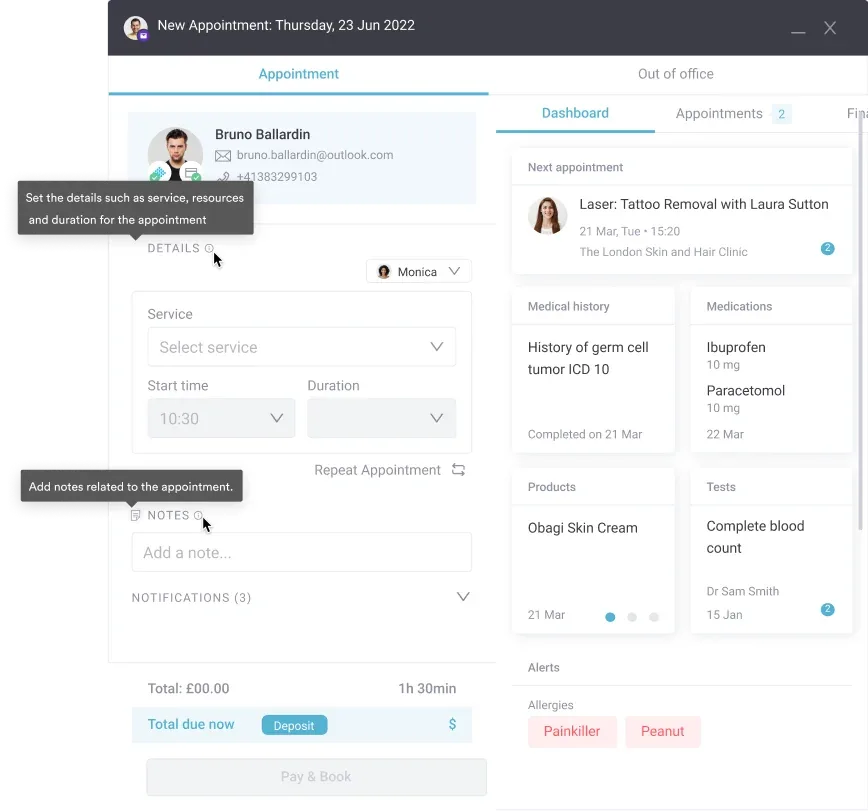
Pabau brings these 99393 safeguards directly into the charge workflow: age-based suggestion of the right preventive code (99391-99395) from the patient’s date of birth, automatic Z00.121/Z00.129 ICD-10 pre-population, Modifier 25 prompts when a same-day problem-oriented E/M is added, and annual-frequency edits that catch duplicate preventive claims before they deny. To see these pediatric well-child billing checks in action, book a demo.

Need billing rules for a heavy-duty walker? heavy-duty wheeled walker billing guide covers Medicare Part B and Medicaid rules for patients who weigh more than 300 pounds.
Billing a forearm crutch attachment? forearm crutch platform attachment guide explains per-unit billing and the documentation needed when a patient cannot grip a standard handle.
What about a walker platform attachment? walker platform attachment billing guide covers the SWO rules, coverage criteria and common denials for a walker forearm platform attachment.
CPT Code 99393 covers established patients aged 5 through 11 years at the date of service. A patient who has turned 12 before the visit date should be billed under CPT 99394 (established patient, 12-17 years) instead.
The primary ICD-10-CM codes paired with 99393 are Z00.129 (encounter for routine child health examination without abnormal findings) and Z00.121 (encounter for routine child health examination with abnormal findings). Z23 is added as a secondary code when vaccines are administered at the same visit.
No, Modifier 25 is not appended to 99393 itself. Modifier 25 goes on the separate problem-oriented E/M code (such as 99213 or 99214) when a separately identifiable sick visit is billed alongside the preventive visit on the same date of service.
Most payers cover one preventive medicine visit per patient per year for this age group, so 99393 is typically reported once in a rolling 12-month period. A second claim inside that annual window usually denies on frequency unless a specific plan exception applies, which is why age-based and frequency edits at charge entry help pediatric practices avoid duplicate submissions.
The only difference is the patient’s age at the date of service. CPT 99392 covers established patients aged 1-4 years, 99393 covers ages 5-11 years, and 99394 covers ages 12-17 years. All three are periodic comprehensive preventive medicine reevaluation services for established patients, with age-appropriate content varying by developmental stage.
Yes. Vaccine administration codes (90460 with counseling, or 90471) and vaccine product codes are billed alongside 99393 without Modifier 25. Vaccine codes are not E/M services, so the Modifier 25 rule does not apply. Confirm your major payer’s preference for 90460 versus 90471 before defaulting to one pattern.
The calculated 2026 Medicare Physician Fee Schedule non-facility amount for 99393 is roughly $80-$85 (a total RVU of about 2.43 multiplied by the 2026 conversion factor), though routine preventive medicine codes are generally non-covered by Medicare. Commercial payers typically reimburse between $160 and $280, varying by contract and region. Use the CMS Physician Fee Schedule lookup to find the current rate for your specific locality.