



CCSD code G5100: Bypass of duodenum billing guide
CCSD code G5100 bills a bypass that leaves the duodenum in place CCSD code G5100...

Last Updated: Oct 16, 2026

CPT Code 99397 covers periodic comprehensive preventive medicine reevaluation for established patients aged 65 and older.
Traditional Medicare Part B does not cover CPT 99397 – use G0438 or G0439 for Annual Wellness Visits with Medicare patients instead.
When a problem-oriented E/M is billed on the same date as CPT 99397, append Modifier 25 to the E/M code to show it is a separately identifiable service.
Pabau’s claims management software helps prevent age-mismatch denials and same-day billing errors by flagging coding conflicts before submission.
CPT Code 99397 is the billing code for a periodic comprehensive preventive medicine reevaluation of an established patient aged 65 years or older. It is the oldest-patient code in the age-stratified preventive medicine family (99391-99397) and applies only to patients who are 65 or older on the date of service.
According to the American Medical Association (AMA) CPT code set, CPT Code 99397 is defined as: Periodic comprehensive preventive medicine reevaluation and management of an individual including an age and gender appropriate history, examination, counseling/anticipatory guidance/risk factor reduction interventions, and the ordering of laboratory/diagnostic procedures, established patient, 65 years and older. This article covers Medicare coverage rules, reimbursement benchmarks, documentation requirements, related codes, modifier usage, and the most common denial patterns for this code.
CPT Code 99397 is a bundled service. The visit is not a single assessment but a multi-component encounter that covers several distinct clinical activities under one billing unit.
Immunization administration is not included in the 99397 bundle, but vaccines ordered and administered during the same encounter can be billed separately using the appropriate vaccine and administration codes.
No. Traditional Medicare Part B does not cover CPT Code 99397. This is one of the most consequential coverage rules in preventive medicine billing, and billing 99397 to traditional Medicare will result in a denial.
Medicare created its own preventive visit framework using HCPCS Level II codes. For established Medicare patients, the correct codes are G0438 (Annual Wellness Visit, first) and G0439 (Annual Wellness Visit, subsequent). These HCPCS codes define the scope of Medicare’s covered wellness benefit and are structurally different from the CPT 99397 service, covering a personalized prevention plan rather than a traditional comprehensive physical exam.
A routine comprehensive physical is statutorily excluded from Medicare coverage, so the patient is financially responsible for CPT 99397 and the practice may bill them directly. An Advance Beneficiary Notice (ABN) is not required for statutorily excluded services, but issuing a voluntary ABN before the visit is good practice: it documents that the patient was told the service is non-covered and confirms their agreement to pay.
Coverage under Medicare Advantage (Medicare Part C) varies by plan. Some Medicare Advantage plans cover CPT 99397 as part of their enhanced preventive benefits, in addition to or in lieu of the G0438/G0439 annual wellness visit codes. According to BCBS Idaho Medicare Advantage coding guidelines, select plans explicitly allow preventive medicine codes in the 99385-99397 range. Verify coverage directly with the specific Medicare Advantage plan before billing.
Because traditional Medicare does not cover CPT Code 99397, reimbursement data comes primarily from commercial payers. Rates vary by geography, payer contract, and practice setting. Because Medicare does not cover CPT Code 99397, it carries no Medicare-assigned national RVUs, so the values below are third-party estimates. Commercial payers often reference RVU-based methodology, and tools like the CMS Physician Fee Schedule lookup tool, when setting their own preventive-visit rates.
The FastRVU 2026 RVU lookup tool shows the following approximate values for CPT 99397:
These are approximate national benchmarks. Actual reimbursement depends on your negotiated payer contract, geographic location (GPCI adjustment), and facility versus non-facility billing. Always verify current rates against your specific payer contracts and the current year’s CMS fee schedule files.
Billing CPT Code 99397 correctly requires attention to several workflow steps beyond selecting the right code. Each of the following guidelines addresses a documented source of claims errors or audit risk. Using GP clinic software with integrated billing workflows helps teams enforce these rules consistently across providers.

Verify the patient’s date of birth against their chart before submitting. CPT Code 99397 requires the patient to be 65 or older on the date of service. A patient turning 65 the week after their visit does not qualify. Age-mismatch denials are cited by Premera Blue Cross as one of the most common errors in preventive medicine billing.
Confirm the patient’s primary payer before scheduling. Traditional Medicare Part B patients should receive G0438 or G0439, not CPT 99397. Commercial insurance and Medicaid patients typically qualify for CPT 99397. Medicare Advantage patients require plan-level verification. Most billing errors in this code family stem from payer mix-ups, not documentation gaps.
The medical record must support all components of the 99397 service.
A note that reads “annual physical” with a vital signs entry and a medication list does not support CPT 99397. The Office of Inspector General (OIG) and payer audit programs look for documentation that specifically reflects the age-appropriate preventive medicine components defined in the AMA CPT descriptor. Maintain HIPAA-compliant documentation practices throughout, as the same records that support a claim also fulfill your compliance obligations.
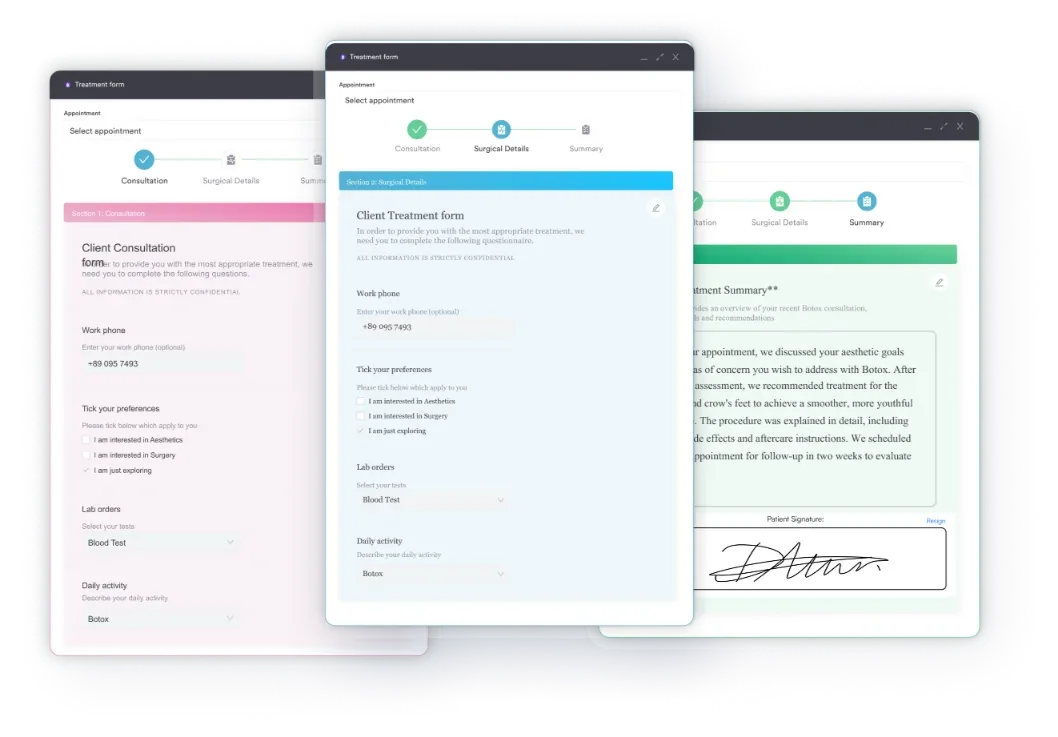
Using digital intake forms that capture age-appropriate screening questions before the visit helps clinicians complete the history and counseling components efficiently and creates a documentation trail that supports the claim.
Document anticipatory guidance topics explicitly in the note. Listing “fall prevention counseling provided” or “polypharmacy reviewed with patient” is more defensible in an audit than a generic phrase like “patient education given.” Specific language maps directly to the CPT 99397 service components and reduces the risk of a medical necessity denial on post-payment review.
A patient may present for their annual preventive visit and also require evaluation of an acute or chronic problem during the same encounter. Both services can be billed, but the coding must reflect that the two services are distinct and separately identifiable.
Per guidance from the American Academy of Family Physicians (AAFP) Family Practice Management journal, when a problem-oriented E/M is performed on the same day as a preventive medicine visit, append Modifier 25 to the E/M code (not to the 99397 code). Modifier 25 signals to the payer that the E/M is a significant, separately identifiable service performed on the same day as a preventive medicine service.
Not all payers accept same-day billing for preventive and problem-oriented E/M codes. Some apply bundling edits that deny the lower-valued code. Verify payer-specific policies on same-day billing before submitting. Modifier 25 usage is one of the most scrutinized billing patterns in E/M audits.
CPT Code 99397 sits within the 99381-99397 preventive medicine code family. The full family is age-stratified, separating new patients (99381-99387) from established patients (99391-99397). Selecting the wrong code within the family is a common billing error, particularly at age boundaries.
The most common within-family error is billing 99396 (age 40-64) for a patient who recently turned 65 or billing 99387 (new patient) for a patient who was previously seen. Verify both age and patient status before submitting. For the full code set overview, see the AAPC Codify CPT lookup.
The distinction between these two codes is patient status, not age or service content. Both codes apply to patients aged 65 and older. CPT Code 99387 applies when the patient is new to the practice (not seen by any physician of the same specialty in the same practice within the past three years). CPT Code 99397 applies to established patients. Billing 99387 for an established patient triggers a patient-status mismatch denial and is an audit flag under OIG preventive care reviews.

Pabau’s claims management software checks coding rules, patient status, and payer requirements at the point of scheduling, so billing teams catch 99397 age mismatches and Medicare payer errors before the claim is submitted.

CPT Code 99397 requires a supporting ICD-10-CM diagnosis code that reflects the reason for the preventive visit. Many payers validate that the diagnosis code submitted is appropriate for a preventive medicine service. Using a problem-based diagnosis code (e.g., a chronic condition) without pairing it with a preventive visit code can trigger bundling denials. The 1500 claim form collects the patient demographics, insurance details, and diagnosis and procedure codes every payer requires.
If a problem-oriented E/M is billed on the same day using Modifier 25, the E/M code should carry the diagnosis code for the acute or chronic condition being evaluated. The Z00.00 or Z00.01 code pairs with the 99397 preventive visit code. Separating the diagnosis codes by service type is a key step in avoiding bundling denials on same-day claims. Maintaining HIPAA compliance for medical offices requires that diagnosis coding accurately reflects the documented clinical encounter.
CPT Code 99397 is one of the highest-volume preventive medicine codes billed to commercial payers, which makes it a high-priority code for payer review. The following denial patterns appear most frequently across commercial payers and are addressable at the point of documentation or billing entry. Claims management software with built-in coding rule checks can catch most of these before submission.
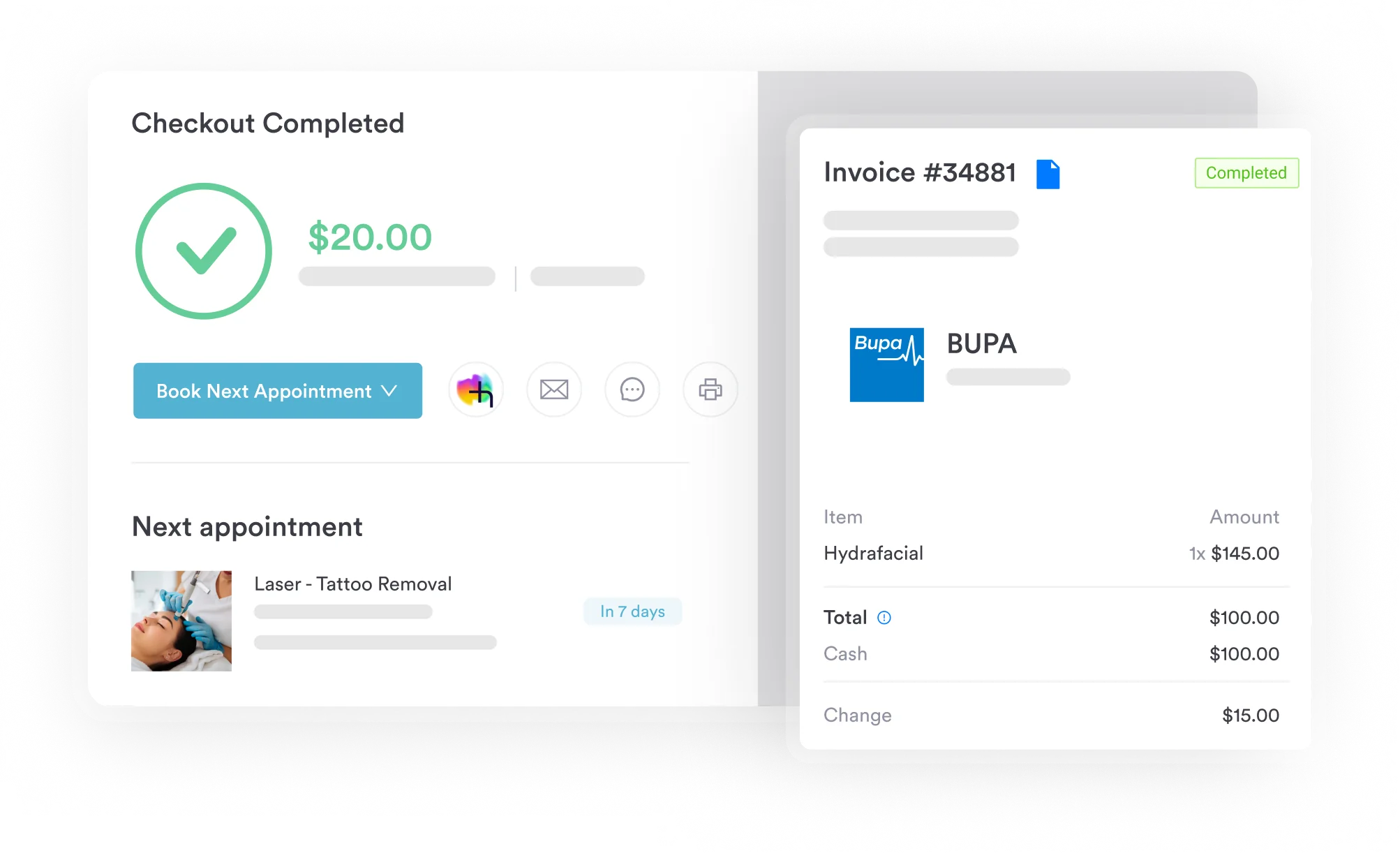
Building automated billing workflows that validate patient age, payer type, and visit frequency before claim submission reduces the first three denial types to near zero. The remaining denials typically require documentation review and appeal. Reworking denied claims one at a time keeps cash moving but never lowers the denial rate.
Run a monthly claims aging report filtered by CPT 99397 and sort by denial reason. If age-mismatch denials appear more than once, the root cause is likely a front-desk workflow issue, not a billing error. Verify that check-in staff confirm the patient’s date of birth at every visit and that the EHR or practice management system auto-populates age on the billing screen.
Blue Cross Blue Shield (BCBS) plans vary by state and operating entity, so there is no single universal BCBS policy for CPT 99397. That said, most BCBS commercial plans cover annual preventive medicine visits for adults, including CPT 99397 for patients 65 and older. Several recurring billing patterns are worth reviewing for BCBS specifically.
BCBS plans commonly apply network and coordination of benefits rules that can affect payment even when the code and documentation are correct. Verifying that the rendering provider is in-network, that the patient’s coverage is active, and that no other payer has primary responsibility is a prerequisite before billing. BCBS plans may also apply different frequency limitations or coverage criteria for preventive visits than other commercial payers. Checking the specific BCBS plan’s coverage policy, available through the plan’s provider portal, is the most reliable step. The PGM Billing CPT lookup tool provides a free reference for CPT code details that can support payer verification conversations.
For practices with a mixed payer panel that includes both traditional Medicare and BCBS Medicare Advantage enrollees, using primary care practice software that distinguishes between Medicare Part A/B and Medicare Advantage plans at the eligibility verification step prevents the most frequent source of 99397 coding errors.
CPT Code 99397 is one of the highest-volume preventive medicine codes in the US billing system. The most costly errors with this code are not documentation gaps but preventable workflow failures: submitting to traditional Medicare, missing the age threshold by a few weeks, or billing a same-day E/M without Modifier 25.
Pabau’s claims management software validates patient age, payer type, modifier requirements, and frequency rules before claims reach submission. For practices managing a high volume of preventive visits across an aging patient panel, that pre-submission layer is where denials get stopped. To see how Pabau handles preventive medicine billing workflows, book a demo.

Need the new patient counterpart to 99397? CPT Code 99387 covers periodic comprehensive preventive medicine for new patients aged 65 and older.
Billing a walker brake replacement? walker brake attachment billing guide covers coverage rules, written orders and modifiers for a replacement brake on a wheeled walker.
Need guidance on billing a sitz bath? sitz bath billing guide covers Medicare coverage, the KX modifier and the ICD-10 pairings that keep a sitz bath claim paid.
CPT Code 99397 is the billing code for a periodic comprehensive preventive medicine reevaluation for an established patient aged 65 and older. The service includes an age and gender appropriate history, physical examination, counseling and anticipatory guidance, risk factor reduction interventions, and the ordering of laboratory or diagnostic procedures.
No. Traditional Medicare Part B does not cover CPT Code 99397. For Medicare beneficiaries, use G0438 (Annual Wellness Visit, first) or G0439 (Annual Wellness Visit, subsequent) instead. Some Medicare Advantage plans do cover CPT 99397, but coverage must be verified with the individual plan.
CPT Code 99397 applies to established patients who are 65 years of age or older at the time of service. For established patients aged 40-64, use CPT 99396. Submitting 99397 for a patient under 65 will result in an age-mismatch denial.
Both codes apply to patients aged 65 and older, but the distinction is patient status. CPT 99387 is for new patients (not seen by a physician of the same specialty in the practice within the past three years), while CPT 99397 is for established patients. The service content is essentially the same; the patient relationship determines which code applies.
Yes, but Modifier 25 must be appended to the problem-oriented E/M code (not to 99397) to indicate it is a significant, separately identifiable service. The medical record must contain documentation that clearly distinguishes the preventive visit from the problem-oriented encounter. Not all payers accept same-day billing, so verify payer-specific policy before submitting.
Modifier 25 is the relevant modifier, but it is appended to the same-day problem-oriented E/M code, not to CPT 99397 itself. CPT 99397 typically requires no modifier when billed alone. Modifier 25 on the wrong code is itself a common billing error.



