CPT code 76391: Magnetic resonance elastography billing guide
CPT code 76391: Definition, descriptor and what the procedure covers CPT code 76...

Last Updated: Oct 23, 2026

CPT code 90901 describes biofeedback training by any modality, covering EMG, EEG, thermal, and galvanic skin response sessions.
Pelvic-floor biofeedback is no longer billed with 90901: code 90911 was deleted in 2020 and replaced by the time-based codes 90912 and 90913. Report only one biofeedback code per session.
Medicare coverage for 90901 is condition-specific and LCD-dependent: blanket statements that Medicare always covers it are inaccurate.
Practice management software like Pabau helps practices attach the correct biofeedback CPT codes, document medical necessity, and track denial patterns.
Modifiers such as 59, 25, 95, and KX can apply to a 90901 claim depending on what else is billed the same day — confirm each payer’s requirements before submitting.
CPT code 90901 is a billable code for biofeedback training by any modality, including EMG, EEG (neurofeedback), skin temperature, galvanic skin response, and respiratory biofeedback. It reports one complete session rather than a timed increment. This guide covers the code definition, documentation requirements, Medicare and private payer rules, CCI edits, related codes, and practical denial-prevention steps so your team submits clean claims from the start.
This guide is written for clinicians, practice managers, and billing staff working in outpatient therapy, physical therapy, psychology, and pelvic health settings. It covers every major decision point from code selection through to audit-proofing your records.
The American Medical Association’s CPT code set defines CPT code 90901 as “biofeedback training, any modality.” That four-word descriptor carries real significance: the code covers any physiological signal used to train self-regulation, whether that is electromyography (EMG), electroencephalography (EEG/neurofeedback), skin temperature, galvanic skin response, or respiratory biofeedback. This is the full CPT code 90901 description billing staff reference when a claim needs the exact code language on file.
Because 90901 is not time-based, each unit represents one session rather than a 15- or 30-minute increment. That structure means documentation must justify the session itself, not just its duration.
CPT code 90901 sits within the Biofeedback Services and Procedures range (90875-90913) in the AMA CPT manual. Its official descriptor is intentionally broad: “biofeedback training by any modality.” This places every modality under one non-time-based code unless the training specifically involves anorectal or urethral sphincter EMG or manometry, in which case CPT codes 90912 and 90913 apply.
| Code | Descriptor | Time-based? | Common settings |
|---|---|---|---|
| 90901 | Biofeedback training, any modality | No (per session) | Outpatient therapy, psychology, PT, pelvic health |
| 90912 | Biofeedback training, perineal muscles, anorectal or urethral sphincter, including EMG and/or manometry; initial 15 min | Yes | Pelvic floor, urology, colorectal |
| 90913 | Biofeedback training, perineal muscles, anorectal or urethral sphincter, including EMG and/or manometry; each additional 15 min | Yes (add-on to 90912) | Pelvic floor, urology, colorectal |
| 90875 | Individual psychophysiological therapy with biofeedback (30 min) | Yes | Psychology, psychiatry |
| 90876 | Individual psychophysiological therapy with biofeedback (45 min) | Yes | Psychology, psychiatry |
Strong documentation is what separates a clean 90901 claim from a denial or an audit finding. Payers and Medicare reviewers look for four elements: medical necessity, the modality used, active patient participation, and clinician involvement throughout the session.
Use your practice’s client record to capture all four elements within the session note, not in a separate addendum created days later.
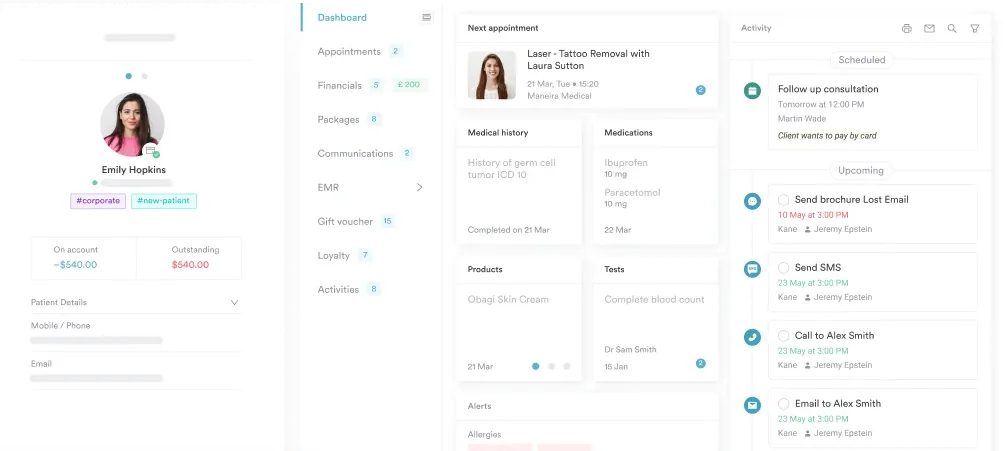
Practices using digital forms can build structured SOAP note templates that prompt clinicians to capture each element automatically, reducing documentation gaps before claims are submitted.

Medicare coverage for biofeedback under CPT code 90901 is condition-specific. Coverage is governed by Local Coverage Determinations (LCDs) issued by Medicare Administrative Contractors (MACs) such as Noridian, not by a single national rule that applies uniformly. Practices billing Medicare for 90901 must verify the applicable LCD in their jurisdiction before submitting.
The Centers for Medicare and Medicaid Services (CMS) has published billing guidance through the Medicare Coverage Database. Article A53352 states clearly: “When biofeedback training is provided, the most appropriate biofeedback code (90901 or 90912 or 90913) should be billed. Separate billing for concurrently applied modalities and/or procedures during biofeedback training is not appropriate.” That rule is non-negotiable on Medicare claims.
Biofeedback training performed in an inpatient hospital or skilled nursing facility is billed under Medicare Part A. Outpatient settings bill under Medicare Part B. That distinction matters for pelvic health practices that occasionally treat patients across care settings.
Medicare Advantage plans, including UnitedHealthcare Medicare Advantage, may have different preferred codes. AAPC community reporting indicates that UHC Medicare Advantage shifted toward favoring CPT codes 90901, 90912, or 90913 under National Coverage Determination (NCD) 30.1.1 as of February 2022, though providers should verify current UHC policy documentation directly before assuming this guidance still applies.
Before submitting a 90901 claim for a Medicare patient, verify the specific LCD in your MAC jurisdiction. Coverage indications, session limits, and prior authorization requirements vary by region. The CMS Medicare Coverage Database is searchable by contractor and article number.
Practices on membership models handle many of these services with direct primary care software instead of per-claim billing.
The single most important billing rule for this code: report only one biofeedback code per session. Per CMS Article A53352, you bill the most appropriate biofeedback code (90901, 90912, or 90913) for the service provided, and you cannot stack 90901 on top of the perineal/sphincter codes for the same session. Code 90913 is an add-on that may only be reported in conjunction with 90912, never on its own.
The difference between the codes is anatomy and timing. CPT code 90901 covers biofeedback training using any physiological modality and is reported once per session, regardless of duration. CPT codes 90912 and 90913 are restricted to training of the perineal muscles, anorectal or urethral sphincter, typically used in pelvic floor therapy for urinary or fecal incontinence, and they are time-based (90912 for the initial 15 minutes, 90913 for each additional 15 minutes). Note that 90911 — the previous single code for perineal/sphincter biofeedback — was deleted effective January 1, 2020 and replaced by 90912 and 90913, so it should no longer appear on any claim.
When pelvic floor biofeedback is the service provided, 90912/90913 are the correct codes. Using 90901 for perineal or sphincter training is a coding error that may trigger a payer audit.
Billing CPT code 97112 (neuromuscular reeducation) alongside 90901 or 90912/90913 requires care. CMS LCD commentary confirms that 97112 should not be separately billed when it is integral to the biofeedback session. The exception: if 97112 is provided as a genuinely separate and distinct treatment from biofeedback in the same visit, separate billing may be appropriate. However, this is an audit-sensitive scenario. Document the two services as separate.
For pelvic floor settings, CPT codes 51784, 51785, and 91122 should only appear during the initial diagnostic examination. According to CMS Article A57635, these codes are not expected on routine biofeedback training claims once the diagnostic phase is complete.

Pabau’s claims management tools help outpatient therapy practices attach the right CPT codes, document medical necessity in structured notes, and track denial patterns across payers. Fewer errors, fewer denials, faster reimbursement.

Modifiers change how a payer reads a 90901 claim when other services are billed the same day, or when the payer needs proof that coverage criteria are met. Four modifiers come up most often on biofeedback claims.
None of these apply automatically — payer policy decides which modifier, if any, a claim needs.
Private payer coverage for CPT code 90901 is not uniform. Health Net’s Clinical Policy CP.BH.300 explicitly lists 90901 among covered biofeedback codes for behavioral health disorders, but lists specific covered diagnoses and may require prior authorization. Other commercial payers apply their own medical necessity criteria, session limits, and pre-authorization requirements.
Practices serving mental health populations should verify each payer’s behavioral health carve-out policies. Some commercial plans route biofeedback claims through a behavioral health administrator rather than the primary medical plan, which can cause denials if the claim is submitted to the wrong entity.
Neurofeedback (EEG biofeedback) is clinically distinct from surface EMG biofeedback, but both are trained physiological responses. From a CPT coding perspective, neurofeedback may be billed using the biofeedback code family including 90901, since the descriptor is modality-neutral. However, payer-specific coverage is inconsistent: some commercial payers explicitly exclude neurofeedback from biofeedback coverage policies, treating it as experimental. Before billing 90901 for neurofeedback sessions, verify the individual payer’s current coverage policy. Do not assume that modality-neutrality in the CPT descriptor translates to automatic payer acceptance.
Psychologists and other behavioral health providers billing biofeedback alongside psychotherapy should review whether CPT codes 90875 or 90876 are more appropriate. Those codes describe individual psychophysiological therapy incorporating biofeedback training in the same session as psychotherapy, and they are time-based (30 and 45 minutes respectively). Using 90901 when 90875/90876 better describes the service may result in undercoding or a coding audit.
Build a payer-specific code matrix for your top five payers before the start of each calendar year. Include preferred biofeedback codes, session limits, prior authorization requirements, and behavioral health routing instructions. Review it whenever a new MAC policy or commercial plan update is issued.
Claim denials for biofeedback under 90901 cluster around a small number of recurring causes. Identifying them before submission is the most efficient way to improve your practice’s clean claim rate.
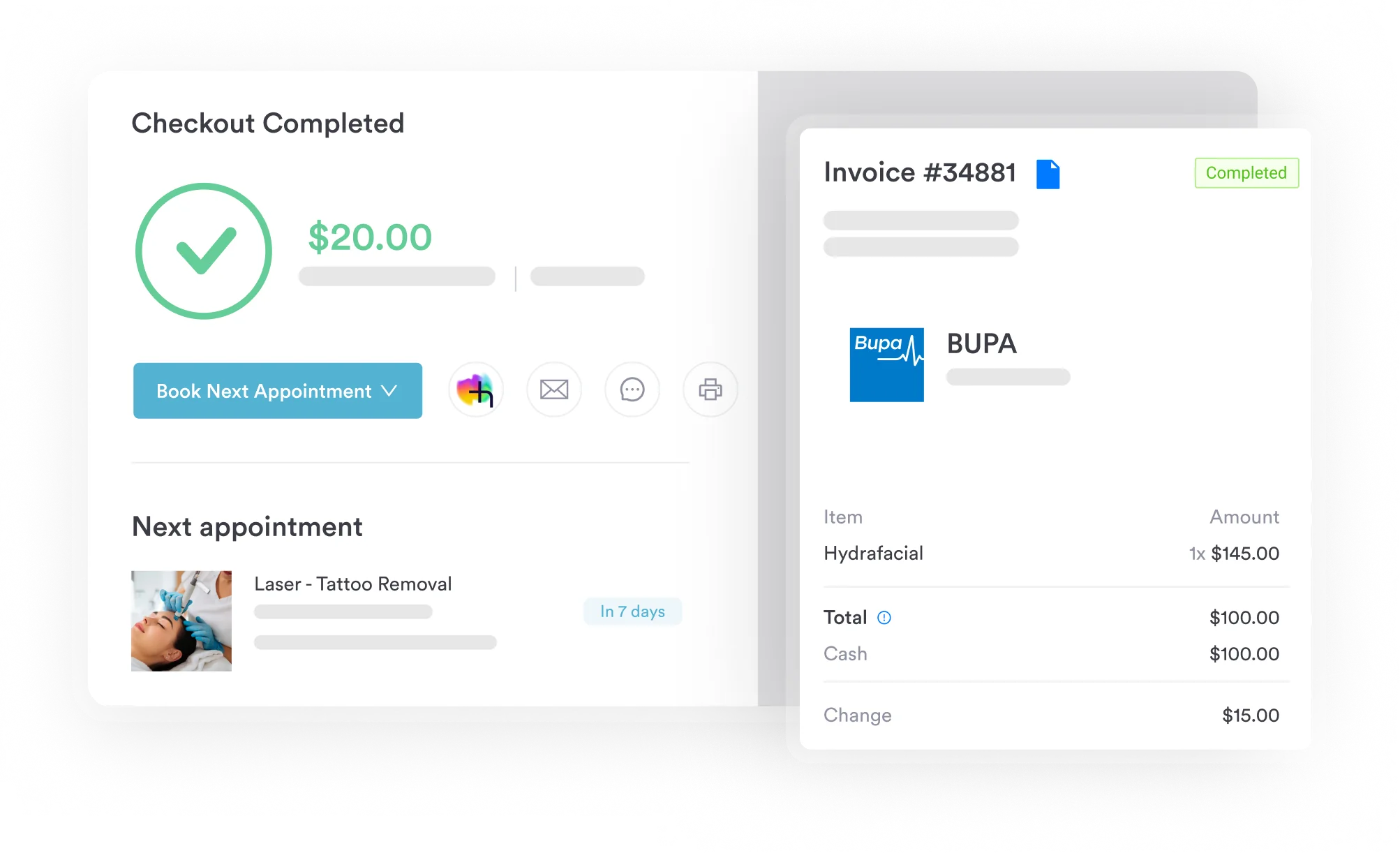
Practices using Pabau’s claims management software can set up automated denial tracking by CPT code, making it easier to spot patterns across payers and identify documentation gaps before they become repeat denials. The automated workflows feature can trigger documentation completeness checks before a claim is generated.
The reimbursement rate for CPT code 90901 changes annually through the Medicare Physician Fee Schedule update process. Never rely on a prior year’s reimbursement figure when budgeting or verifying claims. The CMS Physician Fee Schedule lookup tool allows you to search current reimbursement rates by code, locality, and facility vs. non-facility setting. Use it at the start of each calendar year and whenever you open a new practice location.
For non-Medicare payers, reimbursement rates are typically negotiated under your provider agreement and will differ from Medicare rates. When contracting or renegotiating with commercial plans, the CMS rate serves as a useful benchmark rather than a floor.
The AAPC Codify platform provides CCI edit lookups, RVU data, and payer-specific guidelines alongside CPT code definitions. It is a practical reference for billing teams who need to verify coding rules before submission.
For multi-location practices, Pabau’s multi-location management helps standardize CPT code usage across sites so that billing staff in different offices apply the same code selection rules and documentation protocols regardless of location.
Accurate billing for biofeedback training comes down to three things: choosing between 90901 and 90912/90913 correctly, documenting medical necessity in every session note, and verifying payer-specific coverage before each new patient’s first claim. The rule to report only one biofeedback code per session is absolute, and Medicare coverage is LCD-dependent, not universal.
Pabau’s claims management software gives outpatient therapy and behavioral health practices the tools to track denials by CPT code, structure documentation templates, and automate compliance checks. To see how Pabau supports biofeedback billing workflows, book a demo.

Billing COVID vaccine administration too? COVID-19 vaccine billing guide covers CPT code 91320 for the Pfizer-BioNTech vaccine, including its dosage, formulation, and effective date.
Managing claims across a psychology practice? Pabau for psychology practices supports psychophysiological therapy billing and session documentation.
Coding new patient eye exams too? Eye exam billing guide covers CPT code 92002 documentation, modifiers, and billing rules for a new patient eye exam.
CPT code 90901 is used to bill biofeedback training sessions involving any physiological modality, including EMG, EEG (neurofeedback), skin temperature, galvanic skin response, or respiratory biofeedback. It covers one complete training session regardless of duration, and is used in outpatient therapy, psychology, physical therapy, and pelvic health settings.
CPT 90901 applies to biofeedback training using any modality and is reported once per session regardless of duration. CPT 90912 and 90913 are specific to training of the perineal muscles, anorectal or urethral sphincter for pelvic floor conditions such as urinary or fecal incontinence, and they are time-based (90912 for the initial 15 minutes, 90913 for each additional 15 minutes). These codes replaced 90911, which was deleted in 2020. Report only one biofeedback code per session.
Medicare coverage for CPT 90901 is condition-specific and governed by Local Coverage Determinations (LCDs) set by your Medicare Administrative Contractor. Coverage is not universal. Commonly covered conditions include urinary incontinence and certain chronic pain presentations. Verify your MAC’s current LCD before submitting.
No. Per CMS Article A53352, you report only the single most appropriate biofeedback code per session (90901, 90912, or 90913) — you cannot stack 90901 with 90912/90913 for the same session. Code 90913 is an add-on that may only be billed in conjunction with 90912. Note that 90911, the old single perineal/sphincter code, was deleted in 2020.
Every CPT 90901 claim requires: a supporting diagnosis with medical necessity language, the specific modality used (e.g. EMG, EEG), documentation of active patient participation, clinician presence and instruction throughout the session, and measurable progress toward functional goals. Missing any element increases denial and audit risk.
Yes, psychologists may bill CPT 90901, but they should also evaluate whether CPT 90875 or 90876 better describes the service when biofeedback is combined with psychotherapy in the same session. Those codes cover individual psychophysiological therapy incorporating biofeedback training and are time-based (30 and 45 minutes respectively).
There’s no single figure: Medicare pays according to the Physician Fee Schedule for your locality and facility setting, and commercial payers set their own contracted rates. Check the CMS Physician Fee Schedule lookup tool each year, since figures update annually and vary by region.
Not on its own, but a modifier often applies depending on what else is billed the same day. Modifier 59 flags 90901 as distinct from another same-day procedure, modifier 25 applies to a significant separate E/M service, modifier 95 covers telehealth delivery, and a KX modifier attests that documentation meets the payer’s medical policy. Confirm which apply with each payer before submitting.