



HCPCS code E0198: Water pressure pad billing guide
HCPCS code E0198 is a water pad for a standard mattress HCPCS code E0198 is the ...

Last Updated: Oct 13, 2026

CPT Code 90945 reports dialysis procedures other than hemodialysis (peritoneal dialysis, hemofiltration, CRRT) with a single physician or QHP evaluation per session
The critical distinction from CPT 90947 is the number of evaluations: one evaluation = 90945, repeated evaluations in the same session = 90947
CPT 90945 bundles the E&M related to the dialysis procedure and renal failure; a separate E&M code may be billed only for a truly unrelated condition
Pabau’s claims management software helps nephrology practices track per-session dialysis codes, modifier usage, and ESRD billing workflows without errors
CPT code 90945 is the per-session code for a dialysis procedure other than hemodialysis (peritoneal dialysis, hemofiltration, or continuous renal replacement therapy) performed with a single physician or qualified health care professional (QHP) evaluation. It bundles the evaluation and management (E/M) related to the dialysis and renal failure into one payment.
This reference covers the official description, the 90945 vs. 90947 distinction, documentation requirements, Medicare reimbursement, and the most common billing errors nephrologists and billers encounter.
The official AMA CPT code set defines CPT Code 90945 as: “Dialysis procedure other than hemodialysis (e.g., peritoneal dialysis, hemofiltration, or other continuous renal replacement therapies), with single evaluation by a physician or other qualified health care professional.”
The code falls within the Miscellaneous Dialysis Services and Procedures range (90945-90947) and applies to outpatient, inpatient, and emergency settings. The “other than hemodialysis” framing is intentional: hemodialysis has its own dedicated codes (90935 for single evaluation, 90937 for repeated evaluations). CPT Code 90945 covers the parallel non-hemodialysis modalities.
The CPT code for peritoneal dialysis is 90945 when the physician or QHP performs a single evaluation during the session, or 90947 when repeated evaluations are required. This covers both continuous ambulatory peritoneal dialysis (CAPD) and automated peritoneal dialysis (APD). Peritoneal dialysis is never billed with the hemodialysis codes 90935 or 90937, which are reserved for hemodialysis sessions.
One caveat: for managed home peritoneal dialysis patients, monthly ESRD capitation codes apply instead of the per-session peritoneal dialysis CPT code 90945. See the reimbursement section below for how to tell which applies.
The dialysate used in peritoneal dialysis has its own HCPCS supply code, chosen by bag volume. A4722 covers bags of 2,000 to 2,999 cc, which Medicare pays under the ESRD prospective payment system.
The only billing distinction between these two codes is the number of physician or QHP evaluations during the dialysis session.
The evaluation count reflects how many times the physician or QHP assessed the patient during the session, not how many total interactions occurred. A nurse checking vitals between the physician’s single visit does not trigger CPT 90947. The medical record must clearly document when each physician evaluation occurred to support the code selected.
This is where most denials originate. According to Noridian Medicare (JF Part B MAC), renal dialysis procedure codes 90935, 90937, 90945, and 90947 include E&M services related to the dialysis procedure and the renal failure. You cannot bill a separate E&M code for the dialysis encounter itself.
A separate E&M code is appropriate only when the physician addresses a condition that is genuinely unrelated to dialysis or renal failure during the same visit. The medical record must clearly distinguish the unrelated condition, and Modifier 25 is generally required to signal the separate medically necessary service.
Document the unrelated condition in a separate note or clearly delineated section of the visit note. Payers audit Modifier 25 claims closely, and a generic note that blends dialysis management with the unrelated condition will likely result in a denial or recoupment. Specificity in the record is what defends the claim.
With integrated video appointments, follow-ups tied to these codes no longer require an office visit.
Clean documentation protects the claim at every stage, from submission through audit. Per-session dialysis codes like CPT 90945 require the record to support three things: the modality used, the number of physician evaluations, and the clinical findings from that evaluation.
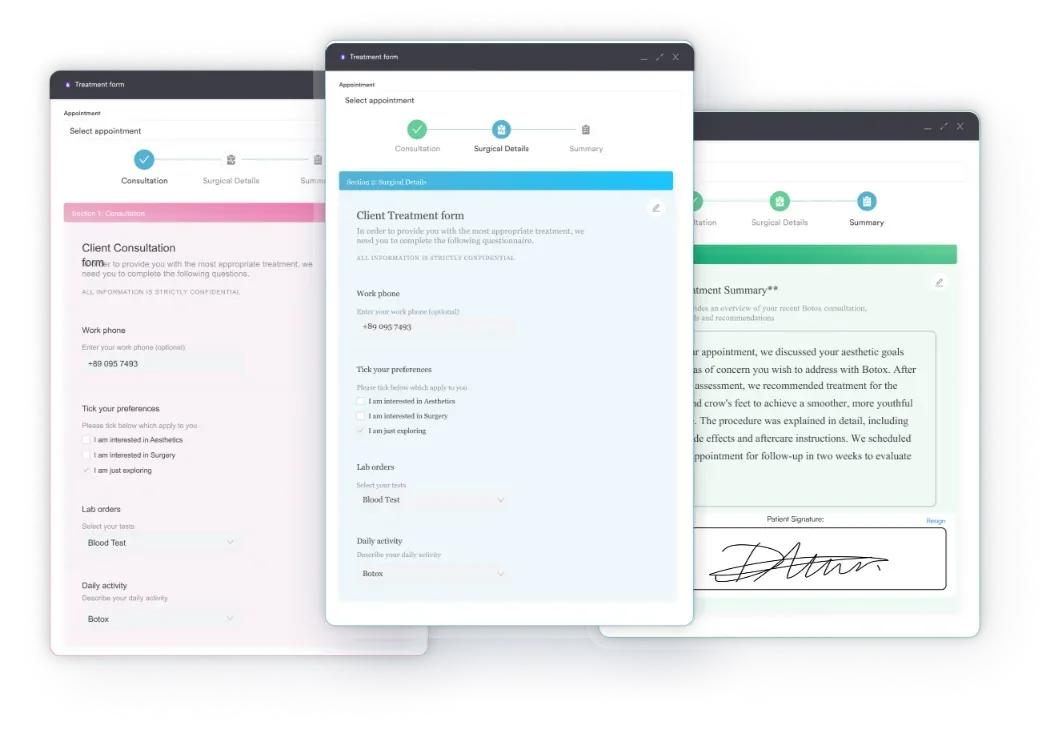
Maintaining HIPAA-compliant documentation practices across the nephrology team reduces exposure when payer audits target high-volume dialysis claims. Structured digital intake and clinical forms ensure every required element is captured at the point of care rather than reconstructed from memory afterward.
Medicare payment for CPT Code 90945 is set through the Physician Fee Schedule (PFS). Rates vary by geographic locality and are adjusted annually. To find the current rate for your practice location, use the CMS Physician Fee Schedule lookup tool or check current RVU values via the FastRVU 2026 lookup.
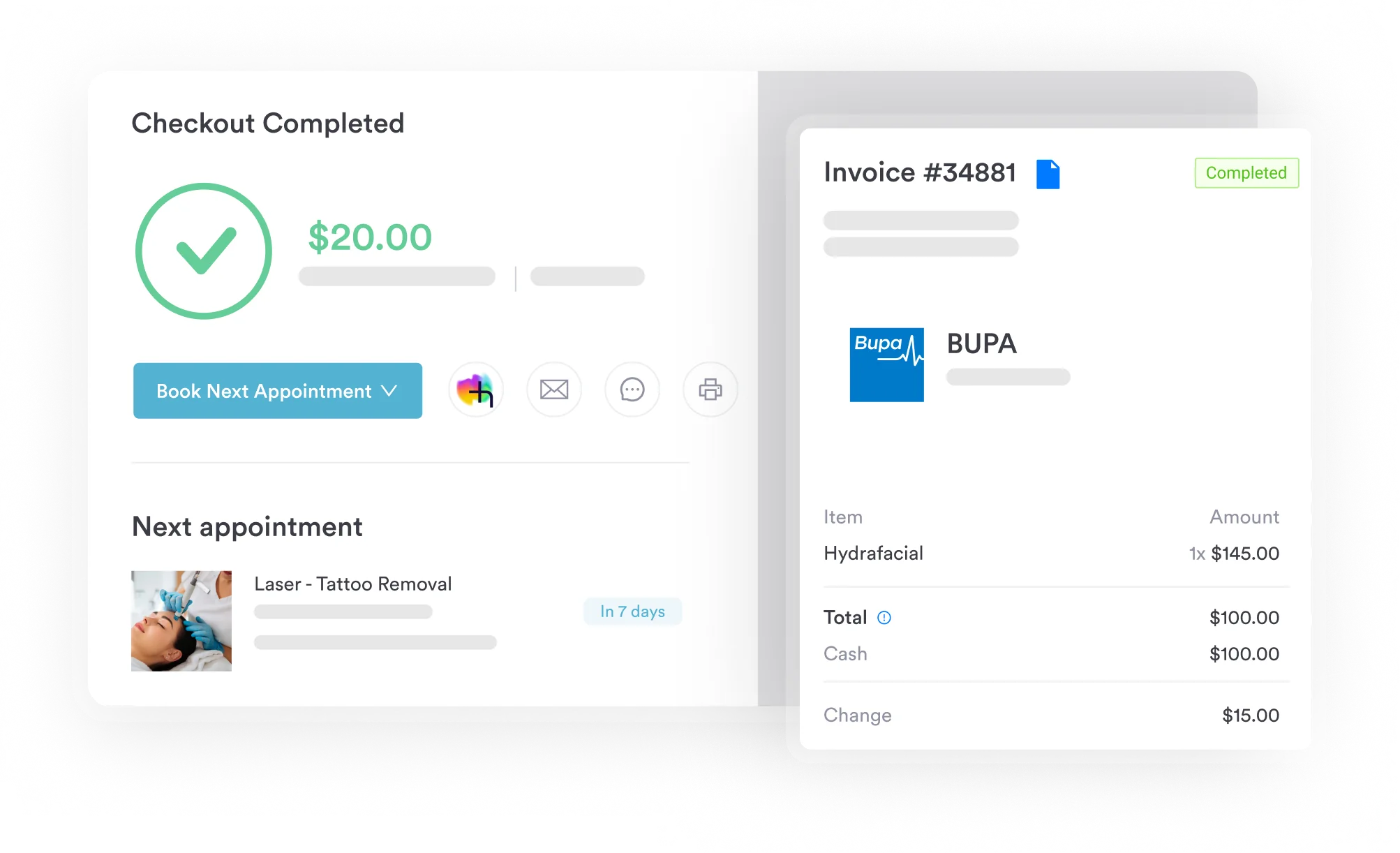
As an approximate benchmark, national average reimbursement for CPT 90945 falls roughly in the $105 to $135 range, though the exact allowed amount depends on your locality’s geographic adjustment. Medicare pays 80% of that allowed amount, leaving a 20% patient co-insurance. Treat the range as a planning figure and confirm the current rate through the CMS lookup before you budget against it. Where a practice does not bill the payer directly, the patient needs an itemized statement carrying this code and its charge.
A few reimbursement considerations specific to CPT 90945:

Pabau’s claims management software helps nephrology and dialysis practices track per-session codes, attach supporting diagnosis codes, flag modifier usage, and submit cleaner claims. See how it fits your billing workflow.

Dialysis billing is a high-audit area for Medicare. These are the errors that most frequently cause denials or trigger payer scrutiny for CPT Code 90945.
CPT 90947 pays more than 90945, which creates pressure to default to it. Without clear documentation of two or more distinct physician evaluations during the same session, payers will deny the claim or downcode it to 90945 on review. Document evaluation times explicitly.
Submitting a routine E&M code alongside 90945 without Modifier 25 and a clearly documented unrelated condition is a top denial trigger. The dialysis code already includes the E&M for renal failure management. Separate E&M services must meet the “unrelated and separately identifiable” test to survive audit.
Peritoneal dialysis and CRRT are coded using 90945 or 90947, not 90935 or 90937. Submitting a hemodialysis code for a peritoneal dialysis session is an incorrect code assignment that payers can identify through claims data patterns. Document the modality in the clinical record and match the code accordingly. For broader CPT procedure code resources, including per-session documentation standards, ensure your billing team has a current coding reference.
Both 90945 and 90947 include a physician or QHP evaluation. When an outpatient facility performs the dialysis but no physician evaluation takes place, billing 90945 claims a professional service that was never delivered. In that situation the facility bills only the technical component, and the physician codes do not apply. Match the code to the service documented in the record, not to the modality alone.
Facility claims submitted without the required revenue code (082X for hemodialysis, 083X for peritoneal dialysis/ESRD, 088X for other dialysis) are incomplete per CMS requirements and will reject. Confirm that your billing team’s workflow includes revenue code assignment for every facility dialysis claim. A claims management workflow that enforces required field completion before submission catches these before they leave the practice.
Run a monthly audit of your 90945 and 90947 claims side by side. If 90947 represents more than 20-30% of your non-hemodialysis dialysis claims, verify that your documentation consistently supports repeated evaluations. Payer data analysts flag outlier ratios, and a pattern of 90947 without adequate documentation is a common recoupment trigger.
Nephrology billing requires familiarity with the full dialysis code family, from the outpatient dialysis CPT codes through the ESRD monthly capitation codes, to select the right code for each encounter. The table below covers the codes most commonly used alongside or instead of CPT Code 90945.
Verify current code descriptions and coverage rules through AAPC Codify or the CMS fee schedule lookup. Codes and coverage policies update annually. For other per-session coding references. Using nephrology prescription workflows that integrate with billing reduces the risk of modality-code mismatches at submission.

CPT Code 90945 is a precise per-session code: non-hemodialysis modality plus single physician or QHP evaluation. The margin for error is narrow because the distinction from 90947 rests entirely on documentation, and the E&M bundling rules are strict. Practices that standardize their dialysis documentation templates, revenue code workflows, and modifier review processes will have fewer denials and cleaner audit trails.
Pabau’s claims management software helps nephrology practices build those workflows directly into their billing process, from required field validation through submission tracking. To see how it handles dialysis and other specialty billing scenarios, book a demo.

Billing a binocular microscopy exam? Binocular microscopy billing guide covers CPT code 92504 for the diagnostic ear exam performed with a stereoscopic operating microscope.
Billing a swallowing evaluation? Swallowing evaluation billing guide covers CPT code 92610 documentation that supports medical necessity for the evaluation and treatment codes.
Documenting a cardiopulmonary resuscitation episode? CPR billing guide covers CPT code 92950 and why start time, end time, and defibrillation use matter.
CPT Code 90945 is a per-session billing code for dialysis procedures other than hemodialysis, including peritoneal dialysis, hemofiltration, and continuous renal replacement therapies (CRRT), when a single physician or QHP evaluation is performed during that session. It bundles the dialysis procedure and the E&M related to renal failure into one code.
CPT 90945 is used when the physician or QHP performs one evaluation during the dialysis session; CPT 90947 is used when repeated evaluations are required in the same session, typically because the patient is unstable or the dialysis prescription needs to be revised mid-session. The medical record must document each evaluation’s timing and findings to support whichever code is selected.
For Medicare patients on home dialysis, monthly management is billed using the ESRD monthly capitation codes 90963-90966 rather than per-session CPT codes like 90945. (HCPCS codes G0491 and G0492 are separate codes for dialysis in acute kidney injury patients without ESRD, not home-dialysis capitation.) Per-session billing with 90945 generally applies to facility-based or acute care settings. Verify coverage with each payer and confirm whether the patient qualifies for monthly capitation before selecting the code.
Yes, but only when the E&M service addresses a condition unrelated to the dialysis procedure or renal failure. According to Noridian Medicare, CPT 90945 already includes E&M services related to dialysis and renal failure. A separate E&M requires Modifier 25, a clearly documented unrelated condition, and a distinct note or section in the medical record to survive audit.
ICD-10-CM Code N18.6 (End-stage renal disease) is the most common pairing for ESRD patients undergoing peritoneal dialysis or other non-hemodialysis modalities. For acute kidney injury requiring CRRT, N17.xx codes (Acute kidney failure) may be appropriate. Always document the diagnosis in the clinical record and confirm crosswalk requirements with each payer.
CMS requires facility claims for dialysis to include revenue code 083X for peritoneal dialysis/ESRD services, or 088X for other dialysis modalities, alongside the CPT code. Revenue code 082X applies to hemodialysis. Missing the revenue code causes a claim rejection before it reaches clinical review.



