



CCSD code G5100: Bypass of duodenum billing guide
CCSD code G5100 bills a bypass that leaves the duodenum in place CCSD code G5100...

Last Updated: Oct 16, 2026
CPT code 90935 reports a hemodialysis procedure with a single physician or qualified healthcare professional (QHP) evaluation during the session. It covers inpatient hemodialysis for any patient and outpatient hemodialysis for non-ESRD patients, and bundles related evaluation and management (E/M) services, which cannot be billed separately on the same day.

CPT Code 90935 covers a hemodialysis procedure with a single physician or qualified healthcare professional evaluation during the session.
This code bundles E/M services related to the dialysis procedure and renal failure: those services cannot be billed separately on the same day.
CPT 90935 applies to inpatient hemodialysis and outpatient HD for non-ESRD patients; ESRD patients in outpatient dialysis facilities are billed under monthly capitation codes instead.
Pabau’s claims management software helps nephrology practices submit clean 90935 claims, track denial reasons, and maintain audit-ready documentation.
Most claim denials for hemodialysis services come down to one misunderstood rule: E/M services billed separately on the same day as CPT Code 90935. Understanding exactly what this code covers, and what it excludes, protects reimbursement and prevents audit risk for nephrology practices.
CPT Code 90935 is the AMA’s Current Procedural Terminology code for a hemodialysis procedure with a single physician or qualified healthcare professional (QHP) evaluation. The official descriptor reads: “Hemodialysis procedure with single physician evaluation.” This code belongs to the 90935-90999 dialysis services and procedures code range and is maintained by the AMA. It captures one complete hemodialysis session where the attending physician or QHP evaluates the patient once during that session.
The single-evaluation distinction is what separates 90935 from its companion code, 90937. If the patient’s condition changes mid-session and requires a repeat evaluation or revision of the dialysis prescription, the provider must switch to 90937. Both codes are subject to Medicare’s global surgery guidelines, which means related E/M services are considered bundled.
Use this table to confirm key attributes before submitting a claim. Verify current reimbursement figures against the CMS Physician Fee Schedule lookup tool, as rates update annually with each new fee schedule cycle.
The most consequential billing decision with hemodialysis coding is determining whether the patient has end-stage renal disease. That single factor changes which code set applies entirely.
Non-ESRD patients: CPT Code 90935 is the correct code when the patient is receiving hemodialysis for acute kidney injury (AKI) or another non-ESRD indication, whether the session occurs in an inpatient or outpatient setting. This is a fee-for-service billing scenario: each session generates a distinct claim.
ESRD patients in outpatient dialysis facilities: These patients fall under the Monthly Capitation Payment (MCP) model. The physician bills one of the ESRD monthly capitation codes (such as HCPCS codes G0491 or G0492, or CPT codes covering monthly management) rather than a per-session code like 90935. Billing 90935 for an ESRD patient in a certified ESRD facility is a common audit trigger.
The monthly management code depends on how many times the physician sees the patient. For a patient 20 or older with four or more face-to-face visits, that code is CPT Code 90960.
ESRD patients in inpatient settings: When an ESRD patient is admitted as a hospital inpatient and requires hemodialysis, 90935 or 90937 can apply. CMS guidance, including CMS Carriers Manual Section 15350B and Transmittal R1810B3, confirms that CPT codes 90935 and 90937 are used to report inpatient ESRD hemodialysis as well as outpatient HD for non-ESRD patients.
If a patient transitions from AKI to ESRD during their treatment course, document the date of ESRD designation precisely. Billing 90935 after an ESRD determination triggers automatic denials under the MCP model and creates recoupment risk.
Most medicine-section services happen in family practice, where primary care software keeps orders, results, and billing aligned.
Clean documentation for CPT Code 90935 must support both the hemodialysis procedure and the single physician evaluation. Auditors look for evidence of all three components: the dialysis session itself, the clinical assessment performed during that session, and the medical necessity for hemodialysis on that date.
Using structured digital intake and clinical documentation forms reduces the risk of incomplete notes reaching claim submission. Practices that document in discrete fields rather than free-text narrative are far easier to audit and far faster to credential.
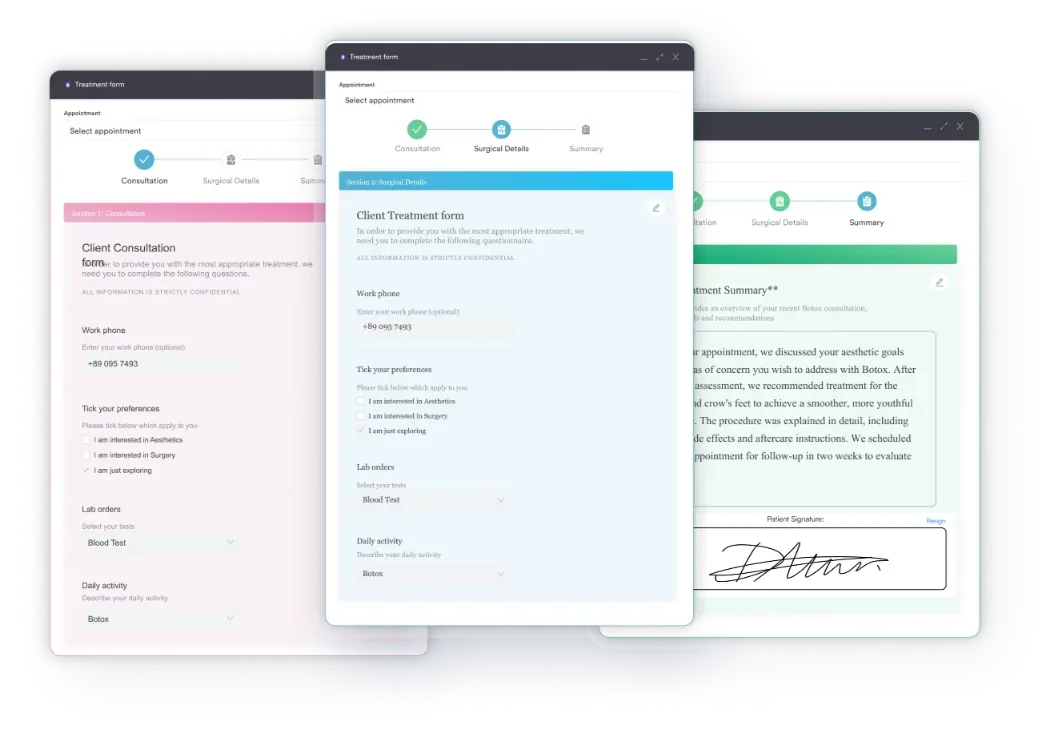
One documentation point that catches practices off guard: if the physician evaluates the patient before the dialysis session begins rather than during it, the evaluation may not qualify under 90935’s bundled E/M. Document that the evaluation occurred in conjunction with the dialysis procedure itself.
According to Noridian Medicare (Jurisdiction F), renal dialysis procedures including CPT Code 90935 incorporate the evaluation and management services related to the dialysis procedure and the patient’s renal failure. That bundling rule eliminates one of the most common billing errors in nephrology: appending a same-day E/M code.
There is one exception worth understanding. If the physician performs an E/M service that is clearly separate and distinct from the dialysis-related evaluation, such as managing an acute exacerbation of a completely unrelated condition (an acute MI presentation, for example), that separately identifiable service may be billed with modifier 25. However, this is not a blanket permission to append an E/M to every dialysis encounter. The separate problem must be documented thoroughly, and many Medicare Administrative Contractors apply scrutiny to these claims. Practices billing HIPAA-compliant medical records for nephrology services should maintain modifier 25 documentation standards that would withstand pre-payment review. An authorization request approved for one code does not cover a different code billed on the day. The 1500 claim form and its electronic equivalent ask for the same data in a different layout.
WPS Government Health Administrators (GHA) has published guidance confirming that Medicare treats 90935 and 90937 as global surgery procedures, meaning the global surgery package rules apply. This affects:
Practices using claims management software can flag modifier 25 combinations before submission, preventing the denial cycle that costs nephrology groups significant revenue each quarter.
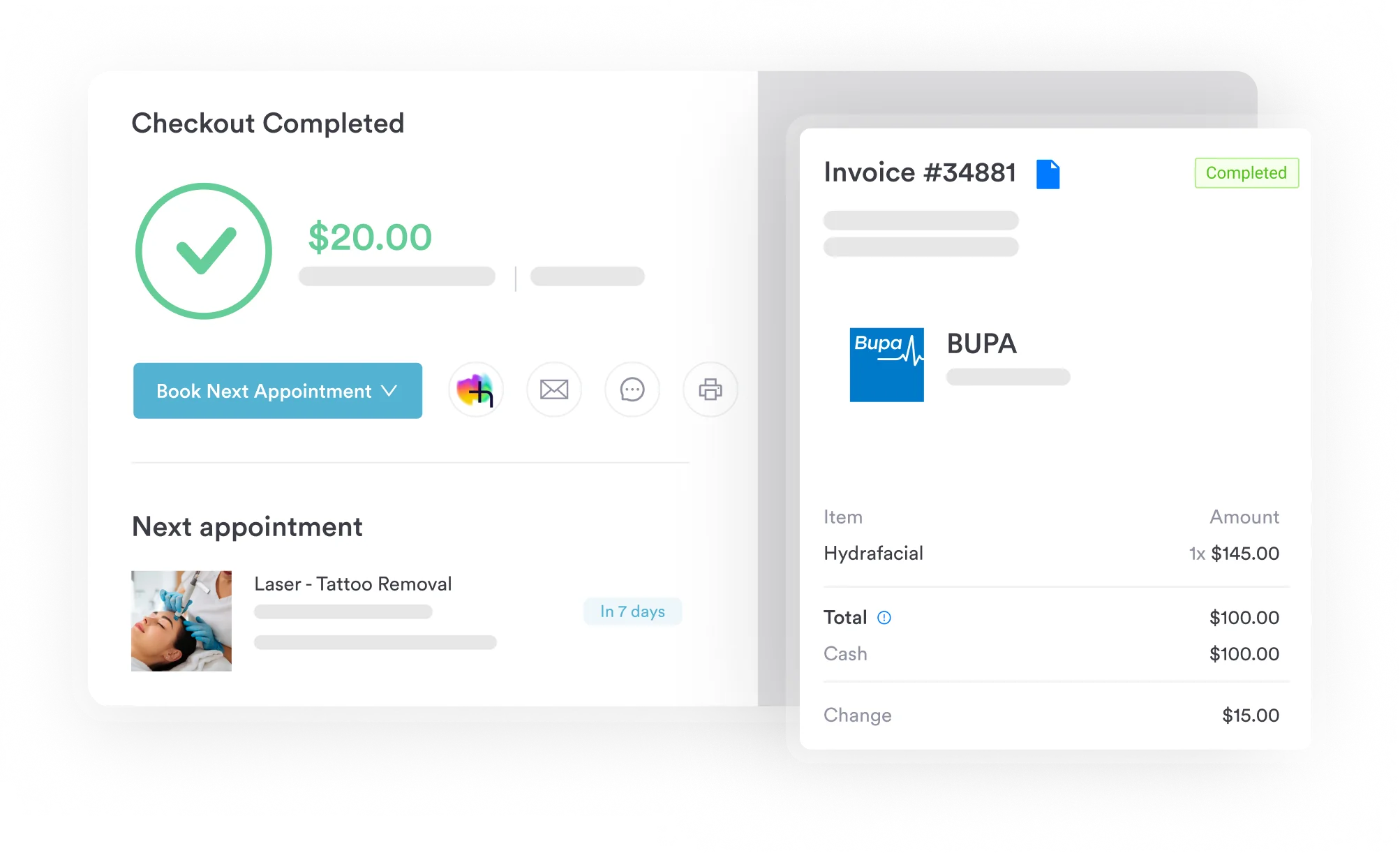

Pabau’s claims management tools help nephrology practices submit accurate hemodialysis claims, track denial reasons, and maintain audit-ready documentation across every patient encounter.

The difference between CPT Code 90935 and CPT 90937 comes down to how many evaluations occur during a single hemodialysis session. Get this wrong and you either underbill (using 90935 when 90937 applies) or trigger a medical necessity review (using 90937 when the documentation only supports one evaluation).
Note that 90937 carries a lower wRVU than 90935 in 2026 estimates from sources such as the FastRVU lookup tool, reflecting CMS valuation methodology rather than clinical complexity. Always verify current wRVU figures against the official CMS Physician Fee Schedule before finalizing reimbursement projections, as these values are updated annually.
For nephrology coding teams, the practical rule is simple: if a clinician documents only one assessment note during the session, use 90935. If the documentation includes a mid-session reassessment prompted by a clinical change (hypotension, access complications, cardiac event), use 90937. A well-structured CPT billing workflow should catch this distinction before claims reach the payer.
The Renal Fellow Network notes that if a physician sees a patient in the morning and the patient then requires emergency dialysis, the physician can still bill the dialysis code. Document the connection between the morning assessment and the subsequent dialysis decision to support medical necessity.
Nephrology practices bill across a wider dialysis code family depending on modality, setting, and ESRD status. Knowing where CPT Code 90935 fits within that family prevents upcoding and helps identify the right code for less common scenarios. Review the full list on the AAPC Codify CPT code lookup for complete descriptors.
Peritoneal dialysis and hemofiltration use 90945 and 90947, not 90935 and 90937. Billing 90935 for a peritoneal dialysis session is a code-definition error that payers catch during automated editing and will result in denial. The structure of specialty CPT code families follows consistent patterns across clinical categories, and dialysis is no exception.
Access problems found during dialysis are coded outside this family. They show up as elevated venous pressures, decreased flow rates, or an inability to cannulate. Medicare’s LCD L34062 names those signs as coverage criteria for dialysis circuit angioplasty, reported as 36902.
Medicare reimbursement for CPT Code 90935 is calculated through the Resource-Based Relative Value Scale (RBRVS), using the code’s assigned work RVU, practice expense RVU, and malpractice RVU, multiplied by the annual CMS conversion factor and adjusted for geographic locality via the Geographic Practice Cost Index (GPCI).
Published sources estimate the 2026 work RVU for CPT 90935 at 2.00. A historical reference point: a 2020 Healio report noted the median national Medicare payment for 90935 was approximately $67.74 for calendar year 2021. Current rates will differ. Use the CMS Physician Fee Schedule lookup tool to retrieve the exact reimbursement amount for your Medicare Administrative Contractor (MAC) jurisdiction and locality before building revenue projections.
Four regional MACs process the majority of nephrology claims in the US:
Each MAC may issue local coverage determinations (LCDs) or billing articles that go beyond CMS national policy. Checking your specific MAC’s guidance before claim submission is standard nephrology billing practice. The practice management team at established nephrology groups typically maintains a MAC-specific billing reference library for exactly this reason.
Modifier use with CPT Code 90935 is narrow by design. The global surgery package for hemodialysis codes limits the scenarios where modifiers are appropriate.
Qualified non-physician practitioners (NPPs) who provide the dialysis evaluation may bill under their own NPI or incident-to their supervising physician, depending on the setting and the payer’s incident-to policies. For other specialty CPT billing scenarios, NPP billing rules follow the same supervision framework.
Claim denials for CPT Code 90935 cluster around a handful of preventable errors. Practices that audit their denial patterns quarterly can reduce rejection rates significantly within two billing cycles.
A structured clinical documentation workflow that captures dialysis session parameters at point of care, rather than reconstructed later, dramatically reduces these documentation gaps. The same documentation discipline applied in other specialty coding scenarios applies directly to hemodialysis billing.
Nephrology practices billing CPT Code 90935 face a tighter documentation burden than most specialties: session parameters, single evaluation notes, ESRD vs non-ESRD determination, and modifier decisions all need to be correct before a clean claim goes out. Errors at any of these points create denials that consume staff time and delay cash flow.
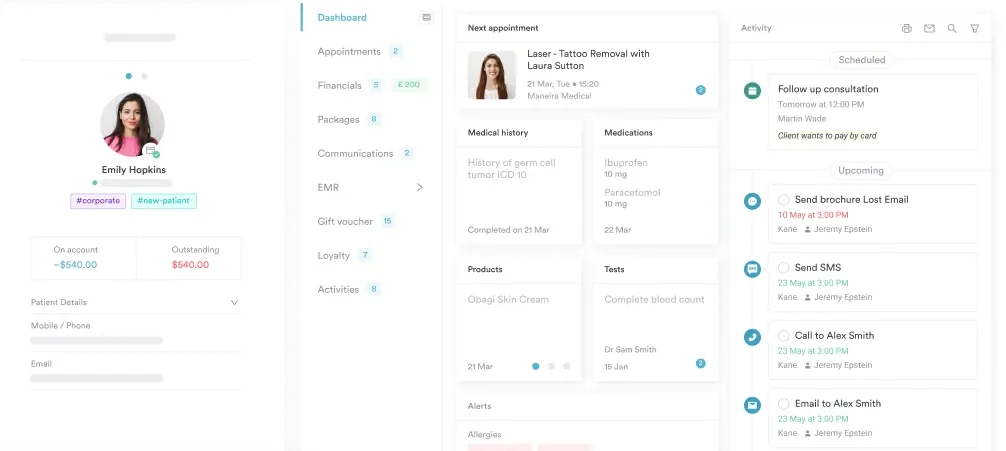
Pabau’s claims management software helps practices build pre-submission checks into the billing workflow, flagging common dialysis coding conflicts (such as same-day E/M without modifier 25) before the claim reaches the payer. The platform’s digital forms allow nephrology teams to capture structured dialysis session notes, access type, session parameters, and physician evaluation records in a format that supports both clinical care and audit-ready documentation.
For practices managing inpatient consultations alongside outpatient dialysis panels. This matters most during MAC audits, when the ability to produce a complete and coherent clinical record quickly determines how quickly the review resolves. Teams that rely on structured coding workflows across their specialty billing consistently outperform those working from paper or disconnected systems in audit response times. The same principle applies to complex multi-code billing scenarios where documentation chains must hold up under scrutiny.
CPT Code 90935 is a straightforward code with several layers of nuance that consistently catch nephrology practices off guard: E/M bundling, the ESRD vs non-ESRD distinction, global surgery rules, and MAC-specific policies all converge on a single claim. Getting each layer right requires documentation that is structured at the point of care, not reconstructed at billing.
Pabau’s claims management and digital documentation tools give nephrology teams the pre-submission validation and structured note capture they need to keep 90935 claims clean. To see how Pabau handles hemodialysis billing workflows, book a demo with our team.

Billing fundus photography in eye care? Fundus photography billing guide covers CPT code 92250, including bilateral billing rules and NCCI edit conflicts with OCT codes.
Fitting and billing contact lenses? Contact lens fitting billing guide covers CPT code 92310 for corneal contact lens fitting and the supervision it requires.
Billing an unlisted ophthalmological service? Unlisted ophthalmological service billing guide explains when to use CPT code 92499 and how payers review these claims individually.
CPT Code 90935 reports a hemodialysis procedure with a single physician or QHP evaluation. It applies to inpatient HD for any patient and outpatient HD for non-ESRD patients. ESRD patients in outpatient dialysis facilities are billed under monthly capitation codes.
90935 covers hemodialysis with one physician evaluation; 90937 covers hemodialysis requiring repeated evaluations or revision of the dialysis prescription. Use 90937 when the patient’s condition changes mid-session and requires an additional assessment.
Yes. CPT 90935 bundles E/M services related to the dialysis procedure and renal failure. A separate E/M code on the same date requires modifier 25 and must address a completely unrelated medical problem, documented thoroughly.
Yes, for non-ESRD patients with acute kidney injury or other non-ESRD indications. For ESRD patients at a certified outpatient facility, the monthly capitation model applies and 90935 will be denied.
Rates vary by locality and update annually. A historical reference: the median national Medicare payment was approximately $67.74 for 2021. Verify current rates using the CMS Physician Fee Schedule lookup tool for your MAC jurisdiction.
Medicare treats 90935 as a global surgery procedure, bundling pre-procedure evaluations, intraoperative services, and related post-procedure care. Same-day E/M services related to the dialysis or renal failure cannot be separately billed without meeting modifier 25 criteria.



