



CCSD code G5100: Bypass of duodenum billing guide
CCSD code G5100 bills a bypass that leaves the duodenum in place CCSD code G5100...

Last Updated: Oct 16, 2026

CPT code 90868 describes therapeutic repetitive transcranial magnetic stimulation (TMS) treatment; subsequent delivery and management, per session – reported for every follow-up TMS session after the initial 90867 intake.
ICD-10 codes F32.1, F32.2, F33.1, and F33.2 (major depressive disorder, moderate to severe, without psychosis) are the primary medical necessity codes accepted by CMS and most commercial payers.
Prior authorization requirements vary significantly by payer: Highmark requires authorization for 90868 effective May 2026, while New Mexico Medicaid does not require prior authorization for TMS services.
Pabau’s claims management software and AI-assisted clinical documentation tools help psychiatry and mental health practices streamline TMS billing workflows and reduce claim errors across the 90867-90869 code family.
CPT code 90868 is the billing code for each subsequent transcranial magnetic stimulation (TMS) treatment session – the delivery and management of a follow-up session after the initial 90867 intake. It is reported once per session across a treatment course that typically runs 20 to 36 sessions. The mental health EMR you use to document and submit those sessions determines how consistently each claim meets payer criteria.
This guide covers CPT code 90868 in full: What it describes, how it fits within the 90867-90869 family of TMS CPT codes, which ICD-10 codes establish medical necessity, what documentation each session requires, and how payer policies differ for Medicare, Medicaid, and commercial insurers.
CPT code 90868 is the standard billing code for each subsequent TMS treatment session after the initial setup. The official AMA descriptor, as maintained by the American Medical Association, reads: “Therapeutic repetitive transcranial magnetic stimulation (TMS) treatment; subsequent delivery and management, per session.”
The “per session” designation is critical. A standard MDD treatment course typically involves 20 to 36 sessions over four to six weeks, and 90868 is reported once for each of those sessions. Providers must not bill a single 90868 for multiple sessions delivered on the same day, even if the patient receives two separate stimulation protocols.
CPT code 99183 follows the same per-session rule. It bills one unit for physician supervision of a hyperbaric oxygen session, however long that session runs.
TMS is an FDA-cleared non-invasive neuromodulation therapy. A focused magnetic field, delivered through a coil positioned against the scalp, stimulates neurons in the left dorsolateral prefrontal cortex – the region most consistently implicated in treatment-resistant depression. The therapy requires no anesthesia and is delivered in an outpatient or office setting.
CPT code 90868 makes sense only in context of the full family of TMS CPT codes covering a treatment series. Each code represents a distinct phase of the series.
| CPT Code | Description | When to use |
|---|---|---|
| 90867 | Initial TMS treatment, including cortical mapping, motor threshold determination, delivery, and management | First session of a TMS treatment series |
| 90868 | Subsequent TMS treatment; delivery and management, per session | Every follow-up session after 90867 |
| 90869 | Subsequent motor threshold re-determination with delivery and management | When motor threshold must be recalculated (typically one or two times per series) |
A practical note on specialty behavioral health CPT codes: 90868 cannot be billed for a session that also involves motor threshold re-determination. On those specific sessions, you must report 90869 instead. Attempting to bill 90868 for a re-determination session is one of the most common coding errors in TMS practices.
Per payer policy guidance, subsequent TMS codes (90868 or 90869) should not be billed without a prior initial session documented under 90867 in the treatment series. If a patient transfers mid-series from another provider, document the transfer clearly and retain records of the originating 90867 session.
According to CMS Medicare Coverage Database Article A57072, the following ICD-10-CM codes support medical necessity for CPT codes 90867, 90868, and 90869. Documentation of the depression screening that established the diagnosis – for example. Submitting 90868 with an unsupported diagnosis code is the primary cause of preventable denials.
| ICD-10 Code | Description | Notes |
|---|---|---|
| F32.1 | Major depressive episode, moderate | Single episode; most commonly reported |
| F32.2 | Major depressive episode, severe without psychotic features | Single episode; treatment-resistant cases |
| F33.1 | Major depressive disorder, recurrent, moderate | Recurrent pattern; requires documentation of prior episodes |
| F33.2 | Major depressive disorder, recurrent, severe without psychotic features | Most common for treatment-resistant depression classification |
Anxiety-spectrum codes (F40.x, F41.x) do not support medical necessity for 90868 under most LCD policies. Patients with comorbid anxiety and MDD should be coded to the primary condition driving the TMS treatment – typically one of the moderate-to-severe depression ICD-10 codes listed above. Related codes such as F32.9 (major depressive disorder, single episode, unspecified) do not meet the specificity 90868 requires, so confirm the accepted diagnosis against the LCD for your MAC jurisdiction.
OCD as a TMS indication requires separate consideration. The FDA cleared deep TMS for OCD, but payer coverage of 90868 under an OCD primary diagnosis (F42.x) is inconsistent. Verify with each individual payer before submitting; some commercial plans explicitly exclude OCD as a covered indication for 90868.
Before submitting 90868 claims, run a crosswalk check between your ICD-10 diagnosis codes and your payer’s specific LCD. CMS A57072 governs Medicare, but commercial payers often have their own medical necessity criteria. The AAPC CPT-to-ICD-10 crosswalk tool can help identify which diagnosis codes are accepted for 90868 by specific payer types.
A GP practice platform keeps these high-volume services charted, coded, and billed from one screen.
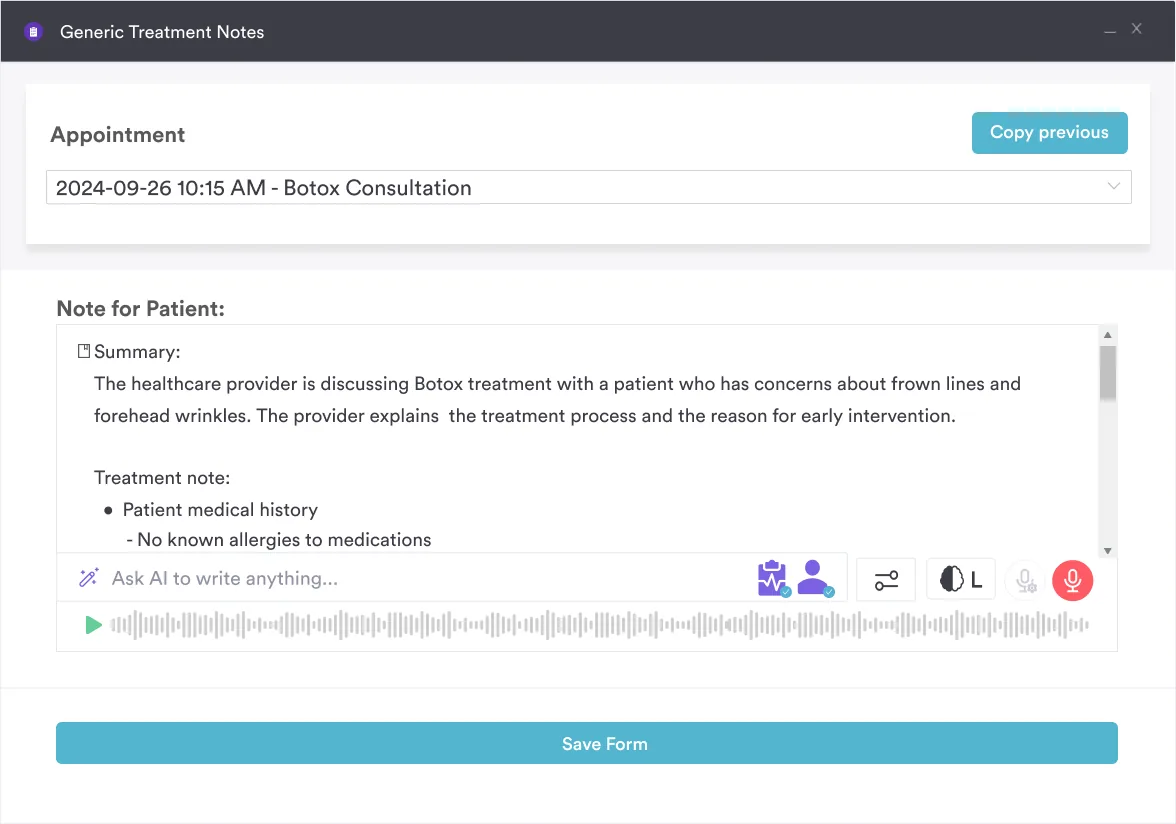
Each subsequent TMS session billed under CPT code 90868 requires a session-specific treatment note. A blanket note covering multiple sessions, or copying and pasting the same note without modification, is a documented audit risk. Payers expect the record to reflect what actually happened during that session.
The note should include the following elements for each 90868 session:
Practices using a psychiatric evaluation template as a starting point for TMS session notes should customize the template to capture the stimulation parameters listed above. A structured SOAP note for mental health works well for the per-session record. Generic psychiatric progress notes are insufficient for TMS billing.
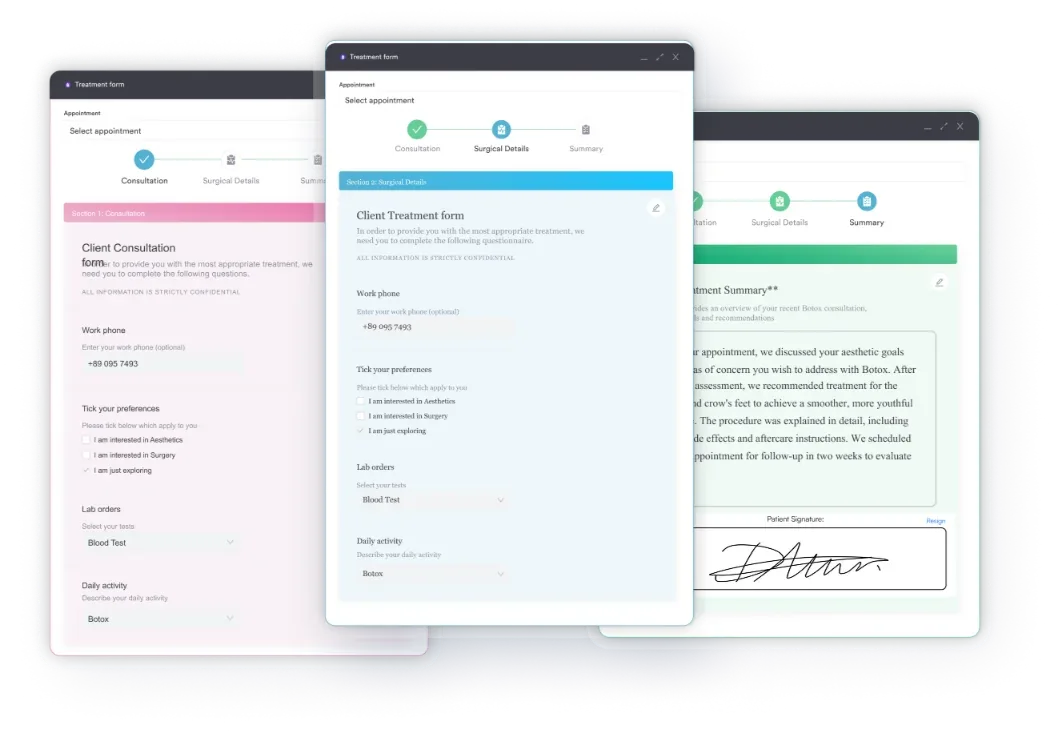
For practices dealing with the documentation burden across 20-plus sessions per patient.
Medicare reimbursement rates for CPT code 90868 are set annually through the CMS Physician Fee Schedule. Rates vary by geographic locality and are adjusted by the geographic practice cost index (GPCI) for each MAC region.
To find the current national average and locality-specific rates for 90868, use the CMS Physician Fee Schedule lookup tool, filtering by CPT code 90868 and your practice’s MAC region. The same CMS data files publish the work RVU values for 90868, so you can confirm both the fee and the RVU components from a single source.
Commercial payer rates for 90868 typically negotiate above Medicare rates, though the spread varies considerably by region and plan. Some larger commercial payers base reimbursement on a percentage of the Medicare fee schedule (often 110-130%), while others use contracted rates established at credentialing.
Place of Service (POS) code matters for reimbursement. Most TMS services are delivered in an outpatient office (POS 11) or independent clinic (POS 49) setting. Hospital outpatient department settings carry different facility fee structures and should be billed under the appropriate outpatient facility codes rather than the professional fee schedule rate.

Pabau’s claims management tools help psychiatry and mental health practices track CPT code 90868 sessions, reduce denials, and submit cleaner claims across Medicare, Medicaid, and commercial payers.

Coverage for CPT code 90868 is established but not uniform. Medicare, Medicaid, and commercial payers each maintain their own policies, and prior authorization requirements differ widely.
Medicare’s TMS guidelines cover 90868 for MDD under the applicable Local Coverage Determination (LCD), with CMS Article A57072 governing billing and coding. Coverage requires documentation of treatment-resistant depression – specifically, an inadequate response to one or more antidepressant medications at adequate doses and duration during the current episode.
State Medicaid coverage for TMS is expanding. California’s Medi-Cal program added CPT codes 90867, 90868, and 90869 as covered benefits effective July 2024, per a DHCS bulletin. New York State Medicaid extended coverage for the same codes effective November 1, 2025, specifically for treatment-resistant MDD. New Mexico’s Medicaid program does not require prior authorization for TMS services under these codes, per draft HCA guidance from February 2024.
Coverage in other states varies. Verify with your state Medicaid agency or MAC before billing 90868 to Medicaid in states not listed above. For practices that treat conditions outside MDD, note that TMS coverage for non-MDD indications is even more variable at the state Medicaid level; choosing the right platform matters.
UnitedHealthcare maintains a published medical policy for TMS that covers 90868 for MDD with treatment-resistant documentation. Highmark includes CPT code 90868 in its list of procedures requiring prior authorization, effective May 1, 2026, under the Highmark Behavioral Health and TMS category. Practices billing Highmark for TMS should confirm authorization is in place before initiating subsequent sessions.
The psychiatry EMR software your practice uses should allow you to flag authorization requirements by payer at the patient level, so billing staff can track authorization status across multi-week TMS treatment series without relying on manual spreadsheets. For a wider view of how these systems fit a behavioral health workflow.
Build a payer-specific TMS billing checklist for your top five payers. For each payer, document: (1) whether prior authorization is required for 90868, (2) the maximum number of sessions covered per treatment series, (3) the accepted ICD-10 codes, and (4) any device-specific coverage restrictions (some payers differentiate between standard coil and deep TMS systems). Review and update this checklist at least once per quarter, as payer policies change frequently.
TMS billing denial patterns are predictable once you know what payers flag. The most frequently cited issues for 90868 claims include the following.
Using claims management software with built-in claim scrubbing helps catch these errors before submission. A system that flags payer-specific rules – including NCCI edits for 90868 – reduces the volume of remits your billing team needs to work after the fact.
For ADHD screening CPT code documentation practices that also provide TMS, note that ADHD is not a covered TMS indication under most payer policies, and billing 90868 alongside ADHD-focused encounter codes may trigger additional scrutiny.
TMS practices often need to understand which adjacent codes interact with 90868 in billing and NCCI edit contexts.
| Code | Description | Relationship to 90868 |
|---|---|---|
| 90867 | Initial TMS with cortical mapping and motor threshold | Must precede 90868; billed once per series |
| 90869 | Subsequent motor threshold re-determination with delivery | Replaces 90868 on re-determination sessions |
| 90870 | Electroconvulsive therapy (ECT), per session | Separate neuromodulation code; not bundled with TMS codes |
| 99213-99215 | E/M office visit codes | May be billed same day with modifier 25 if documented separately |
A procedure-to-diagnosis crosswalk that includes LCD and LCA policy data can help verify which diagnosis codes are accepted for 90868 by your MAC. This is particularly useful when treating patients with comorbidities who may qualify under multiple potential ICD-10 codes.
Practices that also treat patients with esketamine for treatment-resistant depression bill a separate code family – see our HCPCS code G2083 billing guide for the monitoring and documentation requirements specific to that therapy.
For a coding reference specific to CPT code definitions and modifiers, the AAPC Codify CPT lookup provides the current AMA descriptor alongside modifier guidance and crosswalk data for the 90867-90869 family.
Getting CPT code 90868 right across a full TMS treatment series requires consistent session-level documentation, accurate ICD-10 diagnosis coding, and payer-specific authorization tracking – none of which can be managed effectively with a manual process at scale.
Pabau’s claims management tools and automated workflows help psychiatry and mental health practices build the documentation and billing infrastructure TMS programs need. See how Pabau handles subsequent session billing by booking a demo.

Billing dialysis sessions too? Dialysis procedure billing guide covers CPT code 90945 for dialysis other than hemodialysis, bundling the evaluation into one payment.
Coding GI motility studies too? Esophageal motility study billing guide walks through CPT Code 91010 documentation, ICD-10 pairing, and modifier rules for esophageal manometry claims.
Billing liver elastography scans too? Liver elastography billing guide covers CPT Code 91200 denials from modifier errors, missing ICD-10 links, and medical necessity gaps.
CPT code 90868 covers therapeutic repetitive transcranial magnetic stimulation (TMS) treatment; subsequent delivery and management, per session. It is reported once for each standard follow-up TMS session after the initial intake session billed under 90867.
CPT 90867 covers the first session of a TMS series and includes cortical mapping, motor threshold determination, delivery, and management. CPT 90868 covers all subsequent standard sessions, which include only delivery and management – no motor threshold work is included in 90868.
Yes, Medicare covers CPT code 90868 for major depressive disorder under applicable Local Coverage Determinations, with CMS Article A57072 governing billing and coding. Coverage requires documented treatment-resistant depression, including evidence of inadequate response to antidepressant medication at adequate doses during the current episode.
Prior authorization requirements vary by payer. Highmark requires authorization for 90868 effective May 2026. New Mexico Medicaid does not require prior authorization for TMS services. Medicare authorization requirements are determined at the MAC level. Always verify authorization requirements with each individual payer before initiating a TMS treatment series.
CPT 90868 is billed once per subsequent TMS session, with most standard treatment courses involving 20 to 36 sessions over four to six weeks. Payer policies often specify a maximum number of sessions per treatment series; exceeding that number without documented medical necessity and re-authorization typically results in denial.
Each 90868 session requires a session-specific note documenting the date, treatment duration, coil positioning, stimulation parameters (frequency, intensity, pulse count), patient tolerance and feedback, reference to the current motor threshold value, and provider attestation. Identical notes copied across multiple sessions are an audit risk and may result in claim denial or recoupment.
Reimbursement varies by payer and location. Medicare pays subsequent TMS sessions through the Physician Fee Schedule, adjusted by the geographic practice cost index for each MAC region – use the CMS fee schedule lookup tool to check your locality’s rate. Commercial payers typically pay above Medicare, often 110-130% of the fee schedule or a separately contracted rate.
Only if the additional service is significant and separately identifiable from the TMS session itself, documented in the note, and billed with modifier 25 on the E/M or psychotherapy code. Payers apply NCCI edits to this combination, so confirm the specific payer’s bundling rules before submitting both codes for the same date of service. Two practices can bill the same encounter at a different visit level, and the note settles which was right.
A physician – typically a psychiatrist or neurologist – or a qualified non-physician practitioner such as a nurse practitioner or physician assistant can bill for the session, depending on state supervision and scope-of-practice rules. The treating or supervising provider must sign off on each session note regardless of who administers the stimulation.



