CPT Code 31653: EBUS With 3+ Mediastinal Stations
CPT code 31653: Official descriptor and clinical scope CPT code 31653 is the pro...

Last Updated: Oct 20, 2026
73720 is the CPT code for MRI of the lower extremity other than a joint, without contrast and then with contrast in one session. It covers the thigh, lower leg, or foot when a non-contrast series is followed by a post-contrast series and further sequences.
The code sits in the 73718-73723 lower extremity MRI family. Hip, knee, and ankle joint studies use 73721-73723, and a non-joint study with only one series uses 73718 or 73719.
Let Pabau's smart automation suggest the right codes, reduce claim denials, and keep your practice compliant—effortlessly.
Automate repetitive tasks and focus on what matters most—your patients.
Reduce coding errors and ensure compliance with the latest regulations.
Clean claims, fewer denials, and faster reimbursements.
Powerful insights and reporting to help your practice thrive.
HIPAA compliant SOC 2 certified GDPR-compliant Trusted by 4,000+ clinics worldwide

CPT code 73720 covers MRI of the lower extremity other than a joint, with a non-contrast series followed by a contrast series.
Anatomy separates 73720 from 73723, and the contrast protocol separates it from 73718 and 73719.
Never bill 73718 and 73719 together for the same region and session, because 73720 already covers both series.
Laterality modifiers LT and RT, plus 26 or TC for split billing, are the modifiers payers most often expect on 73720.
Pabau’s claims management software checks 73720 claims against built-in CPT and ICD-10 catalogs before they go to Claim.MD.
The American Medical Association (AMA) defines CPT code 73720 with this official descriptor:
Magnetic resonance (eg, proton) imaging, lower extremity other than joint; without contrast material(s), followed by contrast material(s) and further sequences.
Three elements decide correct use. The modality is MRI, and the target is lower-extremity anatomy other than a joint. The session must also include both a non-contrast and a post-contrast series.
“Other than joint” covers the thigh, the lower leg, and the foot when the study targets bone, muscle, or soft tissue. MRI focused on the hip, knee, or ankle joint moves to the joint codes, 73721 through 73723. Payers differ on foot studies, so check local policy when the order names the midfoot or forefoot.
The radiologist first acquires a full set of sequences with no contrast. A gadolinium-based agent is then injected intravenously, and further sequences follow in the same session.
Both series must be performed to report 73720. A non-contrast study alone is 73718, and a post-contrast study alone is 73719. If the contrast portion is cancelled, report 73718 for the series that was completed.
The lower extremity MRI series runs from 73718 to 73723. Two questions pick the code. Is the target a joint, and which contrast protocol was used?
The most frequent error on this code is a swap between 73720 and 73723. Both describe the same two-series protocol, so the anatomy in the order and the report decides between them.
Pabau’s sibling pages cover the joint codes in detail. See CPT code 73721 for a joint study without contrast and CPT code 73723 for a joint study without and with contrast.
Medical necessity must tie the order to a question about non-joint lower-extremity tissue that needs both series. The American College of Radiology (ACR) Appropriateness Criteria are the standard reference for ordering decisions. Common indications include:
A non-contrast study (73718) usually answers questions about stress fractures, muscle strains, and bone marrow edema. Payers expect the order to explain why contrast was needed. Orders that state only “leg pain” or “swelling” routinely draw medical necessity denials.
Two records support a 73720 claim: the ordering provider’s note and the radiologist’s report. Both must exist, and a strong report cannot rescue a thin order.
The report must identify the region imaged and confirm that pre-contrast and post-contrast sequences were both acquired. It should also name the contrast agent, dose, and route, and list the sequences used.
A structured impression that answers the ordering question closes the evidence chain. Pairing that report with the order in a superbill gives payers the full record on audit.
Modifier errors cause many preventable radiology denials. Five modifiers come up most often on 73720, and each carries payer-specific nuances.
Bilateral studies on the same date need two line items, one with LT and one with RT. Do not report two units on a single line. Some payers also require a separate prior authorization for each side.
Medicare pays 73720 under the Medicare Physician Fee Schedule (MPFS). Rates vary by locality, place of service, and whether the claim is global, professional only, or technical only.
Because it includes two full series, 73720 carries more relative value units (RVUs) than 73718 or 73719. Check current figures in the CMS Physician Fee Schedule lookup tool before you set fees, since rates update every January 1.
Two payment rules often affect these claims. The multiple procedure payment reduction lowers payment for additional advanced imaging studies in the same session. In the office setting, the gadolinium agent is usually billed separately with a HCPCS supply code.
Practice management software like Pabau connects to Claim.MD, a US clearinghouse, for eligibility checks and 837P claim submission. The clearinghouse submission workflow validates CPT and ICD-10 codes before claims reach the payer.
Run a fee schedule check against the CMS lookup tool at the start of each calendar year. MPFS rates change on January 1, and billing last year’s rates into the first quarter costs revenue on every imaging claim.
Prior authorization (PA) requirements for 73720 vary by payer and plan year. No single rule applies universally, but the broad pattern is:
For 73720, payers usually look for a suspected mass, infection, or tumor follow-up. An approval for 73718 does not usually cover 73720. Update the request if the radiologist decides to add contrast.
Pabau’s claims management software tracks PA status alongside the claim lifecycle. That lowers the risk of submitting a claim without an approved authorization number.
Pairing 73720 with a diagnosis that payers do not accept for contrast MRI is a top denial driver. The ICD-10 code must explain why both series were ordered, not just name a symptom. The table shows commonly accepted pairings.
Symptom-only codes such as pain or swelling, paired with 73720 without supporting notes, trigger medical necessity edits. Payers that apply local coverage policies to advanced imaging often deny these combinations on first submission.
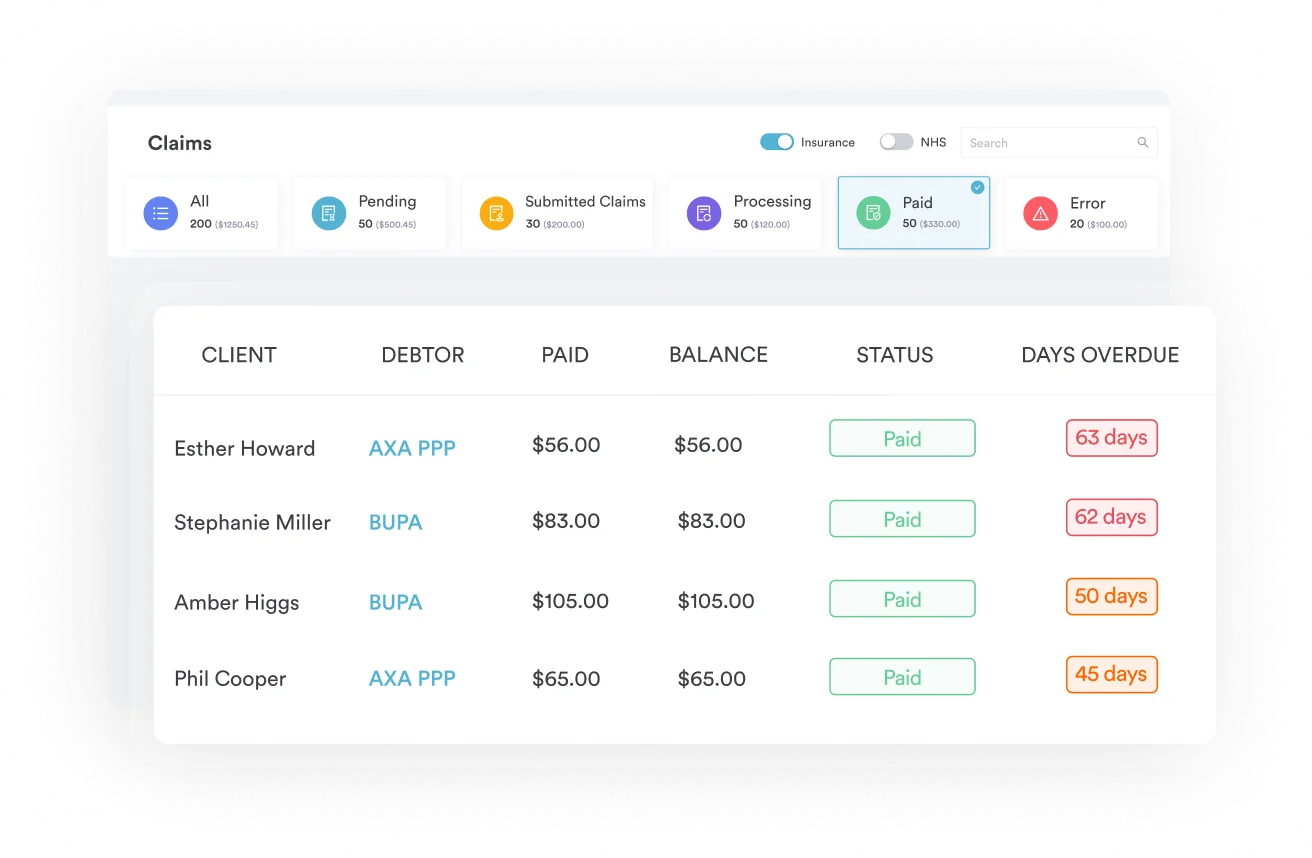
A structured denial management workflow treats each denial category differently rather than resubmitting the same claim unchanged. The table below maps common denial types to their root causes and fixes.
Automated payer edits catch most of these before a reviewer sees the claim. The denial codes in medical billing reference explains the CARC and RARC codes that appear on the remittance when 73720 is denied.
One 73720 study of one extremity in a session is one unit. Billing 73720 twice on the same date for the same extremity is an audit risk.
A joint and a non-joint region of the same leg are sometimes imaged separately, such as the knee and the thigh. Report the joint code and 73720 on separate lines, with modifier 59 or XS where an NCCI edit applies.
Flag same-day 73720 claims for a pre-submission review. Claim scrubbers catch obvious unit errors, but bilateral and joint-plus-region cases need a check against the imaging schedule.
Most 73720 denials start before the claim is built. A study authorized as 73718 becomes 73720 at the scanner, or a knee study goes out under the non-joint code.
Pabau’s claims management software keeps the order, authorization number, and claim together in one patient record. Built-in CPT and ICD-10 catalogs check the code pairing before the claim goes to Claim.MD.
When the remittance comes back, Pabau matches it to the claim. Billers can see which 73720 lines were paid, reduced, or denied, and correct them faster.

Pabau checks 73720 claims against built-in CPT and ICD-10 catalogs, tracks prior authorizations, and reconciles remittances through Claim.MD. See how it reduces denials for imaging-heavy practices.

Accurate billing for 73720 comes down to two checks made before the claim is built. Confirm the study targeted non-joint anatomy, and confirm the report shows both series.
Get those right, and the rest is routine. Add a diagnosis that justifies contrast, a laterality modifier, and an authorization that matches the protocol performed.
Book a demo to see how Pabau keeps lower extremity MRI claims accurate from order to payment.

Need to understand how clearinghouse submission works for imaging codes? 837 file and electronic claim submission explains the EDI transaction format that carries 73720 claims to payers.
Dealing with ERA remittance after a 73720 denial? Electronic remittance advice guide covers how to read CARC and RARC denial codes on the 835 transaction.
Want to verify patient eligibility before scheduling? Insurance eligibility verification outlines the 270/271 transaction that confirms MRI coverage and PA requirements before the appointment.
CPT code 73720 is the AMA code for MRI of the lower extremity other than a joint, without contrast followed by contrast and further sequences. It covers the thigh, lower leg, or foot when both series are acquired in one session.
CPT 73720 is for non-joint lower-extremity anatomy, while 73723 is for any joint of the lower extremity. Both describe the same without-then-with contrast protocol, so the anatomy in the order and report decides the code.
All three cover MRI of the lower extremity other than a joint. CPT 73718 is without contrast, 73719 is with contrast, and 73720 covers both series in one session.
No. When both series are performed on the same region in one session, report a single line of 73720. Billing 73718 and 73719 together is unbundling and triggers NCCI edits.
Prior authorization for CPT 73720 depends on the payer and plan. Most commercial insurers and many Medicare Advantage plans require it for elective MRI. An approval for 73718 does not usually cover 73720, so confirm the authorized code matches the protocol.
Medicare pays CPT 73720 under the Physician Fee Schedule, with rates set by locality, place of service, and the component billed. It carries more RVUs than 73718 or 73719. Check current figures in the CMS lookup tool, since rates update each January 1.