CCSD code F5010: Parotid duct transposition billing guide
CCSD code F5010 covers parotid duct transposition, one side or both CCSD code F5...

Last Updated: Oct 9, 2026

CPT code 41800 describes drainage of an abscess, cyst, or hematoma of dentoalveolar structures – a surgical procedure code, not an evaluation and management code
Linked ICD-10-CM diagnoses include K12.2 (cellulitis and abscess of mouth), K04.6, and K04.7 – each must be documented in the clinical record before billing
Modifier 51 applies when 41800 is performed alongside another procedure in the same operative session – always check NCCI edits before appending modifiers
Pabau’s claims management software helps oral surgery practices track CPT 41800 claims, flag denials, and maintain audit-ready documentation in one place
CPT code 41800 is a surgical procedure code for the intraoral drainage of an abscess, cyst, or hematoma of the dentoalveolar structures – the tissue and bone surrounding the teeth. It reports incision and drainage of an acute or chronic collection in this region, most commonly a dental abscess.
This reference guide covers the CPT code 41800 descriptor, applicable ICD-10-CM diagnoses, modifier rules, reimbursement benchmarks, and documentation requirements for oral surgery billing teams.
CPT code 41800 is maintained by the American Medical Association (AMA) as part of the Current Procedural Terminology (CPT) code set. The official descriptor reads: Drainage of abscess, cyst, or hematoma; dentoalveolar structures.
CPT 41800 falls within the range 41800-41899, which covers surgical procedures on the dentoalveolar structures. This is a surgical procedure code. It describes a specific operative intervention – incision and drainage (I&D) of an acute or chronic collection within the tissue surrounding the teeth and alveolar bone.
Three distinct pathological conditions fall under this code:
What CPT 41800 does not cover: This code is not for sublingual gland removal (CPT 42450), not for drainage of a floor-of-mouth abscess (which may map to CPT 41000 or 41005 depending on the approach), and not for drainage of facial space infections with extraoral incisions. Verify the anatomical site and surgical approach before selecting 41800.
Payers require a supported ICD-10-CM diagnosis code on every claim for CPT 41800. The diagnosis must reflect the actual clinical condition documented in the chart – not simply the code that triggers payment. Using an unsupported diagnosis code to secure reimbursement constitutes improper billing.
The following ICD-10-CM codes represent the most commonly linked diagnoses for surgical procedure billing in this anatomical range. Verify each against current AAPC Codify crosswalk data before publishing to your superbill. What a superbill includes decides whether the patient insurer processes or rejects the reimbursement request.
When coding for CPT 41800, use the most specific ICD-10-CM code that reflects documented clinical findings. K04.6 and K04.7 are preferable over K12.2 when the abscess has a confirmed periapical origin, because specificity reduces the risk of a medical necessity denial. Apply ICD-10 sequencing principles when multiple active diagnoses apply: if an untreated odontogenic infection spreads beyond the dentoalveolar region.
Document the specific tooth number, the type of collection (abscess, cyst, or hematoma), the presence or absence of a draining sinus, and the surgical approach in your operative note. Payers cross-reference your ICD-10 code against this documentation during audits. A claim coded as K04.6 (abscess with sinus) needs chart language confirming a sinus tract was identified.
Modifier selection for CPT 41800 depends on whether additional procedures were performed in the same session, the bilateral nature of any drainage, and payer-specific requirements. Appending the wrong modifier – or omitting one when required – is a primary cause of claim denial and post-payment audit exposure.
The most commonly applicable modifiers are:
Always check current NCCI edit tables before billing CPT 41800 alongside CPT codes 10060 or 10061 (incision and drainage of skin abscess). These codes may be bundled depending on the documentation. The Centers for Medicare and Medicaid Services (CMS) maintains the NCCI edit tables and updates them quarterly.

Pabau’s claims management software helps oral surgery and dental practices track claim status, flag denials, and maintain audit-ready documentation – so billing teams spend less time chasing payments and more time on patient care.

In software built for functional medicine, digestive diagnoses sit next to the lab panels and protocols that inform them.
CPT 41800 is valued under the Resource-Based Relative Value Scale (RBRVS). Reimbursement varies by payer, geographic location, and whether the procedure is performed in a facility (hospital or ambulatory surgery center) or a non-facility (office) setting. The Medicare Physician Fee Schedule (MPFS) sets the national benchmark; commercial payers typically reimburse at a percentage of MPFS or at contracted rates.
Use the CMS Physician Fee Schedule lookup tool to retrieve the current year’s Medicare allowable amounts for CPT 41800 by geographic area. Enter the code, select your Medicare Administrative Contractor (MAC) locality, and confirm the non-facility and facility rates.
Key reimbursement considerations for CPT code 41800:
For practices tracking multiple procedure code reimbursements, reviewing procedure code fee schedules alongside your contracted payer rates helps identify underpayments systematically.
Clean claims for CPT 41800 require documentation that supports three things: the medical necessity of the drainage procedure, the specific anatomical site and surgical technique, and the provider’s credentials to perform the service.
A complete operative note for CPT 41800 should address all of the following:
Maintaining HIPAA-compliant record-keeping practices ensures your operative notes are protected and retrievable during payer audits.

Pre-authorization documentation: When prior authorization is required, gather radiographic images, the clinical note from the pre-operative visit, and the proposed ICD-10-CM diagnosis code before submitting the PA request. Payers may request evidence that conservative treatment (antibiotics) was attempted and failed before approving surgical drainage.
Denial rates for CPT 41800 are disproportionately high in practices that use the code infrequently. The four most common denial reasons and their corrections:
CPT 41800 vs. related codes: Choosing the wrong code in the dentoalveolar surgical range produces denials and potential compliance exposure.
The distinction between CPT 41800 and CPT 40800 is anatomical. CPT 40800 applies to abscess drainage in the vestibule (the mucous membrane-lined space between the cheek/lip and the alveolar ridge) rather than the dentoalveolar tissue itself. When the operative note documents an intraoral incision into the alveolar mucosa or periapical tissue overlying the tooth root, CPT 41800 is correct. When the incision targets vestibular mucosa without dentoalveolar involvement, CPT 40800 applies.
CPT 10060 and 10061 (incision and drainage of skin abscess) should never be used for intraoral dentoalveolar drainage. These codes are for cutaneous or subcutaneous abscesses of the skin. Using them for intraoral procedures misrepresents the anatomical site and may trigger a Medicare audit under LCD L33563, which governs skin and subcutaneous I&D procedures. Verify your medical necessity documentation matches the anatomical site coded on every claim.
Run a quarterly internal audit of CPT 41800 claims. Pull claims where 41800 was denied, identify whether the denial pattern is ICD-10 mismatch, modifier error, or POS issue, and correct the underlying superbill or template. Tracking denial root causes for this code helps billing teams recover revenue that would otherwise be written off.
Oral surgery practices billing CPT code 41800 alongside adjacent procedure codes face compounding documentation and claim management demands. Pabau’s claims management software is built for multi-code, multi-payer clinical environments where a single modifier error can ripple into multiple denied claims across a patient episode.
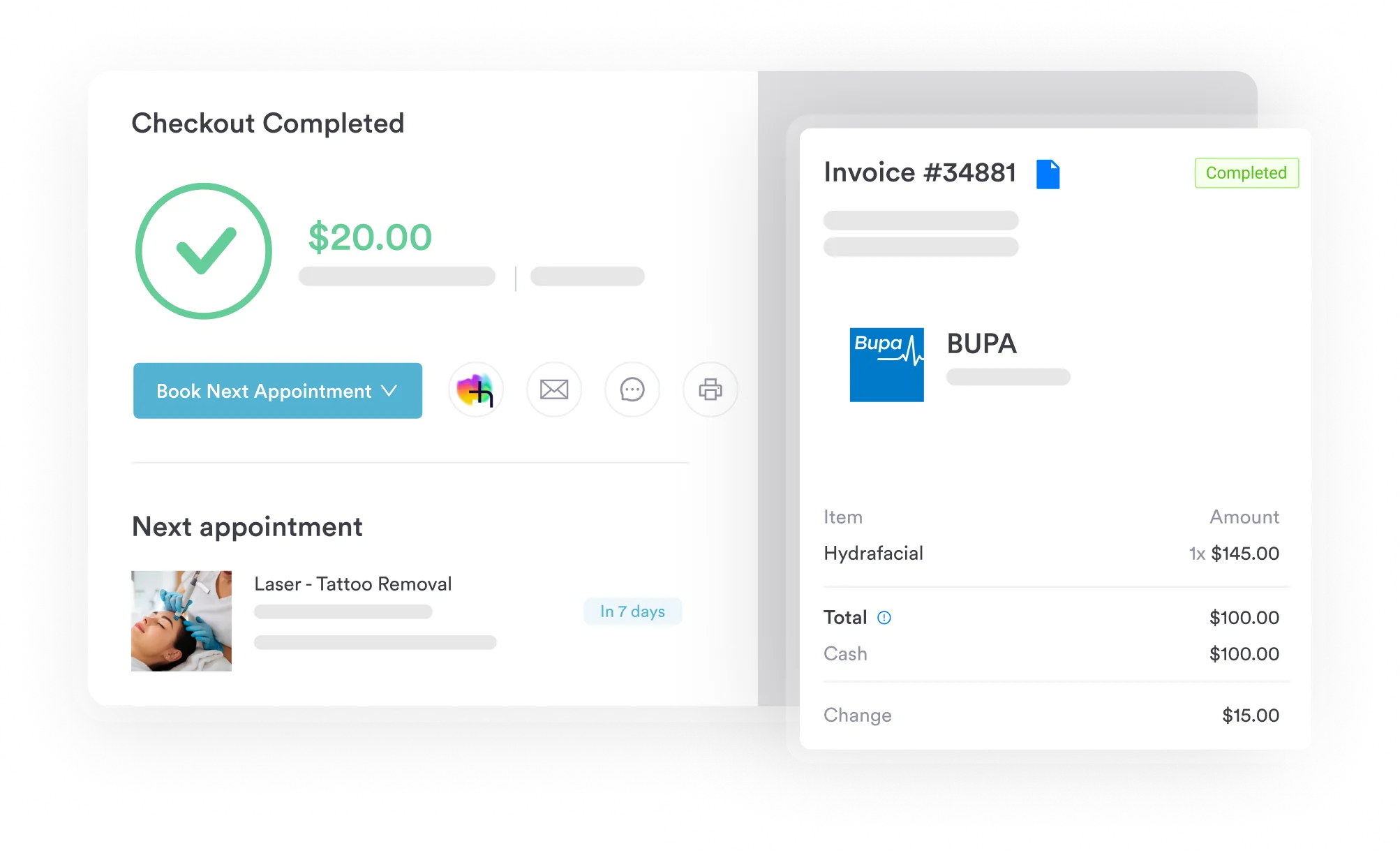
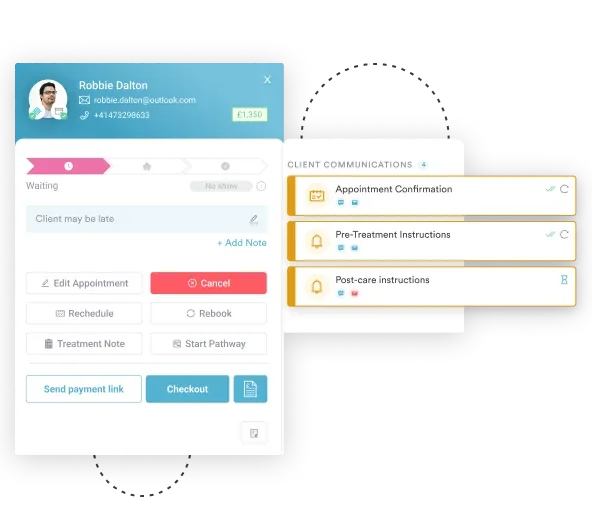
Practices using Pabau can build procedure-specific documentation templates that capture every required operative note element for CPT 41800 before the claim is generated. The platform’s automated billing workflows flag incomplete documentation before submission, reducing first-pass denial rates for surgical procedure codes. For practices managing oral and maxillofacial or plastic surgery workflows, Pabau centralizes patient records, operative notes, and claim tracking in one place.
CPT code 41800 is precise in scope: drainage of an abscess, cyst, or hematoma confined to the dentoalveolar structures via an intraoral approach. Getting the reimbursement right depends on three things – selecting the correct, most specific ICD-10-CM diagnosis, applying modifiers only when NCCI edits or payer rules require them, and documenting the operative note with enough anatomical and procedural detail to survive a medical necessity review.
Pabau helps oral surgery billing teams manage CPT 41800 claims from documentation to submission. Book a demo to see how Pabau reduces claim errors for surgical procedure codes.

Billing photodynamic therapy for skin lesions? CCSD code S0607 covers photodynamic therapy billing when four or more malignant skin lesions are treated.
Coding a deep tissue lesion removal? CCSD code S0653 covers billing for removing a benign lesion from muscle or deeper tissue, excluding lipoma.
Treating four or more skin lesions? CCSD code S0820 explains the billing code for curettage and cryotherapy when four or more lesions are treated.
CPT code 41800 covers the incision and drainage of an abscess, cyst, or hematoma located within the dentoalveolar structures – the tissue and bone surrounding the teeth. It applies to intraoral drainage procedures only and does not cover vestibular abscess drainage (CPT 40800) or cutaneous abscess drainage (CPT 10060).
Medicare reimbursement for CPT 41800 varies by geographic location and place of service. The non-facility (office) rate is higher than the facility rate because practice expense RVUs are included. Use the CMS Physician Fee Schedule lookup tool to retrieve current-year allowable amounts for your MAC locality. Commercial payer rates are contracted independently and typically differ from Medicare rates.
The most common modifiers for CPT 41800 are modifier 51 (multiple procedures, when 41800 is a secondary procedure in the same session), modifier 59 (distinct procedural service, when required to override an NCCI bundling edit), and modifier 25 appended to the same-day E/M code when a separately identifiable evaluation is documented. Modifier 76 applies for repeat drainage of the same site within the global period.
CPT 41800 describes drainage of an abscess, cyst, or hematoma within the dentoalveolar structures (periapical tissue, alveolar bone, periodontal structures). CPT 40800 describes drainage of an abscess in the vestibule of the mouth (the mucosal space between the lip or cheek and the alveolar ridge). The distinction is anatomical – document the exact incision location to select the correct code.
CPT 41800 may be covered by Medicare when medically necessary and performed by an enrolled physician or oral surgeon, but Medicare’s dental exclusion creates coverage uncertainty. Coverage depends on whether the condition is medical (not dental) in nature and on your local MAC’s LCD policies. Always verify coverage with your MAC before assuming Medicare will pay for dentoalveolar drainage procedures.