ICD-10 Code S42.444P: Medial epicondyle fracture, right humerus
ICD-10 Code S42.444P: full descriptor and code validity ICD-10 Code S42.444P car...

Last Updated: Oct 13, 2026
Billable Code Specific Code
G07 is the billable ICD-10-CM code for intracranial and intraspinal abscess and granuloma in diseases classified elsewhere.
Let Pabau's smart automation suggest the right codes, reduce claim denials, and keep your practice compliant—effortlessly.
Automate repetitive tasks and focus on what matters most—your patients.
Reduce coding errors and ensure compliance with the latest regulations.
Clean claims, fewer denials, and faster reimbursements.
Powerful insights and reporting to help your practice thrive.
HIPAA compliant SOC 2 certified GDPR-compliant Trusted by 4,000+ clinics worldwide

ICD-10 Code G07 describes intracranial and intraspinal abscess and granuloma occurring as a manifestation of a disease classified elsewhere in ICD-10-CM.
G07 carries a mandatory Code First instruction: the underlying etiology (such as schistosomiasis, tuberculosis, or neurosyphilis) must always be sequenced before G07.
G07 is unacceptable as a primary diagnosis on claims; submitting it without the etiology code first will trigger a claim denial.
Pabau’s claims management software helps coders sequence etiology-manifestation pairs correctly and flag G07 claims before submission.
ICD-10 Code G07 has the official description: Intracranial and intraspinal abscess and granuloma in diseases classified elsewhere. It sits within ICD-10-CM Chapter 6, Diseases of the Nervous System (G00-G99), under the block G00-G09, Inflammatory diseases of the central nervous system, as documented in the CMS ICD-10-CM code files and guidelines.
The code captures a specific clinical scenario: an abscess or granuloma located within the cranial cavity or spinal canal that exists because of an underlying systemic or infectious disease that is itself classified in a different part of ICD-10-CM. The nervous system manifestation does not get its own standalone code; it is documented as a secondary condition tied to the primary disease.
G07 sits directly between G06 and G08 in the tabular list. Understanding its neighbors clarifies when G07 applies versus when a different code is correct.
| Code | Description | Key distinction |
|---|---|---|
| G06 | Intracranial and intraspinal abscess and granuloma | Primary abscess/granuloma with no mandatory underlying disease code |
| G06.0 | Intracranial abscess and granuloma | Specific intracranial site under G06 |
| G06.1 | Intraspinal abscess and granuloma | Specific intraspinal site under G06 |
| G07 | Intracranial and intraspinal abscess and granuloma in diseases classified elsewhere | Manifestation code: requires Code First from underlying disease |
| G08 | Intracranial and intraspinal phlebitis and thrombophlebitis | Vascular inflammation, not abscess/granuloma |
| G09 | Sequelae of inflammatory diseases of central nervous system | Late effects after the acute inflammation has resolved |
G07 is a billable ICD-10-CM diagnosis code for fiscal year 2026. Being billable means it can appear on a claim as a valid coded diagnosis. Being billable does not mean it can stand alone as the primary (first-listed) diagnosis.
G07 is designated as unacceptable as a primary diagnosis. Payers, including Medicare and most commercial insurers, will reject claims that list G07 in the first position without a preceding etiology code. This distinction matters in day-to-day coding: a code can be valid and billable while still being structurally restricted to secondary position.
For practices managing high volumes of neurological or infectious disease cases.

The Code First instruction is the most consequential rule attached to G07. It reflects the ICD-10-CM etiology/manifestation coding convention, described in the ICD-10-CM Official Guidelines for Coding and Reporting (FY2026): when a condition has both an underlying cause and a manifestation in another body system, the etiology code goes first and the manifestation code follows.
For G07, the sequence on every claim must follow this structure:
Reversing this order or submitting G07 without the etiology code is a sequencing error. Most clearinghouses flag this automatically, but claims that slip through will likely be denied on medical necessity grounds because the payer cannot identify the clinical reason for the CNS complication.
G07 applies when specific systemic or infectious diseases produce an intracranial or intraspinal abscess or granuloma as a named manifestation. Common etiology codes that sequence before G07 include:
The etiology code drives medical necessity. Without it, the claim lacks the clinical context that justifies the CNS diagnosis.
In software built for functional medicine, these diagnoses sit beside labs, lifestyle data, and protocols.
Coders frequently encounter both G06 and G07 when documenting intracranial or intraspinal infections. The distinction is structural, not clinical: G06 (and its subcodes G06.0 and G06.1) applies when the abscess or granuloma is the primary condition being treated, without a Code First instruction. G07 applies when the abscess or granuloma is a manifestation of a separate underlying disease that must be coded first.
A practical way to distinguish them: if the physician documents an intracranial abscess as the primary problem with no named systemic causative disease coded separately, G06.0 is appropriate. If the physician documents that the intracranial abscess developed because of schistosomiasis, tuberculosis, or another disease classified elsewhere, the etiology code goes first and G07 follows.
This distinction aligns directly with how etiology/manifestation coding conventions work across ICD-10-CM: whenever a “diseases classified elsewhere” suffix appears in a code’s title, it signals manifestation status and a Code First requirement.
Searches for the brain abscess ICD-10 code usually point to G06.0 (Intracranial abscess and granuloma). That code covers a primary intracranial or cerebral abscess with no separately coded underlying disease.
G07 applies only when the same brain abscess is documented as a manifestation of a disease classified elsewhere, such as tuberculosis or schistosomiasis. The etiology code is sequenced first, and G07 follows. The same split governs a spinal abscess: use G06.1 (Intraspinal abscess and granuloma) for a primary case, or the etiology code plus G07 when it stems from an underlying disease.
When the operative report or clinical notes describe an abscess or granuloma with a named causative pathogen or systemic disease, query the Code First instruction before selecting G06 versus G07. The presence of a documented underlying disease such as schistosomiasis, TB, or syphilis moves the CNS finding from G06 to G07 and changes the required code sequence entirely.
The only inclusion term carried in the ICD-10-CM tabular notes for G07 is the schistosomiasis example attached to its Code First instruction. More broadly, the presentations that fall under G07 include:
These presentations are not exhaustive. Any intracranial or intraspinal abscess or granuloma that the physician documents as a manifestation of a separately classified underlying disease falls within G07’s scope, even if the specific pathogen is not named in the tabular notes. The governing rule is the etiology/manifestation relationship.
Accurate documentation of these inclusion terms strengthens audit defensibility. Well-structured client record management that captures the physician’s linked etiology-manifestation documentation reduces the risk of upcoding or undercoding queries during payer reviews.
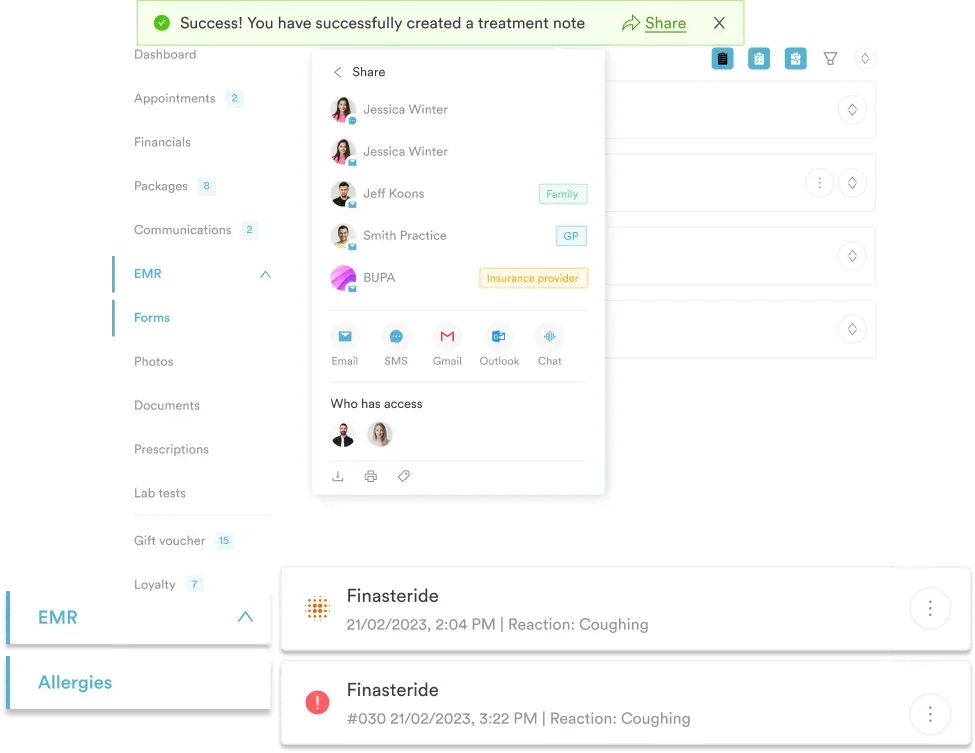

Pabau’s claims management tools help your coding team flag etiology-manifestation pairs, sequence diagnosis codes correctly, and submit cleaner claims from day one.

Accurate coding of G07 depends entirely on what the physician documents. Coders cannot assign a Code First etiology without explicit physician documentation linking the CNS abscess or granuloma to a specific underlying disease. Assumed connections are not sufficient under ICD-10-CM guidelines.
The clinical record should contain:
When documentation is unclear or the causal link is not established in the record, the appropriate action is to query the treating physician before assigning G07. Coders should never infer the etiology-manifestation relationship from clinical context alone. Strong medical documentation workflows that capture this linkage at the point of care reduce query volumes and speed up the billing cycle.
For practices handling HIPAA-compliant clinical documentation, ensuring that linked diagnoses are captured accurately in the patient record before coding begins is a foundational step in avoiding audit exposure on manifestation codes.
Three errors appear consistently in G07 coding reviews:
G07 appears most often in inpatient records, specialist neurology and infectious disease encounters, and post-surgical documentation for patients with known systemic infections that have spread to the CNS. Understanding where it fits in the billing workflow prevents sequencing errors from compounding.
A reliable billing workflow for G07 follows these steps:
Using practice management software that integrates coding logic with the clinical record reduces the manual steps in this workflow. Practices that rely on disconnected systems often see G07 sequencing errors introduced when coders work from printed notes rather than a linked EHR entry.
Pabau’s claims management software supports etiology-manifestation pair validation, helping coding teams catch sequencing issues before claims are submitted to clearinghouses. This is particularly relevant for practices with high neurology or infectious disease caseloads where Code First instructions are common across multiple diagnosis categories.
For a broader view of how EHR integration workflows support accurate diagnostic coding, see Pabau’s guidance on connecting clinical documentation to billing processes.
Practices that maintain legacy records or work with older data sets may encounter ICD-9-CM codes that mapped to the G07 category during the ICD-10 transition in 2015. The closest ICD-9-CM predecessor was 324.9 (Intracranial and intraspinal abscess of unspecified site), within the 324.x abscess series. The General Equivalence Mapping is approximate, because ICD-9 did not separate abscess and granuloma “in diseases classified elsewhere” the way ICD-10-CM does.
ICD-10-CM G07 is more specific than its ICD-9 predecessors. The ICD-10 update separated abscess/granuloma presentations (G06, G07) from encephalitis/myelitis (G05.x) and phlebitis (G08), providing clearer clinical distinctions. When reviewing historical records or running crosswalk comparisons, use the ICD List crosswalk reference to verify which ICD-9 codes mapped to G07 for your specific patient population.
For practices that have not yet completed a full audit of historical records after the ICD-10 transition, ensuring that legacy G07-equivalent ICD-9 codes were correctly mapped is worth reviewing, particularly if those records are referenced in ongoing care plans or payer audits.
When querying legacy data or running ICD-9 to ICD-10 crosswalks for CNS infection cases, verify that the etiology code transitioned correctly alongside the G07 manifestation code. A correctly mapped G07 with an incorrectly mapped or missing etiology code creates the same sequencing error in historical data that it would in a live claim.
Accurate coding of intracranial and intraspinal conditions requires familiarity with the surrounding codes in the G00-G09 block. Each of the following covers a distinct clinical scenario that should not be confused with G07:
When working with patients who present with multiple CNS complications of a systemic disease, more than one of these codes may apply. Each manifestation that meets coding criteria and is documented by the physician can be assigned in addition to G07 when clinically appropriate. For neurology-focused practices, patient care management workflows that track active diagnoses across encounters reduce the risk of assigning G09 (sequelae) prematurely when the underlying CNS condition is still active. Front-desk data entry and back-office coding both feed cash collection, so errors compound downstream. A shared coding reference also standardizes how two coders handle the same borderline case.
Practices managing infectious disease or neurology cases within a structured EHR benefit from linking digital intake forms directly to the diagnostic coding workflow, ensuring that the physician’s documented etiology-manifestation links are captured at intake rather than reconstructed at the billing stage.

G07 is a precisely scoped manifestation code. It applies only when an intracranial or intraspinal abscess or granuloma is documented as a direct result of a disease classified elsewhere in ICD-10-CM, and it can never stand alone as a primary diagnosis. Getting the etiology-manifestation sequence right is the single most important step in coding G07 correctly.
Practices that handle neurological and infectious disease billing regularly need a system that enforces code sequencing rules before claims reach the payer. Pabau’s claims management and clinical documentation tools are built to reduce the manual burden on coders handling complex manifestation codes. To see how Pabau handles these workflows in practice, book a demo with the team.

Working with other neurological ICD-10 codes? ICD-10 code G64 covers other disorders of the peripheral nervous system, with its own documentation and coding rules.
Coding an unidentified viral fever? ICD-10 code A94 covers an arthropod-borne viral fever when lab results do not confirm the virus.
Coding a smallpox case? ICD-10 code B03 remains the billable smallpox code used mainly for surveillance and bioterrorism reporting.
ICD-10 Code G07 is a billable ICD-10-CM diagnosis code that describes intracranial and intraspinal abscess and granuloma occurring as a manifestation of a disease classified elsewhere. It is used when the CNS finding is directly caused by an underlying systemic or infectious disease (such as schistosomiasis or tuberculosis) that must be coded first.
Yes, G07 is a billable ICD-10-CM code for FY2026. However, it is unacceptable as a primary (first-listed) diagnosis. It must always be sequenced after the Code First underlying etiology, and claims submitted with G07 in the primary position will typically be denied.
G06 (and its subcodes G06.0 and G06.1) applies when an intracranial or intraspinal abscess or granuloma is the primary condition with no mandatory Code First instruction. G07 applies when the abscess or granuloma is a manifestation of a separately classified underlying disease; the etiology code must always precede G07 on the claim.
G07 is paired with underlying diseases from other ICD-10-CM chapters that produce CNS abscess or granuloma as a named manifestation. The most common are schistosomiasis (B65.x), tuberculosis (A17.81), and neurosyphilis (A52.3). Any documented systemic or infectious disease that directly causes an intracranial or intraspinal abscess or granuloma requires this sequencing.
No. G07 is unacceptable as a primary diagnosis under the ICD-10-CM etiology/manifestation convention. As a manifestation code with a mandatory Code First instruction, it must always appear after the underlying etiology code. Submitting G07 in the primary position without the etiology code first is a sequencing error that will result in claim denial.
A primary intraspinal abscess is coded G06.1 (Intraspinal abscess and granuloma), which also covers a spinal epidural abscess. When the abscess is a manifestation of an underlying disease classified elsewhere, the etiology code is listed first and G07 follows.
A spinal epidural abscess is reported with G06.1 (Intraspinal abscess and granuloma), while an intracranial extradural or subdural abscess falls under G06.2 (Extradural and subdural abscess, unspecified). G07 is reserved for cases where the abscess is a documented manifestation of a separately classified disease.
A resolved brain abscess with no active infection is reported with Z86.61 (Personal history of infections of the central nervous system), not G07. G07 applies only while the abscess or granuloma is an active manifestation of an underlying disease.