



HCPCS code E0198: Water pressure pad billing guide
HCPCS code E0198 is a water pad for a standard mattress HCPCS code E0198 is the ...

Last Updated: Oct 13, 2026

CPT code 00811 covers anesthesia for lower intestinal endoscopic procedures (endoscope introduced distal to the duodenum) not otherwise specified, introduced in 2018.
Use 00811 instead of 00812 when a screening colonoscopy converts to a diagnostic procedure due to biopsy, polypectomy, or ablation, per CMS guidelines.
Medicare waives the deductible and reduces coinsurance to 15% (as of 2026) when 00811 is billed with the PT modifier on a converted screening colonoscopy, a rate scheduled to step down further before a full coinsurance waiver in 2030.
Practice management software like Pabau helps anesthesia and GI billing teams document conversion triggers, apply modifiers correctly, and reduce claim denials.
Most claim denials for colonoscopy anesthesia trace back to one decision point: whether the procedure stayed a screening or became diagnostic. Getting that classification wrong costs practices the reimbursement they earned and creates avoidable patient cost-sharing disputes. Practice management software like Pabau.
CPT code 00811 is the anesthesia code for lower intestinal endoscopic procedures where the endoscope is introduced distal to the duodenum, not otherwise specified. In plain clinical terms: it covers anesthesia for colonoscopies and lower GI endoscopic procedures that are diagnostic, therapeutic, or converted from a screening. The American Medical Association (AMA) maintains this code within the CPT code set, which was updated in 2018 to give GI anesthesia its own granular code family.
In addition, the code sits inside the CPT range 00100-01999, which covers anesthesia services. It replaced the deleted code 00810 as part of the 2018 GI anesthesia restructure. Here is the official descriptor as published in the AMA CPT codebook:
The “not otherwise specified” language in 00811’s descriptor is deliberate. It makes the code the catch-all for any lower GI endoscopy anesthesia that does not fit the narrower screening-specific code (00812) or the combined upper/lower code (00813). Diagnostic colonoscopies, therapeutic procedures, and screening-to-diagnostic conversions all land here.
Before 2018, anesthesiologists and CRNAs reporting colonoscopy services had only two codes: 00740 for upper GI procedures and 00810 for lower GI procedures. Both carried 5 base units.
A CMS and CPT Editorial Panel misvaluation review, prompted by rising utilization of GI endoscopy anesthesia, found that this structure failed to distinguish between routine preventive colonoscopies and more complex diagnostic or therapeutic procedures.
The American Society of Anesthesiologists (ASA), the relevant specialty society for anesthesia base-unit valuation, worked through that review to help establish the more granular code set that reflects those different risk profiles and resource requirements.
Effective January 1, 2018, those two codes were deleted and replaced with five new codes. As a result, payers and providers gained a coding structure that could finally price anesthesia accurately by procedure intent. For example, understanding where each code fits is essential for correct billing, especially when a case changes direction mid-procedure.
Anesthesia billing teams managing multiple gastroenterology accounts should also be familiar with the related code for combined upper and lower GI procedures, CPT code 00813, since the same conversion and modifier logic applies whenever a case spans more than one part of the tract.
Check your EHR’s code master file for any legacy references to 00810 or 00740. Both were deleted effective January 1, 2018. Claims submitted with these codes will reject on first pass. Run a quarterly audit of your anesthesia code library to catch outdated entries before they reach clearinghouse.
The distinction between 00811 and 00812 is the most consequential coding decision in colonoscopy anesthesia billing. Using the wrong code results in claim denial, patient cost-sharing errors, or both. The Centers for Medicare and Medicaid Services (CMS) guidelines are specific about which code applies in each scenario.
Use 00812 when: the procedure is a preventive screening colonoscopy from start to finish, with no intervention performed. The procedure code on the facility or physician claim will typically be CPT 45378 (diagnostic colonoscopy). The anesthesia provider bills 00812, and Medicare applies preventive service cost-sharing rules.
Use CPT code 00811 when: the procedure is a diagnostic colonoscopy from the outset, or a therapeutic procedure, or a screening colonoscopy that converts to diagnostic during the case. Per CMS guidance, if a procedure commences as a screening but transitions to a diagnostic procedure due to biopsy, ablation, polypectomy, or a similar intervention, the anesthesia provider reports 00811, not 00812. The corresponding surgical code on the facility claim will shift from 45378 to a code such as 45385 (colonoscopy with polypectomy) or similar.
Commercial payer variation is a genuine pain point here. Some commercial plans follow Medicare’s 00811-PT rule for converted screenings. Others instruct providers to bill 00812 regardless of whether an intervention occurred, to protect the patient from higher cost-sharing. Verify each plan’s policy before assuming Medicare rules apply universally. Practices using digital intake forms can capture the patient’s insurance type at booking and flag accounts that require payer-specific anesthesia coding review before the procedure date.
Comparing practice management systems for medical teams is worth the effort before anesthesia time-unit billing becomes a spreadsheet job.
Modifier selection for CPT code 00811 directly affects patient cost-sharing and claim adjudication. Two modifier categories matter most: the PT modifier for converted screenings, and the provider-type modifiers that identify who delivered the anesthesia service.
Specifically, the PT modifier signals to Medicare that the procedure began as a preventive screening colonoscopy. When a screening converts to diagnostic (a polyp is removed, a biopsy is taken, or ablation is performed), CMS requires the anesthesia claim to report 00811 with the PT modifier appended.
In practice, Medicare waives the deductible for the anesthesia service and reduces the patient’s coinsurance to 15% for 2026. That coinsurance rate is scheduled to step down to 10% for 2027 through 2029, then reach a full coinsurance waiver in 2030.
This distinction matters for patient communications and for front-desk staff explaining out-of-pocket costs after a conversion. Consequently, billing 00811 without the PT modifier when the case started as a screening will result in Medicare applying standard cost-sharing, which overcharges the patient.
Anesthesia claims also require a modifier indicating the provider’s role and supervision arrangement. The standard modifiers used with CPT code 00811 are:
These modifiers can be combined with PT on the same claim line. A converted screening performed under medically directed CRNA care would read: 00811-QK-PT. The AAPC Codify platform provides detailed crosswalk data for each modifier combination.

Pabau helps GI and anesthesia billing teams document conversion events, apply modifiers correctly, and submit cleaner claims the first time. See how claims management works in practice.

Anesthesia reimbursement uses a different formula from standard E/M or procedural codes. Rather than a single fee, payment is calculated as: (Base Units + Time Units + Qualifying Circumstances Units) x Conversion Factor.
CPT code 00811 carries 4 base units according to the American Society of Anesthesiologists (ASA) Relative Value Guide. This is a decrease from the 5 base units the deleted predecessor code 00810 carried.
The drop reflects the 2018 ASA and CMS re-valuation that split GI endoscopy anesthesia into separate codes by procedure type. For context, 00812 carries 3 base units and 00813 carries 5.
One time unit equals 15 minutes of anesthesia time. Anesthesia time begins when the anesthesiologist or CRNA takes responsibility for the patient in the procedure area and ends when they are no longer in personal attendance. For instance, a 45-minute colonoscopy with anesthesia adds 3 time units to the base units.
The Medicare anesthesia conversion factor changes annually. Reimbursement also varies by geographic locality, as CMS adjusts the conversion factor using Geographic Practice Cost Indices (GPCIs). For the most current payment amounts, use the CMS Physician Fee Schedule lookup tool, which publishes locality-specific rates by calendar year. The FastRVU 2026 RVU lookup provides quick access to work, practice expense, and malpractice RVU values across localities.
As a result, billing teams managing multiple payers and locations benefit from automated billing workflows that route claims to the correct fee schedule by payer and location automatically, reducing manual adjustment errors.
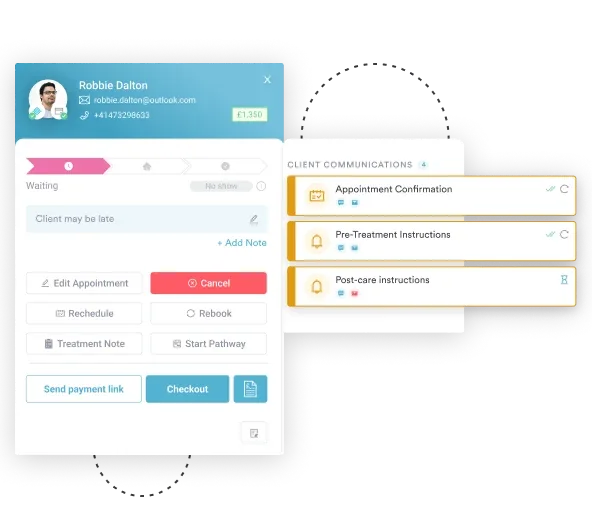
Clean documentation is the first line of defense against 00811 claim denials. The clinical record needs to support both the code selection and any modifier applied. For converted screenings billed with the PT modifier, the operative note must clearly identify the intervention that triggered the conversion.
For any CPT code 00811 claim, the anesthesia record and associated operative notes should document:
The ASA CROSSWALK notes that 00811 may be appropriate for cases where a screening colonoscopy becomes diagnostic, making the operative documentation of that transition a billing necessity, not just a clinical one. Anesthesia practices that use structured clinical records are better positioned to capture these details consistently across providers and procedure rooms.
The type of anesthesia (MAC or general) does not determine which 00811x code is used. Code selection follows the procedure type and whether a conversion occurred, not the anesthesia depth. However, some commercial payers have medical policies governing when MAC is reimbursable for GI endoscopy at all. Practices seeing unexplained denials should pull the payer’s MAC policy for GI procedures alongside their colonoscopy anesthesia policy. For guidance on HIPAA-compliant handling of anesthesia records across payers.
Document the conversion trigger in the anesthesia record itself, not just the surgeon’s operative note. Payers auditing 00811-PT claims will review both. A brief notation such as ‘Procedure converted from screening to diagnostic following polyp removal at hepatic flexure’ in the anesthesia record creates a clean, independent corroboration that supports the modifier.
Claim denials for CPT code 00811 tend to cluster around a handful of avoidable errors. Identifying the pattern in your denial reports is the fastest route to improving first-pass rates.
Practices managing high-volume GI anesthesia accounts benefit from pre-submission claim scrubbing rules that cross-check the anesthesia procedure code against the facility’s reported surgical code. The same cross-check applies to the non-high-risk screening code. For teams handling multi-specialty billing.
Anesthesia billing for lower GI endoscopy involves decisions that happen fast, at the clinical level, and get documented under time pressure. For instance, when a polyp is found and removed during what started as a screening, the anesthesia team needs to update the record, change the code, and apply the correct modifier before the claim goes out. Systems that require manual correction after the fact introduce the delay and inconsistency that drive denial rates up.
Pabau’s practice management platform supports GI and anesthesia billing teams with structured claims management software that maps procedure events to billing codes in real time. Documentation templates built around colonoscopy workflows can flag conversion events, prompt modifier selection, and align the anesthesia record with the facility claim before submission. For practices also handling the broader scheduling and patient communication side. Practices interested in seeing how these tools reduce claim rework can book a demo to walk through the anesthesia billing workflow directly. Time-based and complexity-based selection can point at different codes, so the documented medical decision making decides.
In short, the most common CPT code 00811 billing error is avoidable: using 00812 when a screening converted to diagnostic, or omitting the PT modifier when Medicare requires it. Both errors create downstream cost-sharing problems for patients and denial exposure for the practice.
Pabau’s claims management software helps anesthesia and GI billing teams build the documentation and code-selection logic into the workflow before claims go out, not after denials come back. To see how it works with your procedure types, speak with the team about your anesthesia billing setup.

Need the upper GI counterpart to 00811? CPT code 00731 is the sibling not-otherwise-specified code created in the same 2018 restructure, covering upper GI endoscopy anesthesia.
Handling anesthesia for more complex GI surgical cases? CPT code 00794 covers anesthesia for pancreatectomy, another high-base-unit GI procedure billing teams should know.
Need the surgical-side code for a biopsy conversion? CPT code 45380 covers colonoscopy with biopsy, the other common trigger for a screening-to-diagnostic conversion.
CPT 00811 is the anesthesia code for lower intestinal endoscopic procedures (endoscope introduced distal to the duodenum), covering diagnostic colonoscopies, therapeutic lower GI procedures, and screening-to-diagnostic conversions. It replaced deleted code 00810 on January 1, 2018.
00812 is for pure screening colonoscopies with no intervention; 00811 applies when the procedure is diagnostic, therapeutic, or when a screening converts mid-procedure due to biopsy, polypectomy, or ablation.
It tells Medicare the case started as a preventive screening before converting to diagnostic, which waives the patient’s deductible and reduces coinsurance to 15% for 2026, stepping down further before reaching a full waiver by 2030.
CPT 00811 carries 4 base units per the ASA Relative Value Guide, a decrease from the 5 units assigned to its predecessor code 00810.
When an intervention (biopsy, polypectomy, ablation, or similar) is performed during the session, CMS requires the anesthesia code to change from 00812 to 00811-PT.
Medicare uses the formula (base units + time units) × the annual anesthesia conversion factor, adjusted by geographic locality — check the CMS Physician Fee Schedule lookup for current rates.
CPT code 00813 is the anesthesia code for combined upper and lower gastrointestinal endoscopic procedures performed in the same session, such as an upper GI endoscopy and a colonoscopy under one anesthetic. Report 00813 instead of billing 00811 (or the upper GI code 00731) separately when both procedures are done together.



