CPT code 93503: Swan-Ganz catheter billing and modifiers
CPT code 93503: Official descriptor and procedure overview In the AMA CPT code s...

Last Updated: Oct 23, 2026

CPT Code 00754 describes anesthesia for hernia repairs in the upper abdomen, specifically for omphalocele repair.
The code carries 7 base units, confirmed across the VA Community Care base unit table and Massachusetts Medicaid fee schedule.
Common denial triggers include missing or mismatched ICD-10-CM diagnosis codes and incomplete anesthesia time documentation.
Practice management software like Pabau helps billing teams keep claims, invoices, and documentation organized in one place.
CPT Code 00754 is maintained by the American Medical Association (AMA) as part of the Current Procedural Terminology (CPT) code set. Its full official descriptor is: Anesthesia for hernia repairs in upper abdomen; omphalocele. This code falls within the CPT range 00700-00797, which covers anesthesia for procedures on the upper abdomen.
An omphalocele is a congenital abdominal wall defect in which abdominal organs protrude through the navel, covered by a membranous sac. The ICD-10-CM diagnosis code is Q79.2 (exomphalos). Because omphalocele repair is typically a neonatal or pediatric procedure, anesthesia management is complex and resource-intensive, which is reflected in the code’s clinical and billing positioning.
CPT Code 00754 sits within the 00700-00797 upper abdomen anesthesia range. The hernia repair sub-family runs from 00750 to 00756, covering four anatomically distinct scenarios. Understanding where 00754 fits within this sub-family is essential for correct code selection, especially when the surgical site spans multiple abdominal regions.
CPT Code 00754 carries 7 base units. This value is confirmed across multiple government fee schedules, including the VA Community Care Professional Anesthesia Nationwide Base Unit table and the Massachusetts MassHealth anesthesia service code spreadsheet. The American Society of Anesthesiologists (ASA) Relative Value Guide also assigns 7 base units to this code.
Base units reflect the complexity and risk of the anesthesia service, independent of how long the case runs. For omphalocele repair, the 7-unit assignment accounts for the surgical complexity, typical patient acuity (often neonates), and the clinical demands placed on the anesthesia team.
State Medicaid programs may weight base units differently. Always verify against the applicable payer’s current fee schedule using the CMS Physician Fee Schedule lookup or your payer contract.
Anesthesia reimbursement does not follow the standard RVU model used for surgical CPT codes. Instead, it uses a unit-based formula established by the ASA and adopted by CMS and most commercial payers.
The standard formula is: (Base Units + Time Units + Modifying Units) x Conversion Factor = Reimbursement.
Check the CMS anesthesia conversion factor file or the MPFS locality file referenced above for the applicable conversion factor before calculating expected reimbursement. For a 90-minute omphalocele case billed under 00754: 7 base + 6 time = 13 units, multiplied by the applicable conversion factor.
Modifying units for qualifying circumstances are added on top. Accurate time documentation is therefore the primary driver of reimbursement variability for this code.
Anesthesia time begins when the anesthesiologist starts preparing the patient for induction in the operating room. It ends when the anesthesiologist is no longer in personal attendance and the patient can be safely placed under postoperative supervision.
CMS and most payers require contemporaneous time records, not post-case estimates. Missing entries in the time record can trigger a partial denial or audit. Practices managing multiple anesthesia cases benefit from automated billing workflows that capture time entries in real time rather than relying on manual log reconstruction after the procedure.
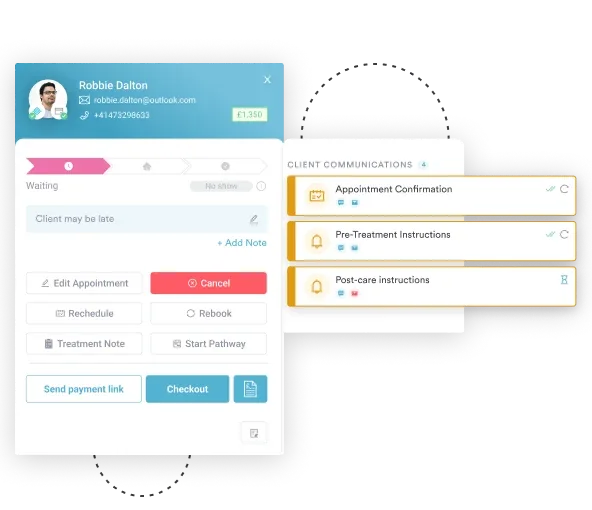
Anesthesia billing runs smoother when medical practice management software ties time units, modifiers, and charges to the visit record.
Modifier selection for CPT Code 00754 depends on the clinical role of the anesthesia provider and the supervision arrangement in place. CMS and most commercial payers require an anesthesia modifier on every claim for these codes.
When an anesthesiologist medically directs a CRNA, the physician bills with QK and the CRNA bills with QX. Each party submits a separate claim.
CMS pays 50% of the allowable anesthesia fee to the physician (QK) and 50% to the CRNA (QX) under this split-billing arrangement. The total reimbursement equals the same amount as a personally performed service (AA) in most Medicare localities.
Document the supervision arrangement before the case begins, not after. If a CRNA starts a case independently and the supervising physician is called in mid-procedure, the modifier assignment changes. Retroactive modifier corrections are one of the leading triggers for anesthesia billing audits. Confirm the clinical role in the pre-procedure checklist and lock the modifier in your system before induction.
Selecting the wrong code in the 00750-00756 sub-family is the most frequent billing error for upper-abdomen hernia repair anesthesia. Each code maps to a specific surgical indication.
00754 and 00756 share the same 7-unit base value, which can lead coders to treat them as interchangeable. 00754 is specific to omphalocele, a congenital defect, while 00756 covers diaphragmatic hernia repair, a structurally different procedure. The surgical operative note should make the distinction clear.
For practices also handling IVF CPT codes, maintaining a code-specific reference table helps prevent cross-code errors at submission.
Two adjacent codes are relevant for broader context. CPT 00770 covers anesthesia for major abdominal blood vessel procedures, which may be performed concurrently with omphalocele repair in complex neonatal cases. It carries 15 base units.
CPT 00790 covers intraperitoneal upper abdomen procedures not otherwise specified. It carries 7 base units and is the fallback code when none of the hernia-specific codes apply.

Pabau helps surgical billing teams keep claims, invoices, and documentation organized in one platform. See how it works for your practice.

Medical necessity for CPT Code 00754 must be established through a supporting ICD-10-CM diagnosis code on the claim. Without a correctly specified diagnosis, payers cannot confirm that omphalocele repair was the surgical procedure performed. The claim will deny on medical necessity grounds regardless of how well the anesthesia itself is documented.
Additional secondary codes may be relevant depending on the patient’s clinical presentation, including codes for associated anomalies or co-morbidities documented in the surgical record. The diagnosis code must appear on the anesthesia claim in the same position used on the surgeon’s claim to ensure payer cross-reference checks pass.
Practices using digital intake forms tied to their billing workflow are better positioned to capture the diagnosis linkage at the point of care rather than reconstructing it at claim submission.

Clean claims for anesthesia codes require documentation that supports three things: the procedure performed, the clinical role of the provider, and the duration of anesthesia services. For CPT Code 00754, that means the claim record must be traceable back to the operative note, the anesthesia record, and the medical necessity documentation.
A standardized HIPAA privacy policy template helps billing teams keep these documentation requirements consistent across every anesthesia claim.
Maintaining HIPAA-compliant documentation practices matters beyond compliance. It’s the primary defense against payer audits, since CMS has the authority to recoup payments for anesthesia claims where time documentation is absent or retrospective.
For practices managing medical forms and recordkeeping across multiple providers, centralized documentation systems reduce the risk of incomplete records at audit time.
Request the surgeon’s claim data before submitting the anesthesia claim. Verify that the ICD-10-CM code on the anesthesia claim matches the diagnosis on the surgical claim exactly. Payers run cross-reference edits between the two claims and will deny the anesthesia claim if the diagnosis codes do not align. This takes five minutes and prevents weeks of appeals work.
Anesthesia billing for omphalocele repair sits at the intersection of complex neonatal clinical coding and payer-specific policy. The most common denial patterns are preventable with upfront verification.
The AAPC Codify CPT lookup provides code-level reference data, including bundling edits and modifier requirements, that help billing teams verify claim configuration before submission.
For practices using practice management software, claim scrubbing can be automated at the workflow level to flag missing modifiers or diagnosis codes before submission rather than after denial.
For a broader look at how anesthesia claims fit into the wider revenue cycle. Practices comparing dedicated platforms can also review our roundup of medical billing software.
Medicare reimburses anesthesia using locality-specific conversion factors. The MA and VA pay at rates defined in their respective fee schedules, which may differ from Medicare. State Medicaid programs set their own base unit values and conversion factors. The North Carolina Medicaid anesthesia base unit table, for example, has historically used different weighting for neonatal procedures. An eligibility check at booking and again at arrival catches mid-month plan changes. Downcoding is as common as upcoding, and both trace back to how the decision-making level was recorded.
Always confirm applicable rates against the current fee schedule before setting expected reimbursement for 00754. Practices tracking multi-payer anesthesia contracts benefit from the practice management tools that centralize payer contract data alongside claim submissions.
CPT Code 00754 is a specific, low-volume code with a defined clinical application: anesthesia for omphalocele repair. Its 7 base units reflect the complexity of neonatal anesthesia management.
Clean-claim requirements are straightforward when the diagnosis linkage, time documentation, and modifier selection are confirmed before submission. Errors in any one of those three areas account for the majority of denials on this code.
Pabau’s claims management software helps anesthesia and surgical billing teams keep claims, invoices, and documentation organized in one place, so nothing is missing at submission. To see how it works for your billing team, book a demo.

Coding a follow-up hand injury visit? Middle finger dislocation code covers the follow-up visit version and when to use the initial or late-effect character instead.
Coding a follow-up hand tendon injury? Left thumb extensor injury code covers the subsequent encounter version for a patient still healing from the injury.
Coding a partial hand amputation case? Transmetacarpal amputation ICD-10 code covers a partial hand amputation at the initial encounter when the side is not documented.
CPT Code 00754 covers anesthesia services for hernia repairs in the upper abdomen specifically for omphalocele, a congenital abdominal wall defect. It does not apply to standard ventral hernias, lumbar hernias, or diaphragmatic hernia repair, which each have their own codes within the 00750-00756 sub-family.
CPT 00754 has 7 base units, confirmed across the VA Community Care Professional Anesthesia Base Unit table, the Massachusetts MassHealth anesthesia fee schedule, and the ASA Relative Value Guide. State Medicaid programs may assign different values; verify against your payer’s current fee schedule.
The standard anesthesia modifiers for CPT 00754 are AA (personally performed by an anesthesiologist), QK (medical direction of 2-4 CRNAs), QX (CRNA with medical direction), QY (medical direction of one CRNA), and QZ (CRNA without medical direction). Modifier selection depends on the clinical role of the anesthesia provider and the supervision arrangement in place for that case.
00750 (4 base units) applies to general upper abdominal hernia repair with no more specific descriptor. 00752 (6 base units) applies to lumbar and ventral incisional hernias and wound dehiscence. 00754 (7 base units) is specific to omphalocele repair, a congenital abdominal wall defect. Each code maps to a distinct surgical indication and they are not interchangeable.
Anesthesia reimbursement uses the formula: (Base Units + Time Units + Modifying Units) x Conversion Factor. For CPT 00754, base units are 7. Time units are calculated at 1 unit per 15 minutes of documented anesthesia time. Modifying units are added for qualifying circumstances. The conversion factor is payer- and locality-specific; Medicare uses locality-based rates from the Physician Fee Schedule.