CPT Code 35820: Exploration for postoperative hemorrhage (thorax)
CPT Code 35820: Official descriptor and clinical overview CPT Code 35820 is defi...

Last Updated: Nov 13, 2026
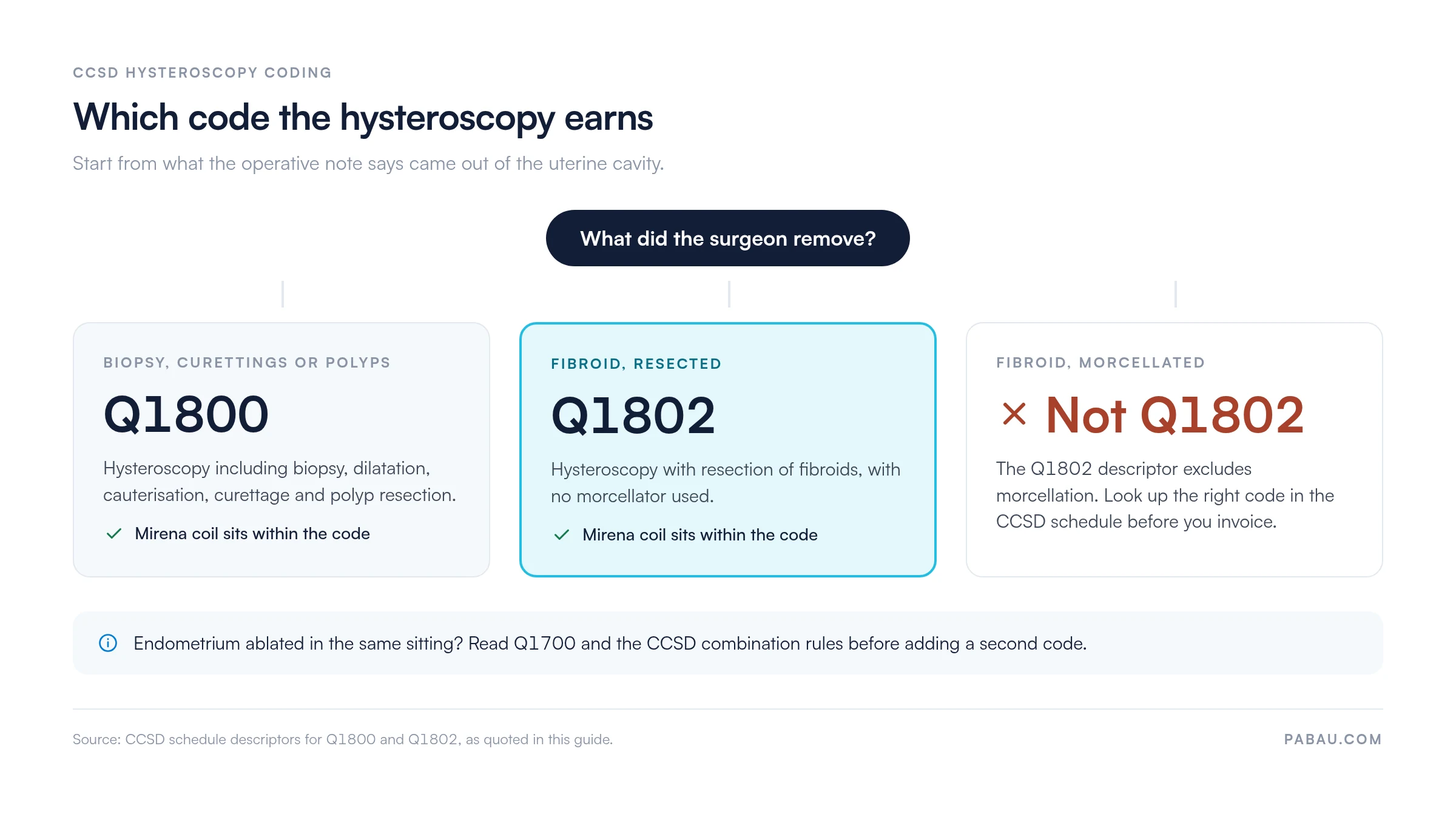
Q1802 is the CCSD code for hysteroscopy with resection of fibroids (excluding morcellation), with or without Mirena coil insertion. It applies when the surgeon removes fibroids from inside the uterine cavity through a hysteroscope, in UK private practice.
The CCSD schedule lists Q1802 under 14.1.0 Uterus/Adnexa. A hysteroscopy that only takes a biopsy or removes polyps belongs under Q1800. Morcellation falls outside Q1802 too, so the operative note decides the code.
Let Pabau's smart automation suggest the right codes, reduce claim denials, and keep your practice compliant—effortlessly.
Automate repetitive tasks and focus on what matters most—your patients.
Reduce coding errors and ensure compliance with the latest regulations.
Clean claims, fewer denials, and faster reimbursements.
Powerful insights and reporting to help your practice thrive.
HIPAA compliant SOC 2 certified GDPR-compliant Trusted by 4,000+ clinics worldwide

CCSD code Q1802 covers hysteroscopy with resection of fibroids, excluding morcellation, with or without insertion of a Mirena coil.
A hysteroscopy limited to biopsy, dilatation, cauterisation, curettage or polyp resection belongs under Q1800, even when a Mirena coil goes in.
The operative note should name the fibroid, the resection technique and any coil insertion, because the insurer checks it against Q1802.
Match the code on the pre-authorisation to the code on the invoice, and tell the insurer when the plan changes in theatre.
Pabau records the pre-authorisation on the patient’s case, warns your team when it is missing and sends UK claims through Healthcode and Bupa.
CCSD code Q1802 is the UK private-practice code for hysteroscopy with resection of fibroids, excluding morcellation, with or without insertion of a Mirena coil. The CCSD schedule lists it under 14.1.0 Uterus/Adnexa.
In clinical terms, this is a hysteroscopic myomectomy. The surgeon passes a hysteroscope through the cervix and cuts away a fibroid that bulges into the uterine cavity. A coil can go in at the same sitting without changing the code.
Biopsy-only and polyp-only hysteroscopies fall outside Q1802. Claims coded that way tend to come back, because the fibroid is what earns Q1802.
Both codes start with a hysteroscope, and both allow a Mirena coil. What separates them is the tissue the surgeon removes.
Two edge cases need care, and the diagram below sets them beside the main split. If the fibroid came out with a hysteroscopic morcellator, Q1802 does not apply, so look up the right code before you invoice.
Our CCSD codes library lists the neighbouring gynaecology entries. If the surgeon also ablated the endometrium, check Q1700 and the CCSD combination rules first.
Most Q1802 claims follow the same path. Each handover is a place where the code, the authorisation or the note can drift apart.
Fees and claim deadlines vary by insurer, so confirm both in the insurer’s provider guidance. Bupa publishes its codes through the Bupa code search, and our Bupa CCSD codes guide covers its billing basics.
Most problems with Q1802 come from a mismatch between what happened in theatre and what the paperwork says. These are the ones to watch.
When the scan is unclear, tell the patient the authorisation may need to change after theatre. A quick call to the insurer on the day saves a recode and a resubmission later.
Run through these checks with the operative note open beside the invoice. If any answer is no, fix it before the claim leaves the practice.
Keep the note, consent and histology report together on the patient record. When the insurer asks for evidence, you can send it the same day.
In many gynaecology practices, the authorisation number lives in an email and the invoice gets built by hand. The operative note sits in another system. When the insurer queries a claim, someone pieces it together again.
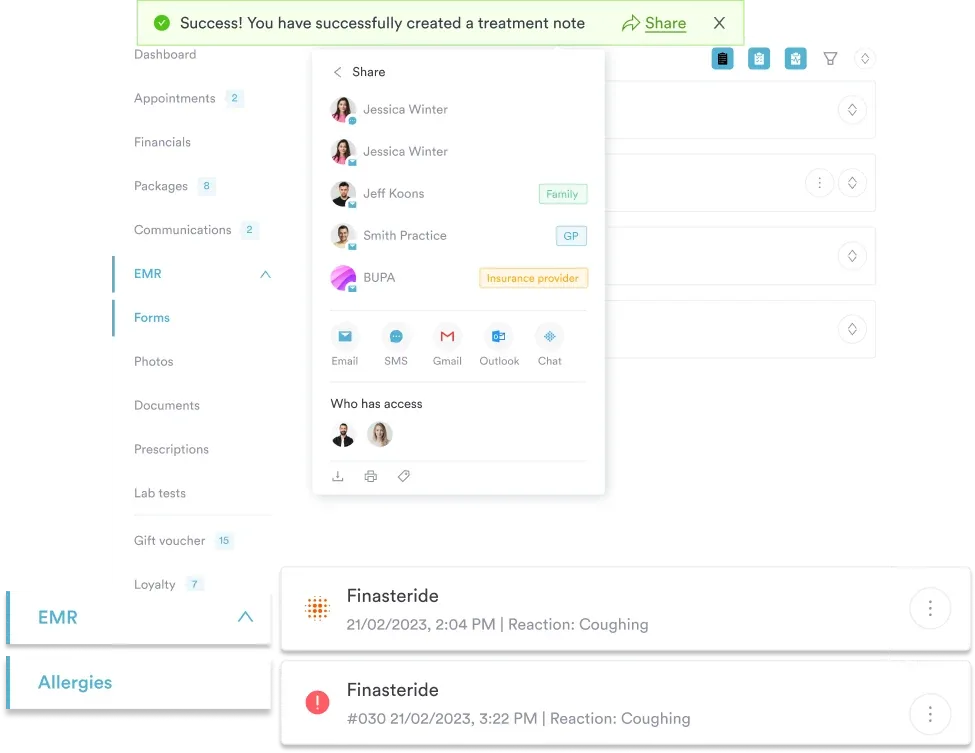
In Pabau’s practice management software, the pre-authorisation sits on the patient’s case. If it is missing, Pabau warns your team before the claim goes out. Our claims management software then sends UK claims through Healthcode and Bupa.
The operative note, consent and histology report sit on the same record as the claim. For a busy gynaecology list, a query becomes a quick lookup rather than a search through folders.

Pabau records each patient’s pre-authorisation on the case, warns your team when one is missing and sends UK claims through Healthcode and Bupa.

Q1802 is a fibroid code. Bill it when the surgeon resected a fibroid without a morcellator, coil or no coil. Polyps and biopsies on their own go to Q1800.
Most rejected claims trace back to one moment. The plan changed in theatre, and the paperwork didn’t. Update the authorisation, write the fibroid into the note and the claim has little left to trip on.
Book a demo to see how Pabau tracks pre-authorisations and sends your gynaecology claims through Healthcode and Bupa.

Did the surgeon ablate the endometrium too? CCSD code Q1700 covers therapeutic endoscopic operations on the uterus, such as endometrial ablation.
Billing mostly through Bupa? Bupa CCSD codes guide explains how Bupa uses CCSD codes in UK private practice.
Coding major gynaecological oncology surgery? CCSD code Q0712 walks through radical trachelectomy billing.
Repairing prolapse in the same specialty? CCSD code P2310 covers anterior and posterior colporrhaphy.
Usually, yes. Hysteroscopic myomectomy means removing fibroids through a hysteroscope, which is what Q1802 describes. The exception is morcellation: Q1802 excludes it, so check the schedule for the code that applies.
Hysteroscopic resection suits submucosal fibroids, the ones that bulge into the uterine cavity. Fibroids in the muscle wall or on the outer surface usually need a laparoscopic or open myomectomy, which carry their own CCSD codes.
Not as a separate procedure. The Q1802 descriptor includes Mirena coil insertion as an option, so the insertion sits inside the code. Ask the insurer how it handles the cost of the device itself.
Usually, yes. UK private insurers generally expect elective surgery to be authorised before it happens. The patient’s policy sets the rule, so confirm it and record the reference before the theatre date.
Often, yes. Many patients go home the same day. Larger fibroids sometimes need a second procedure, so record what was removed and what remains in the operative note.