HCPCS Code Q4185: Cellesta flowable amnion billing guide
HCPCS Code Q4185: definition and official descriptor HCPCS Code Q4185 is the Lev...

Last Updated: Nov 20, 2026
P1400 is the CCSD code for incision of introitus of vagina, a surgical cut at the vaginal opening. UK private medical insurers use it to pay the surgeon's fee when a gynecologist incises the introitus, for example to widen a tight opening.
The code sits in chapter 14 of the CCSD schedule, under sub-chapter 14.4.0 Vagina/Perineum. National Friendly's October 2025 schedule bands it as a Minor procedure. Perineal operations and vaginal reconstruction take separate codes, P1300 and P2100.
Let Pabau's smart automation suggest the right codes, reduce claim denials, and keep your practice compliant—effortlessly.
Automate repetitive tasks and focus on what matters most—your patients.
Reduce coding errors and ensure compliance with the latest regulations.
Clean claims, fewer denials, and faster reimbursements.
Powerful insights and reporting to help your practice thrive.
HIPAA compliant SOC 2 certified GDPR-compliant Trusted by 4,000+ clinics worldwide

CCSD code P1400 covers incision of introitus of vagina, a surgical cut at the vaginal opening, in the schedule UK private insurers use.
The verb in the operation note decides the code. Excision, perineal work and reconstruction each take a different CCSD code.
National Friendly’s October 2025 schedule bands P1400 as a Minor procedure, but each insurer sets its own fee.
CCSD lists P2930, biopsy of lesion of vagina, as an unacceptable combination with P1400 in the same episode.
Claims go electronically via Healthcode or direct to the insurer, with the pre-authorization reference on the invoice.
CCSD code P1400 covers incision of introitus of vagina, a surgical cut at the vaginal opening. UK private medical insurers use the code to pay the surgeon’s fee. National Friendly’s CCSD-based schedule of fees lists it as a Minor procedure.
The introitus is the entrance to the vagina. A gynecologist incises it to open or widen it, for example when the opening is tight or narrowed by scar tissue. The CCSD narrative names the site and the action but no indication, so the operation note has to supply the reason.
The CCSD Group develops and licenses the schedule. Its members are representatives from four large private insurers: Bupa, AXA Health, Aviva and Vitality. The code tells the payer what was done, while each insurer sets what it pays.
CCSD keeps its code principles behind a login on its website. Read the principles for P1400 there before you bill it alongside another procedure. Our CCSD code billing guides take other codes in the schedule from narrative to paid claim the same way.
Operations at the vaginal opening sit close together in the schedule, and the site alone does not settle the code. The verb in the note matters most. An incision, an excision and a reconstruction each land on a different code. Read the note for where the surgeon worked, then for what they did.
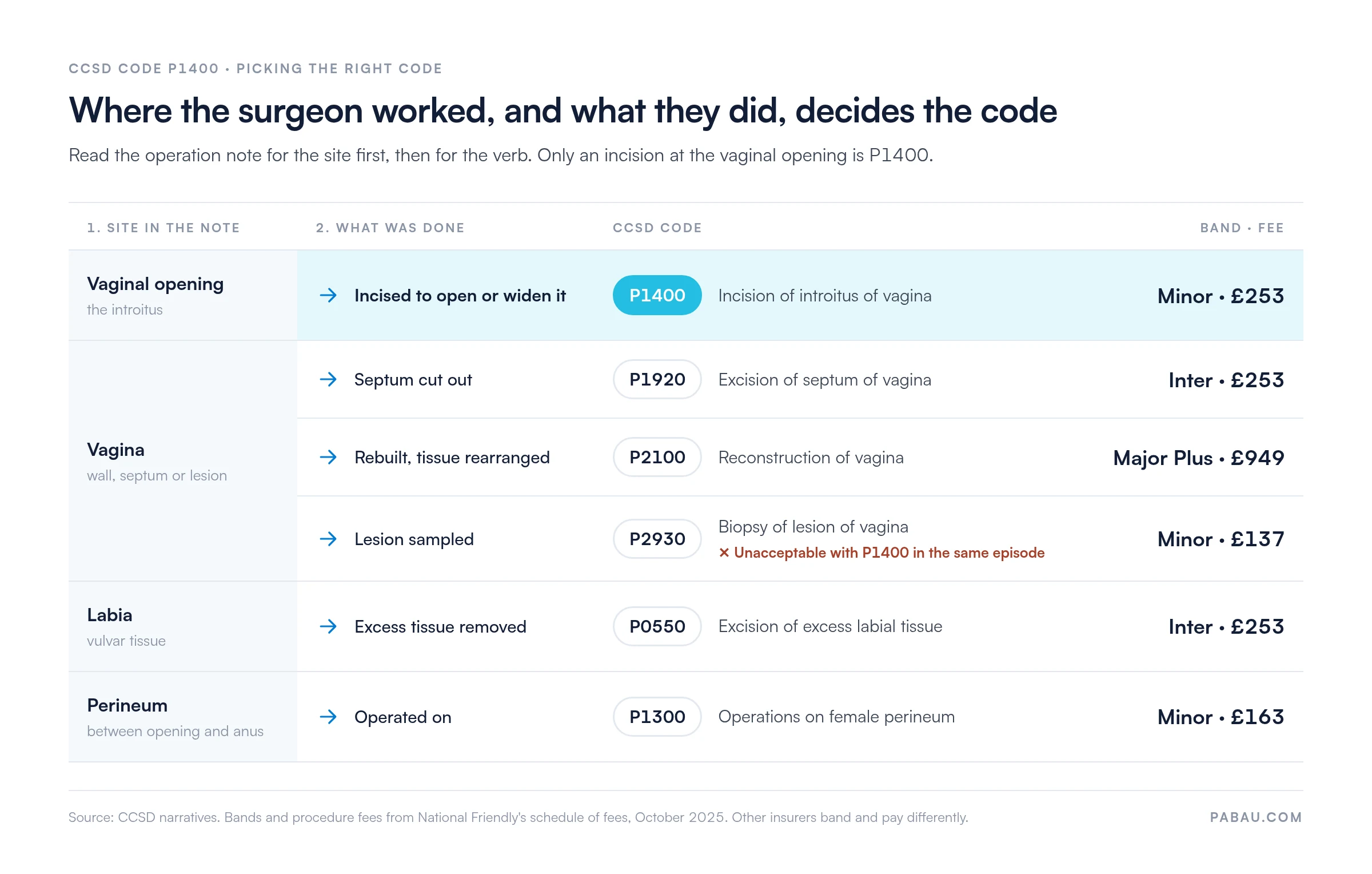
Bands and fees in the table come from National Friendly’s October 2025 schedule. Other insurers band and price the same codes differently. Our guides to CCSD code P1300 and CCSD code P2100 cover those two codes in detail.
Hymen surgery is the case to check first. We found no separate hymenectomy code in the CCSD vagina/perineum or vulva/labia sections. Ask the insurer how it wants hymen surgery coded, and keep its answer on file. Marsupialisation of a Bartholin cyst, by contrast, has its own vulva/labia code, P0320.
The NHS classification draws these lines differently. In OPCS-4, category P14 shares the P1400 title and holds the episiotomy codes. Hymen operations sit in P15, female perineotomy in P13.5 and vaginoplasty in P21. OPCS-4 and CCSD are separate schedules, so never copy an OPCS code onto an insurer claim.
When an insurer asks for a diagnosis, use the WHO version of ICD-10 used in the UK, not the US ICD-10-CM. Code the finding recorded at operation, which may differ from the reason for referral.
Code to the finding in the operation note, not the referral letter. A patient referred for dyspareunia who has a tight introitus at surgery gets N89.6 first. N94.1 then follows as a secondary code.
A P1400 claim is only as strong as the operation note behind it. If the note just says the introitus was released, the coder has to guess between an incision, an excision and a repair. The insurer may then query the claim.
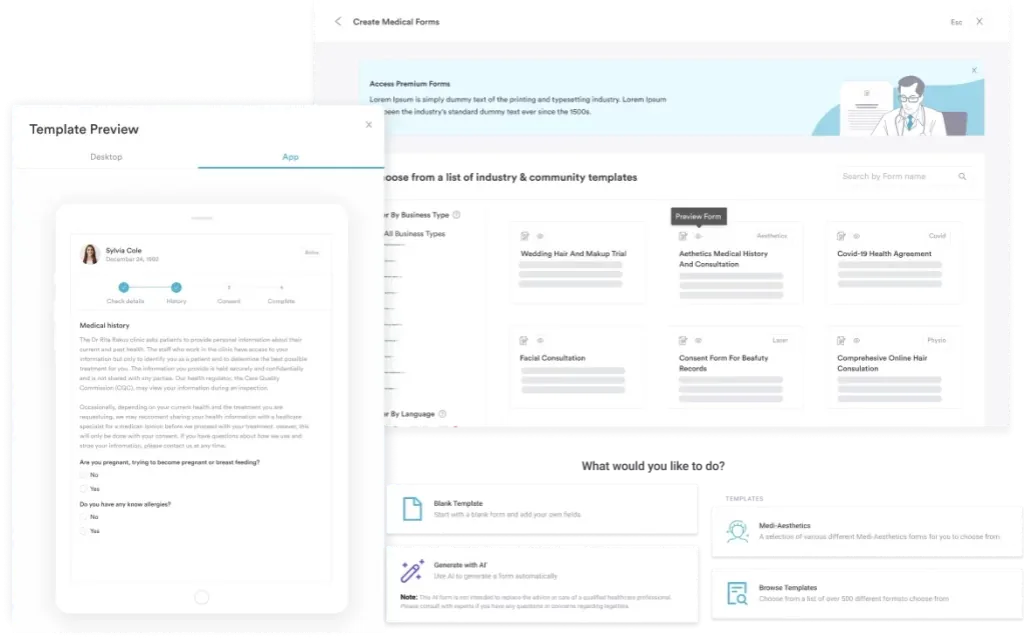
Pabau, the practice management platform we build, lets you turn that list into a digital form the surgeon completes at the end of the case.
Agree a standard procedure title with your gynecologists, such as “Incision of introitus to widen tight opening”. When the title carries the action, the person coding the claim reads it in seconds.
The work starts before the operation. UK private insurers generally expect planned surgery to be authorized first, and the patient’s policy decides what is covered. Confirm the details with the payer before the procedure date.
The anesthetist, where one is involved, bills the insurer separately for the same operation. If the surgeon charges above the insurer’s fee, tell the patient about the shortfall in writing before the procedure.
Each slip below can get a P1400 claim queried or rejected. Each one also has a fix your team can apply before the claim goes back.
If a claim is still refused, follow the appeal process in the insurer’s current provider manual. Only commit to a deadline you have confirmed there.
In many gynecology practices, the authorization lives in an email, the operation note sits in another system, and the claim is keyed in by hand. Every handoff is a chance to lose the reference number or send last year’s fee.
Pabau keeps those steps on the patient record. Its claims management software sends claims electronically through Healthcode and to Bupa. The authorization code, dates and sessions sit on the patient’s case, with a warning when one is missing.
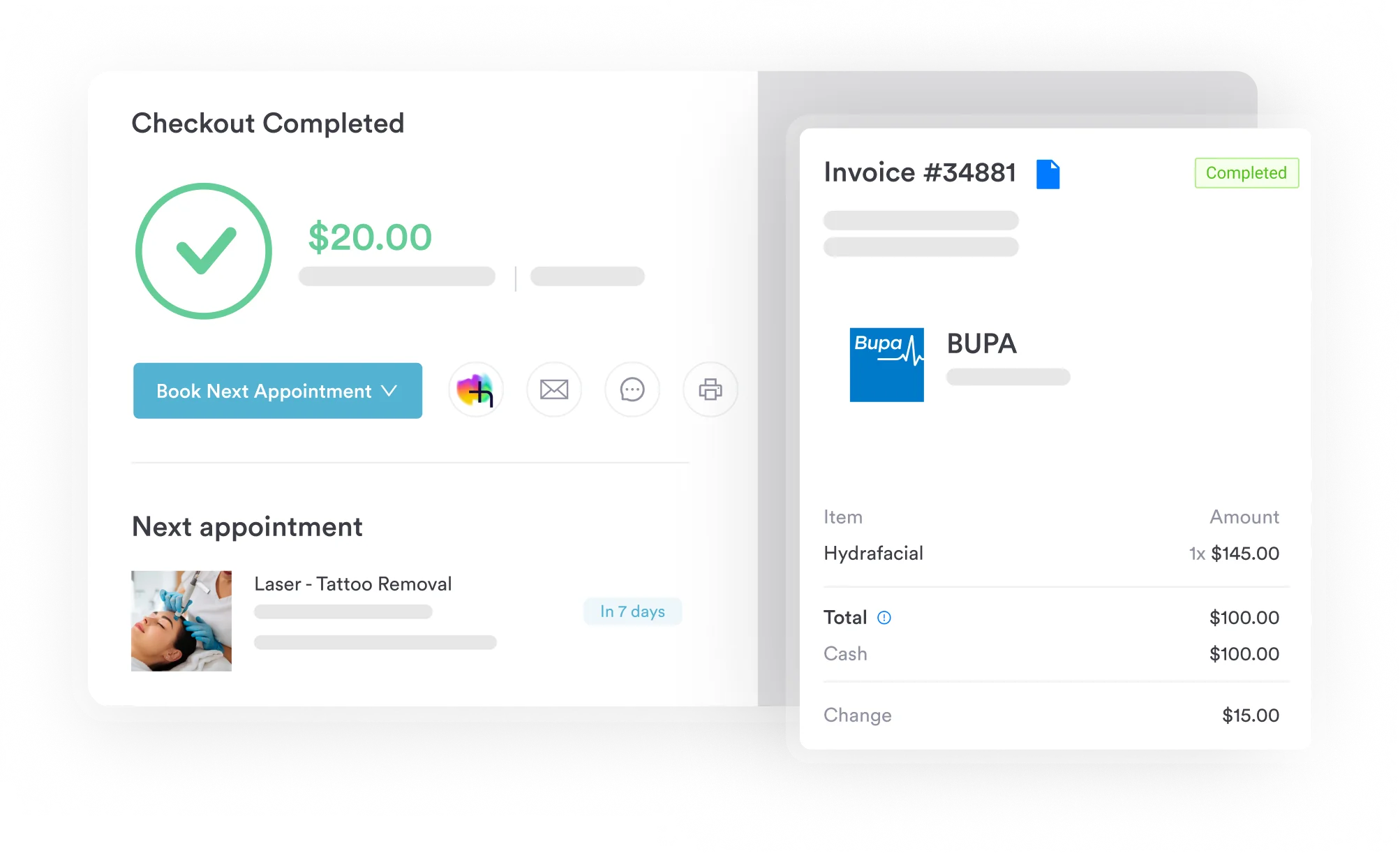
The result is fewer claims bounced for a missing reference, and a clear view of what each insurer still owes. Your team spends less time on rework and more on patients.

Pabau tracks authorization codes on the patient’s case and sends claims electronically through Healthcode and to Bupa. You see each claim’s status without phoning the insurer.

P1400 is a simple code once the note says “incision” and names the introitus. Most queries come from a vague note, a biopsy billed in the same episode, or a fee from an old schedule.
Settle the procedure title with your gynecologists, and check each insurer’s current schedule before you invoice. Those two habits clear most of the delays on these claims. Book a demo to see how Pabau tracks authorizations and sends your Healthcode claims from one patient record.

Coding work on the perineum instead? CCSD code P1300 covers operations on the female perineum and how they differ from work at the introitus.
Billing a vaginal reconstruction? CCSD code P2100 explains the reconstruction code and the combinations CCSD does not accept.
Need a full Bupa CCSD billing reference? Bupa CCSD codes covers Bupa’s procedure list and how its claims work.
Repairing a fistula rather than the opening? CCSD code P2530 covers repair of rectovaginal fistula and what its claim needs.
CCSD code P1400 covers incision of introitus of vagina, a surgical cut at the vaginal opening. A gynecologist uses it to open or widen the introitus. Excision of tissue, perineal work and vaginal reconstruction take separate CCSD codes.
UK private medical insurers and the practices that bill them use it. The CCSD Group, made up of representatives from Bupa, AXA Health, Aviva and Vitality, develops the schedule. Claims usually go electronically via Healthcode or direct to the insurer.
Common pairings are N89.6 for a tight introitus, N89.5 for vaginal stenosis or adhesions, and N99.2 for adhesions after earlier surgery. N94.1, dyspareunia, can follow as a secondary code. Always code the finding recorded at operation.
We found no separate hymenectomy code in the CCSD vagina/perineum or vulva/labia sections. Ask the insurer how it wants hymen surgery coded before you submit, and keep its answer on file.
CCSD lists P2930, biopsy of lesion of vagina, as an unacceptable combination with P1400 in the same episode. Read the code principles on the CCSD website before both codes appear on one claim.
Each insurer sets its own fee. National Friendly’s October 2025 schedule bands P1400 as a Minor procedure with a £253 procedure fee. Check the paying insurer’s current schedule before you invoice.