CPT Code 35820: Exploration for postoperative hemorrhage (thorax)
CPT Code 35820: Official descriptor and clinical overview CPT Code 35820 is defi...

Last Updated: Nov 13, 2026
Q0712 is the CCSD code for radical trachelectomy including laparoscopic and removal of lymph nodes +/- ureterolysis. It covers fertility-sparing surgery for small, early-stage cervical cancer, where the surgeon removes most of the cervix and nearby tissue but keeps the uterus.
The operation includes laparoscopic removal of the pelvic lymph nodes. Ureterolysis is included whether or not the surgeon needs it, so neither step is billed on a separate line.
Let Pabau's smart automation suggest the right codes, reduce claim denials, and keep your practice compliant—effortlessly.
Automate repetitive tasks and focus on what matters most—your patients.
Reduce coding errors and ensure compliance with the latest regulations.
Clean claims, fewer denials, and faster reimbursements.
Powerful insights and reporting to help your practice thrive.
HIPAA compliant SOC 2 certified GDPR-compliant Trusted by 4,000+ clinics worldwide

CCSD code Q0712 covers radical trachelectomy with laparoscopic pelvic lymph node removal, a fertility-sparing operation for small, early-stage cervical cancer.
Ureterolysis is part of the code, so a separate ureterolysis line (M2530, M2580, M2581 or M2582) doesn’t belong on the claim.
If the surgeon goes on to a radical hysterectomy, bill the code for that operation instead of Q0712.
The operative note should show the approach, the nodes removed, whether ureterolysis was done and where the specimens went.
CCSD publishes codes and coding rules but no fees, so confirm authorization and payment terms with the patient’s insurer before surgery.
CCSD code Q0712 is the UK private-insurance code for a radical trachelectomy with laparoscopic removal of the pelvic lymph nodes, with or without ureterolysis. Cancer Research UK describes the operation as removing most of the cervix, the tissue around it and the upper part of the vagina. The uterus stays in place.
That combination is the point of the procedure. It treats a small stage 1 cervical cancer while leaving the option of a pregnancy later. A gynecologic oncologist performs it. In UK practice, a gynecological cancer multidisciplinary team (MDT) usually reviews the case first.
Q0712 sits in CCSD Chapter 14, under Uterus / Adnexa. The Clinical Coding and Schedule Development (CCSD) group publishes the codes UK insurers use for private claims, along with their coding rules. It doesn’t set fees, so each insurer decides what it pays for the operation.
The surgeon works through the operation in a set order, and each stage leaves something the billing team will look for later in the note.
Units combine approaches in different ways. Some pair keyhole node removal with a vaginal trachelectomy, while others complete the whole operation laparoscopically. If the operation was mainly open or robotic, check the schedule for a closer match before you assign Q0712.
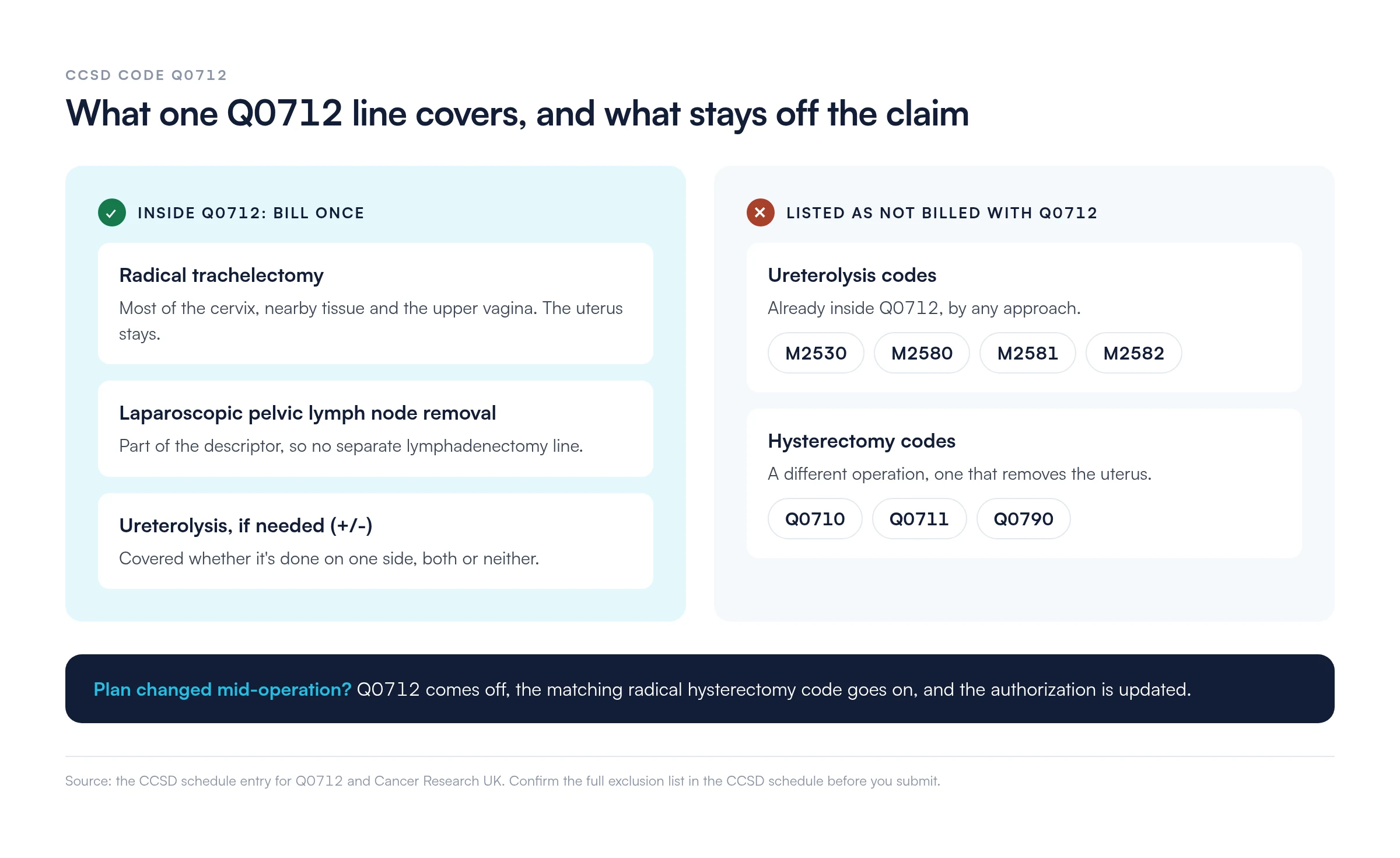
CCSD’s entry for Q0712 lists the codes below among the combinations it won’t accept on the same claim. The descriptions are short summaries, not the official wording. The full schedule sits behind a login, so check the current entry for the complete list before you rely on this one.
Two patterns explain the list. Ureterolysis is part of Q0712 already, on either side and by any approach. Done as a standalone operation, a one-sided release has its own code, M2530. The hysterectomy codes describe a different operation, one that removes the uterus Q0712 sets out to keep.
The same logic applies to the nodes. Q0712’s descriptor includes lymph node removal, so a separate lymphadenectomy line would bill one step twice. The map below puts the bundle and the exclusions side by side.
Here’s an illustrative case. A 31-year-old patient is booked for a radical trachelectomy after MDT review, and the insurer authorizes Q0712. During surgery, the findings call for more radical surgery, so the surgeon goes on to a radical hysterectomy.
The claim now follows the operation that took place. Q0712 comes off, and the radical hysterectomy code that matches the approach goes on. Call the insurer to update the authorization, because the original approval named a different procedure. The operative note should explain why the plan changed.
Insurers check the claim against the record, so the note has to support each part of the descriptor. Make sure it covers:
The diagnosis usually comes from ICD-10 category C53, malignant neoplasm of cervix uteri. Pick the code that matches the histology report.
Does one-sided ureterolysis change the code? No. The “+/- ureterolysis” in the descriptor covers none, one side or both.
Can Q0712 go on a claim without the laparoscopic element? Check first. The descriptor names a laparoscopic approach, so the note should show one.
Where does the fee come from? From the insurer. Check their fee schedule or your agreement with them before surgery.
Gynecology billing teams often juggle the authorization letter, the operative note and the histology report across separate systems. When the plan changes mid-operation, that split is where a claim stalls.
Pabau, the practice management software we build, keeps the note, the authorization number and the claim on one patient record. Its Healthcode integration sends CCSD-coded claims from that record and tracks their status.
The claims software for practices also checks required fields, such as membership and authorization numbers, before a claim goes out. Fewer claims come back for missing details, and your team spends less time on resubmissions.
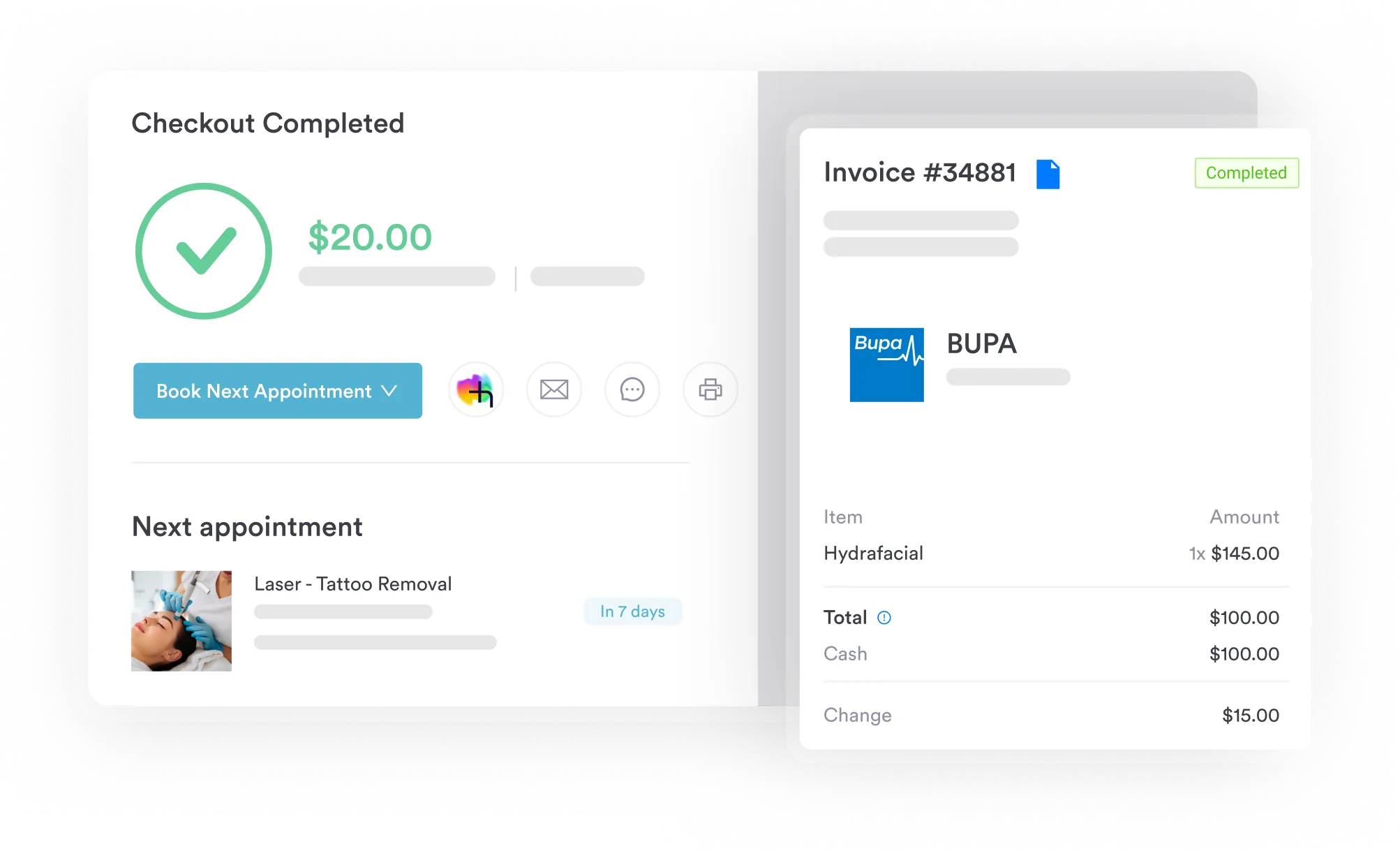

Pabau keeps operative notes, authorization numbers and Healthcode claims together, and checks required claim fields before submission.

Q0712 bundles the node dissection and any ureterolysis into a single line. A clean claim shows that this one operation happened as the note describes.
The decision that matters most comes after surgery. If the plan changed, recode from the note and update the authorization before you submit. That habit prevents the slowest rework this code produces.
Book a demo to see how Pabau keeps operative notes, authorizations and Healthcode claims on one patient record.

Coding a hysterectomy instead? CCSD code Q0750 covers subtotal abdominal hysterectomy and how to bill it.
Working on gynecologic oncology claims? CCSD code Q0880 explains billing a hysterectomy for an ovarian tumor.
New to the CCSD schedule? Bupa CCSD codes guide shows how the schedule is structured and searched.
Coding other operations on the uterus? CCSD code Q1700 covers therapeutic hysteroscopic operations and what goes on the claim.
It may be possible, because the uterus stays in place. Cancer Research UK notes that the baby would need to be delivered by cesarean section.
Cancer Research UK says patients usually stay in the hospital for one or two nights. The surgeon confirms the plan for each patient.
A cone biopsy removes a small cone of tissue from the cervix, often to diagnose or treat early changes. A radical trachelectomy removes most of the cervix, nearby tissue and the pelvic lymph nodes.
A radical hysterectomy removes the uterus as well as the cervix, so it ends fertility. That’s why the two codes can’t be billed together.
No. NHS hospitals record procedures in OPCS-4. CCSD codes are used for claims to UK private medical insurers.