

CPT Code 30801: Superficial turbinate ablation billing guide
CPT Code 30801: Official descriptor and procedure overview The American Medical ...

Last Updated: Nov 27, 2026
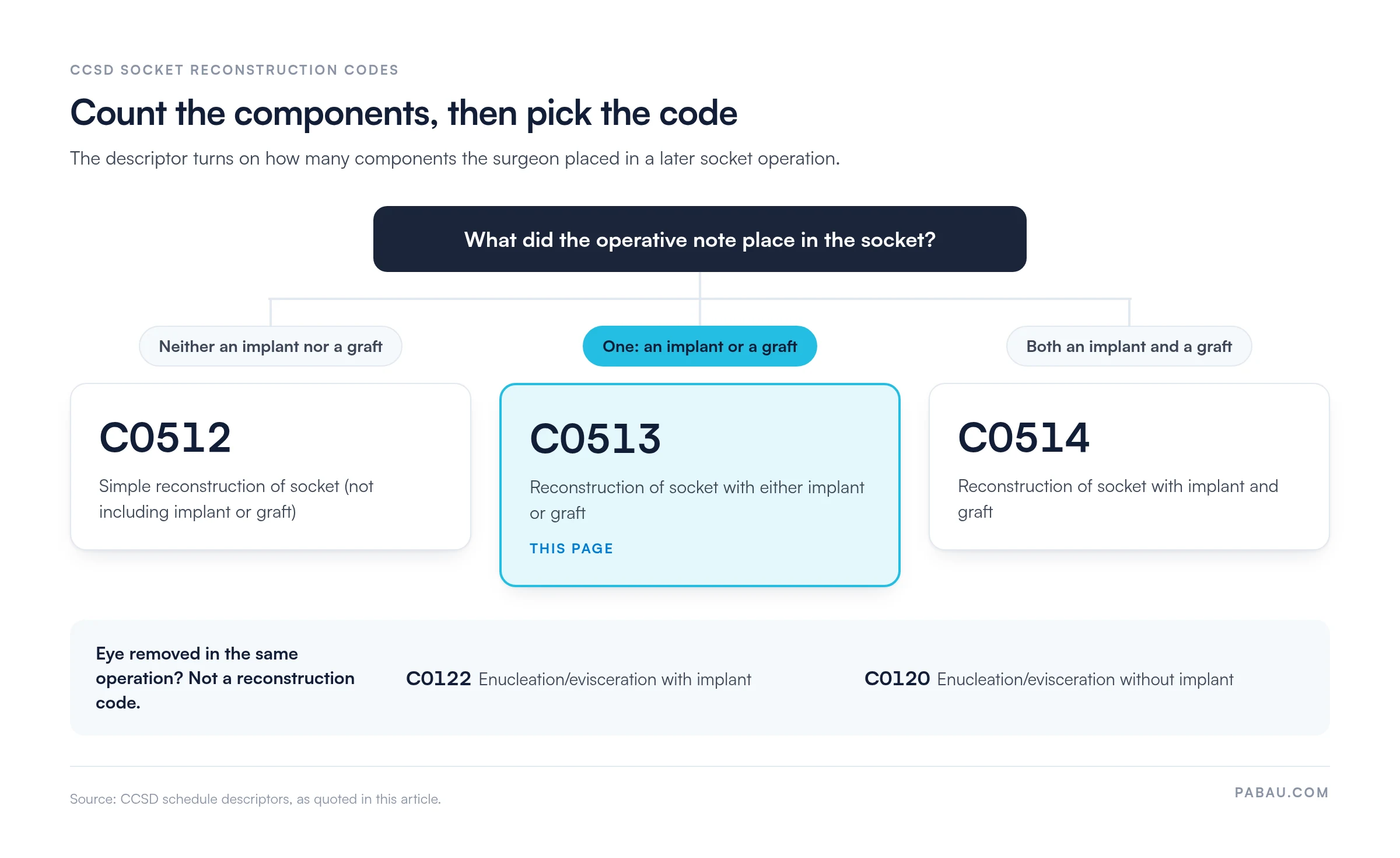
C0513 is the CCSD code for reconstruction of socket with either implant or graft. It covers a later operation that rebuilds an anophthalmic socket with one component, an orbital implant or a graft. An anophthalmic socket is the orbit left after the eye is removed.
A socket rebuilt with both an implant and a graft bills as C0514, and one rebuilt with neither bills as C0512. UK private medical insurers assess the code through the CCSD schedule.
Let Pabau's smart automation suggest the right codes, reduce claim denials, and keep your practice compliant—effortlessly.
Automate repetitive tasks and focus on what matters most—your patients.
Reduce coding errors and ensure compliance with the latest regulations.
Clean claims, fewer denials, and faster reimbursements.
Powerful insights and reporting to help your practice thrive.
HIPAA compliant SOC 2 certified GDPR-compliant Trusted by 4,000+ clinics worldwide

C0513 covers socket reconstruction with one component, an implant or a graft. Both together bill as C0514, and neither as C0512.
Every C0513 claim needs a matching diagnosis, and mismatched or missing ICD-10 codes are a common denial trigger.
UK private medical insurers such as Bupa, AXA Health, Aviva and Vitality usually expect pre-authorization before socket reconstruction.
The operative note must name the implant material and size or the graft type and harvest site, or the claim is likely to be queried.
CCSD code C0513 is the UK private-insurer code for reconstruction of socket with either implant or graft.
It covers a later operation that rebuilds the anophthalmic socket with one component, either an orbital implant or a graft. The code sits in chapter 4, Eye and orbital contents, of the CCSD schedule.
CCSD stands for Clinical Coding and Schedule Development. Bupa, AXA Health, Aviva and Vitality use its schedule as a shared coding language for private healthcare. The CCSD technical guide sets out the rules for applying and bundling codes like C0513.
The word “either” in the descriptor matters, because the number of components decides the code. A socket rebuilt with an implant and a graft in the same operation bills as C0514. A simple reconstruction with neither component bills as C0512.
C0513 is used when the anophthalmic socket has lost the volume, structure or fornix depth needed to hold a prosthetic eye. The most common clinical triggers are:
An oculoplastic surgeon performs the procedure, and the operative note must name the indication. The insurer checks the claim against the diagnosis, so the note and the codes need to agree.
Both sub-types bill under C0513, as long as only one component is used. The approach decides what the operative note must record and which diagnosis codes describe the indication best.
A dermis fat graft is harvested from the patient’s abdomen or flank, trimmed to the volume deficit, and placed in the socket. Surgeons often prefer it after a synthetic implant has extruded or when socket blood supply is poor.
Hydroxyapatite and porous polyethylene implants let fibrovascular tissue grow into them. They still need enough conjunctiva or Tenon’s capsule over them for cover. If the surgeon adds a graft to cover the implant, the operation bills as C0514 rather than C0513.
UK private medical insurers expect a diagnosis on every C0513 claim, and many ask for it as an ICD-10 code. The table lists the codes most often paired with C0513. Always match the code to the documented clinical finding.
Important: The UK uses the WHO edition of ICD-10, not the US ICD-10-CM. Check every sub-code against the WHO version, and use the most specific code the documented diagnosis supports.
Socket reconstruction is one step in a longer episode of oculoplastic care. Knowing which neighboring code covers each step prevents undercoding, overcoding and duplicate claims.
Eye removal sits in the globe and orbit codes: C0122 with an implant and C0120 without one. Oculoplastic care can also include a blocked tear duct, and widening or stenting it under imaging control bills as XR320. Check each descriptor against the current CCSD schedule before coding, because it is updated regularly.
Our CCSD codes reference is the place to look up the other codes in the schedule, such as C0512. The Bupa CCSD codes guide explains how the wider schedule is organized. Skin grafts sit in a separate chapter, so a small full thickness graft to the head bills as code S3624.
The operative note must show an insurer’s reviewer that a socket reconstruction with one component took place. A vague note is a frequent reason C0513 claims are queried or reduced.
Digital clinical forms capture the operative fields at the point of care, so incomplete notes are less likely to reach billing. The note should include:
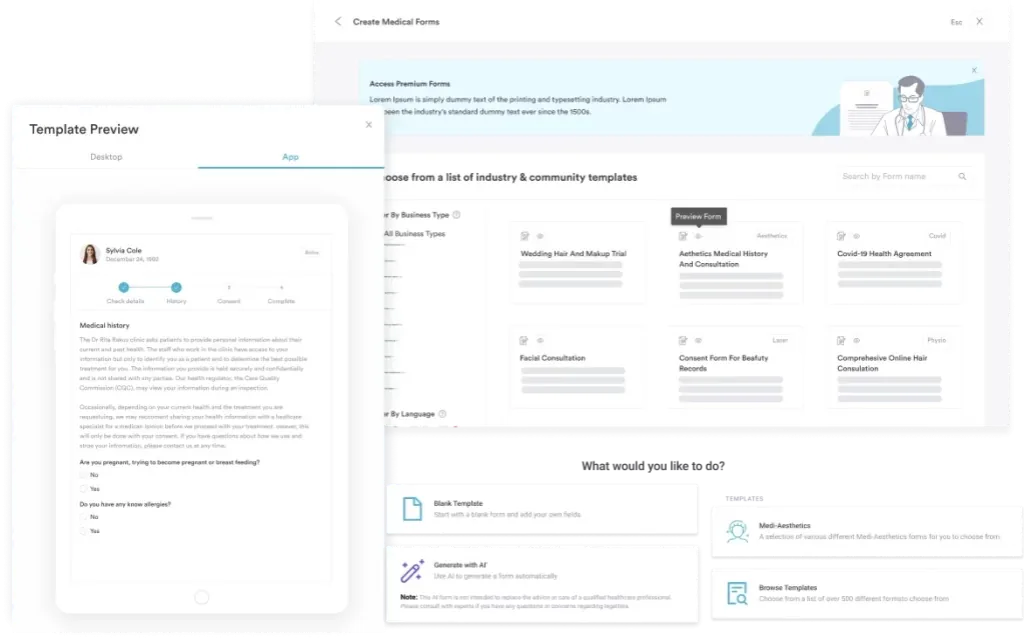
Insurers may ask for the full operative note when they query a C0513 claim. Keep a complete copy in the patient record, ready to send within the insurer’s deadline.
Run a documentation check before submitting any C0513 claim. Confirm the note names the implant material and size, or the graft type and harvest site. A note that says only ‘socket reconstruction performed’ will draw a request for more information from the insurer.
Most UK private medical insurers, such as Bupa, AXA Health, Aviva and Vitality, expect pre-authorization before socket reconstruction. Rules differ by insurer and policy, so confirm them before booking surgery. The request for C0513 typically includes:
Turnaround varies by insurer, so send the request as soon as the surgery date is set. Surgery done without an authorization number risks non-payment. If authorization is declined, ask the insurer for its reasons in writing, because they form the basis of an appeal.
C0513 claims fail for a handful of predictable reasons, and each is cheaper to prevent than to appeal. Strong medical billing compliance from the operative note through to submission lowers the risk of each one.
Mismatched or missing ICD-10 codes are a common denial trigger, and so are notes that leave the component unnamed. A coding check before submission catches both.
Socket reconstruction rarely stands alone. The episode usually spans eye removal, the later reconstruction and a prosthesis fitting, and each stage is claimed on its own date of service. Insurers generally accept:
Bundling rules can change when CCSD updates the schedule. For an unusual case, ask the insurer’s provider support team to confirm co-billing in writing before you submit.
Oculoplastic practices billing C0513 handle a small number of high-value claims that depend on detailed notes. Built by hand, each claim passes through several documents, and the implant size, graft site or eye side can drift between them.
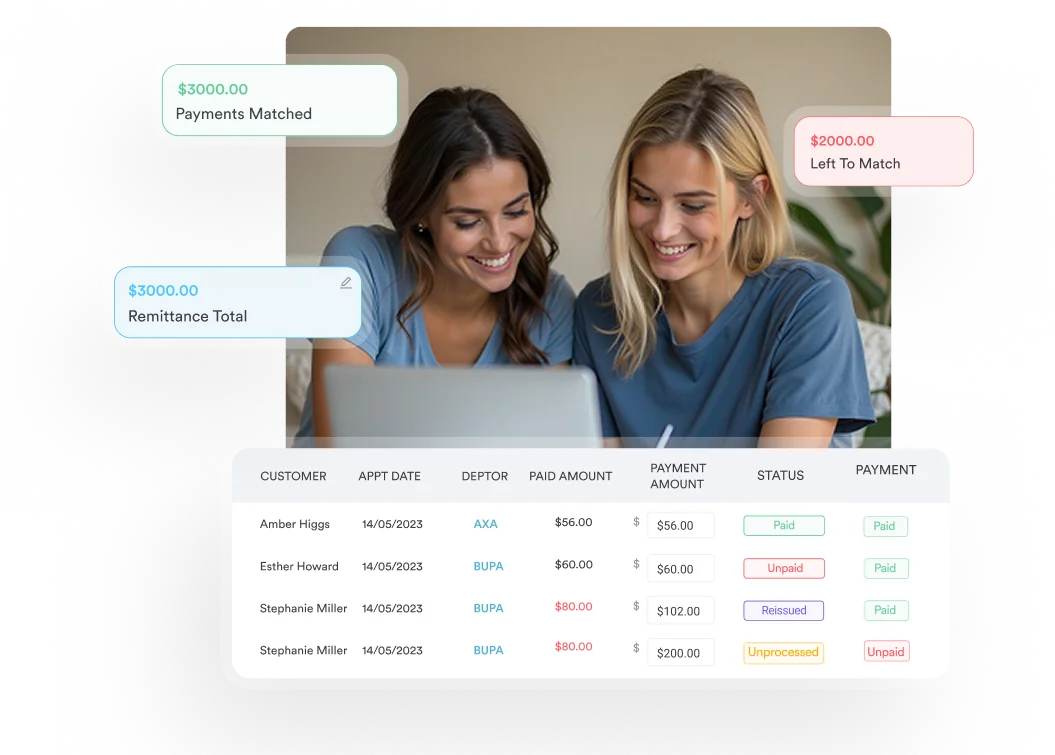
Pabau, a practice management platform with built-in claims management software, keeps the note, the authorization and the claim on one patient record. Claims go to UK insurers such as Bupa through Healthcode from that record.
The pre-authorization is tracked on the case, and Pabau warns the team when one is missing. The result is fewer insurer queries and less time spent rebuilding claims after surgery.

Pabau helps oculoplastic practices keep the operative note, pre-authorization and claim on one patient record. Claims reach UK insurers through Healthcode, and missing authorizations are flagged before surgery.

Code C0513 only when the operative note shows one component, an implant or a graft. Both components make it C0514, and neither makes it C0512. Settle the component first, then the code.
The authorization request, the operative note and the claim should describe the same procedure on the same eye. Book a demo to see how Pabau keeps oculoplastic notes and insurer claims in step.

Need a broader CCSD billing reference? Pabau’s Bupa CCSD codes guide covers how the CCSD schedule is structured and how UK private insurers assess claims.
Placed an implant and a graft together? CCSD code C0514 covers socket reconstruction with both components in one operation.
Placing the implant at eye removal? CCSD code C0122 covers enucleation or evisceration with an implant in the same operation.
Eye removed with no implant? CCSD code C0120 covers enucleation or evisceration without an implant, before any later socket reconstruction.
CCSD code C0513 covers reconstruction of the anophthalmic socket with one component, either an orbital implant or a graft. The implant may be hydroxyapatite or porous polyethylene, and the graft is often dermis fat. UK private medical insurers assess the code through the CCSD schedule.
Yes, but only one of them per operation. The official descriptor is “Reconstruction of socket with either implant or graft.” If the surgeon places an implant and a graft together, the code is C0514. A simple reconstruction with neither component bills as C0512.
Common pairings include Q11.1 (other anophthalmos), H44.5 (degenerated conditions of globe) and T85.3 for implant extrusion. Z90.0 (acquired absence of part of head and neck) covers an eye lost to earlier surgery. Check each code against the WHO edition of ICD-10 used in the UK.
A dermis fat graft is a piece of the patient’s own fat and dermis, taken from the abdomen or flank. It is shaped and placed in the socket to restore volume. Surgeons often prefer it when the conjunctiva is poor or a previous synthetic implant has extruded.
Usually, yes. Most UK private medical insurers, such as Bupa, AXA Health, Aviva and Vitality, expect it before socket reconstruction. Send the CCSD code, the diagnosis, a supporting letter from the surgeon, laterality and the planned surgery date. Rules vary by insurer and policy.
Not on the same surgical claim. The ocularist fits the prosthetic eye at a separate appointment once the reconstructed socket has healed. That fitting is claimed on its own date, so check the patient’s policy for how the insurer covers it.




