ICD-10 code S61.201A: Open wound of left index finger without nail damage
ICD-10 code S61.201A covers a left index finger wound of unstated type ICD-10 co...

Last Updated: Oct 16, 2026
Billable Code Specific Code
T85.72XD is the billable ICD-10-CM code for infection and inflammatory reaction due to insulin pump, subsequent encounter.
Let Pabau's smart automation suggest the right codes, reduce claim denials, and keep your practice compliant—effortlessly.
Automate repetitive tasks and focus on what matters most—your patients.
Reduce coding errors and ensure compliance with the latest regulations.
Clean claims, fewer denials, and faster reimbursements.
Powerful insights and reporting to help your practice thrive.
HIPAA compliant SOC 2 certified GDPR-compliant Trusted by 4,000+ clinics worldwide

T85.72XD is a billable ICD-10-CM code for infection and inflammatory reaction due to an insulin pump at a subsequent encounter (7th character D).
Use T85.72XD only after the initial treatment visit (T85.72XA); ‘D’ indicates the patient is receiving active, routine care for an ongoing insulin pump infection.
The ICD-9-CM approximate crosswalk is V58.89 (Other specified aftercare); the mapping is approximate, not exact.
Pabau’s claims management software helps diabetes and metabolic health practices document subsequent encounters and submit T85.72XD claims accurately.
ICD-10 Code T85.72XD is the billable diagnosis code for “Infection and inflammatory reaction due to insulin pump, subsequent encounter.” The Centers for Medicare and Medicaid Services (CMS) mandated its use across all healthcare settings for dates of service on or after October 1, 2015.
You assign it at a follow-up visit when an already-identified insulin pump infection is under active management. It is one of several insulin pump complication codes: infection sits in the T85.7 group, while mechanical faults such as breakdown, displacement, and leakage each carry their own T85.6 codes, all mapped below.
This code belongs to the T85 category (Complications of other internal prosthetic devices, implants and grafts) within ICD-10-CM chapter S00-T88 (Injury, poisoning and certain other consequences of external causes). It covers infections or inflammatory reactions at the insulin pump infusion site, in the surrounding tissue, or related to the pump device itself during a follow-up visit when the condition is already under active management.
The T85 category covers other device families too, and each takes its own subcategory. Mechanical breakdown of other gastrointestinal prosthetic devices, for instance, is coded T85.518A at the initial encounter. Insulin pump complications stay inside the T85.6 and T85.7 groups.
The “X” in T85.72XD is a placeholder character required to allow the 7th character extension. Without the placeholder, the code structure would be invalid in ICD-10-CM. See the CDC/NCHS ICD-10-CM web tool to look up the full tabular listing for T85.72 and its child codes.
The single most common coding error with T85.72XD is using the wrong 7th character. Misassignment between A, D, and S is a top reason for claim denial on insulin pump complication codes.
Per the ICD-10-CM Official Guidelines for Coding and Reporting, “subsequent encounter” (7th character D) applies when the patient is receiving routine care during the healing or recovery phase. It does not mean the second visit in a calendar year; it means any visit after the initial evaluation where the provider is managing an already-identified condition.
A patient seen at an endocrinology clinic for a pump site wound check three weeks after the initial infection diagnosis should receive T85.72XD, not T85.72XA. The initial encounter code was appropriate at the first visit where the infection was identified and treated. Similar 7th character logic applies across other ICD-10 codes.
T85.72XD is a fully billable ICD-10-CM code, confirmed valid through FY2025-2026. It requires no additional digits to be considered complete.
For practices transitioning legacy records or reconciling older claims, the approximate ICD-9-CM equivalent is:
This mapping is approximate, not exact. V58.89 was a broad aftercare code that did not capture device-specific infection detail. The CrossCoder bidirectional crosswalk tool documents this conversion, confirmed through the CDC/NCHS General Equivalence Mappings (GEMs). Coders reconciling pre-2015 claims should note the clinical specificity gap: T85.72XD communicates far more detail to payers than V58.89 ever could.
For comparison.
Reimbursement claims with a date of service on or after October 1, 2015 must use ICD-10-CM codes. Payers will reject any claim that uses an ICD-9-CM code for a post-2015 service date. Use the ICD List lookup to confirm a code’s billable status before submission.
When reviewing pre-2015 records for continuity of care, flag the V58.89 to T85.72XD crosswalk in your documentation system. This prevents coding staff from applying the ICD-9 code on current claims while still providing historical context for the patient’s record.
Tracking a complication from presentation to recall is far easier inside a patient management system than on paper.
Continuous subcutaneous insulin infusion (CSII) via insulin pump is a standard diabetes management approach for type 1 and select type 2 patients. Infusion site infections are a recognized complication, typically presenting as local erythema, induration, or abscess formation at the cannula insertion point.
Correct use of T85.72XD in subsequent encounters matters for two practical reasons. First, it signals to the payer that treatment is ongoing and medically necessary, supporting continued coverage. Second, it creates an accurate longitudinal record of device-related complications that informs future device management decisions and quality metrics.
Practices using digital intake forms can standardize subsequent encounter documentation, capturing the patient’s infection status, wound assessment, and pump site condition at each follow-up visit. This keeps the clinical record aligned with the T85.72XD code and reduces documentation-driven denials.
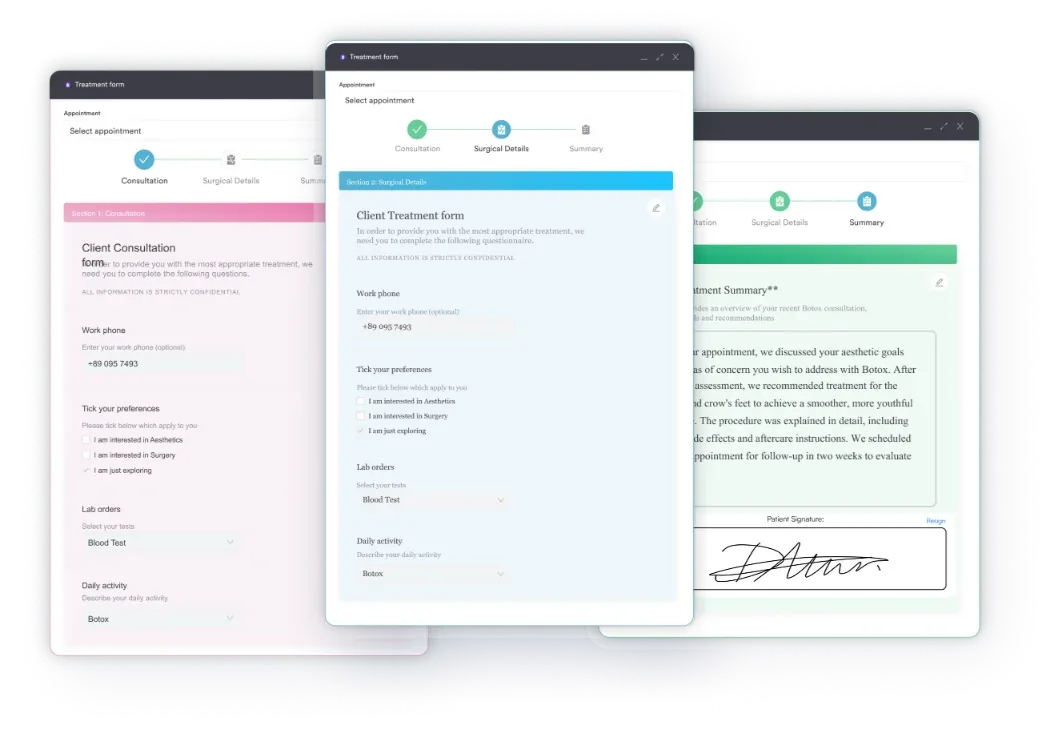

Pabau’s claims management software helps diabetes and metabolic health practices document subsequent encounters accurately, reducing denials on device complication codes like T85.72XD.

Poor documentation is the fastest route to a T85.72XD denial. Payers expect the medical record to justify both the diagnosis and the encounter type. Missing one element pushes the claim into review or rejection.
The medical forms at your practice can be structured to capture each of these elements at every subsequent encounter visit, keeping documentation consistent across providers within the same clinic. Practices managing claims management software integrated with their EHR can flag incomplete documentation before a claim is submitted.
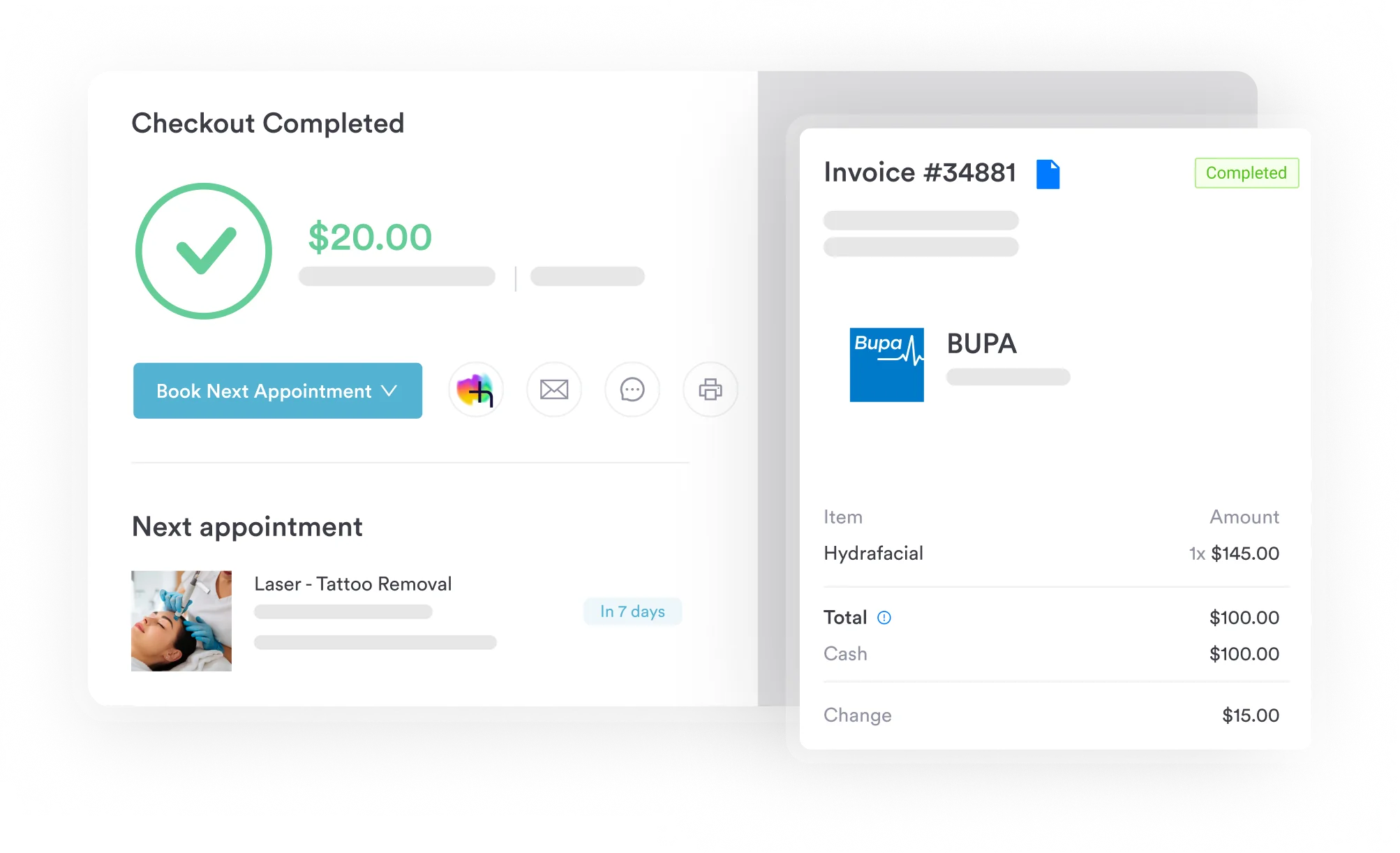
Audit your T85.72XD claims quarterly. Pull a sample of 10-20 claims and match each against the corresponding clinical note. If the note reads ‘doing well, infection clearing’ without documenting the specific wound status, pump site assessment, or care provided, your documentation is likely insufficient for payer review. Tighten the template before you receive a denial.
T85.72XD is rarely coded alone. Insulin pump infection encounters almost always involve diabetes mellitus as the underlying condition, and coders must also account for any complications or comorbidities present at the visit.
T85.72XD covers infection, but a pump can also fail mechanically. Those faults are coded in the T85.6 subcategory, and each base code needs a 7th character (A, D, or S) to become billable. This table maps the full insulin pump complication set, so you can pick the right base code before adding the encounter character.
The base T85.6 codes are not billable on their own. When a pump malfunction causes an insulin overdose, ICD-10-CM guideline I.C.4.a.5.a sequences the T85.6- code first, followed by T38.3X1- for the poisoning. An underdose from the same malfunction takes T38.3X6- (underdosing) in the second position.
Per ICD-10-CM sequencing guidelines, coders should generally sequence the complication code (T85.72XD) as the principal diagnosis for the encounter, with the underlying diabetes code as an additional code. Typical pairings include:
Always verify the applicable diabetes code reflects the patient’s documented glycemic control at the visit. The ICD-10 code for autistic disorder article offers a useful comparison of how comorbid coding works across different diagnostic categories. For crosswalk and coding guidance, the AAPC Codify ICD-10-CM lookup supports keyword and code-range searches across the full T85 family.
Practices managing multi-provider diabetes clinics benefit from compliance management workflows that standardize which CPT codes are paired with T85.72XD by encounter type, reducing individual coder variation and audit risk.
Coding accuracy for device complication codes depends on the quality of the underlying clinical record. A fragmented documentation system, where encounter notes, device records, and billing codes live in separate places, is where T85.72XD errors originate.
Pabau’s claims management software connects clinical documentation directly to the billing workflow. Practitioners at diabetes and metabolic health clinics can build structured encounter note templates that capture every element required for a T85.72XD subsequent encounter, from device identification to wound status to the active management plan. The same record flows into the claims submission process, so coders are working from a complete clinical picture rather than a sparse note. Front-desk data entry and back-office coding both feed cash collection, so errors compound downstream. A code lookup that lives beside the desk gets used; one buried in a shared drive does not.
Pabau also supports patient record documentation that tracks device history across visits, making it straightforward to confirm that a patient has already had an initial encounter coded and that the current visit qualifies as a subsequent encounter. For practices investing in EHR integration across their diabetes care workflows, this continuity is what prevents the most common T85.72XD errors from reaching the payer.
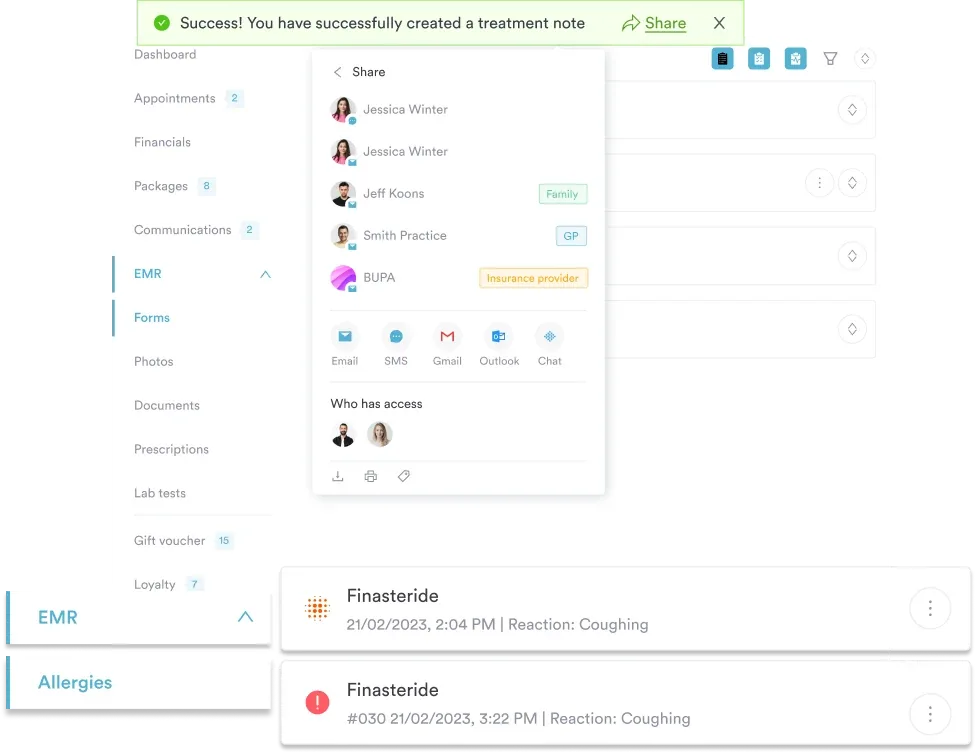
Misassigning the 7th character on insulin pump complication codes is one of the costliest avoidable errors in diabetes billing. T85.72XD captures exactly what T85.72XA does not: the follow-up encounter where ongoing clinical management is the focus.
Complete documentation, correct encounter sequencing, and accurate comorbidity pairing are what stand between a clean T85.72XD claim and a denial. Practices that build these requirements into their HIPAA compliance for medical offices documentation workflows reduce audit exposure and speed up reimbursement cycles. To see how Pabau helps diabetes and metabolic health clinics manage device complication claims from documentation through submission, book a demo.

Billing a preventive visit for a young patient? Preventive visit billing for ages 5-11 CPT code 99383 covers the initial comprehensive preventive visit for new patients aged 5 through 11.
Billing a preventive visit for a younger adult? Preventive visit billing for ages 18-39 CPT code 99385 covers preventive visits for new patients aged 18 to 39 and common coding pitfalls.
Billing a preventive visit for an infant? Infant preventive visit billing guide CPT code 99391 covers preventive re-evaluations for established patients under one year old.
T85.72XD is the billable code for infection and inflammatory reaction due to an insulin pump at a subsequent encounter, used at follow-up visits where a provider is managing an already-identified pump infection.
Subsequent encounter (7th character D) means the patient is receiving routine care during the healing or recovery phase. It applies to any visit after the initial evaluation, not just the literal second appointment.
T85.72XA is for the initial evaluation, T85.72XD for ongoing subsequent management, and T85.72XS for sequela encounters documenting residual effects after the infection has resolved.
T85.72XD maps approximately to ICD-9-CM V58.89 (Other specified aftercare), though the mapping is approximate and V58.89 did not capture device-specific infection detail.
Yes, T85.72XD is fully billable through FY2025-2026 and requires no additional digits. All claims with dates of service on or after October 1, 2015 must use ICD-10-CM codes.
Infection uses the T85.72 family: initial (XA), subsequent (XD), and sequela (XS). Mechanical faults have separate codes: T85.614 (breakdown), T85.624 (displacement), T85.633 (leakage), and T85.694 (other mechanical). Diabetes codes (E10/E11 series) and Z96.41 are commonly paired.
A malfunctioning pump is coded as mechanical breakdown under T85.614, with a 7th character added for the encounter: T85.614A, T85.614D, or T85.614S. Displacement is T85.624 and leakage is T85.633.