ICD-10 Code Z74.8: Other problems related to care provider dependency
ICD-10 Code Z74.8: Definition and code details ICD-10 Code Z74.8 is the billable...

Last Updated: Oct 19, 2026
Billable Code Specific Code
Q02 is the billable ICD-10-CM code for microcephaly.
Let Pabau's smart automation suggest the right codes, reduce claim denials, and keep your practice compliant—effortlessly.
Automate repetitive tasks and focus on what matters most—your patients.
Reduce coding errors and ensure compliance with the latest regulations.
Clean claims, fewer denials, and faster reimbursements.
Powerful insights and reporting to help your practice thrive.
HIPAA compliant SOC 2 certified GDPR-compliant Trusted by 4,000+ clinics worldwide

ICD-10 Code Q02 is the single billable diagnosis code for microcephaly, valid for FY2026 (effective October 1, 2025).
Documentation must carry an objective head circumference more than 2 standard deviations below the mean for age and sex.
The Tabular List adds an Excludes1 note for Meckel-Gruber syndrome and a code-first note for congenital Zika virus disease.
Q02 is exempt from Present on Admission reporting, so it never feeds hospital-acquired condition measures.
Practice management software like Pabau keeps the measurement, the etiology note, and the claim on one patient record.
ICD-10 Code Q02 is the billable ICD-10-CM diagnosis code for microcephaly. It is valid for fiscal year 2026, and that edition took effect on October 1, 2025. According to the CMS ICD-10 codes page, Q02 is a specific, terminal code with no subcategory codes beneath it.
One measurement drives the assignment. The record needs an objective head circumference more than 2 standard deviations below the mean for the child’s age and sex. Claims management software pulls the claim from the same record that holds that measurement.

Q02 sits in a small corner of the ICD-10-CM system. Knowing where it falls helps coders pick the right sibling code when a patient has more than one congenital condition.
FY2026 extended Chapter 17 to Q00-QA0 and added the new QA0 category for genetic disorders. A Chapter 17 code is sequenced as principal diagnosis when the congenital condition is the reason for the visit. It moves to a secondary position when it is a related condition instead.
Microcephaly is a condition in which the head circumference is much smaller than expected for a child’s age and sex. The threshold that drives Q02 is a measurement more than 2 standard deviations below the mean. The CDC/NCHS ICD-10-CM tool carries the same criteria.
The condition may be primary, meaning brain development failed structurally, or secondary, meaning it was acquired. Etiology matters for coding, because some causes require an additional code alongside Q02.
Associated findings such as intellectual disability or seizure disorders are common, and each one carries its own ICD-10-CM code. Practices that follow these children through years of therapy often run their notes and scheduling in speech therapy software built for repeat developmental visits.
Two terms sit under the Includes note for Q02. When either one appears in physician documentation, Q02 is the correct code assignment.
Both terms come from the Includes note in the ICD-10-CM Tabular List, which is an instructional note rather than an Alphabetical Index entry. If the documentation says micrencephaly or micrencephalon, the code assignment is the same. There is no separate code to go looking for.
Q02 carries two instructional notes in the Tabular List. Reading both before you finalize the code prevents the rejections that follow a wrong assignment.
The Excludes1 note under Q02 lists Meckel-Gruber syndrome, coded to Q61.9. Excludes1 means the two codes are never reported together for the same patient. When the record confirms Meckel-Gruber syndrome, report Q61.9 and leave Q02 off the claim.
Q02 also carries a code-first instruction. Where congenital Zika virus disease is documented, sequence P35.4 ahead of Q02. The note applies to any encounter where that diagnosis is in the record.
The codes below are not part of the Excludes1 note. They are the ones coders reach for by mistake, so the distinction is worth holding in mind at assignment.
Sequencing is the other thing to settle here. When a chromosomal abnormality such as trisomy 21 is the documented primary cause, the official guidelines decide which code leads. Microcephaly listed as a manifestation does not sequence first on its own.
Missing one documentation element is enough for a Q02 claim to deny. Payers expect objective, measurement-based evidence in the encounter note, beyond the diagnostic label itself. Digital clinical forms built around these requirements capture the data at the point of care.

Getting these fields into the note during the visit is what makes a clean claim possible on the first pass. Structured medical forms that pre-populate the fields reduce the risk of an incomplete encounter.
Pabau’s structured patient records let clinicians capture head circumference, growth chart data, and developmental findings inside one encounter note. That keeps the billing team from rebuilding the story after the visit has closed.
Document the specific percentile and reference chart used alongside the raw head circumference measurement. Payers increasingly want the normative reference too, for example the WHO 2006 growth standards. It validates the 2 SD threshold in a way the bare measurement cannot.
The ICD-10-CM Official Guidelines for Coding and Reporting govern every Q02 assignment. A handful of patterns produce most of the claim errors and audit findings in microcephaly coding.
When a Q02 claim comes back rejected, the remittance advice names the reason. Reading the denial codes tells you whether the problem was the measurement or the sequencing, which decides how you rework it.
The codes below cover the differential. Use them when microcephaly is suspected but not confirmed, or when a different congenital nervous system condition turns out to be the diagnosis.
The CMS ICD Code Lists carry the full valid and excluded code list for coordination of benefits. That matters when a microcephaly patient is seen by several specialties or covered by more than one payer.
Q02 is a diagnosis code. The evaluations and procedures performed during a microcephaly encounter are reported with CPT codes, and the table below covers the usual pairings.
Verify current pairings against the AMA CPT edition in use for the billing year, since descriptors change every year. The AAPC CPT-to-ICD-10 crosswalk is a useful way to confirm medical necessity linkage between the procedure and Q02.
Q02 is exempt from the Present on Admission (POA) reporting requirement. Microcephaly is a congenital condition, so it is present at the time of inpatient admission by definition. Inpatient coders do not report a POA indicator for Q02.
That exemption has a billing effect. POA-exempt codes do not feed hospital-acquired condition measures or the payment adjustments attached to them. Consistently flagging POA-exempt congenital conditions across visits is also what a medical billing compliance review looks for, alongside HIPAA-compliant documentation. A coding error surfaces as a cash flow problem weeks later, which is why the healthcare revenue cycle is measured end to end. A quick reference sheet cuts lookup time on codes a practice bills every week.
Clean Q02 submission depends as much on how the encounter note reads as on the code itself. The habits below keep a claim moving on the first pass instead of into a rework queue.
EHR note structure for Q02 encounters: Put the Q02 diagnosis in the assessment section with the measurement evidence sitting next to it.
Impression: microcephaly (Q02). Head circumference 42.5 cm at 18 months, below the 3rd percentile and greater than 2 SD below the mean per WHO 2006 standards. Etiology under investigation. Genetics referral placed.
A note written that way passes audit review without a coder query.
Motor delay pulls many of these children into weekly therapy. Practices that run those visits in physical therapy software keep every session note on the record the claim is built from.
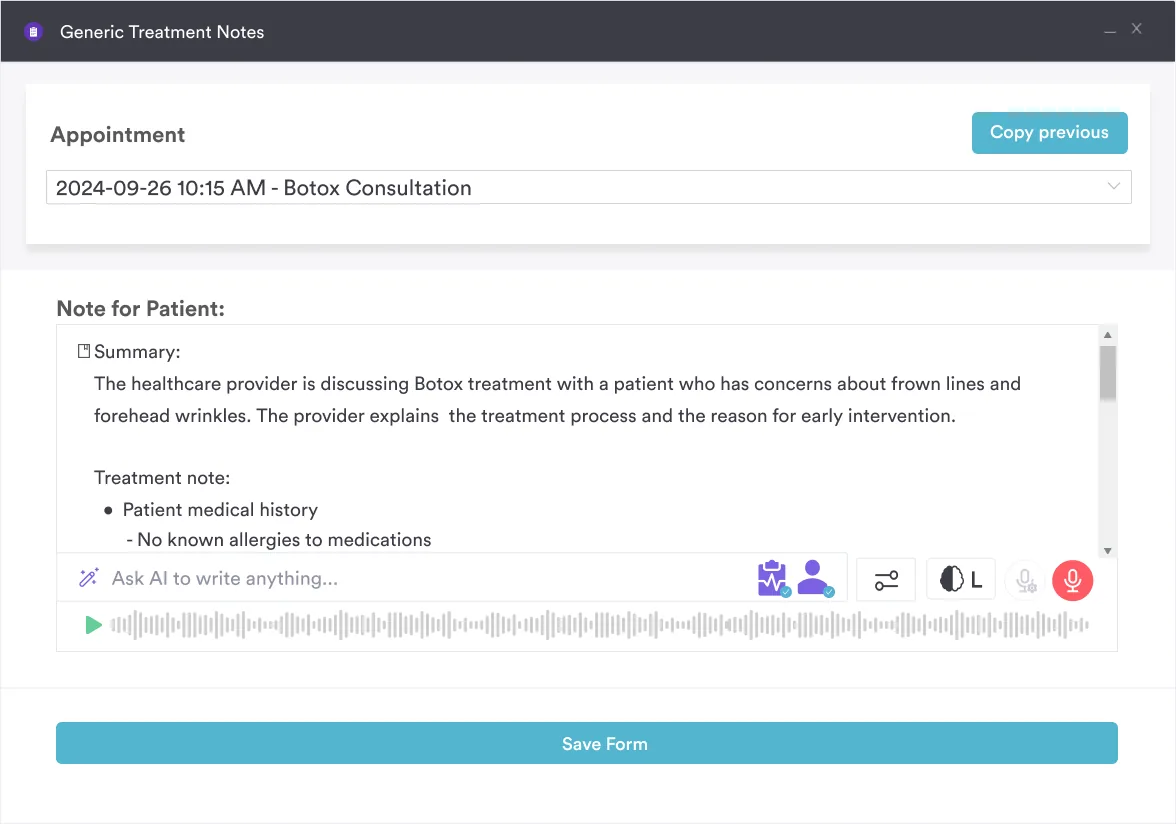
Pabau Scribe, our AI scribe, captures structured note content during the consultation, so the measurement does not go missing from the assessment. For practices carrying a high volume of pediatric congenital cases, practice management tools that join coding workflow to clinical notes cut rework at submission.
Run a quarterly audit on Q02 claims and filter for denials citing missing documentation or medical necessity. In most practices the fix is a single template update. Add the head circumference field and the growth chart reference to the neurology or pediatrics encounter note. Make both required fields before sign-off.
In most practices this work is split across three systems. The growth chart lives in one place, the encounter note in another, and the claim in a third. Every hand-off is a chance for the head circumference to fall out of the record.
Practice management software like Pabau holds them together. Measurements tracking stores each head circumference reading against the patient’s timeline, so growth across months reads in one view. The encounter note, the consent, and the claim all draw on that same record.
For a billing team, the outcome is fewer queries to chase. When a payer asks what supports the Q02 line, the measurement is already in the chart, dated and set against its growth reference. Nobody has to reopen the visit to find it.

Pabau stores growth measurements, encounter notes, and claims against the same patient record. Billing teams find the evidence a payer asks for without reopening the visit.

Q02 has no subcategories, so choosing the code takes seconds. Everything that decides whether it pays sits in the note written before the claim goes out.
Set the encounter template up once. Make head circumference, percentile, and growth reference required fields before sign-off, and put the etiology prompt underneath them. After that, a clean Q02 claim becomes the default rather than a rescue job.
Book a demo to see how Pabau keeps measurement evidence and Q02 claims on the same patient record.

Working a rejected claim? Denial management in healthcare walks through reworking and resubmitting a denial without losing the filing window.
Want the claim right on the first pass? Insurance eligibility verification covers the checks that belong before the patient arrives.
Not sure how long you have to file? Timely filing limits lists the deadlines by payer and what happens when one passes.
Waiting on approval for imaging or genetic testing? Prior authorization process explains how to get a request through the first time.
ICD-10 Code Q02 is the billable ICD-10-CM diagnosis code for microcephaly. Microcephaly is a congenital condition where the head circumference is significantly smaller than expected for a child’s age and sex. Q02 falls under Chapter 17 (Q00-QA0) and is valid for FY2026, effective October 1, 2025.
Yes, Q02 is a specific, billable ICD-10-CM code. It is a terminal code with no subcategory codes beneath it, meaning it can be used directly on claims for payment without needing more detail.
Documentation must include an objective head circumference more than 2 standard deviations below the mean for the child’s age and sex. Record the measurement in centimeters, the percentile, the reference chart used, and the etiology when it is known. Associated neurological findings are documented and coded separately.
The Includes note under Q02 lists hydromicrocephaly and micrencephalon, also written micrencephaly. When either term appears in physician documentation, Q02 is the correct assignment. That note sits in the Tabular List rather than the Alphabetical Index.
Yes. The Excludes1 note under Q02 lists Meckel-Gruber syndrome, which is coded to Q61.9. Excludes1 means the two codes are never reported together. When Meckel-Gruber syndrome is documented, report Q61.9 and leave Q02 off the claim.