ICD-10 Code Y76.0: Diagnostic obstetric and gynecological devices
ICD-10 Code Y76.0: Definition and billable status ICD-10 Code Y76.0 is a valid, ...

Last Updated: Oct 23, 2026
Billable Code Specific Code
O11.1 is the billable ICD-10-CM code for pre-existing hypertension with pre-eclampsia, first trimester.
Let Pabau's smart automation suggest the right codes, reduce claim denials, and keep your practice compliant—effortlessly.
Automate repetitive tasks and focus on what matters most—your patients.
Reduce coding errors and ensure compliance with the latest regulations.
Clean claims, fewer denials, and faster reimbursements.
Powerful insights and reporting to help your practice thrive.
HIPAA compliant SOC 2 certified GDPR-compliant Trusted by 4,000+ clinics worldwide

ICD-10 Code O11.1 is a billable diagnosis code for pre-existing hypertension with superimposed pre-eclampsia occurring in the first trimester (before 14 weeks gestation).
O11.1 requires an additional code from the O10 category to identify the specific type of pre-existing hypertension (essential, secondary, chronic kidney disease, etc.).
Misclassifying O11.1 vs O10.x or O14.x is a common billing error that can trigger claim denials and affect reimbursement accuracy.
Pabau’s claims management software and digital intake forms support accurate obstetric documentation and streamlined ICD-10 code submission workflows.
ICD-10 Code O11.1 is the billable, specific diagnosis code for pre-existing hypertension with superimposed pre-eclampsia, first trimester. It is valid for reimbursement for dates of service from FY2016 through FY2026, as confirmed by the CDC/NCHS ICD-10-CM coding tool.
The parent code O11 itself is not billable. O11.1 through O11.9 are the billable child codes, each reflecting a specific point in the obstetric continuum. O11.1 is restricted to the first trimester, defined as gestation before 14 weeks 0 days. It carries two clinical flags: Maternity Dx (applies to patients aged 12 to 55 years) and Female Dx.
Within ICD-10-CM Chapter 15 (Pregnancy, Childbirth and the Puerperium), O11.1 falls under the block O10-O16, which covers edema, proteinuria, and hypertensive disorders complicating pregnancy. According to the AAPC’s ICD-10-CM code reference, the O11 category is defined by the WHO as pre-existing hypertension with pre-eclampsia complicating pregnancy, childbirth, and the puerperium.
Pre-existing hypertension means a blood pressure diagnosis that predated the current pregnancy or was identified before 20 weeks gestation. Superimposed pre-eclampsia occurs when a patient with that pre-existing condition develops new-onset proteinuria, severe-range blood pressure readings (typically at or above 160/110 mmHg), or other end-organ complications during the pregnancy.
This is clinically distinct from two other common diagnoses. Gestational hypertension without significant proteinuria maps to O13, and gestational hypertension with significant proteinuria (new-onset pre-eclampsia) maps to O14. O11.1 is only appropriate when the hypertension pre-existed and the pre-eclampsia is a superimposed complication. Coders who understand this distinction will flag the right code from the first submission, avoiding denials that slow reimbursement for high-acuity obstetric encounters.
First-trimester superimposed pre-eclampsia is a serious finding. Because classic pre-eclampsia rarely manifests before 20 weeks, first-trimester presentations often prompt additional evaluation for underlying conditions such as molar pregnancy or antiphospholipid syndrome. This clinical nuance should be reflected in documentation so the coder can assign O11.1 with confidence. Providers documenting complex maternal diagnoses in an ICD-10 code reference workflow benefit from pre-structured clinical note templates that prompt trimester confirmation at every visit. A resubmission does not restart the clock, so the original filing limit still governs. Practices treating medical billing as a back-office task find errors at the front desk instead.
The ICD-10-CM tabular list includes a use additional code from category O10 to identify the type of hypertension instruction at the O11 category level. Every claim using O11.1 must also carry a code from the O10 category to specify the type of pre-existing hypertension. Without this secondary code, the claim is technically incomplete and may reject on edit.
The O10 subcode selection depends on the documented hypertension type. Below are the most common pairings, verified against the CMS ICD-10-CM code set.
Sequencing typically places O11.1 as the principal or first-listed obstetric code, with the O10 subcode sequenced immediately after. Always follow payer-specific guidance, as some Medicaid managed care plans carry sequencing edits for Chapter 15 codes. Payers such as Medica include O11.1 within their obstetrical diagnosis code lists, confirming it is a recognized billable code for obstetric global or visit-based encounters.
Document the trimester explicitly in the clinical note, not only in the gestational age calculation. Many EHR systems derive trimester from LMP, but if LMP is uncertain, the coder needs a clinician attestation of trimester to defend code assignment on audit. Add a trimester confirmation field to your obstetric encounter template.
The most consequential coding distinction in obstetric hypertension is between pre-existing conditions (O10-O11) and de novo gestational conditions (O13-O14). Using the wrong category affects MS-DRG assignment and, in value-based contracts, maternal risk stratification scores. When a childbirth record never establishes which category applies, O16.4 is the unspecified code to assign.
O11.1 should never be used when the patient has no documented history of hypertension before 20 weeks gestation. Likewise, O10.011 should not be upgraded to O11.1 without clinical documentation of proteinuria or other pre-eclamptic features. Coders processing obstetric records through claims management software benefit from built-in code pairing validation that flags missing secondary codes on O11 submissions before they reach the clearinghouse.
Understanding these distinctions is similar to navigating other complex Chapter 15 scenarios. For reference on how ICD-10 distinguishes conditions in neurology.
Accurate code assignment starts with the clinical note. For O11.1 to be defensible on audit, the medical record must contain at least four documentation elements.
Practices using digital intake forms can pre-structure obstetric encounter templates to capture all four elements at every prenatal visit, reducing retrospective query burden for the coding team. EHR templates that include a dedicated “pre-existing condition” checkbox and trimester attestation field are particularly effective. HIPAA-compliant documentation workflows for obstetric providers are discussed in more detail in our guide to HIPAA-compliant clinic software.
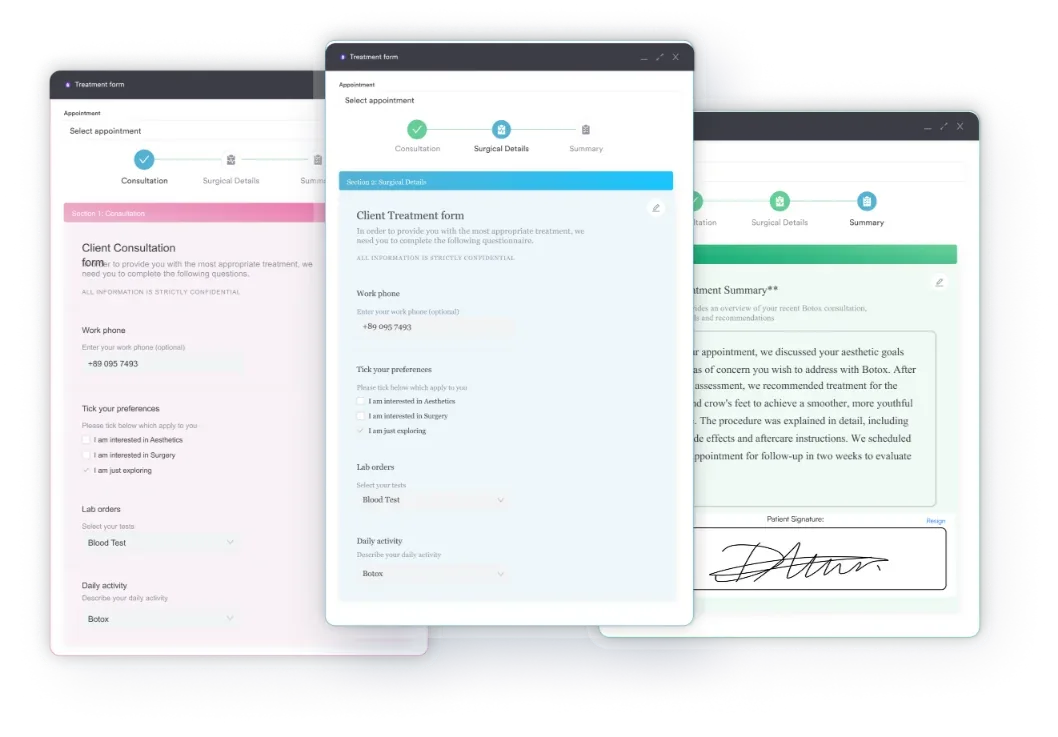

Pabau’s digital forms and claims management tools help OB/GYN practices capture the documentation needed for accurate ICD-10 code submission, reducing denials and speeding up reimbursement.

ICD-10 Code O11.1 sits within the O11 code family, which covers pre-existing hypertension with superimposed pre-eclampsia across all stages of the obstetric timeline. Coders must select the subcode that matches the documented trimester or obstetric phase. For the delivery encounter itself, that subcode is O11.4, whatever the gestational age at birth.
O11.9 should be a last resort. If a note mentions gestational age but the coder has not confirmed which trimester that age falls in, a query to the provider is faster and cleaner than defaulting to the unspecified code. Unspecified codes attract payer scrutiny and can reduce claim value in severity-based payment models. Practices standardizing their patient records management workflows with structured templates reduce unspecified-code rates by ensuring trimester attestation is captured at every encounter.
When a patient is admitted during one trimester and delivers in another, use the trimester at the time of the encounter being coded, not the trimester at delivery. For inpatient stays that span trimester boundaries, code the trimester that applies to the complication being documented at the time of care.
Under HIPAA, all covered healthcare entities are required to use ICD-10-CM diagnosis codes for all electronic health transactions. This mandate took effect October 1, 2015. ICD-10 Code O11.1 is therefore the required code for any claim with a date of service on or after that date involving pre-existing hypertension with superimposed pre-eclampsia in the first trimester.
ICD-10-CM is maintained jointly by the National Center for Health Statistics (NCHS) and the Centers for Medicare and Medicaid Services (CMS). The WHO’s ICD-10 classification browser provides the international framework on which ICD-10-CM is based. Annual updates to ICD-10-CM take effect each October 1, and coders should verify that O11.1 remains unchanged in the current fiscal year edition before submission.
For obstetric practices operating under HIPAA, correctly coded claims are not just a billing issue but a compliance requirement. Using a superseded or incorrect code for a covered transaction can trigger audits. Our guide to HIPAA compliance for medical offices covers the broader documentation and transaction requirements that apply to obstetric practices. Practices coding other Chapter 15 encounters may also encounter ICD-10 specificity challenges similar to those seen in psychiatric coding.
Superimposed pre-eclampsia in a patient with pre-existing hypertension is a high-risk obstetric diagnosis that demands precise ICD-10 coding. ICD-10 Code O11.1 is the correct, billable code for first-trimester presentations, but it only tells part of the story without the mandatory O10 secondary code identifying the underlying hypertension type. Missing that pairing, or using O11.1 when O10.x or O14 is more appropriate, leads to denials that slow payment and distort maternal risk data.
Pabau’s features that save private practices time, including structured digital forms and an integrated claims workflow, help obstetric teams capture the four documentation elements required to assign O11.1 confidently on every encounter. To see how Pabau supports accurate obstetric coding and documentation, book a demo with our team.

Coding a bus driver’s late-effect visit? bus driver collision sequela code covers the 7th character test, sequencing order, and claim checks for this late-effect bus driver code.
Coding a military vehicle sequela claim? military vehicle nontraffic sequela code explains the four conditions that must line up before this billable military vehicle sequela code applies.
Coding a drowning injury sequela visit? drowning aboard a burning ship code covers the sequela code for drowning after a fall or jump from a burning passenger ship.
ICD-10 Code O11.1 is the billable code for pre-existing hypertension with superimposed pre-eclampsia in the first trimester (before 14 weeks gestation), valid for claims from October 1, 2015 onward.
O10.011 covers pre-existing essential hypertension complicating pregnancy without pre-eclampsia. O11.1 applies when superimposed pre-eclampsia — new proteinuria, severe blood pressure readings, or other end-organ features — develops on top of that pre-existing hypertension.
Yes. An O10 subcode identifying the specific hypertension type (e.g. O10.011 for essential hypertension) must be sequenced alongside O11.1 on every claim per the ICD-10-CM tabular use-additional-code instruction.
O11.1 applies to the first trimester only (before 14 weeks 0 days). Use O11.2 for the second trimester, O11.3 for the third, and O11.9 only when trimester cannot be determined from the clinical record.
The approximate crosswalk is 642.74 (pre-eclampsia or eclampsia superimposed on pre-existing hypertension). The mapping is not one-to-one; 642.74 maps broadly across O11 subcodes by encounter phase rather than trimester.
O14 codes apply when pre-eclampsia arises in a patient with no prior hypertension history. O11.1 requires documented pre-existing hypertension with onset before 20 weeks gestation, plus superimposed pre-eclampsia as a new complication.
Pre-eclampsia is coded under the O11 category when it is superimposed on pre-existing hypertension, and under the O14 category when it arises with no prior hypertension history. O11.1 is the specific code for a first-trimester superimposed presentation.
O11.4 covers pre-existing hypertension with pre-eclampsia complicating childbirth, meaning the labor and delivery encounter. Like O11.1, it requires a paired O10 code identifying the underlying hypertension type.