ICD-10 code S61.201A: Open wound of left index finger without nail damage
ICD-10 code S61.201A covers a left index finger wound of unstated type ICD-10 co...

Last Updated: Oct 16, 2026
Billable Code Specific Code
M45.2 is the billable ICD-10-CM code for ankylosing spondylitis of cervical region.
Let Pabau's smart automation suggest the right codes, reduce claim denials, and keep your practice compliant—effortlessly.
Automate repetitive tasks and focus on what matters most—your patients.
Reduce coding errors and ensure compliance with the latest regulations.
Clean claims, fewer denials, and faster reimbursements.
Powerful insights and reporting to help your practice thrive.
HIPAA compliant SOC 2 certified GDPR-compliant Trusted by 4,000+ clinics worldwide

ICD-10 code M45.2 is a billable diagnosis code for ankylosing spondylitis of the cervical region, classified under Spondylopathies (M45-M49) in Chapter 13.
The parent code M45 is non-billable; coders must specify the spinal region (e.g. M45.2 for cervical) to submit a valid claim.
M45.2 and M45.A2 are clinically and administratively distinct: M45.2 requires radiographic sacroiliitis evidence, while M45.A2 covers non-radiographic axial spondyloarthritis.
Pabau’s claims management software and digital intake forms support accurate documentation and streamlined billing for musculoskeletal diagnoses including M45.2.
ICD-10 code M45.2 is the billable diagnosis code for ankylosing spondylitis of the cervical region. It sits within the M45 family, the ankylosing spondylitis ICD-10 codes that classify the condition by the spinal region it affects. Where the non-billable parent code M45 names the disease in general, M45.2 pins it to the cervical spine (C1-C7), which is the level of specificity payers require on a claim.
M45.2 is classified under Chapter 13 of the ICD-10-CM (Diseases of the musculoskeletal system and connective tissue, M00-M99), within the Spondylopathies block (M45-M49). The code specifically identifies ankylosing spondylitis affecting the cervical spine (C1-C7 vertebrae and their associated joints), distinguishing it from presentations at other spinal levels. This article covers the code’s billable status, related code hierarchy, inclusion terms, excludes notes, documentation requirements, and the critical distinction from M45.A2. First-pass rate measures how often a claim is paid without anyone touching it again.
M45.2 is a valid, billable ICD-10-CM diagnosis code, confirmed across the CDC/NCHS ICD-10-CM tool and major coding references for FY2026. It can be used directly on insurance claims and other clinical documents to specify ankylosing spondylitis of the cervical region.
All ankylosing spondylitis ICD-10 codes share the M45 stem, and the digit after the decimal identifies the spinal region. The parent code M45 (Ankylosing spondylitis) is non-billable on its own. Payers require specificity at the sub-code level. This is a standard ICD-10-CM rule: parent codes serve as organizational headers in the tabular list, not as claimable codes. Below is the full M45 family with billable status, structured as coders typically need to reference it.
Use M45.9 only when the clinical record does not specify which region of the spine is affected. Defaulting to M45.9 when documentation identifies the cervical spine is a coding error and may trigger payer queries. Accurate ICD-10 diagnostic coding reference practices require selecting the most specific code supported by documentation.
Coding references list several synonyms and inclusion terms under M45.2 that coders may encounter in clinical documentation. These terms map to M45.2 when they describe ankylosing spondylitis localized to the cervical region.
These terms are inclusion terms, not alternative codes. If the attending physician documents “cervical arthritis” without specifying ankylosing spondylitis as the underlying diagnosis, coders should query the provider before assigning M45.2. The inclusion terms indicate how the condition may be described in notes, not that every mention of cervical arthritis defaults to this code.
Always cross-reference against the ICD List diagnostic code database and the official CMS tabular list when confirming inclusion term applicability for a specific encounter.
Practices charting these diagnoses in Jane often compare Jane App alternatives once caseloads and billing get heavier.
The M45 parent code carries a Type 2 Excludes note. Understanding its scope prevents under-coding and avoids incorrect claim rejections.
A Type 2 Excludes note indicates that the excluded condition is not part of the code it is excluded from, but a patient may have both conditions simultaneously. When a Type 2 Excludes note appears under a code, it is acceptable to use both the M45-series code and the excluded code together on the same claim, when the patient genuinely has both conditions.
This differs from a Type 1 Excludes note, which signals mutually exclusive conditions and prohibits concurrent coding. Coders working in rheumatology should confirm whether their documentation supports concurrent use before adding secondary codes. For broader ICD-10 code documentation practices across specialties, the same Type 1 vs. Type 2 distinction applies.
Patients with ankylosing spondylitis of the cervical region often present with related musculoskeletal or inflammatory conditions. When such comorbidities are independently documented and treated during the same encounter, coding guidelines permit their inclusion as additional diagnoses.
Do not assume comorbidities are implied. Each additional diagnosis coded must be explicitly documented by the treating provider for the encounter in question. Using patient record documentation tools that capture structured clinical detail helps ensure comorbidities are consistently recorded and available at coding time.
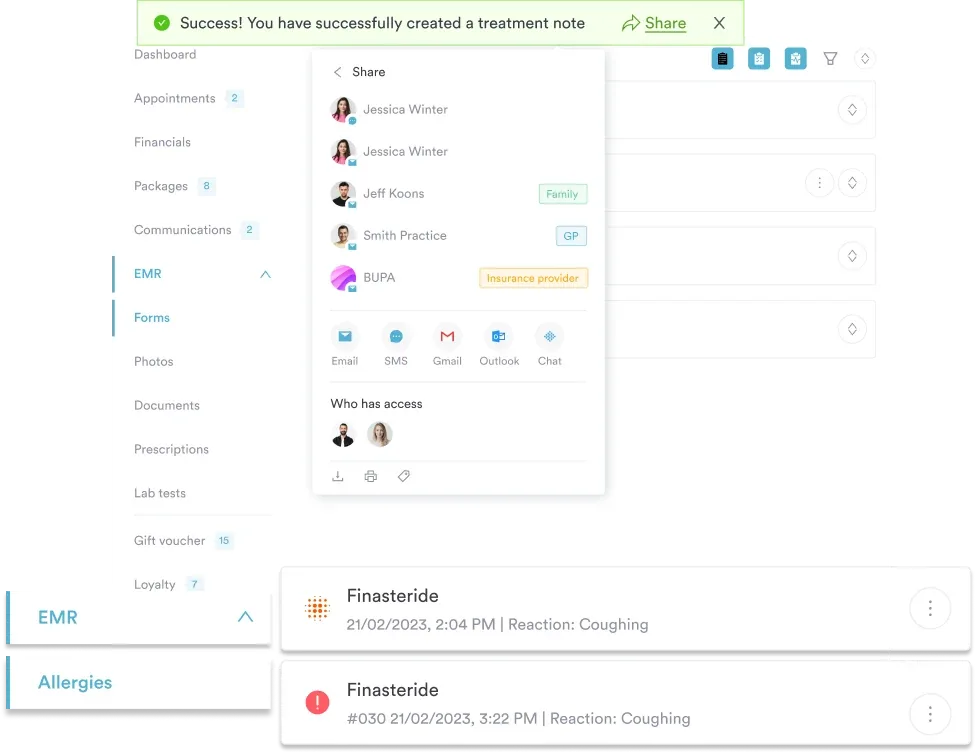
Review the patient’s full problem list before coding an M45.2 encounter. Ankylosing spondylitis is a systemic condition: uveitis, inflammatory bowel disease, and sacroiliitis frequently appear as concurrent diagnoses. Each requires its own ICD-10 code if documented and managed during the visit. Incomplete comorbidity coding leaves legitimate reimbursement on the table.
Confusing M45.2 with M45.A2 is one of the most consequential errors in axial spondyloarthritis coding. Both codes reference the cervical region, but they describe clinically distinct conditions with different diagnostic criteria.
The code assignment must follow what the treating rheumatologist has documented, not what the coder infers from symptom severity. HLA-B27 positivity supports the clinical diagnosis but does not, by itself, determine whether M45.2 or M45.A2 is correct. The determining factor is whether radiographic sacroiliitis has been confirmed. For additional context on musculoskeletal ICD-10 coding accuracy.
Practices managing patients across the axial spondyloarthritis spectrum benefit from physical therapy practice management systems that capture imaging results and diagnosis history in structured, codeable formats.

Practice management software like Pabau supports rheumatology and musculoskeletal practices with structured patient records, digital intake forms, and integrated claims management to keep ICD-10 coding accurate and reimbursement on track.

Payers expect clinical documentation to justify both the diagnosis and the selected ICD-10 code. For M45.2, weak documentation in three areas commonly triggers claim queries: imaging evidence, regional specificity, and treatment justification.
Structured SOAP note clinical documentation practices strengthen the coding audit trail for chronic musculoskeletal diagnoses. For cervical ankylosing spondylitis encounters, each SOAP component should address:
Incomplete SOAP documentation for chronic inflammatory conditions is one of the leading causes of recoupment requests following payer audits. Practices that adopt safer clinical notes practices reduce exposure significantly.
Structured intake processes capture more complete documentation before the clinician encounter begins.

When documenting a cervical AS encounter, record the specific vertebral levels referenced in imaging reports alongside the clinical symptoms. Linking imaging findings directly to the affected spinal segment in your SOAP assessment makes code selection auditable and defensible without requiring additional provider queries at billing time.
Cervical ankylosing spondylitis rarely presents in isolation. Accurate claims submission for M45.2 encounters often requires understanding adjacent codes in the M45-M49 Spondylopathies block and how they interact with reimbursement workflows.
When ankylosing spondylitis of the cervical region is the primary reason for the encounter, M45.2 should be sequenced as the principal diagnosis. Secondary codes for comorbidities, associated manifestations, or separately managed conditions follow.
Where the encounter addresses a complication of the AS rather than the underlying disease itself (for example, a cervical fracture in a patient with long-standing AS), sequencing guidance from the AAPC’s ICD-10-CM coding reference supports placing the complication code first with M45.2 as a secondary diagnosis. Confirm sequencing against the CMS Official Coding Guidelines for the relevant fiscal year.
Other ICD-10 chapters restrict sequencing further. An underdosing code such as T44.6X6A can never lead a claim, so the condition being treated is coded first.
Coders handling spondylopathy encounters should be familiar with the surrounding codes to avoid mis-assignment:
Practices with high rheumatology volume benefit from claims management software that flags sequencing rules and supports payer-specific documentation requirements within the billing workflow. Errors in adjacent-code selection account for a measurable share of musculoskeletal claim rejections.
For private rheumatology and musculoskeletal practices, M45.2 appears on claims across both Medicare and commercial payer environments. The CMS ICD-10 codes page maintains the annual update files used by all major payers. Clinics should verify that their billing software is updated to the current fiscal year’s code set before submitting claims with M45.2 or any M45-family sub-code.
For practices managing practice management software across multiple providers or locations, centralized ICD-10 code libraries within the EHR reduce the risk of practitioners selecting expired or incorrect codes at the point of care.
M45.2 has been part of the ICD-10-CM tabular list since the system’s US implementation and has remained stable through successive fiscal year updates. The WHO’s ICD-10 browser provides the international classification context, noting ankylosing spondylitis as a seronegative inflammatory arthritis with a predilection for the axial skeleton.
In the ICD-9-CM system, ankylosing spondylitis was coded under 720.0, with no sub-level regional specificity. The transition to ICD-10-CM introduced the M45.x family, requiring site-specific documentation that many practices initially struggled to capture consistently. For clinics working toward better coding outcomes.
The classification of M45.2 under Chapter 13 (M00-M99) places it within the broader musculoskeletal framework. Rheumatology practices that also manage adjacent diagnoses (osteoarthritis, psoriatic arthritis, reactive arthritis) should ensure their coding team understands how the spondylopathies block interacts with inflammatory arthropathies (M05-M14) to avoid cross-chapter coding errors.
Selecting M45.2 over the non-billable parent M45 and distinguishing it from M45.A2 are the two coding decisions where practices most commonly introduce errors into their ankylosing spondylitis claims. The documentation chain (imaging evidence, regional specificity, SOAP structure) must support the code selection before the claim is submitted.
Pabau’s AI-assisted clinical documentation and integrated claims management tools help musculoskeletal and rheumatology practices capture the structured documentation M45.2 requires and route it accurately through the billing workflow. To see how Pabau supports diagnostic coding workflows in practice, book a demo.

Coding a follow-up visit for an ear injury? Insect bite follow-up coding guide covers S00.469D, the code for a routine follow-up after a nonvenomous ear insect bite.
Coding a late effect of an eyelid injury? Eyelid injury sequela coding guide covers S01.129S and the seventh character choices that most often cause claim denials.
Coding a late effect of an ear laceration? Ear laceration sequela coding guide covers S01.322S, the code for a healed left ear laceration that involved a foreign body.
ICD-10 code M45.2 is a billable diagnosis code for ankylosing spondylitis of the cervical region. It is classified under Chapter 13 (Diseases of the musculoskeletal system and connective tissue, M00-M99) within the Spondylopathies block M45-M49, and it specifically identifies radiographic ankylosing spondylitis affecting the C1-C7 vertebrae and associated joints.
Yes, M45.2 is a valid billable ICD-10-CM diagnosis code for FY2026. The parent code M45 (Ankylosing spondylitis) is non-billable and cannot be used on claims; coders must select a region-specific sub-code such as M45.2 for the cervical region to submit a valid claim.
M45.2 represents radiographic ankylosing spondylitis of the cervical region, requiring confirmed sacroiliitis on X-ray or CT. M45.A2 represents non-radiographic axial spondyloarthritis of the cervical region, used when the patient has clinical symptoms of axial spondyloarthritis but imaging does not yet show definitive radiographic changes. Both are billable, but they are clinically and administratively distinct codes.
The M45 family includes M45.0 (multiple sites), M45.1 (occipito-atlanto-axial region), M45.2 (cervical region), M45.3 (cervicothoracic region), M45.4 (thoracic region), M45.5 (thoracolumbar region), M45.6 (lumbar region), M45.7 (lumbosacral region), M45.8 (sacral and sacrococcygeal region), M45.9 (unspecified sites), and M45.A2 (non-radiographic axial spondyloarthritis of cervical region). All sub-codes are billable; the parent M45 is not.
The clinical record must include an explicit diagnosis statement naming ankylosing spondylitis of the cervical region, reference to imaging confirming sacroiliitis (with date and interpreting provider), and a SOAP note that documents cervical spine involvement, functional limitations, and the treatment plan. Symptom descriptions alone (such as “neck stiffness”) do not support M45.2 without a confirmed physician diagnosis.
There is no single code for ankylosing spondylitis. The diagnosis is captured by the M45 family, and you select the sub-code for the affected spinal region: M45.0 (multiple sites), M45.1 (occipito-atlanto-axial), M45.2 (cervical), M45.3 (cervicothoracic), M45.4 (thoracic), M45.5 (thoracolumbar), M45.6 (lumbar), M45.7 (lumbosacral), M45.8 (sacral and sacrococcygeal), and M45.9 (unspecified site). The parent code M45 is non-billable, so a region-specific sub-code is required on a claim.
No. Ankylosing spondylitis is a diagnosis, so it is recorded with an ICD-10 code from the M45 family, not a CPT code. CPT codes describe the procedures and services delivered during the visit, such as the office evaluation, joint injection, or imaging. A cervical ankylosing spondylitis claim pairs the diagnosis code M45.2 with the CPT code for whatever service was performed.